Artwork
Eighteen Views of Rome: The Campidoglio
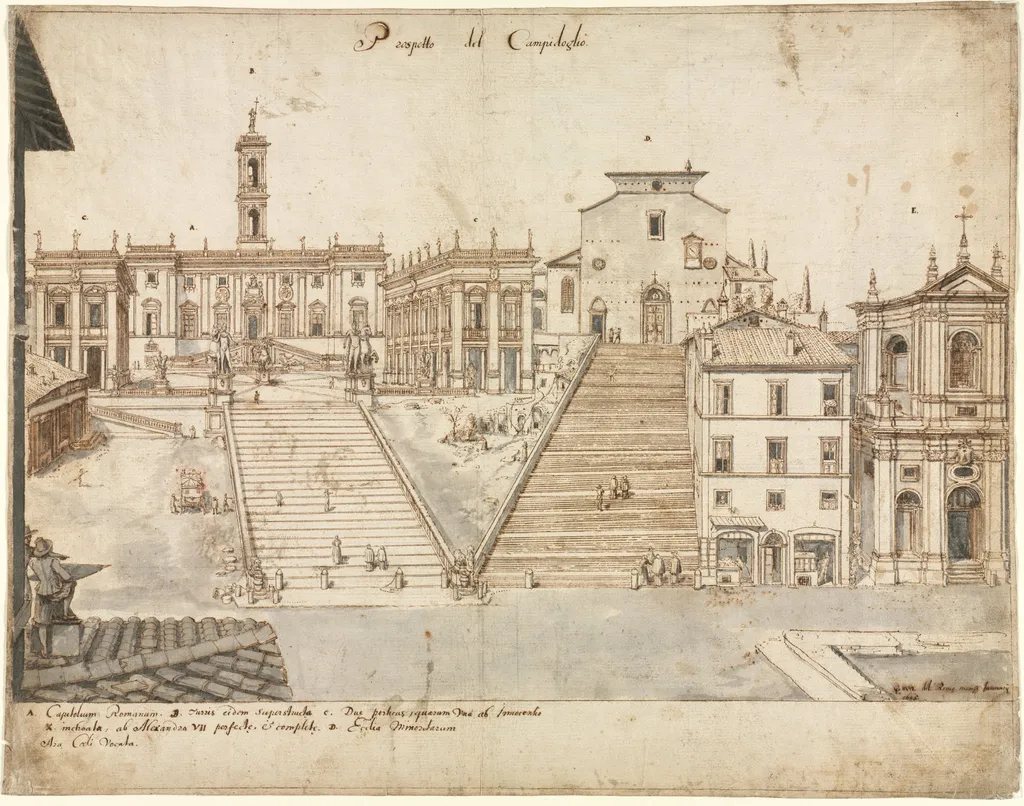
Eighteen Views of Rome: The Campidoglio is a drawing by the Baroque artist Lievin Cruyl. It dates from 1665 and is held in the collection of the Cleveland Museum of Art.
- Accession no.
- 1943.264
- Credit line
- Dudley P. Allen Fund
About this work
You see a bird’s-eye view of Rome’s Campidoglio square, with Michelangelo’s grand steps and twin palaces framing a statue in the center.
You see a bird’s-eye view of Rome’s Campidoglio square, with Michelangelo’s grand steps and twin palaces framing a statue in the center.
Cruyl drew this in 1665, one year before it was turned into an etching. The angle is odd, you’re looking down from above, as if floating over the city. Michelangelo had flipped the square’s direction decades earlier, turning its back on the old Roman Forum to face St. Peter’s instead.
For more views like this, look up etchings.
Overview
Lieven Cruyl, a Flemish draftsman, created this detailed drawing of Rome’s Campidoglio in 1665 as part of a series commissioned by publisher Giovanni Battista de Rossi. The work was later etched and published in 1666. Rendered from an elevated, almost aerial perspective, the drawing captures the spatial arrangement of the piazza with precision, emphasizing its architectural symmetry and the central placement of the Marcus Aurelius statue.
Subject & Meaning
The Campidoglio, once a neglected hilltop, was reimagined by Michelangelo as a ceremonial heart of civic and religious life. Cruyl’s view highlights the deliberate orientation of the piazza away from the ancient Roman Forum and toward St. Peter’s Basilica, symbolizing the shift from pagan antiquity to Christian authority. The placement of the ancient equestrian statue at the center reinforces the continuity of power and legacy within the new urban design.
Technique & Style
Cruyl employed fine pen and ink lines to delineate the architecture with clarity, using subtle shading to suggest depth and volume. The bird’s-eye perspective, unusual for topographical drawings of the time, conveys a sense of spatial control and order. The composition avoids decorative flourish, focusing instead on accurate representation of Michelangelo’s geometric layout and the surrounding urban fabric.
History & Provenance
The drawing was produced during Cruyl’s time in Rome, likely as preparatory material for a series of etchings commissioned by de Rossi. Ten of Cruyl’s views were published in 1666, making this one of the earliest systematic visual records of Rome’s Renaissance urban transformations. The original drawing survives as a rare witness to the process behind the printed series, offering insight into 17th-century topographical documentation.
Context
In the mid-17th century, Rome was being redefined as a center of papal authority and cultural renewal. Cruyl’s drawing reflects broader European interest in documenting classical and Renaissance architecture. His work aligned with scholarly efforts to map and preserve the city’s evolving identity, bridging antiquity and modernity through precise visual recording.
Legacy
Cruyl’s Campidoglio drawing helped establish a visual language for documenting urban spaces in early modern Europe. Its clarity and perspective influenced later topographical prints and surveys. The image endures as a record of Michelangelo’s enduring impact on Rome’s urban form, preserving the spatial logic of a design that continues to shape the city’s ceremonial landscape.
Own this work as a print
Artist & collection

Artist
Lievin Cruyl or Lieven Cruyl was a Flemish priest and a draughtsman and etcher of landscapes, seascapes, and architectural views.

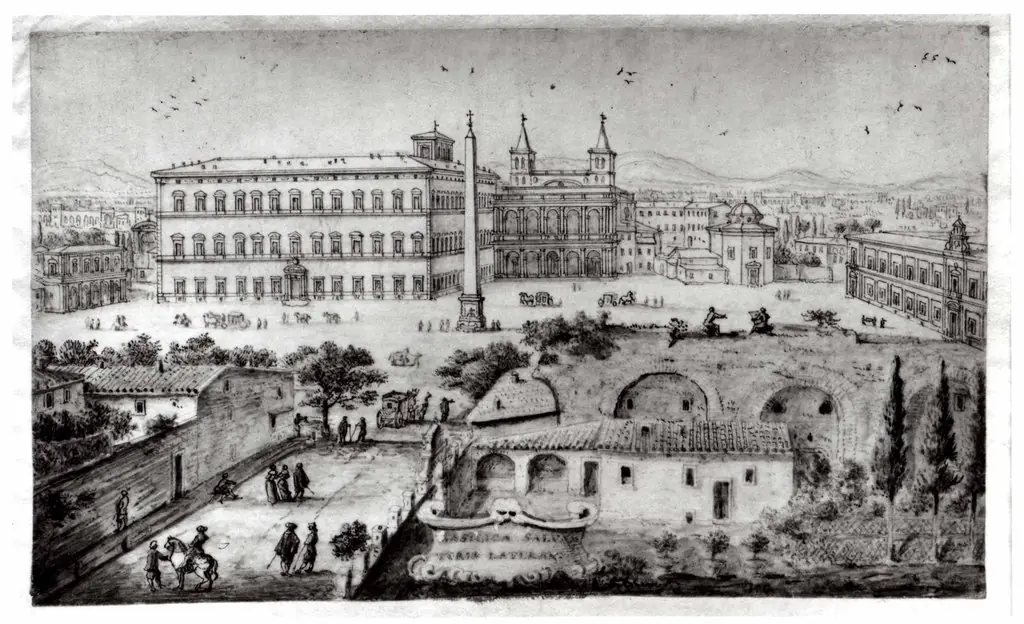 View of Lateran, Rome
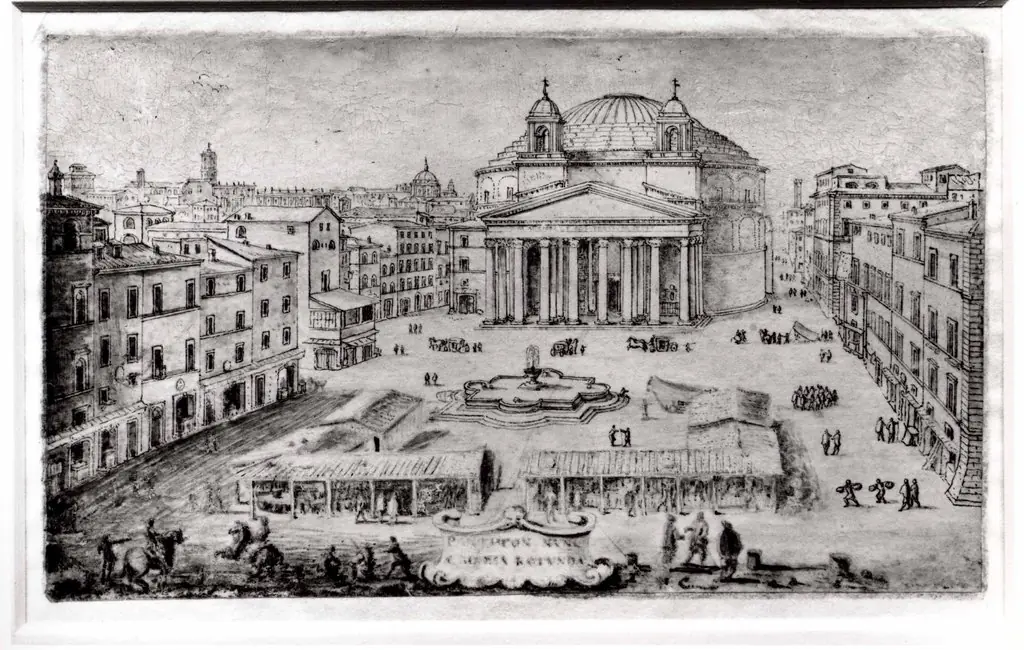 View of the Pantheon, Rome
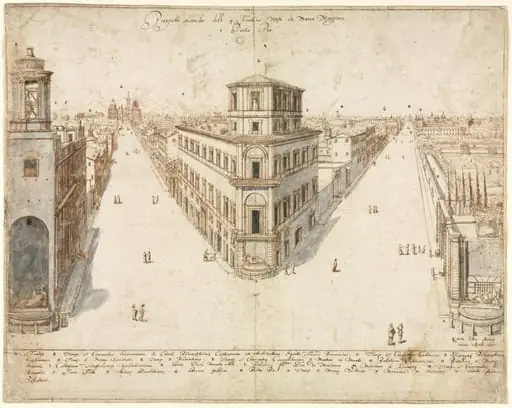 Eighteen Views of Rome: The Quattro Fontane Looking Toward Santa Maria Maggiore
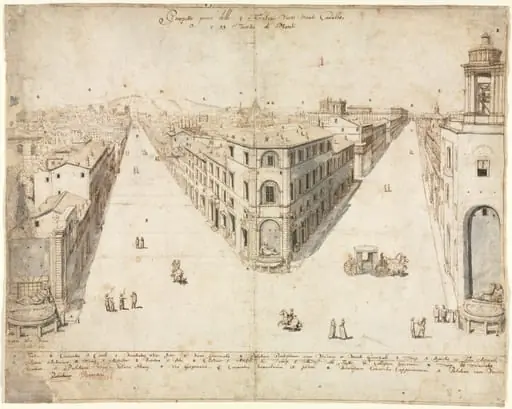 Eighteen Views of Rome: The Quattro Fontane Looking Toward Monte Cavallo
 Sketch for San Giovanni in Laterano (verso)
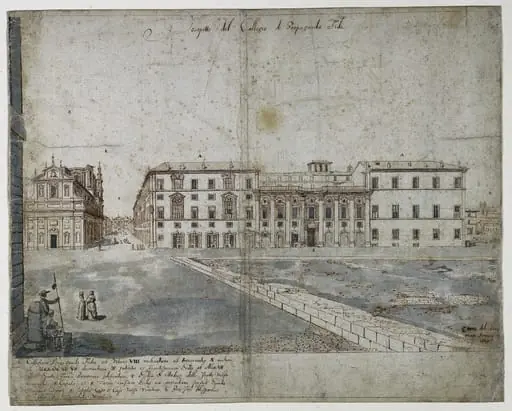 Eighteen Views of Rome: The Collegio di Propaganda Fide (recto)
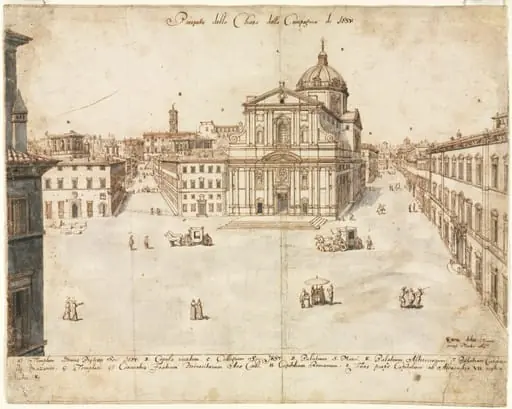 Eighteen Views of Rome: The Church of the Gesù
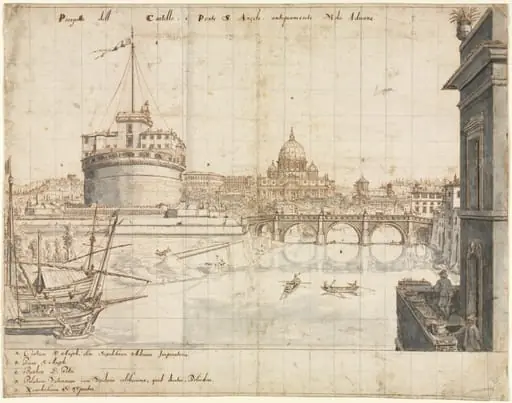 Eighteen Views of Rome: The Castel Sant'Angelo