Artwork
Eighteen Views of Rome: The Piazza Farnese (recto)
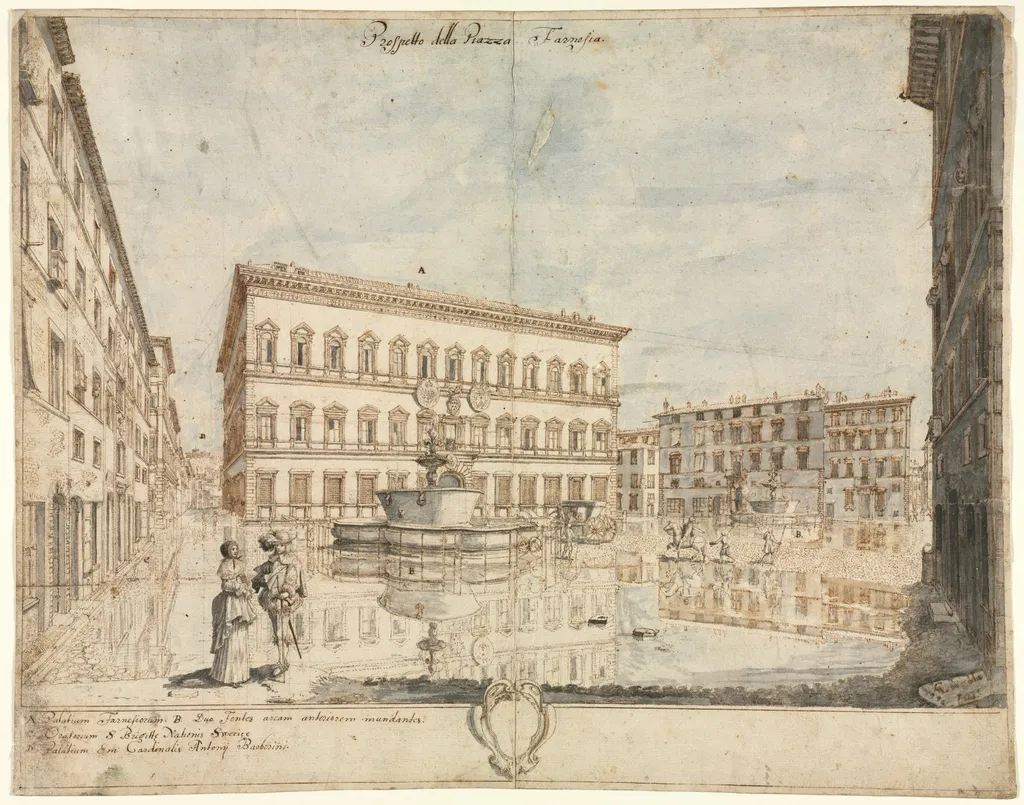
Eighteen Views of Rome: The Piazza Farnese (recto) is a drawing by the Baroque artist Lievin Cruyl. It dates from 1664 and is held in the collection of the Cleveland Museum of Art.
- Accession no.
- 1943.257.a
- Credit line
- Dudley P. Allen Fund
About this work
You’re looking at a busy Roman square: the Palazzo Farnese looms on the left, people chat under umbrellas, and laundry flaps on lines above the street.
You’re looking at a busy Roman square: the Palazzo Farnese looms on the left, people chat under umbrellas, and laundry flaps on lines above the street.
Cruyl drew this scene in 1664, two years before it was turned into an etching. The top-heavy cornice you see was Michelangelo’s tweak, he wanted the building to feel like it was leaning forward, almost tipping into the piazza.
If you like this kind of sharp, on-site sketch, flip through more drawings in the technique: chiaroscuro, it’s the play of light and shadow that gives the scene its punch.
Overview
This drawing, executed in 1664 by the Flemish draftsman Lieven Cruyl, captures a lively Roman piazza dominated by the imposing Palazzo Farnese. The composition presents the building’s façade, bustling pedestrians, and everyday details such as umbrellas and laundry lines, offering a snapshot of urban life in mid‑seventeenth‑century Rome.
Subject & Meaning
The scene focuses on the square in front of the Palazzo Farnese, emphasizing the building’s distinctive upper cornice that projects outward, a design choice intended to give the façade a sense of forward motion. The presence of ordinary activities, conversation, commerce, and domestic chores, underscores the integration of grand architecture within the daily rhythm of the city.
Technique & Style
Cruyl employed a chiaroscuro drawing method, using strong contrasts of light and shadow to model forms and convey depth. The rapid, on‑site sketching style reveals a keen observation of atmospheric effects, while the precise line work delineates architectural details, creating a vivid yet disciplined representation of the space.
History & Provenance
Commissioned by the Roman publisher Giovanni Battista de Rossi, the drawing was part of a series of Roman vistas that Cruyl produced for the market. In 1666, ten of these views, including the Piazza Farnese, were reproduced as etchings, extending their circulation beyond the original drawings.
Context
The Palazzo Farnese, originally designed by Antonio da Sangallo the Younger, was completed after his death in 1546 when Michelangelo added a third level and the prominent overhanging cornice. Cruyl’s depiction records this architectural evolution, situating the work within the broader narrative of Renaissance interventions in Rome’s urban fabric.
Own this work as a print
Artist & collection

Artist
Lievin Cruyl or Lieven Cruyl was a Flemish priest and a draughtsman and etcher of landscapes, seascapes, and architectural views.

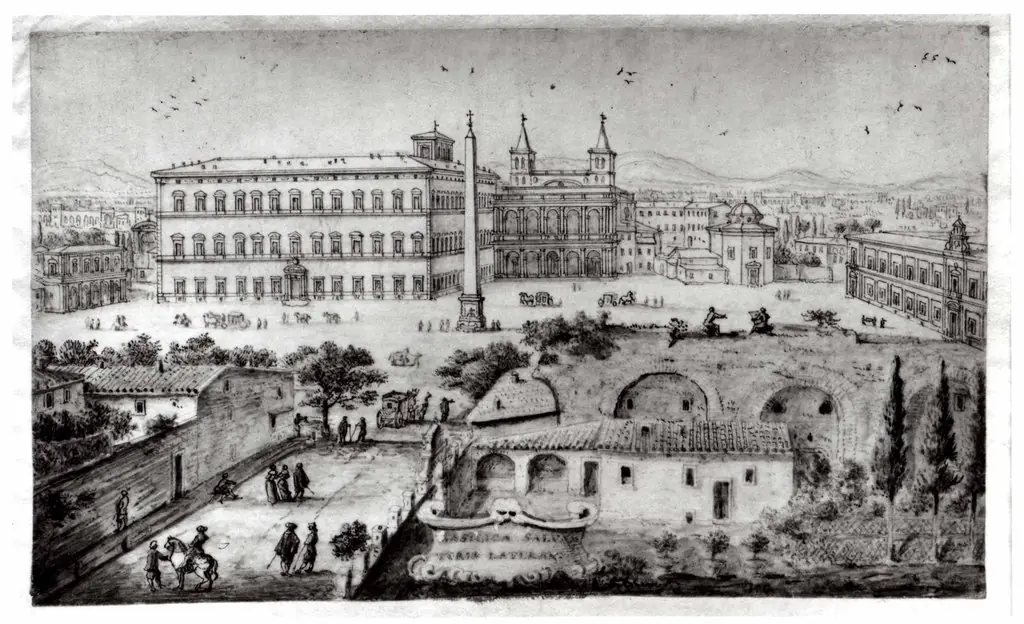 View of Lateran, Rome
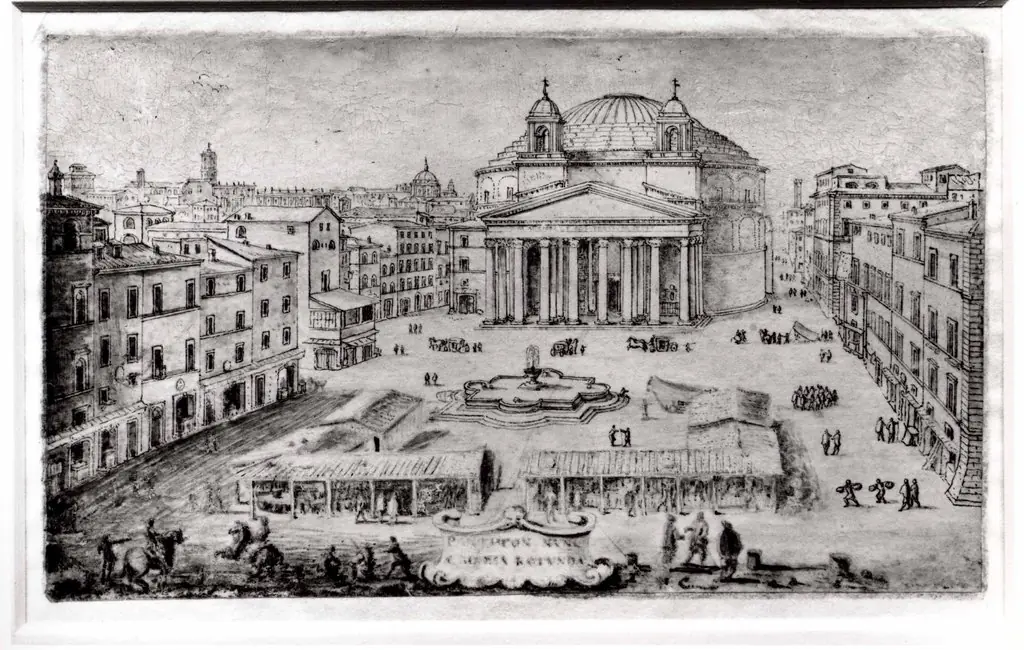 View of the Pantheon, Rome
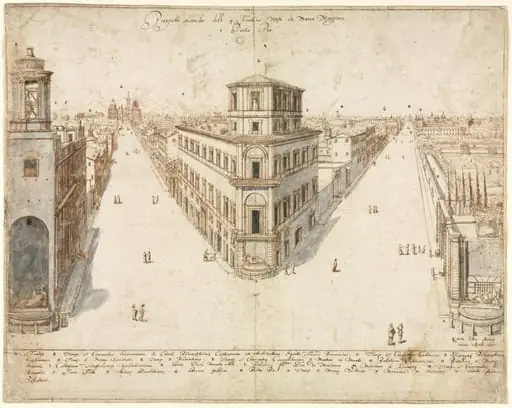 Eighteen Views of Rome: The Quattro Fontane Looking Toward Santa Maria Maggiore
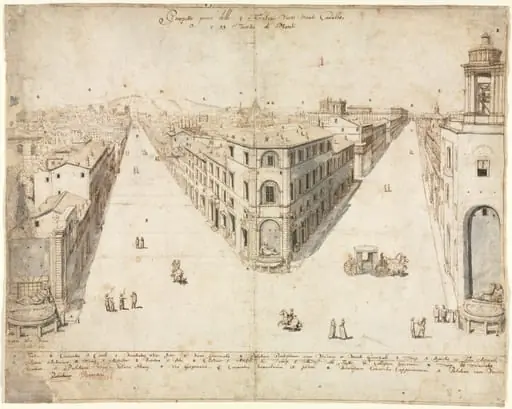 Eighteen Views of Rome: The Quattro Fontane Looking Toward Monte Cavallo
 Sketch for San Giovanni in Laterano (verso)
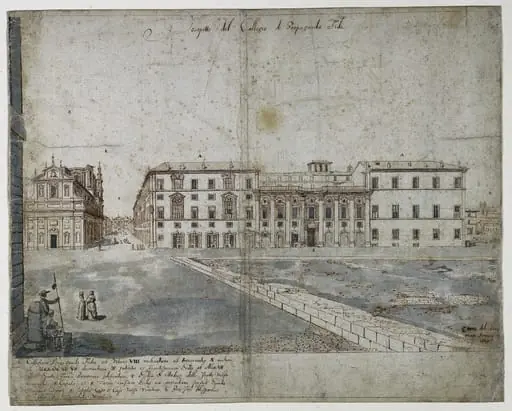 Eighteen Views of Rome: The Collegio di Propaganda Fide (recto)
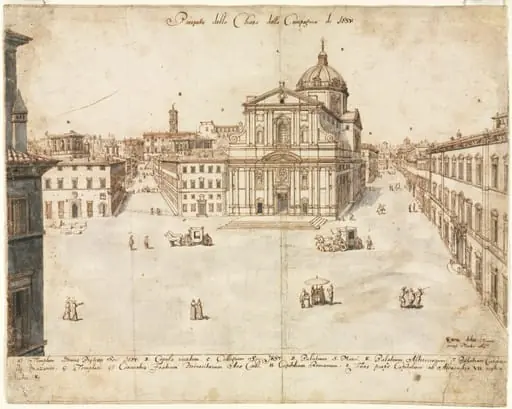 Eighteen Views of Rome: The Church of the Gesù
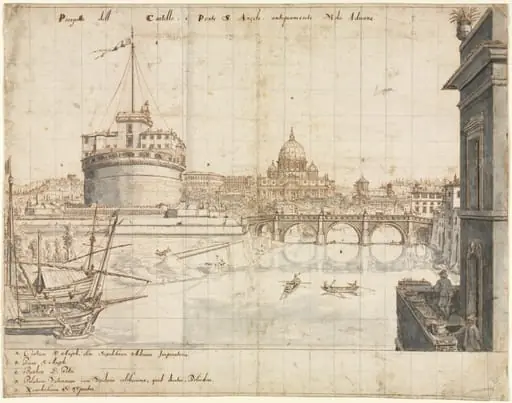 Eighteen Views of Rome: The Castel Sant'Angelo