Artwork
Maud Heath's Monument, Bremhill
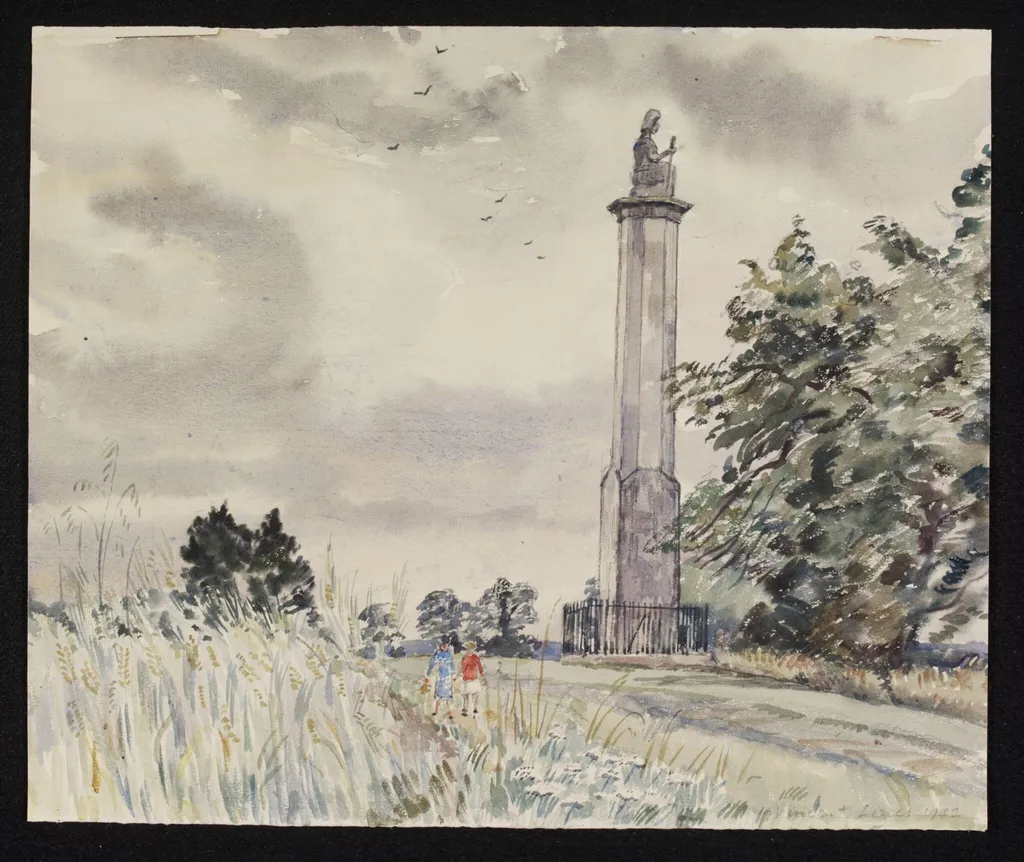
Maud Heath's Monument, Bremhill is a watercolor work on paper by Lines. It dates from 1942 and is held in the collection of the Victoria and Albert Museum.
About this work
Overview
It was produced as part of the Recording Britain project, a government-backed effort to visually archive vulnerable rural landmarks during the Second World War.
Painted in 1942 by artist Lines, this watercolour depicts Maud Heath’s Monument in Bremhill, Wiltshire. It was produced as part of the Recording Britain project, a government-backed effort to visually archive vulnerable rural landmarks during the Second World War. The work belongs to a broader collection funded by the Pilgrim Trust and curated under the supervision of Sir Kenneth Clark, intended to preserve a sense of national identity through documented place.
Subject & Meaning
The monument, a slender stone column crowned with a figure holding a device, stands solitary in a quiet field. Two walkers approach along a path, suggesting quiet reverence rather than tourism. The scene evokes continuity, a local memorial enduring amid rural change.
Its simplicity and isolation reflect the project’s aim to honor unassuming heritage sites often overlooked in grander historical narratives.
Technique & Style
Lines employed loose, fluid brushwork to suggest texture without detail: grasses are rendered in soft washes of green and gray, the sky in pale, diffused tones. The monument’s form is defined with restrained lines, avoiding heavy outline. The muted palette, dominated by earthy greys, pale greens, and off-whites, enhances the quiet atmosphere. The technique conveys immediacy, characteristic of on-site sketching under wartime constraints.
History & Provenance
Created during the Recording Britain initiative, the work was commissioned by the Ministry of Labour and National Service to support artists while documenting at-risk sites. It entered the collection of the Victoria and Albert Museum, where it remains part of a curated archive of over 1,500 watercolours. The project’s records indicate it was completed in 1942, with no known prior ownership or exhibition history beyond institutional storage.
Context
The Recording Britain project emerged amid fears of cultural erasure from bombing, development, and rural depopulation. Artists were sent across the country to record vernacular architecture, monuments, and landscapes before they vanished. Maud Heath’s Monument, though locally significant, was chosen not for grandeur but for its quiet endurance, emblematic of the project’s democratic vision of heritage.
Legacy
The watercolour endures as part of a vital wartime archive that reshaped how Britain understood its material past. Its inclusion in the V&A’s collection ensures ongoing access for researchers and the public. While not widely exhibited, it contributes to a broader understanding of how art served as a tool of cultural preservation during national crisis, offering a quiet counterpoint to wartime propaganda.
Artist & collection

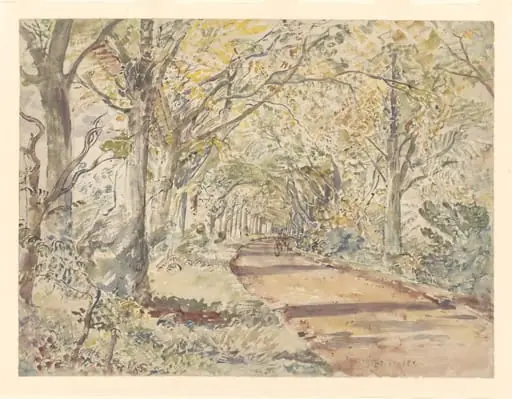 The Beech Avenue, Lasham, Hampshire
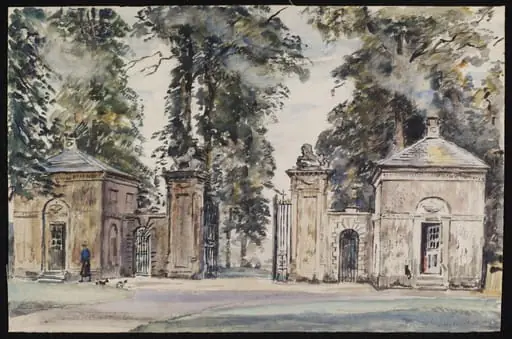 Entrance to Ramsbury Manor
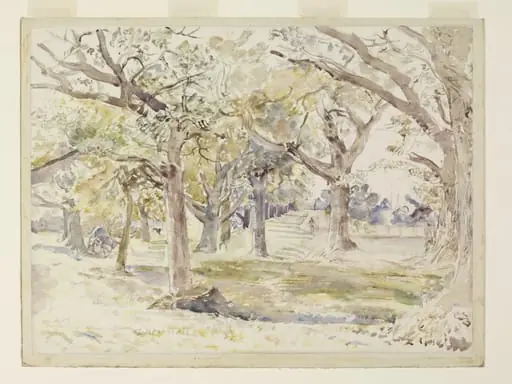 The Avenue, Bucklebury
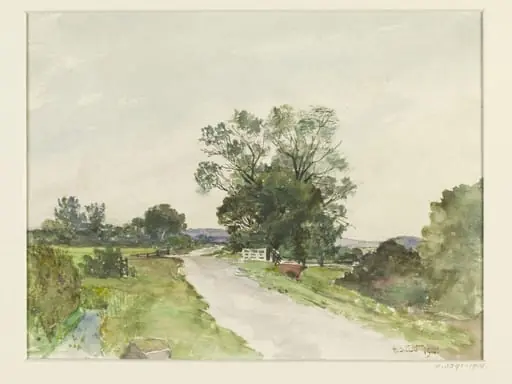 Landscape with road in flat country
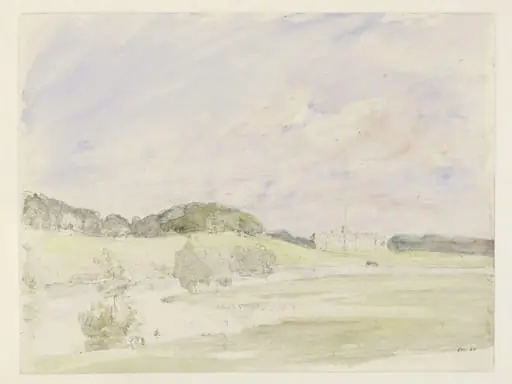 Petworth House from the Park
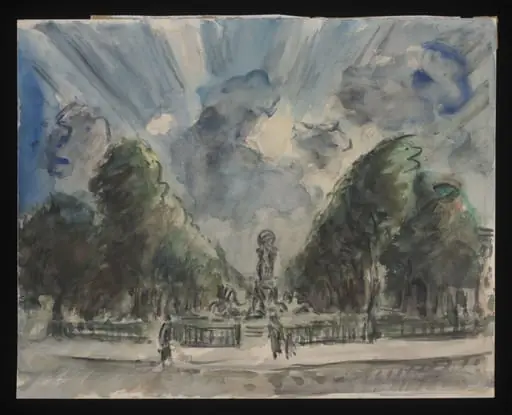 Fontaine de l'Observatoire by Ernst Stern
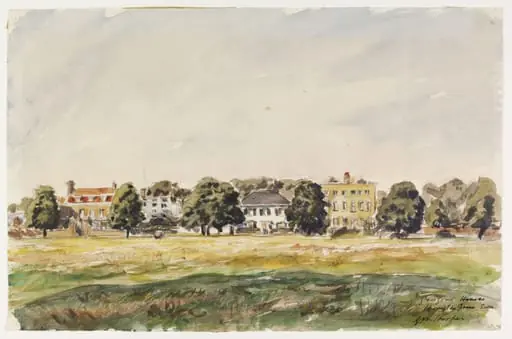 Georgian Houses, Hampton Green
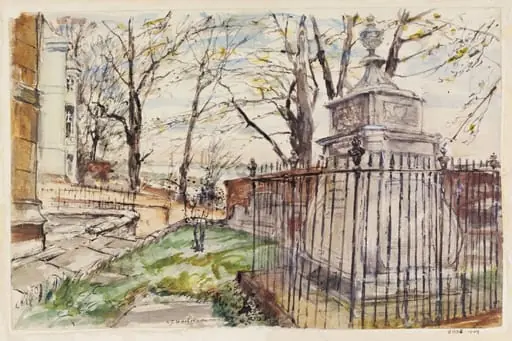 Hogarth's Tomb and Chiswick Reach
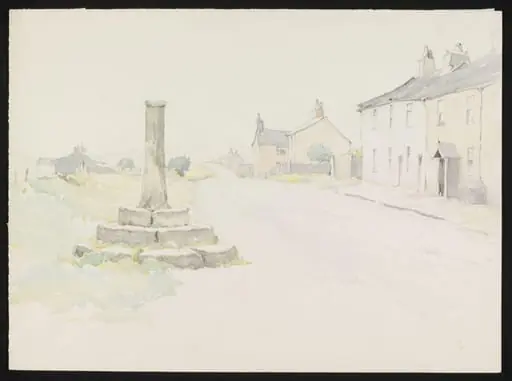 The Village Street and Roman Cross, Affetside
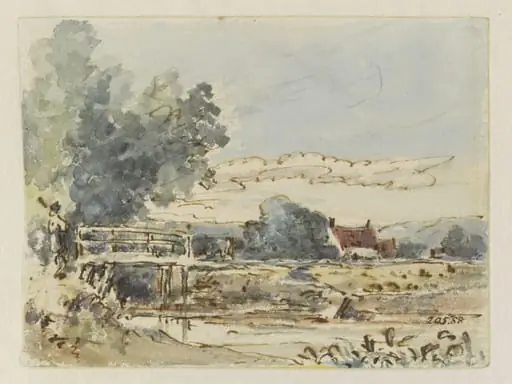 A bridge over a stream, with a cottage behind
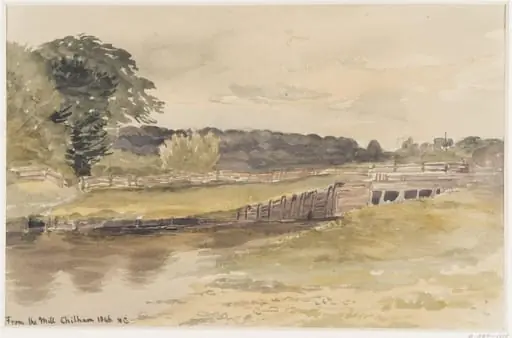 'From the Mill, Chilham'
- A Heath Scene