Artwork
Wye Bridge, Hereford
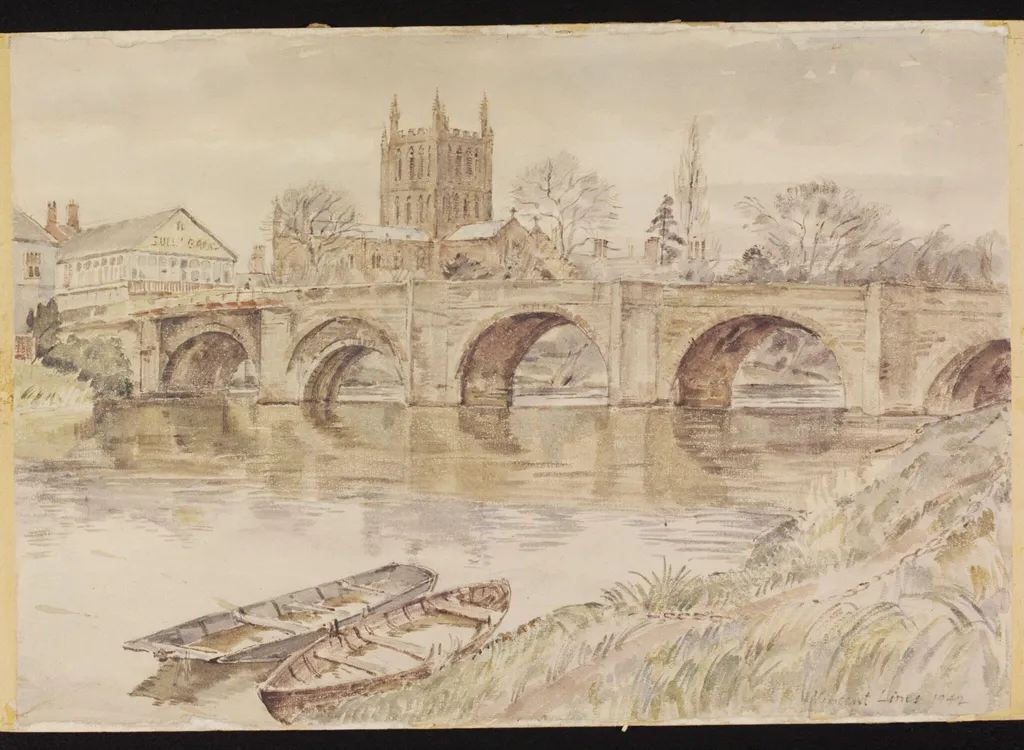
Wye Bridge, Hereford is a watercolor work on paper by the Regionalist artist Lines. It dates from 1942 and is held in the collection of the Victoria and Albert Museum.
About this work
Overview
Created in 1942, this watercolour by the artist Lines captures the Wye Bridge in Hereford. Rendered with a palette of greens and ochres, the composition includes the bridge’s three rounded arches, a riverside building with a partially visible sign, and the distant spire of Hereford Cathedral rising above a sparse treeline.
Subject & Meaning
The work portrays a tranquil river scene where the stone bridge serves as the focal point, linking the town’s commercial life, suggested by the nearby shop sign, and its historic religious presence, embodied by the cathedral tower. The modest boats moored on the bank hint at everyday activity along the waterway.
Technique & Style
Lines employs loose, rapid brushstrokes and a restrained colour scheme to convey atmosphere rather than precise detail. The water’s surface appears calm, achieved through soft washes, while the architectural elements receive just enough definition to remain recognizable, creating a balance between sketch-like spontaneity and structural clarity.
History & Provenance
The painting was produced under the Recording Britain scheme, a wartime initiative launched by Sir Kenneth Clark and financed by the Pilgrim Trust. Artists were commissioned to document scenes of national significance, anticipating possible loss from aerial bombing or other wartime disruptions, thereby preserving a visual record of England’s cultural landscape.
Context
Recorded during the early 1940s, the artwork reflects a period of heightened concern for the preservation of heritage sites. By focusing on a market town bridge and its adjacent cathedral, the piece underscores the interconnectedness of everyday commerce and historic architecture within the British identity that the project sought to safeguard.
Artist & collection

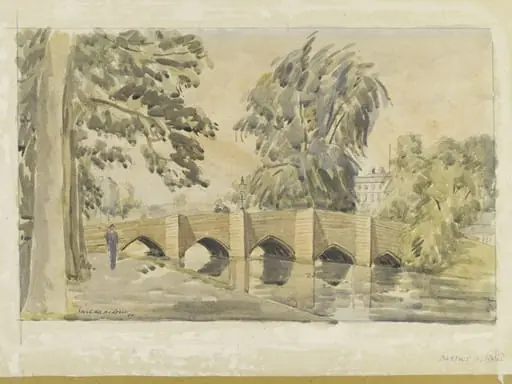 Bridge, Bakewell
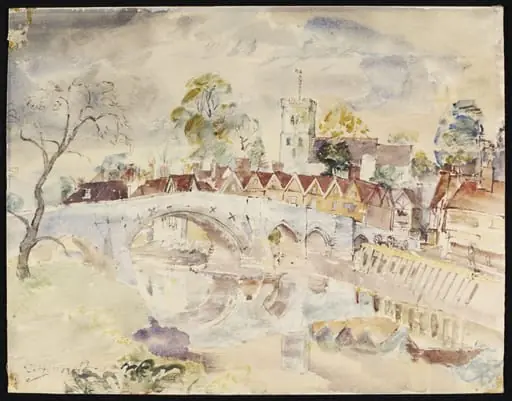 Aylesford Bridge
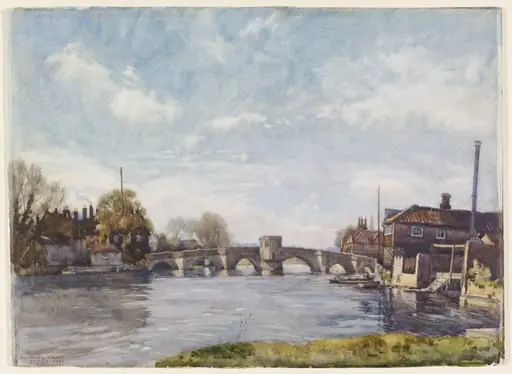 The Bridge and Chantrey Chapel, St.Ives
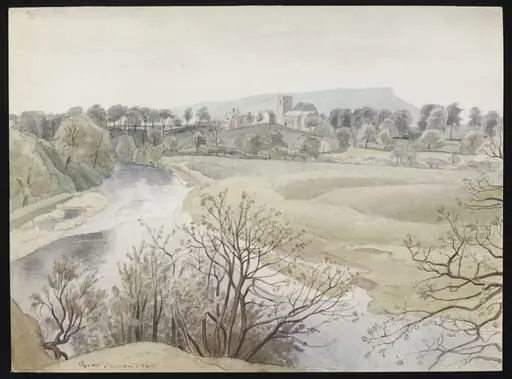 The Ribble at Great Mitton near Clitheroe
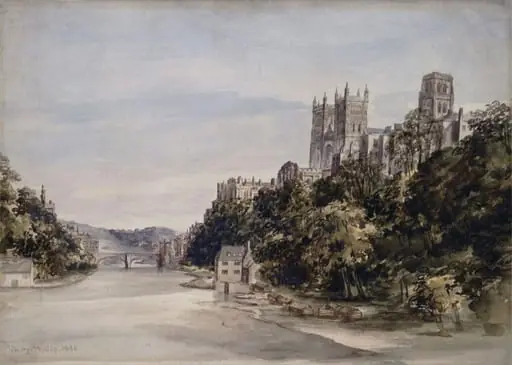 Durham
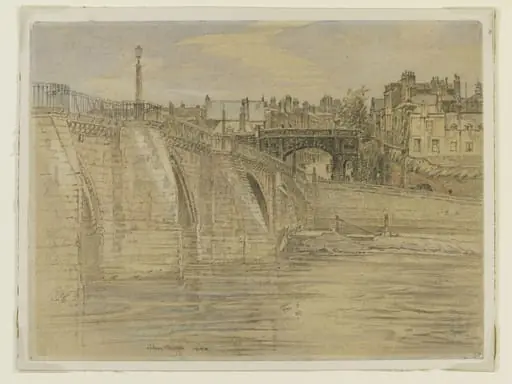 South Bridge Gate and Old Dee Bridge, Chester
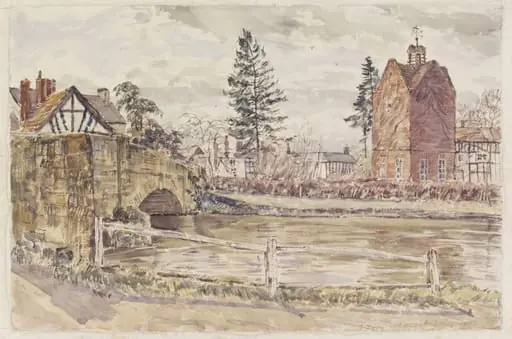 Bridge and Pigeon House, Eardisland
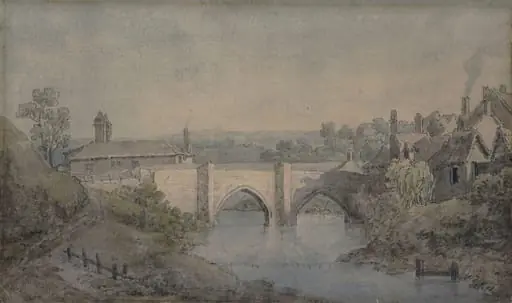 Bishop Gate Bridge, Norwich
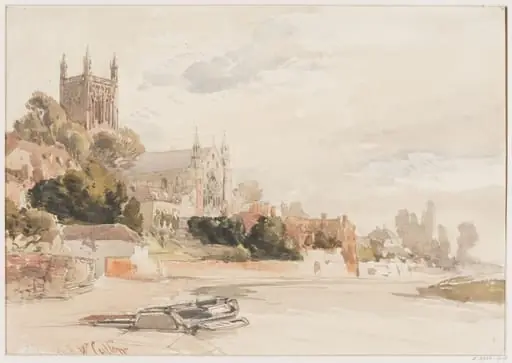 Worcester
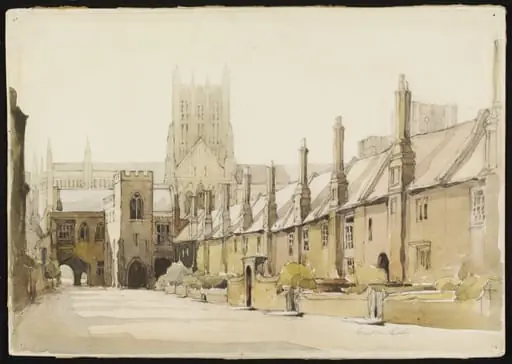 The Vicars' Close, Wells
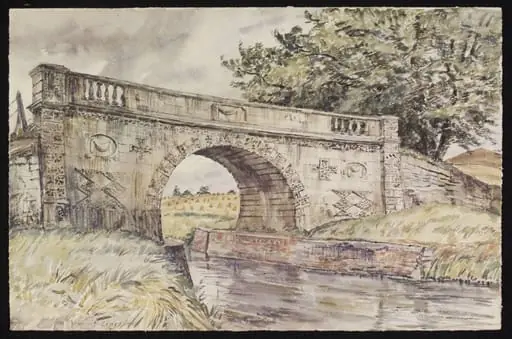 Lady Bridge over the Kennett and Avon Canal, Wilcot