Artwork
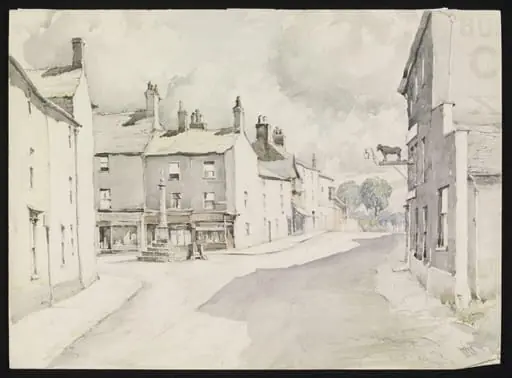
The Village Street and Roman Cross, Affetside
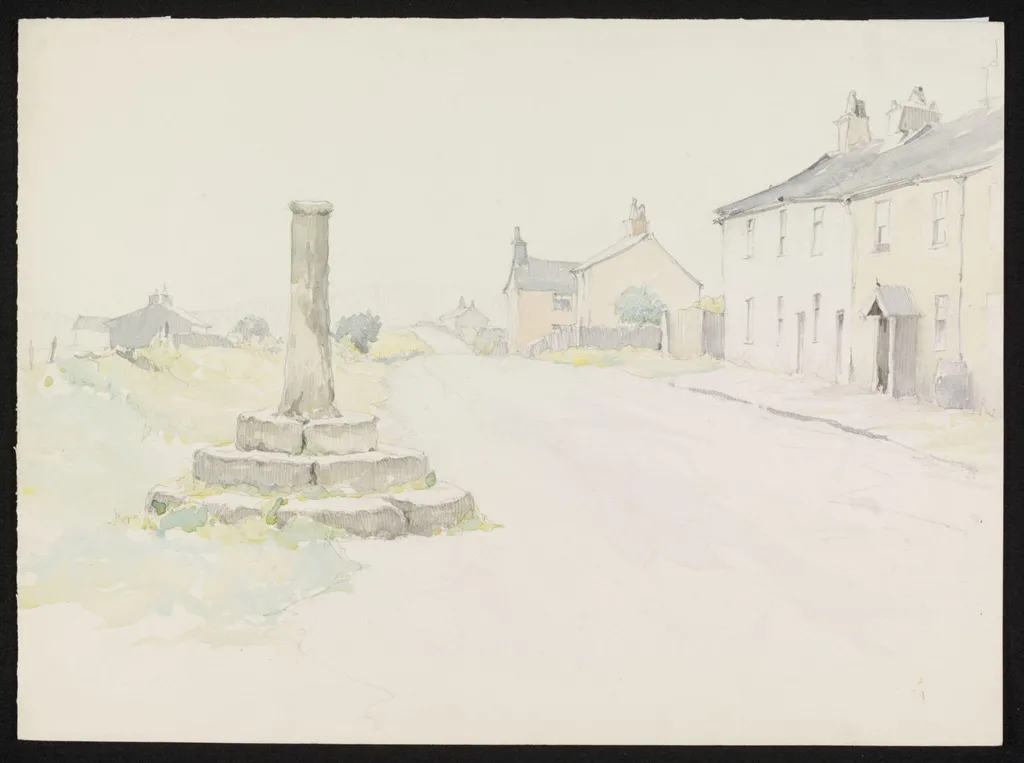
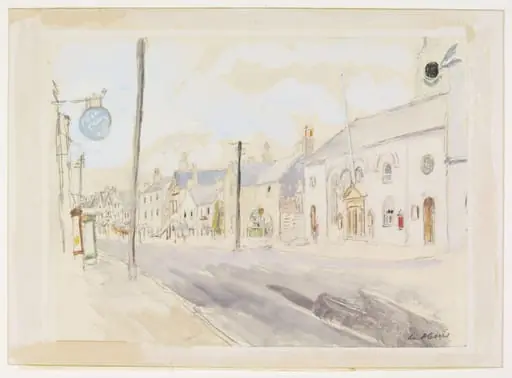
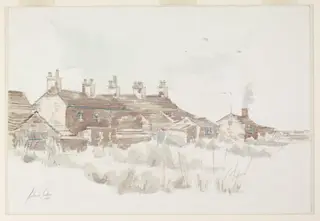
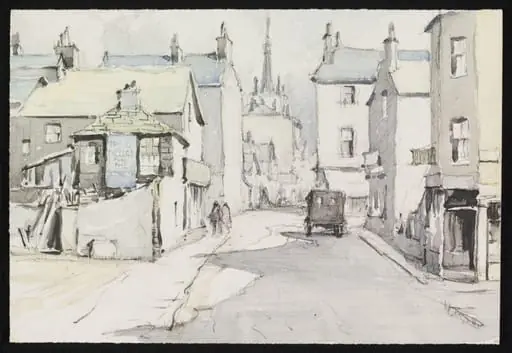
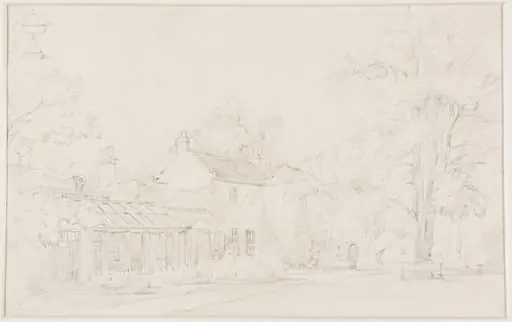
The Village Street and Roman Cross, Affetside is a watercolor work on paper by the Naïve art artist Pile. It dates from 1942 and is held in the collection of the Victoria and Albert Museum. The watercolour, executed in 1942, portrays a headless stone cross set upon a stepped plinth within the village of Affetside.
About this work
Overview
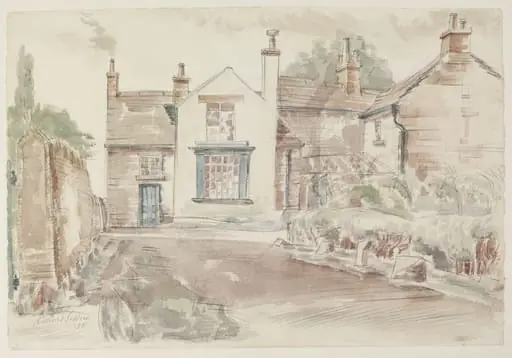
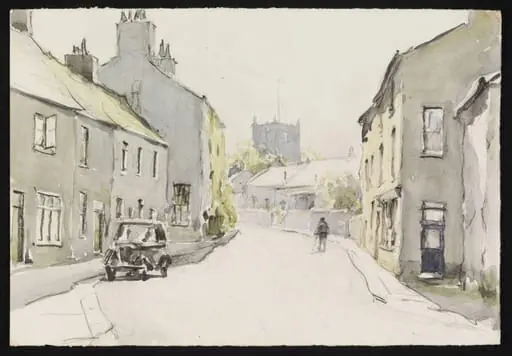
The watercolour, executed in 1942, portrays a headless stone cross set upon a stepped plinth within the village of Affetside. The composition captures a modest street scene, with a few low‑roofed houses and a dry ground mottled by patches of grass, rendered in muted greys and light browns.
Subject & Meaning
The central cross, stripped of its head, serves as a quiet landmark amid the rural landscape, suggesting continuity of local tradition while hinting at the disruptions of wartime Britain. The work reflects contemporary concerns about the erosion of rural life and the shifting sense of national identity during the Second World War.
Technique & Style
The artist employed loose, rapid brushstrokes and a limited palette, emphasizing a sketch‑like quality. The soft, subdued tones and simplified forms convey an everyday calm, while the quick execution aligns with the documentary purpose of the project.
History & Provenance
Created as part of the Recording Britain scheme, the piece was commissioned to document England’s topography amid fears of wartime destruction. The initiative, funded by the Pilgrim Trust and directed by Sir Kenneth Clark, mobilised artists to record scenes across England, with limited coverage of Wales and Scotland and none of Northern Ireland.
Artist & collection