Artwork
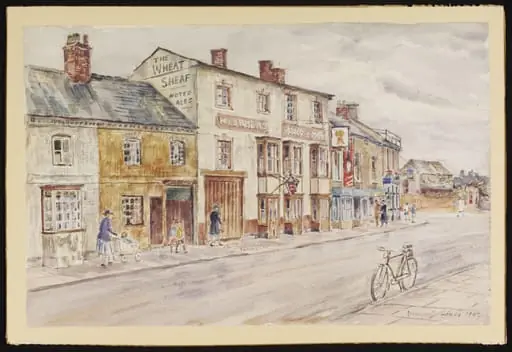
Broad Street, Weobley
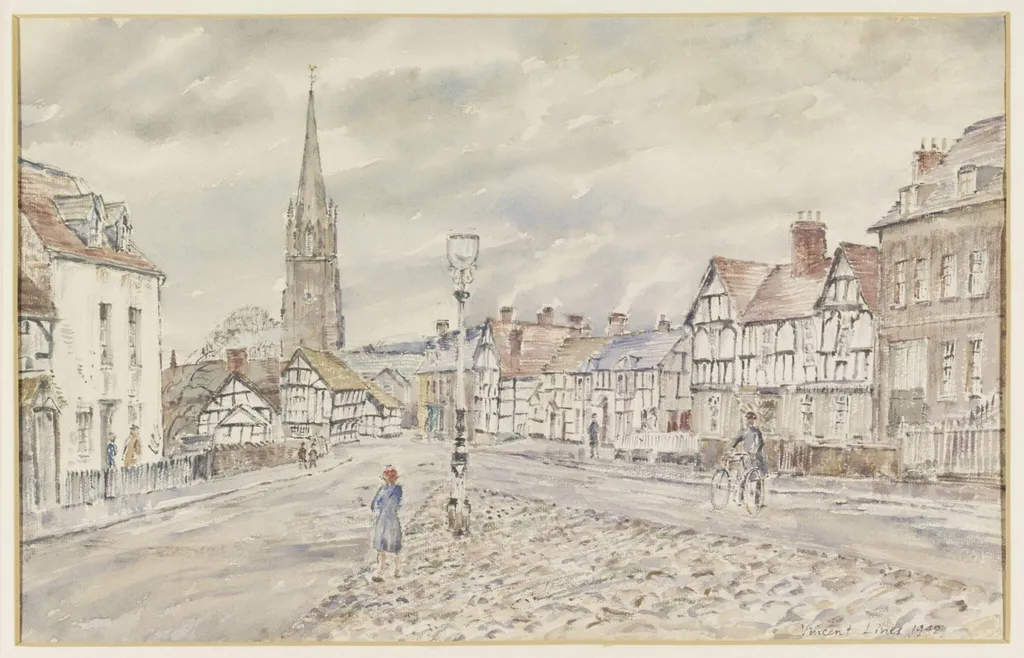
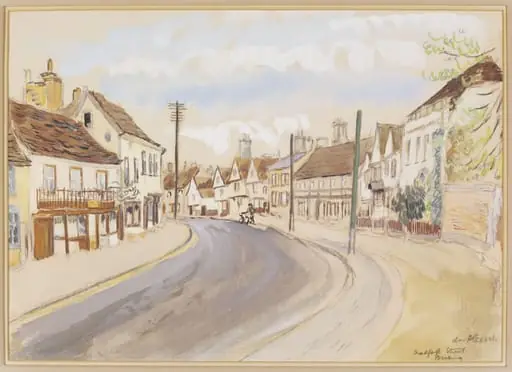
Broad Street, Weobley is a watercolor work on paper by the Social Realist artist Lines. It dates from 1942 and is held in the collection of the Victoria and Albert Museum.
About this work
Overview
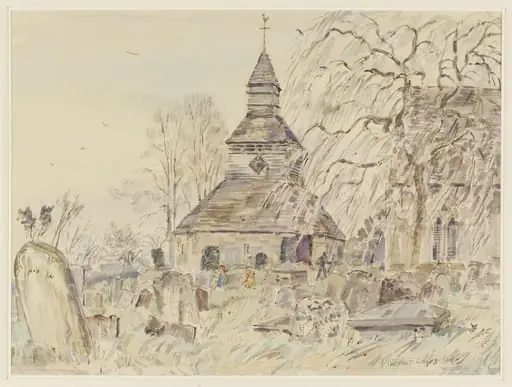
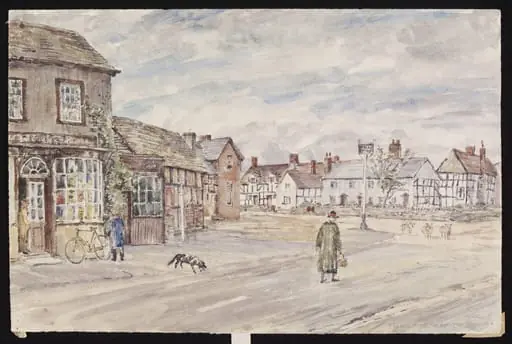
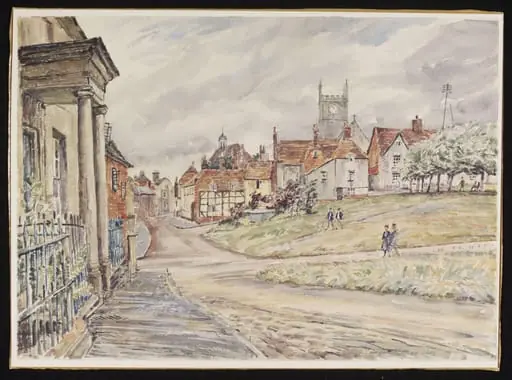
Broad Street, Weobley is a watercolour painted in 1942 that records a tranquil segment of the Herefordshire village’s main thoroughfare. The composition is centred on the soaring spire of the 14th‑century Church of St Peter and St Paul, which dominates the skyline behind a row of characteristic black‑and‑white timber‑framed houses.
Subject & Meaning
The image captures everyday life in a rural English setting: a woman in a blue dress pauses near a lamppost while a cyclist passes further down the cobbled way. The modest figures and the weathered yet inviting architecture convey a sense of continuity and community amid the broader uncertainties of wartime Britain.
Technique & Style
Executed with light washes of watercolour, the artist employs a loose, airy handling that softens the forms while preserving essential details such as the lamppost, the woman’s shoes, and the texture of the timber frames. The palette is muted, with subtle cloud‑filled skies that enhance the scene’s quiet atmosphere.
History & Provenance
Created as part of the Recording Britain scheme, the work was commissioned during World War II to document locales considered vulnerable to bomb damage or post‑war redevelopment. The project enlisted artists to produce visual records, and this piece entered the collection associated with that national archival effort.
Context
Weobley’s Broad Street, with its half‑timbered houses and medieval church, exemplifies the type of historic village landscape the Recording Britain initiative aimed to preserve. The watercolour reflects contemporary concerns about safeguarding cultural heritage while also providing a visual archive of regional architecture and daily life in the early 1940s.
Artist & collection