Artwork
The Tithe Barn, Cherhill
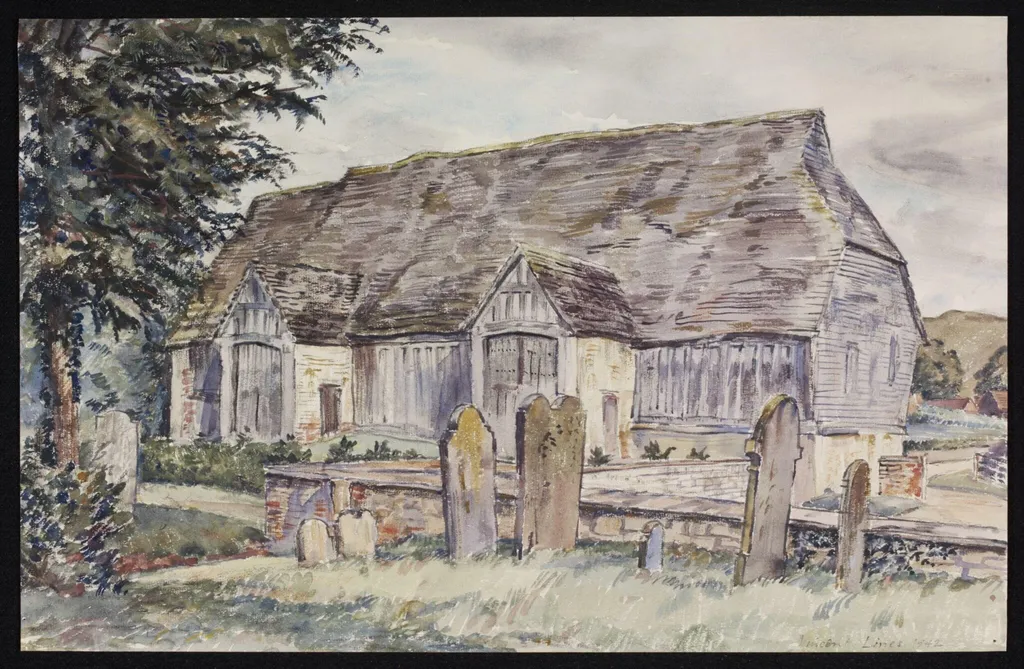
The Tithe Barn, Cherhill is a watercolor work on paper by the Regionalist artist Lines. It dates from 1942 and is held in the collection of the Victoria and Albert Museum.
About this work
The painting is done in watercolor and has soft colors like brown, gray, and green.
This painting shows a large, old barn with a sloping roof. It's made of wood and has a big door in the middle. There are some trees and tombstones in the front. The painting is done in watercolor and has soft colors like brown, gray, and green.
The barn looks old and worn out, but it still looks strong. The trees around it are green and healthy. The tombstones in the front are old and weathered. They have some writing on them, but it's hard to read.
The painting is called "The Tithe Barn, Cherhill" and it was made in 1942. It's held at the Victoria and Albert Museum. If you like this painting, you might also like the work of the artist Lines.
Overview
Created in 1942, this watercolour portrays the historic tithe barn at Cherhill, a substantial timber structure with a steeply pitched roof and a central doorway. Set against a modest landscape of trees and weathered gravestones, the composition employs muted browns, greys and greens, conveying both the building’s age and its enduring solidity.
Subject & Meaning
The image records a rural monument that once stored agricultural tithes, emphasizing the continuity of traditional English countryside life. By including the surrounding graves, the work hints at the passage of time and the layered histories embedded in the local environment.
Technique & Style
Executed in watercolour, the artist renders the barn’s timber framing and roof planes with soft washes, allowing subtle tonal variations to suggest texture and light. The limited palette and restrained brushwork create a calm, documentary tone while preserving atmospheric depth.
History & Provenance
The piece was produced under the Recording Britain scheme, a wartime project funded by the Pilgrim Trust and directed by Sir Kenneth Clark to document threatened heritage sites. It now belongs to the Victoria and Albert Museum’s collection of works from that initiative.
Context
During the Second World War, concerns about bomb damage, urban growth and the erosion of rural customs prompted the Recording Britain effort to capture at risk landscapes. This barn, like many subjects in the series, exemplifies the program’s aim to preserve visual records of a Britain perceived as disappearing.
Artist & collection

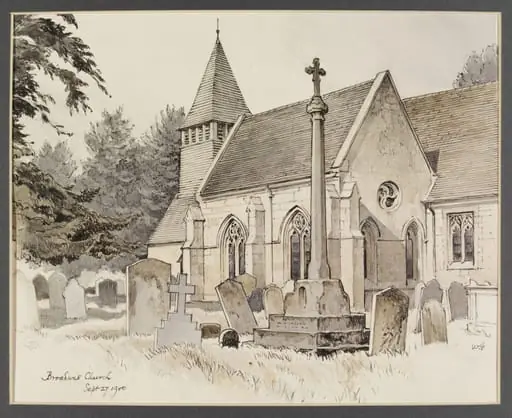 Broadwas Church
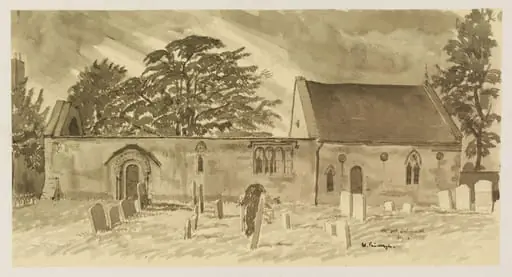 St.George's Church, Hatford
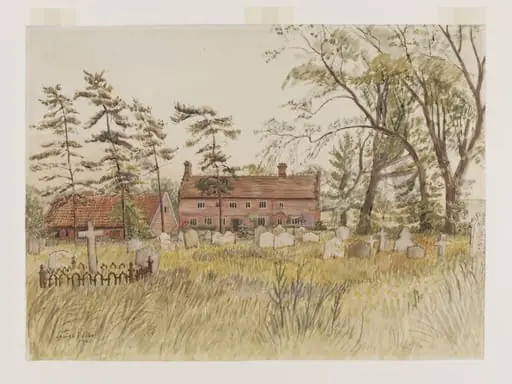 Church Farm (from the Churchyard) Sudbourne
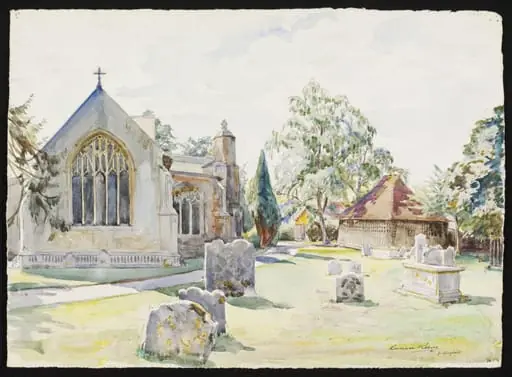 East Bergholt Church and Bell Cage
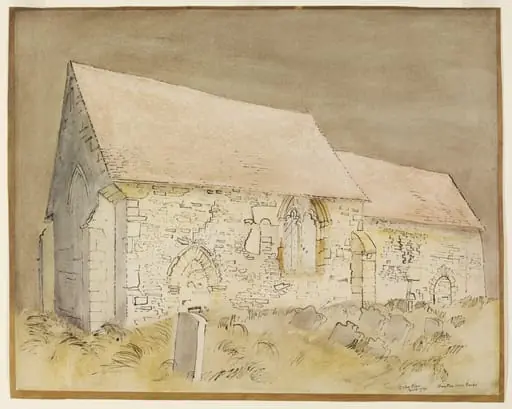 St.Peter's Church, Stanton Low
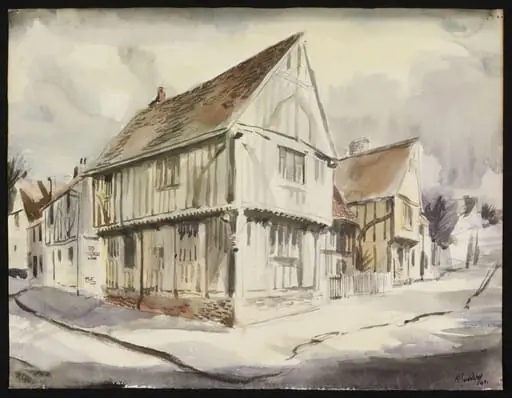 The Wool Hall, Lavenham
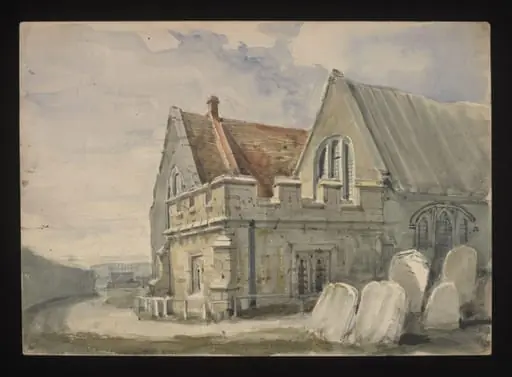 Watercolour drawing by the Grieve family, showing St Peter's Church in Kent
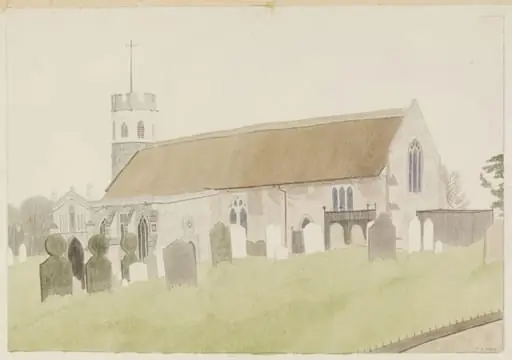 St. Peter's Church, Theberton
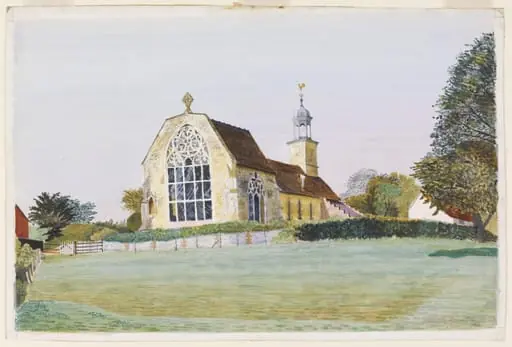 St. Mary's Church, Tilty