Artwork
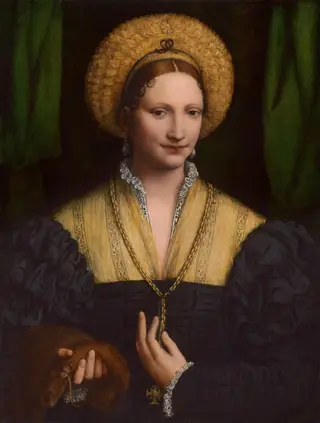
Portrait of Lucina Brembati
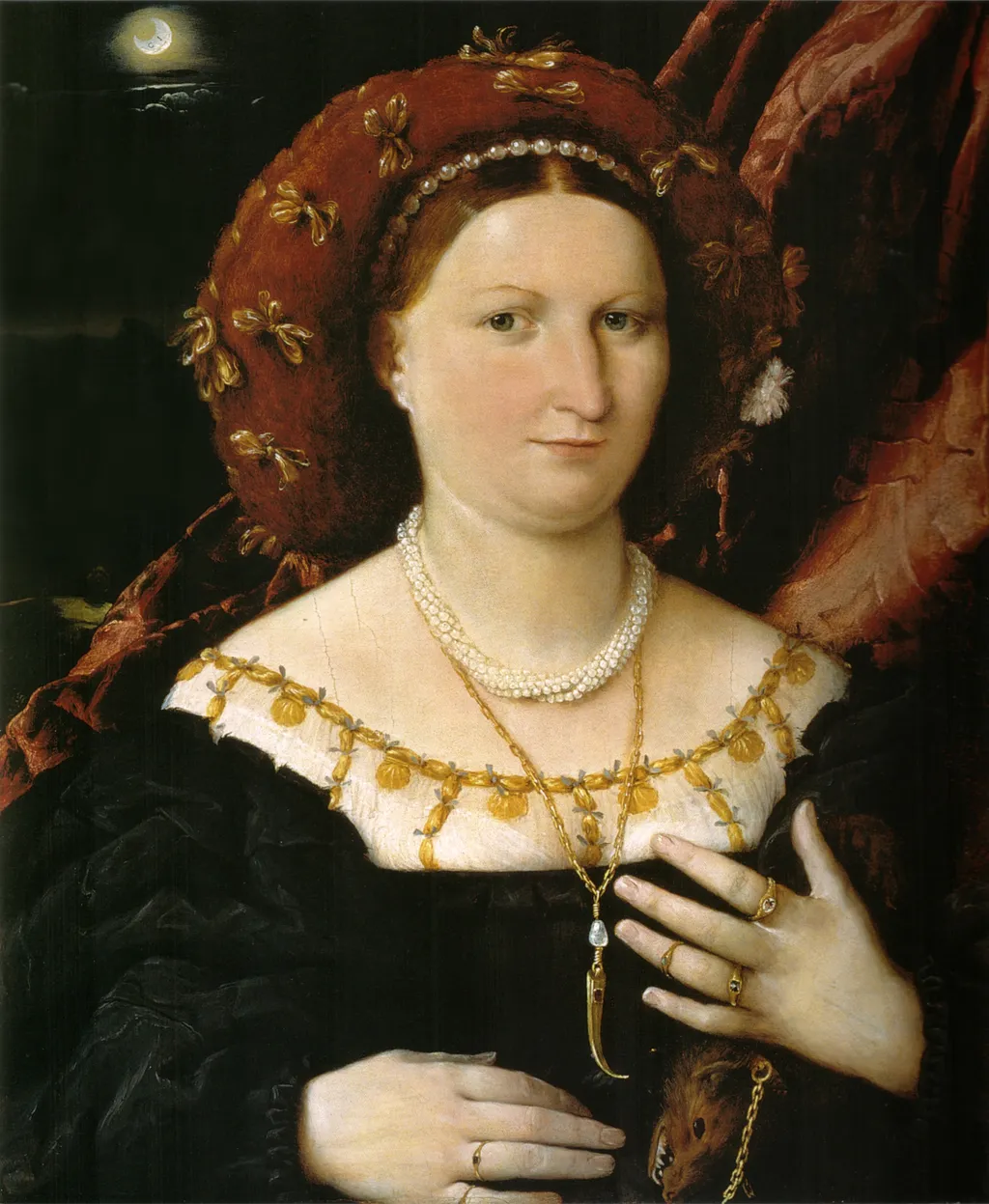
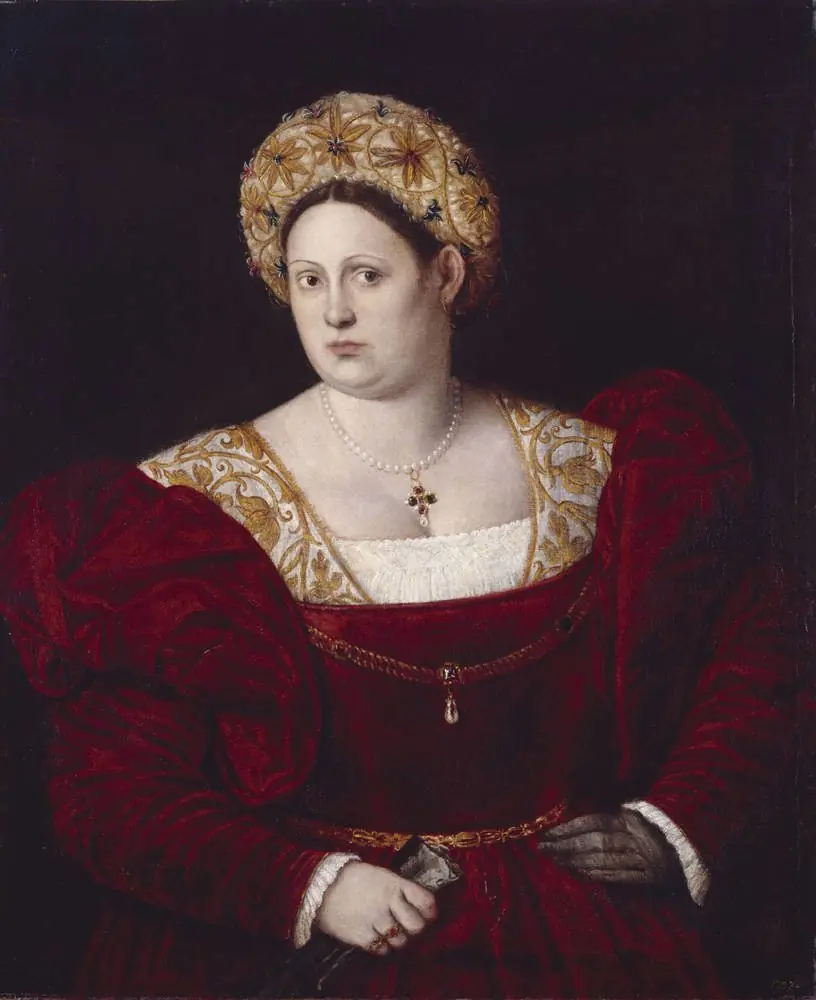
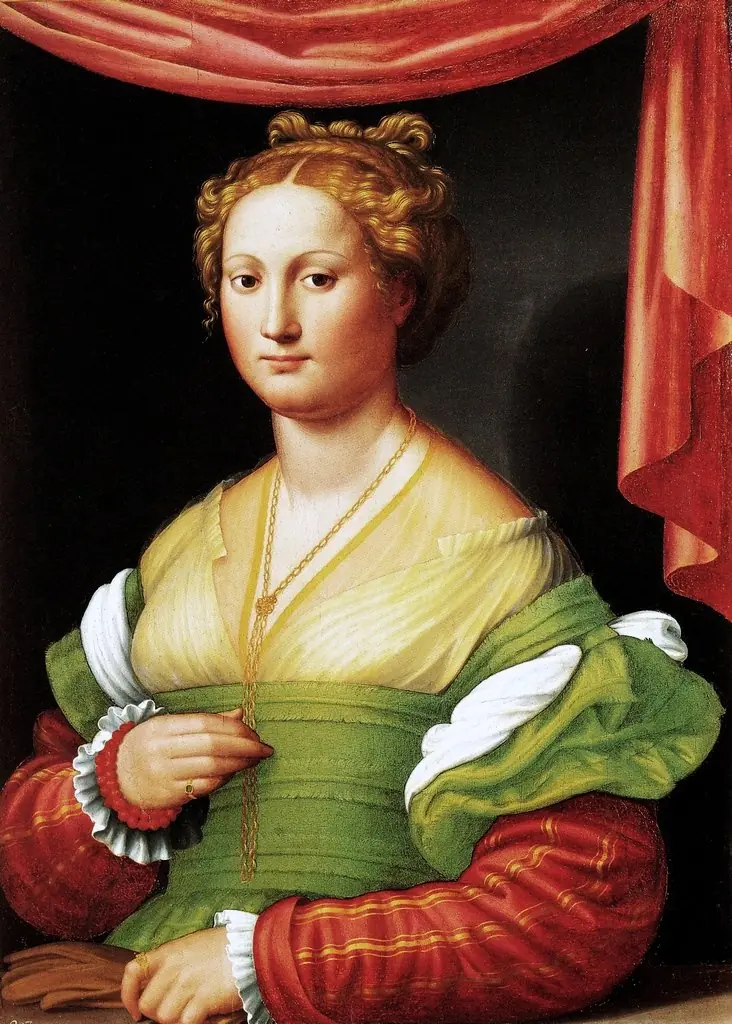
Portrait of Lucina Brembati is an oil painting by the High Renaissance artist Lorenzo Lotto. It dates from 1520 and is held in the collection of the Accademia Carrara.
About this work
Overview
It has been part of the Accademia Carrara’s collection in Bergamo since 1882, having previously belonged to a private family holding.
Painted around 1518, the Portrait of Lucina Brembati is an oil-on-panel work by the Italian artist Lorenzo Lotto. It has been part of the Accademia Carrara’s collection in Bergamo since 1882, having previously belonged to a private family holding. The painting’s identity was confirmed decades after its acquisition through the decoding of symbolic elements embedded in the composition, revealing the sitter’s name and lineage.
Subject & Meaning
The sitter is identified as Lucina Brembati, a noblewoman of Bergamo, through a visual rebus: the word 'CI' inscribed on a crescent moon alludes to 'Lucina' in Italian, while the Brembati family crest appears on a ring she wears. Her poised posture and refined adornments reflect her social standing. The inclusion of personal emblems transforms the portrait into a private declaration of identity, blending heraldry with intimate portraiture.
Technique & Style
Lotto employed oil paint to achieve subtle gradations of light and texture, particularly in the fabric of her dark gown and the sheen of her jewelry. The white collar and red headpiece contrast sharply against the muted tones, drawing attention to her face and hands. Her right hand rests gently on her chest, a gesture that conveys quiet dignity rather than theatricality, characteristic of Lotto’s psychological depth over idealized form.
History & Provenance
The painting remained in private hands until 1882, when it entered the Accademia Carrara’s collection. Its attribution to Lotto and the identification of the sitter were established only after scholarly analysis of the symbolic details. Prior to this, it was likely known locally but not formally documented. Its preservation in Bergamo reflects the region’s longstanding interest in its Renaissance artistic heritage.
Context
Created during Lotto’s time in northern Italy, the portrait reflects the regional preference for individualized representation over the grandeur of Roman or Florentine styles. Unlike courtly portraits of the era, this work emphasizes personal identity through embedded clues rather than overt displays of power. It aligns with a broader trend among northern Italian artists to merge portraiture with intellectual and familial symbolism.
Legacy
The portrait is now recognized as a key example of Lotto’s ability to infuse personal narrative into formal portraiture. Its decoding demonstrated the importance of reading symbolic language in Renaissance art, influencing later scholarship on identity and representation. It remains a touchstone for understanding how private status and public image were negotiated in early 16th-century Italian society.
Own this work as a print
Artist & collection
Artist
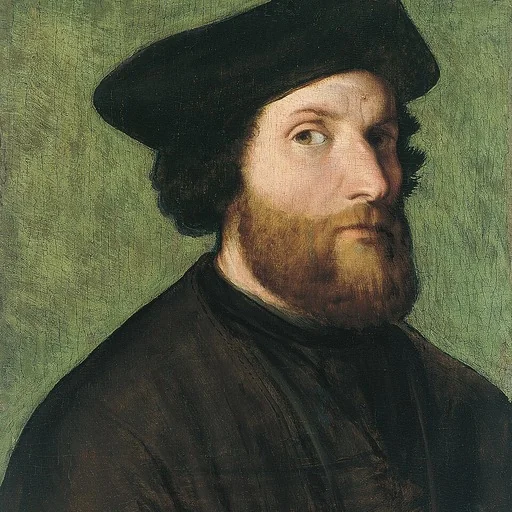
Lorenzo Lotto (c. 1480 – 1556/57) was an Italian Renaissance painter, draughtsman, and illustrator, traditionally placed in the Venetian school, though much of his career was spent in other north Italian cities. He…