Artwork
Allegory of Chastity
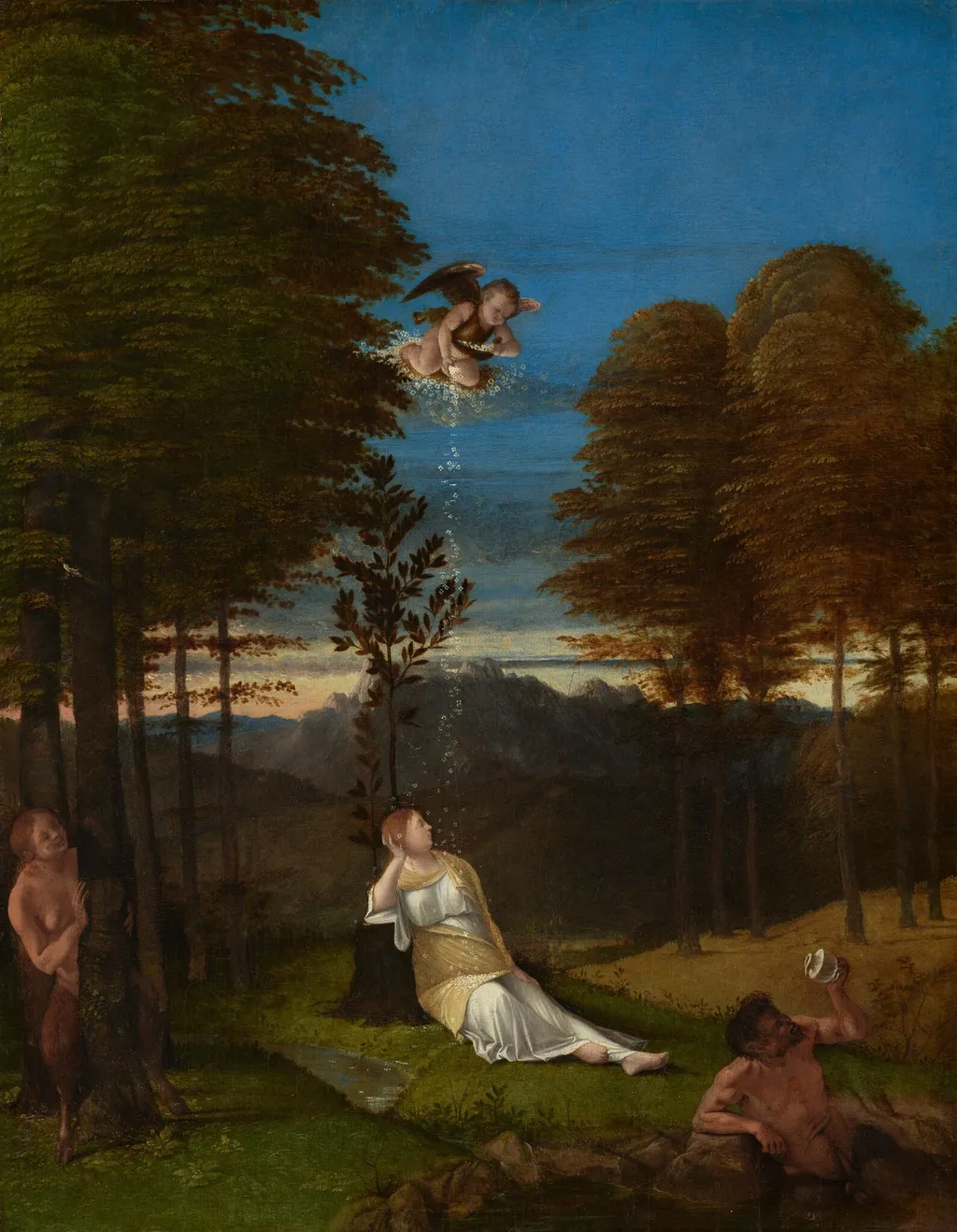
Allegory of Chastity is an oil painting by the Early Renaissance artist Lorenzo Lotto. It dates from 1505 and is held in the collection of the National Gallery of Art.
About this work
Subject & Meaning
She exists in a state of 'quies,' a suspended, purifying vision distinct from unconscious sleep, while a putto showers her with white flowers.
The painting depicts a young woman in white and gold resting against a laurel tree, an allusion to the myth of Daphne. She exists in a state of 'quies,' a suspended, purifying vision distinct from unconscious sleep, while a putto showers her with white flowers. This central figure ignores two satyrs flanking the scene: a female hiding behind a tree and a male drinking wine near a pool, who symbolize the temptations of carnal love and intoxication respectively.
Chastity here represents more than sexual restraint; it signifies the dedication of one's gifts, beauty, intelligence, and sensitivity, to the service of others rather than self-gratification. The work, also known as The Maiden's Dream, is thought to have served as an allegorical cover for a portrait.
Technique & Style
Executed in oil on a wood panel measuring 42.9 × 33.7 cm, the small-scale work reflects the painterly skills of the young Lorenzo Lotto, trained in the Venetian milieu of the Vivarini.
Stylistically, the painting displays the inventive and ironic compositional freedom typical of the young Lotto. The wooded background, animated by sunset glints, recalls both Giorgione's atmospheric evocations and Dürer's watercolours. At the centre, a young woman in white and gold is bathed in a mysterious light and leans against a laurel, evoking the myth of Daphne and the contemplative state of quies.
A putto above pours a cascade of white blossoms over her, while two satyrs, one hidden behind a tree, the other reclining by a pool, embody the lures of lust and drunkenness that she ignores.
History & Provenance
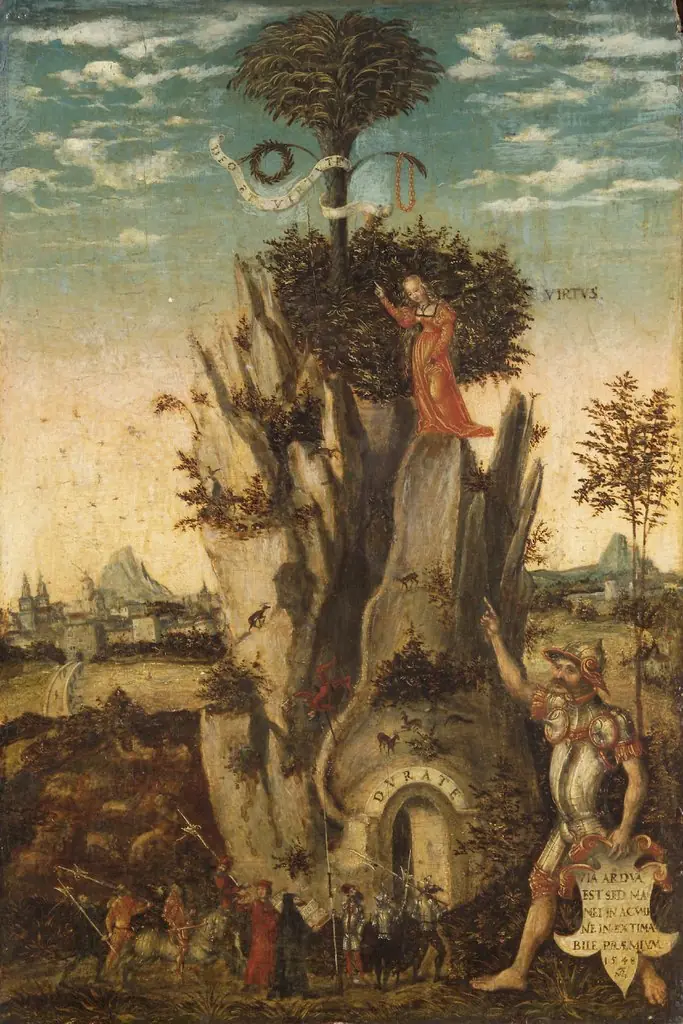
The Allegory of Chastity is dated circa 1505 on the basis of stylistic and thematic parallels with Lorenzo Lotto's Allegory of Virtue and Vice, the sliding cover for his Portrait of Bernardo de' Rossi, suggesting it was likewise intended as a cover for a lost female portrait.
The painting's early provenance traces to the Castelbarco collection in Milan. In 1887 it was sold, then as a work by Hans Rottenhammer, to Sir William Martin Conway, who installed it at Allington Castle, Kent. Count Alessandro Contini-Bonacossi later acquired it and sold it to the Samuel H. Kress Foundation on 4 October 1934; the foundation gifted the work to the National Gallery of Art, Washington, in 1939, where it remains in the Kress Collection.
Various texts have alternatively titled the piece The Dream of the Young Girl.
Context
The Allegory of Chastity (c.1505) exemplifies Lorenzo Lotto's North Italian allegorical language and his connection to the circle of Bishop Bernardo de' Rossi, the patron of his closely related Allegory of Virtue and Vice. Its provenance, from the Castelbarco collection, through Sir William Martin Conway and Alessandro Contini-Bonacossi, to the Kress Foundation and the National Gallery of Art, reflects nineteenth-century European collecting patterns. Critical commentary has noted the painting's synthesis of Dürer's landscape tonality and Giorgione's atmospheric effects, positioning it as a bridge between Venetian colourism and emerging Renaissance allegory.
Overview
Lorenzo Lotto's Allegory of Chastity, painted around 1505, is an oil on panel work from the Italian Renaissance. This painting exemplifies the allegorical genre, using carefully chosen symbols to communicate its central theme. Lotto, active during the High Renaissance and early Mannerist periods, was known for his religious subjects, portraits, and altarpieces, often featuring expressive figures that bridged the stylistic developments of his era.

Own this work as a print
Artist & collection
Artist
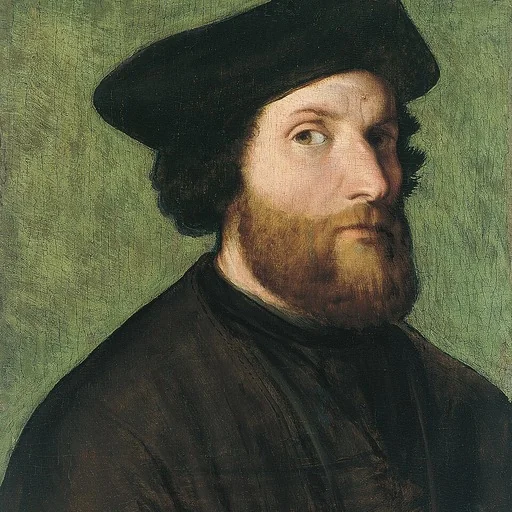
Lorenzo Lotto (c. 1480 – 1556/57) was an Italian Renaissance painter, draughtsman, and illustrator, traditionally placed in the Venetian school, though much of his career was spent in other north Italian cities. He…