Artwork
Husband and Wife
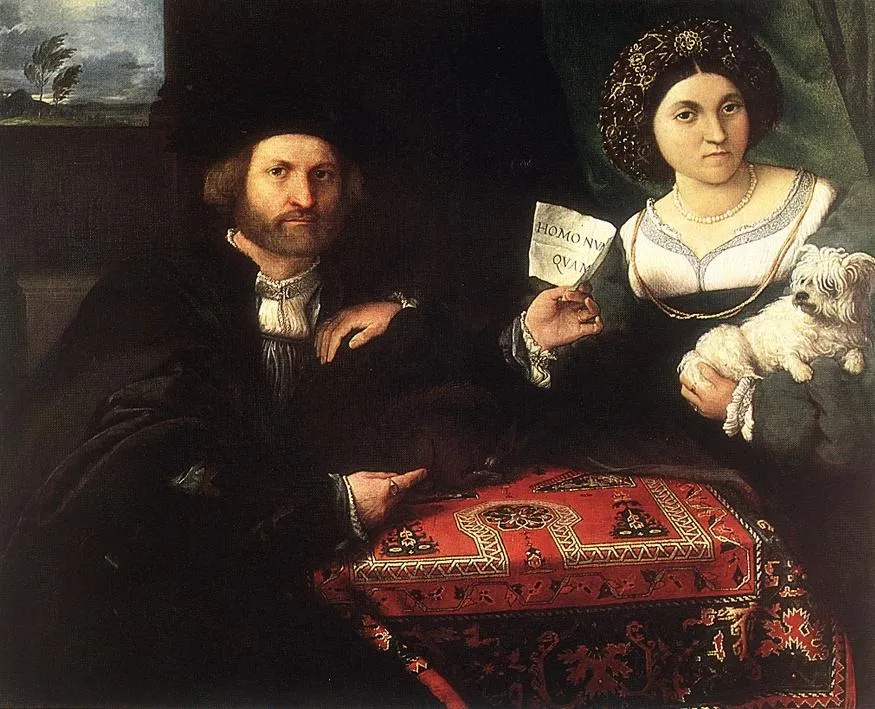
Husband and Wife is an oil painting by the High Renaissance artist Lorenzo Lotto. It dates from 1524 and is held in the collection of the Hermitage Museum.
About this work
Subject & Meaning
A later interpretation proposes the man as a widower enduring unassuageable grief, while the squirrel sleeps undisturbed despite the storm outside.
The double portrait depicts a married couple seated indoors, arranged in a horizontal format with an intimate gesture: the woman’s hand rests on her husband’s shoulder, underscoring conjugal closeness. The woman holds a lapdog, a conventional emblem of marital fidelity in Renaissance portraiture, while her elaborate capigliara, woven with gold cords and floral motifs, signals elite status and contemporary Bergamasque fashion, paralleling accessories seen in Lotto’s Madonna Casotti by Previtali.
The husband points to a sleeping squirrel and holds a scroll inscribed “Homo Nunquam,” prompting varied readings. One hypothesis contrasts human industry with the squirrel’s inactivity, possibly alluding to sloth or lust; another cites a medieval legend where squirrels expel females in scarcity, a fate the husband cannot impose. A later interpretation proposes the man as a widower enduring unassuageable grief, while the squirrel sleeps undisturbed despite the storm outside.
Recent scholarship favors identifying the sitters as Apollonia Cassotti and Antonio Agliardi, married in 1511, with the woman’s headdress bearing the Cassotti device.
Technique & Style
Executed circa 1524, this work is an oil painting on canvas measuring 96 by 116 centimeters. The composition presents a half-length double portrait arranged in a predominantly horizontal format against a dark background. A green curtain hangs behind the female figure, while a window behind the male reveals a windswept landscape.
The artist employs detailed realism to render textures, from the exotic Anatolian carpet covering the table to the woman's elaborately embroidered ring-shaped headdress adorned with golden cords and flowers.
Symbolic elements are integrated into the domestic setting, including a small dog held by the wife representing marital fidelity and a sleeping squirrel indicated by the husband. The male figure also holds a scroll inscribed with the phrase "Homo Nunquam." The couple is linked through an intimate gesture, with the woman's hand resting on her husband's shoulder, while their high social status is conveyed through fashionable clothing and jewelry.
History & Provenance
The painting is dated to 1524 and is attributed to Lorenzo Lotto. It was first recorded in Antwerp, where agents acting for the Russian imperial collections purchased it for Catherine the Great’s holdings in Saint Petersburg. The sitters have been proposed as Antonio Agliardi, a Bergamasque notable, and Apollonia Cassotti, whom records link in marriage by 1511; recent scholarship identifies Apollonia as the sitter based on costume correspondences with Lotto’s Madonna Casotti by Previtali and the presence of the Cassotti emblem in her capigliara.
The work likely originated in Bergamo, where Lotto worked for local patrons, and a closely related version of identical detail survives in a private Bergamasque collection. It entered the Hermitage Museum with the imperial acquisitions and was exhibited in Milan in 1990 and later in Washington and Bergamo in 1997.
Husband and Wife by Lorenzo Lotto is held in the Hermitage Museum in Saint Petersburg, where it is displayed in Hall 220. The painting's earliest documented location is Antwerp, where it was acquired by agents commissioned to enrich the Russian imperial collections, after which it entered the Hermitage holdings where it remains today.
The work was exhibited in Milan in 1990 as part of a show of Italian paintings on loan from the Hermitage, catalogued under the title Ritratto di Niccolò di Bonghi con la moglie. It was shown again in 1997 at an exhibition held in Washington and Bergamo, an occasion that prompted new scholarly readings of the sitters' identities.
Context
Scholarship regarding Lorenzo Lotto's double portrait has focused heavily on the identity of the sitters and the decoding of its complex iconography. While early records place the work in Antwerp before its acquisition for Russian imperial collections, art historians have proposed conflicting identifications, ranging from the Bergamasco couple Antonio Agliardi and Apollonia Casotti to the widower Giovan Maria Cassotti following the 1524 death of his wife, Laura Assonica. The latter theory, advanced during a 1997 exhibition, interprets the sleeping squirrel and the inscription "Homo Nunquam" as symbols of enduring grief contrasting with nature's resilience.
Other scholars note visual correlations between the female subject and Marsilio Cassotti, suggesting she may be his sister. The painting's enigmatic symbols, including the exotic carpet and specific jewelry, remain subjects of debate, with no single interpretation yet deemed definitive.
Legacy
Lorenzo Lotto's double portrait has been the subject of sustained scholarly attention, particularly regarding the identity of its sitters, and has shaped comparative studies of Bergamasca portraiture. Italian scholarship has linked the wife's elaborate embroidered capigliara to similar headdresses in Lotto's Madonna Casotti and the Portrait of Marsilio Cassotti and his wife Faustina, supporting identifications with members of the Agliardi and Cassotti families. The painting was exhibited in Milan in 1990 alongside other Italian works from the Hermitage, where it was catalogued as Portrait of Niccolò di Bonghi with his wife.
A 1997 exhibition in Washington and Bergamo prompted a new reading of the husband as a widower, and the work continues to be cited in monographs on Lotto by Rossi, Pirovano, D'Adda, Milesi, and Cortesi Bosco.
A near-identical, well-preserved contemporary version from a private Bergamo collection is associated with the original commission, suggesting the composition served as a model replicated for heirs.
Overview
Lorenzo Lotto's Husband and Wife, painted in oil on panel in 1524, is a double portrait from the High Renaissance and early Mannerist periods. The artwork captures a married couple, depicted frontally and accompanied by a small dog. This piece exemplifies Lotto's significant contribution to portraiture, a genre he pursued alongside his religious commissions. It is currently housed in the State Hermitage Museum.
Artist & collection
Artist
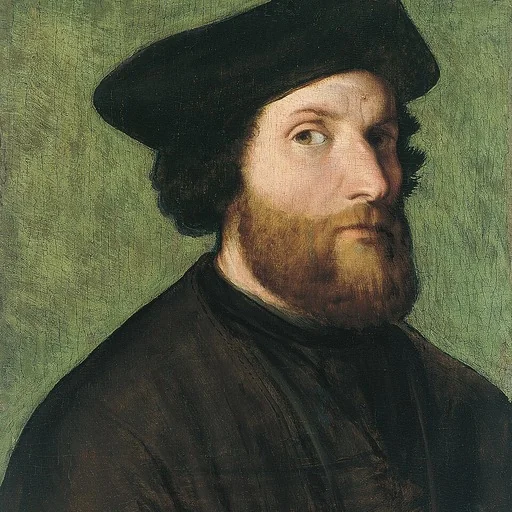
Lorenzo Lotto (c. 1480 – 1556/57) was an Italian Renaissance painter, draughtsman, and illustrator, traditionally placed in the Venetian school, though much of his career was spent in other north Italian cities. He…


- Possibly a portrait of Pieter Coecke van Aelst and his wife Mayken Verhulst and their children
 Pieter Coecke van Aelst, his Wife Mayken Verhulst and Their Children
 The Fortune Teller
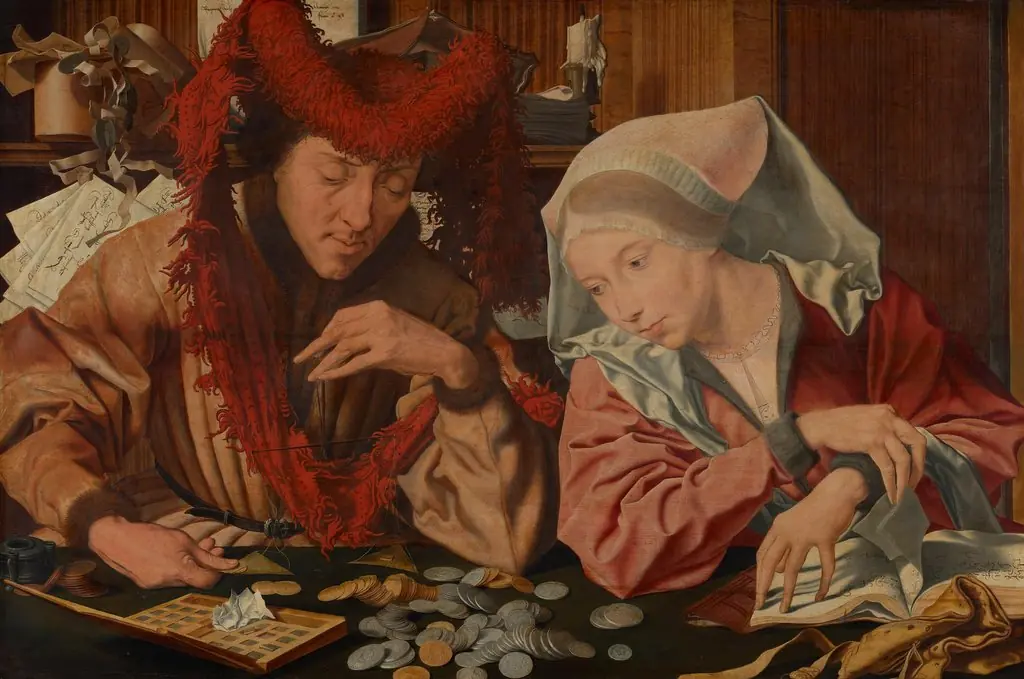 The Tax Collector and His Wife
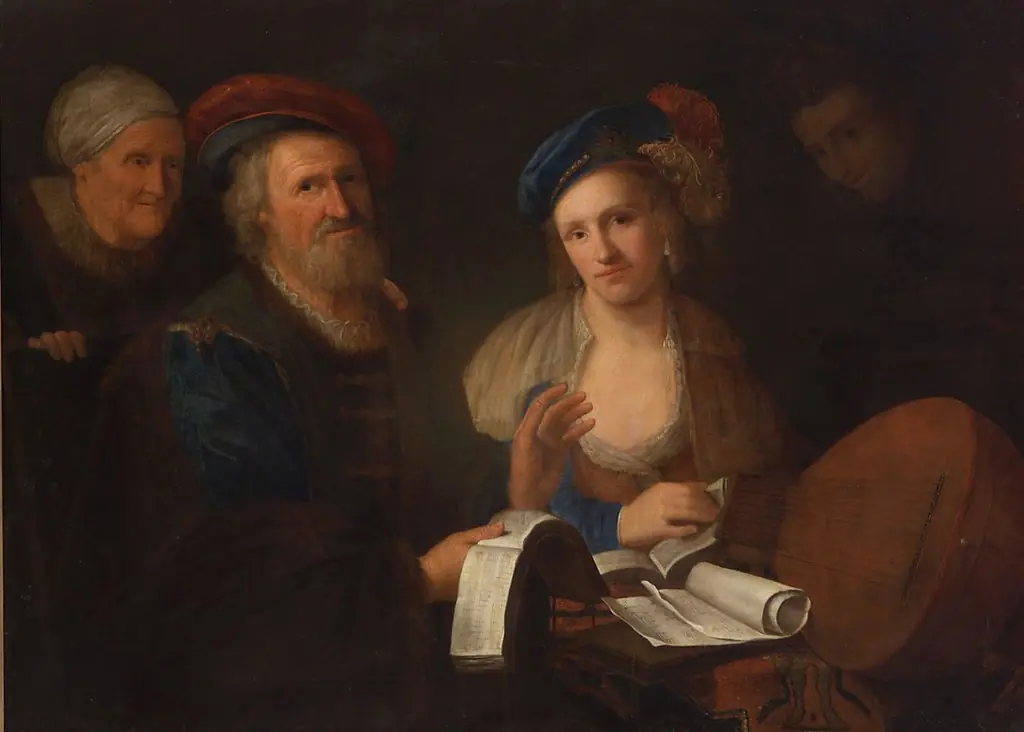 Musizierende Gesellschaft
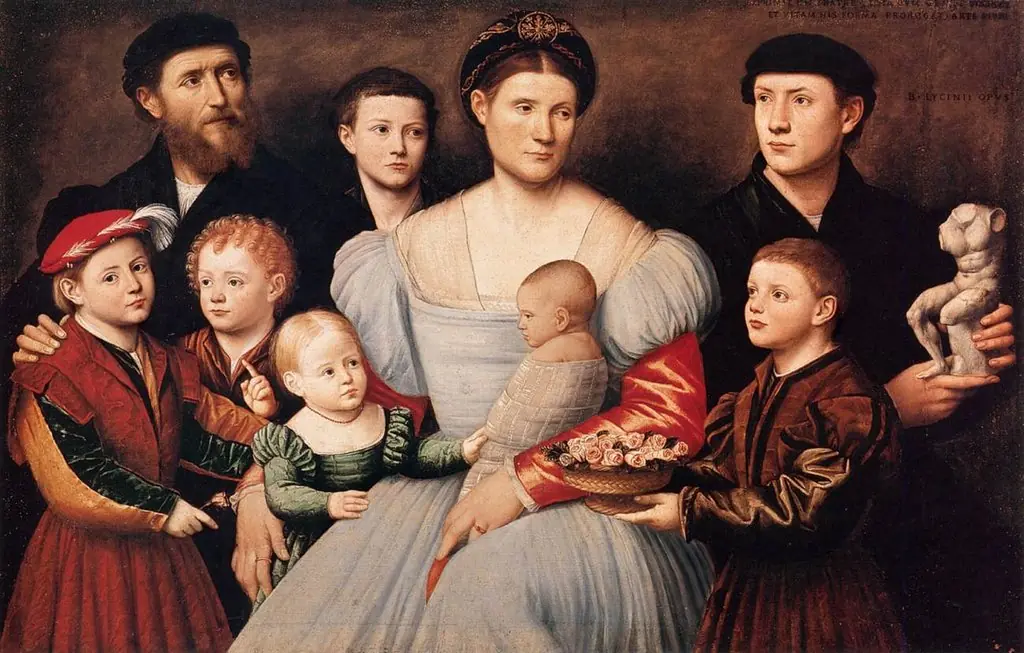 Portrait of Arrigo Licinio and His Family
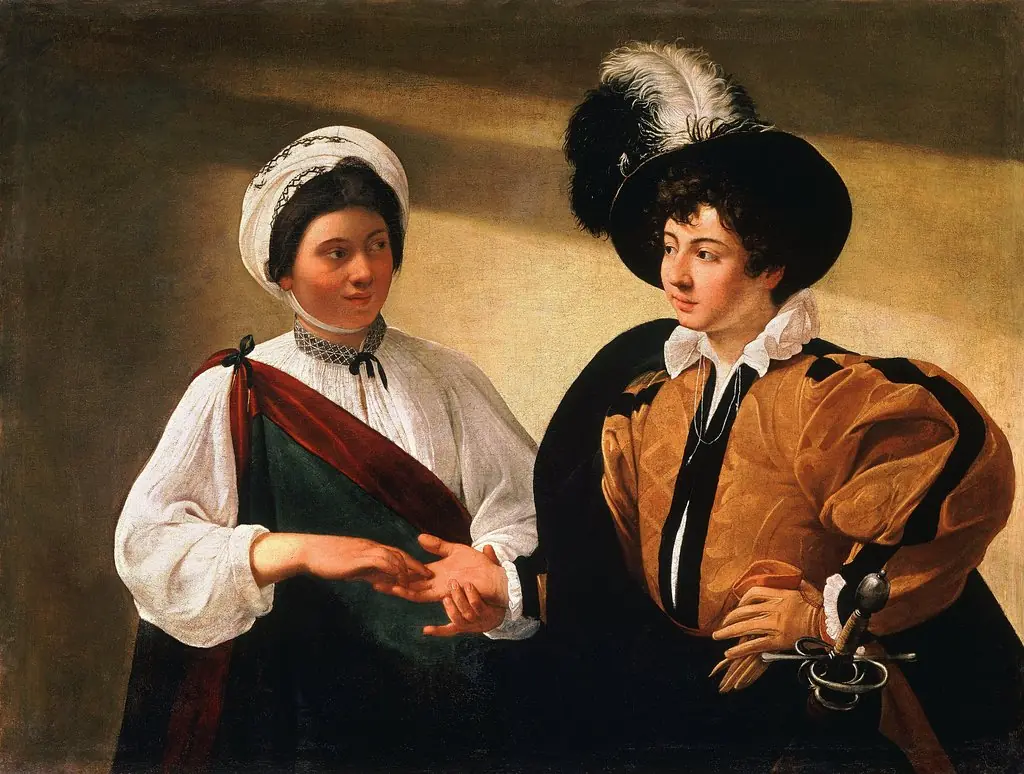 The Fortune Teller
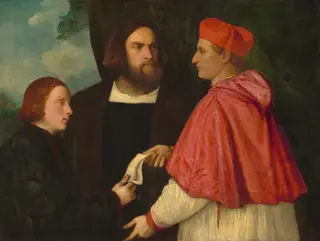 Giacomo and Cardinal Marco, investing Andrea, Abbot of San Zeno, with his Benefice
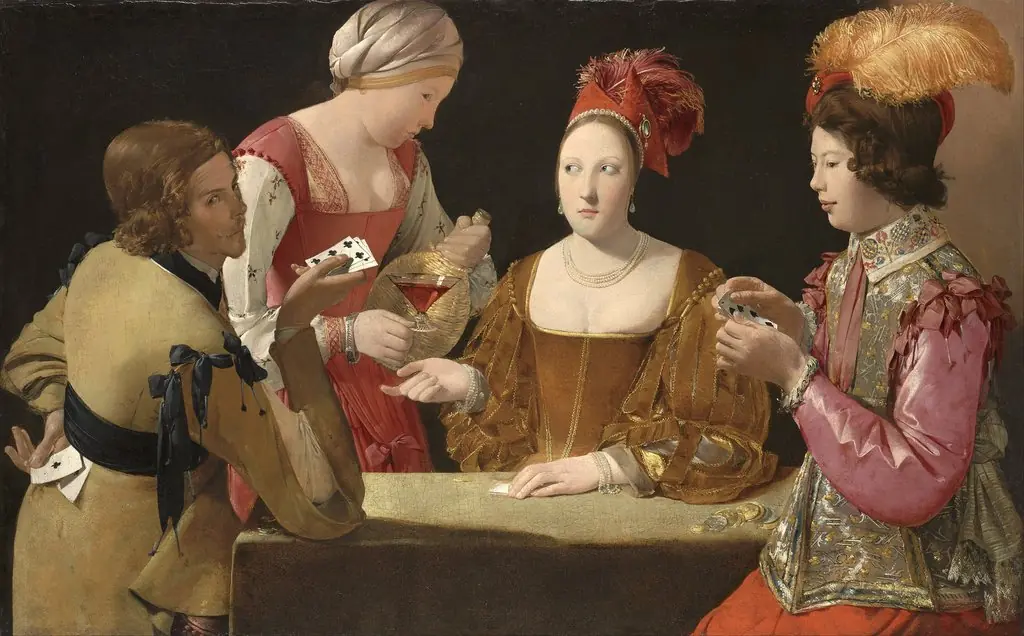 The Cheat with the Ace of Clubs
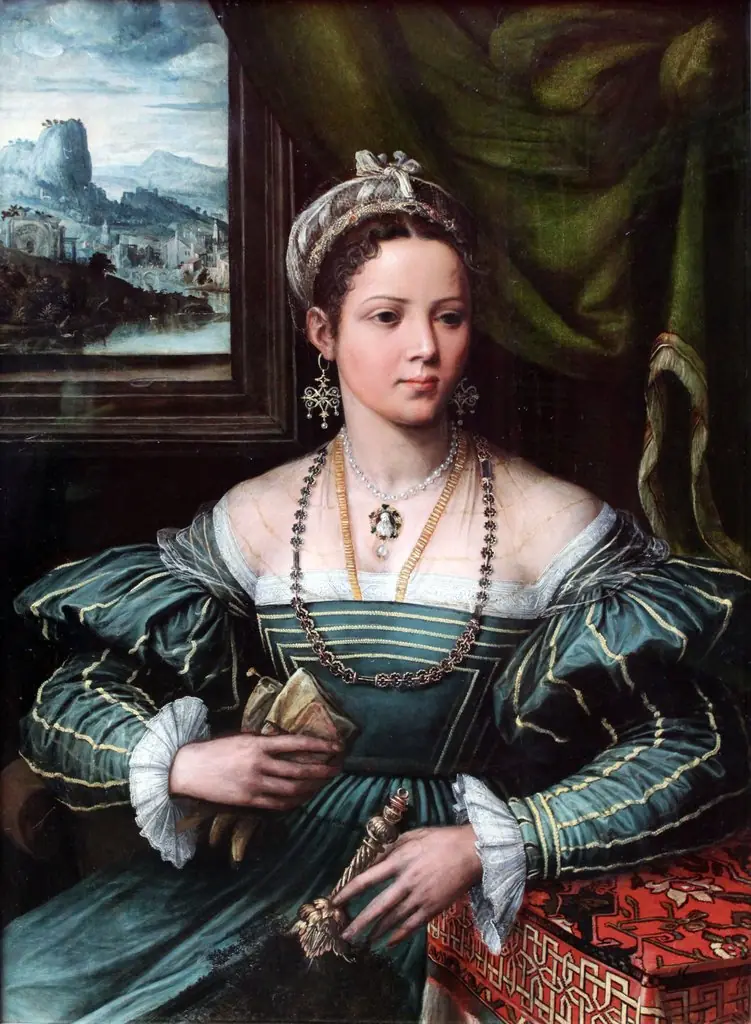 Portrait of a Lady
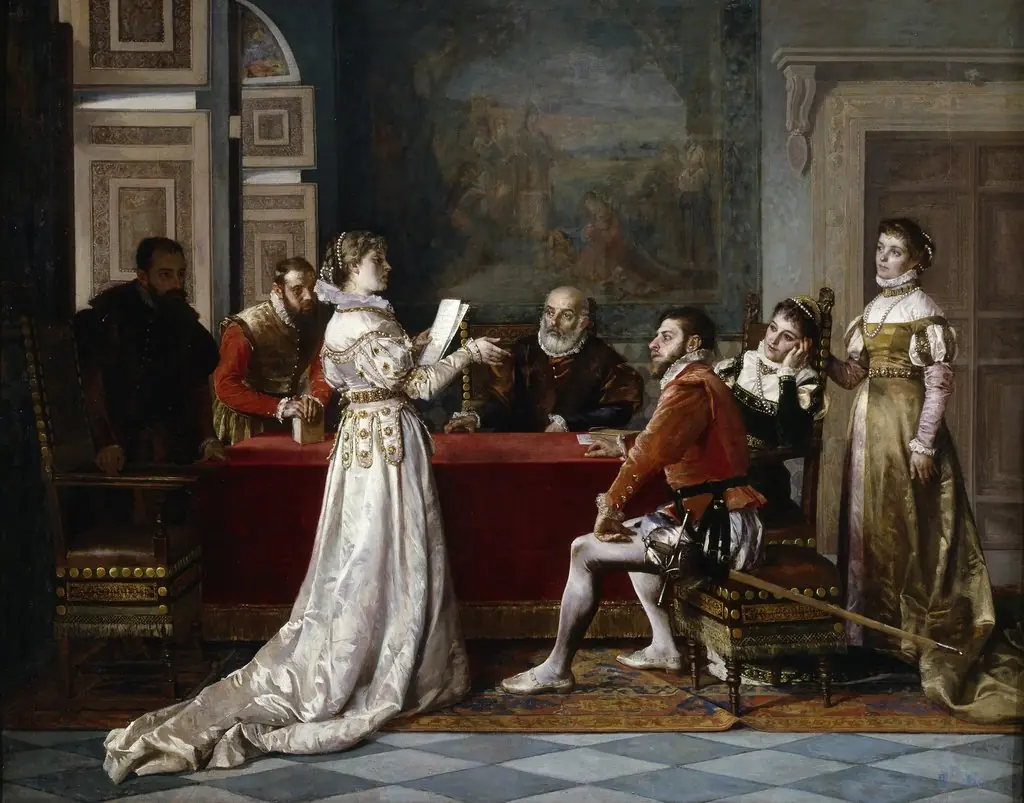 La poetisa
 Wedding of Maria de Medici and Henry IV of France