Artwork
Portrait of Elizabeth of Russia
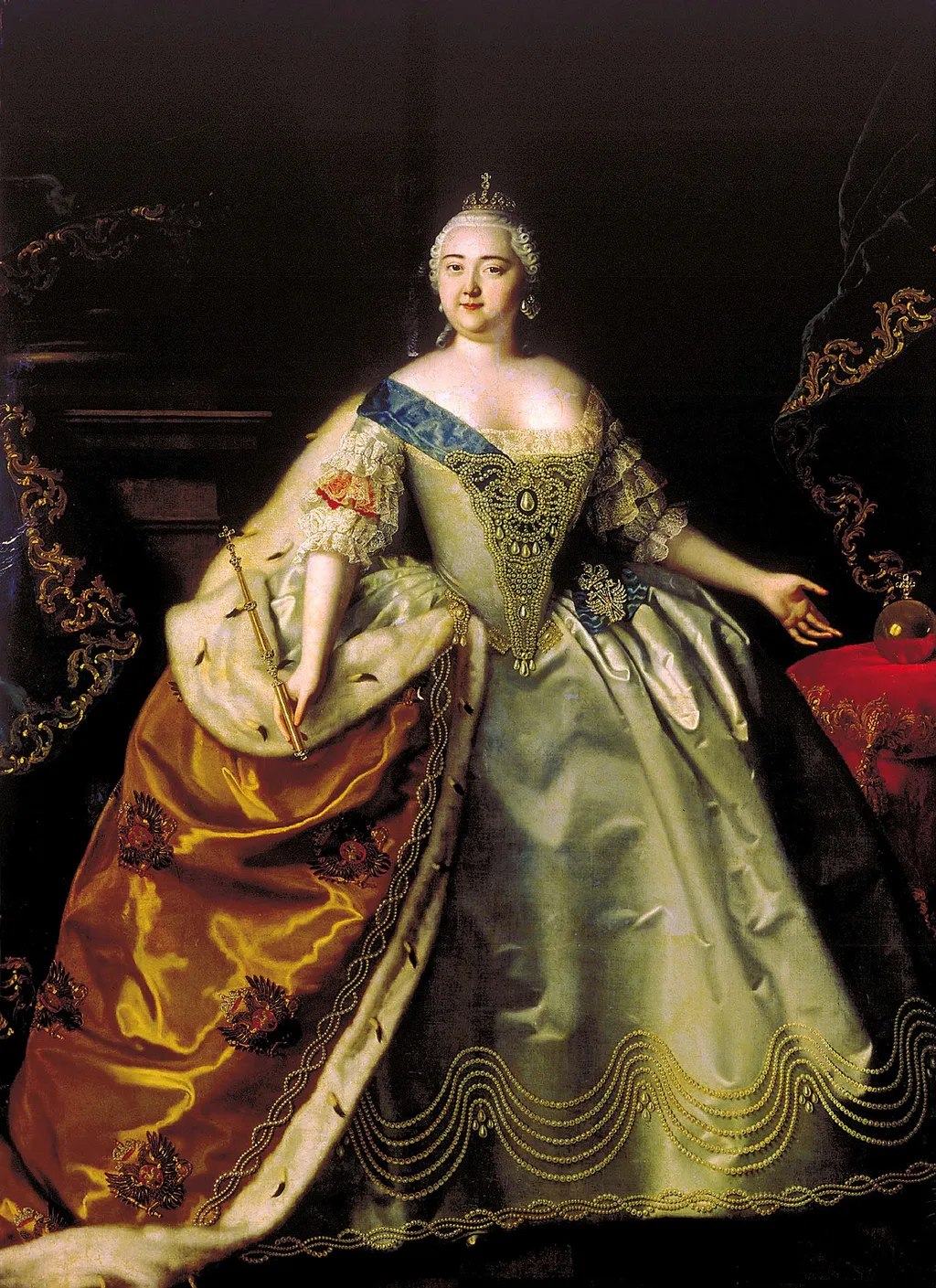
Portrait of Elizabeth of Russia is an oil painting by the Rococo painting artist Louis Caravaque. It dates from 1750 and is held in the collection of the Tretyakov Gallery.
About this work
Subject & Meaning
The work depicts Elizabeth I of Russia as the central subject, portrayed in full court regalia that signifies her imperial authority.
The work depicts Elizabeth I of Russia as the central subject, portrayed in full court regalia that signifies her imperial authority. The iconography includes specific royal attributes: a crown, an orb, and a sceptre, all held or worn to denote sovereign power. She is further distinguished by a royal mantle and the Order of St. Andrew, a high chivalric order.
Her attire is completed by a court dress featuring a stomacher, elements that collectively construct an image of absolute monarchy. The symbolism relies on these traditional emblems of state to represent Elizabeth not merely as an individual, but as the embodiment of the Russian throne and its legitimacy.
Technique & Style
The portrait is executed in oil paint, the standard medium for European court portraiture of the period. It depicts Elizabeth I of Russia in full regalia, including court dress, crown, orb, sceptre, royal mantle, and the Order of St. Andrew, with a stomacher visible in the composition. The formal presentation emphasizes imperial authority through traditional symbols of monarchy. The work is held in the collection of the Tretyakov Gallery.
History & Provenance
The portrait of Elizabeth of Russia by Louis Caravaque is dated to 1750, aligning with the empress’s reign (1741–1762).
The work entered the collection of the Tretyakov Gallery, where it remains located. Provenance records identify the painting as part of the Gallery’s holdings, with no intervening ownership changes documented in the cited sources.
The portrait is held in the collection of the Tretyakov Gallery in Moscow.
It is inventoried there as item 24142, where it has been recorded since at least the mid‑twentieth century.
The work has not been recorded in any major temporary exhibitions in the sources consulted.
Context
The portrait of Elizabeth I of Russia by Louis Caravaque is recognized as a significant example of 18th-century Russian court portraiture, reflecting the political symbolism and artistic conventions of the Russian aristocracy during Catherine the Great's reign. Scholarship highlights its role within Caravaque's broader oeuvre as a Russian court painter, emphasizing how the work combines Western European stylistic influences with distinctly Russian imperial iconography. The painting's presence in the Tretyakov Gallery underscores its importance in the historiography of Russian art, where it is studied both for its technical mastery in oil and its representation of power through regalia such as the Order of St. Andrew and royal mantle.
Overview
Louis Caravaque, a French portraitist active in the early eighteenth century, created an oil painting of Empress Elizabeth of Russia around 1750. Executed in the Rococo style, the work now resides in Moscow’s Tretyakov Gallery, illustrating the courtly portraiture typical of the period.
Own this work as a print
Artist & collection
Artist
Louis Caravaque (French pronunciation:; 1684–1754) was a French portrait painter. He worked and labored in areas like Russia.

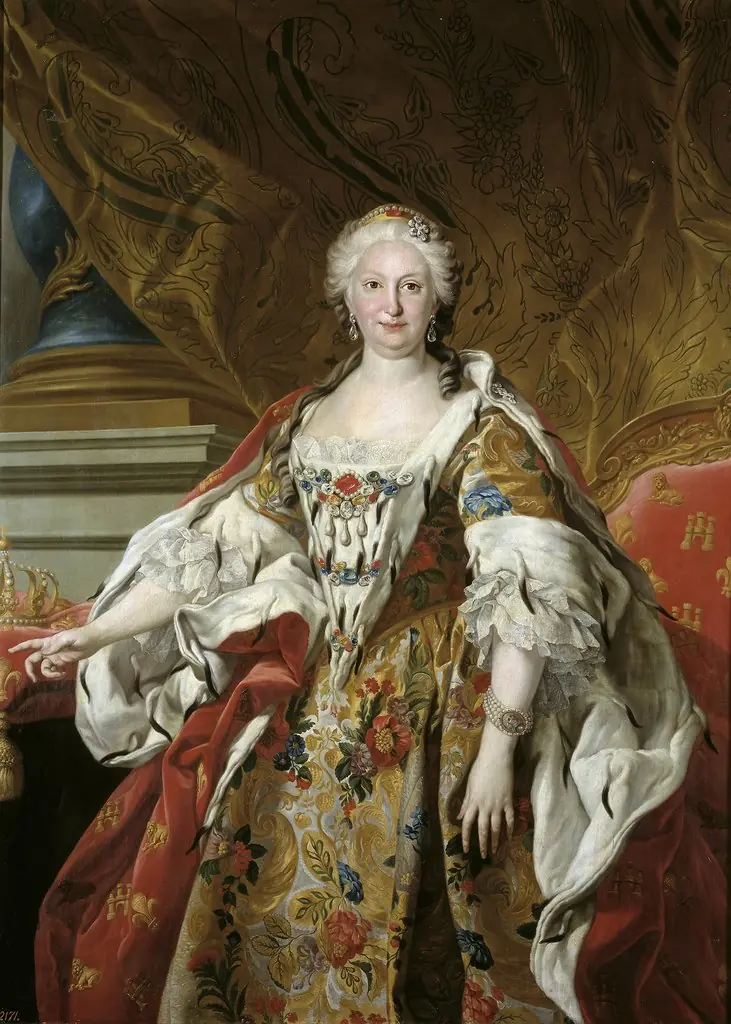 Elisabeth Farnese, Queen of Spain
 Portrait of Ulrika Eleonora the Younger, Queen of Sweden
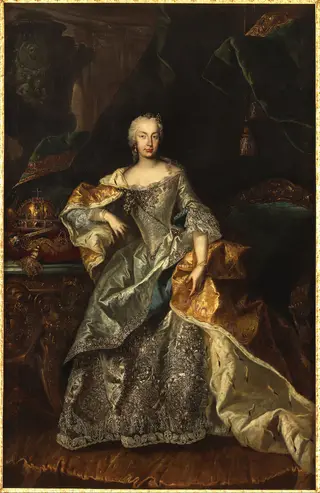 Maria Theresa as Queen of Hungary
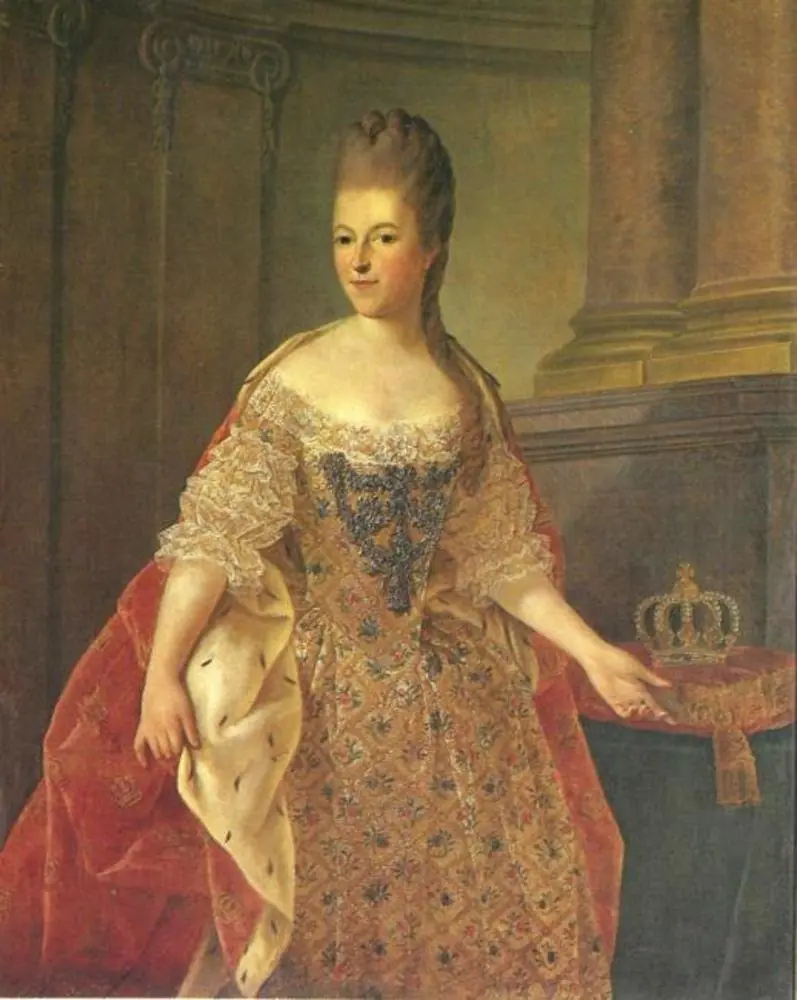 Frederika Sophia Wilhelmina (Wilhelmina; 1751-1820), prinses van Pruisen. Echtgenote van prins Willem V
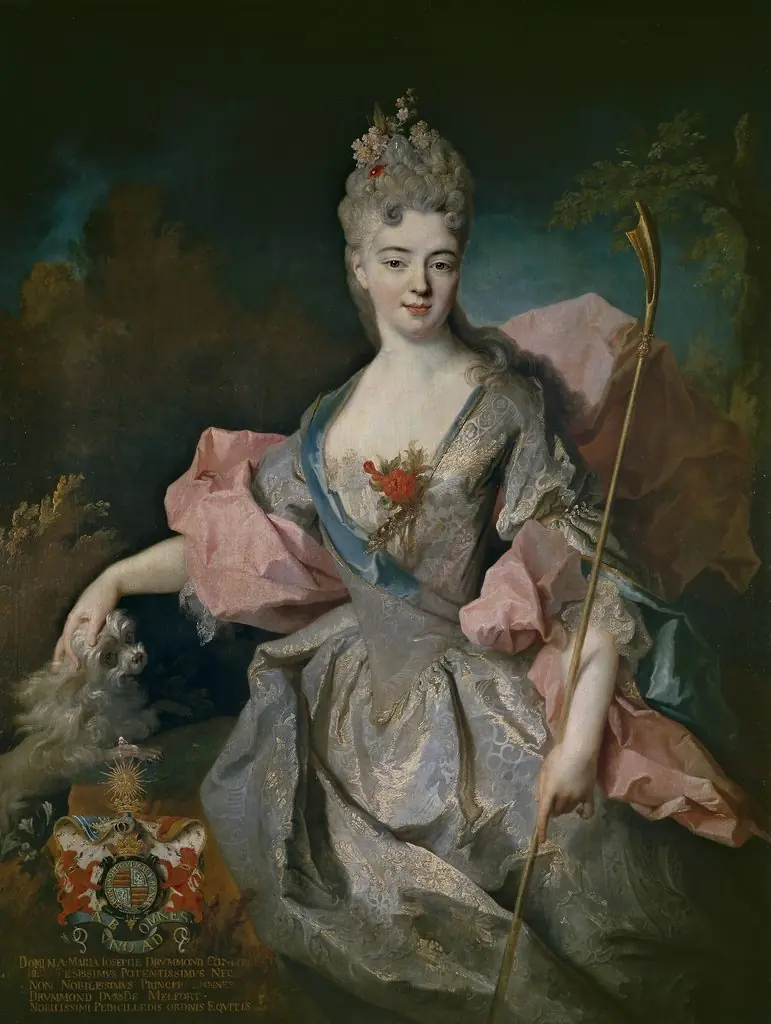 Lady Mary Josephine Drummond, Countess of Castelblanco
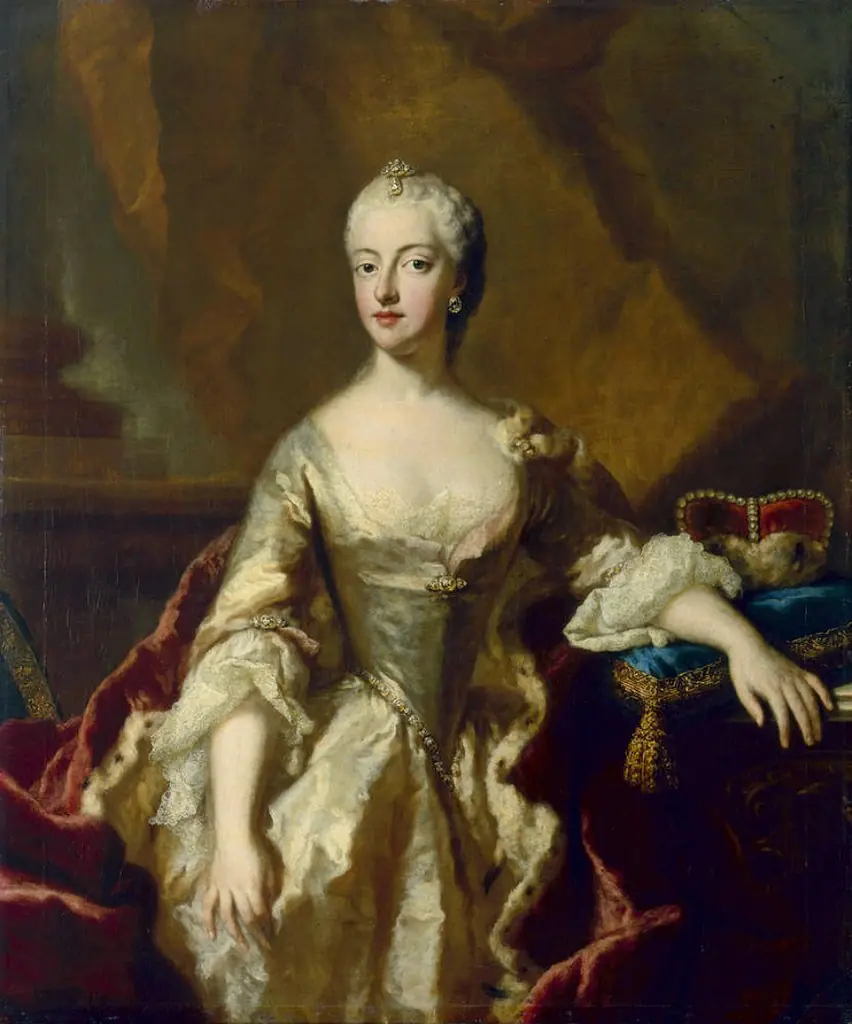 Margravine Maria Anna Josepha of Baden-Baden
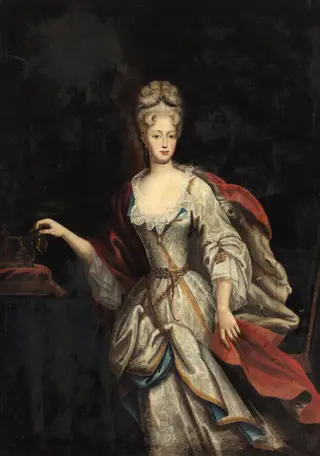 Bildnis einer Fürstin
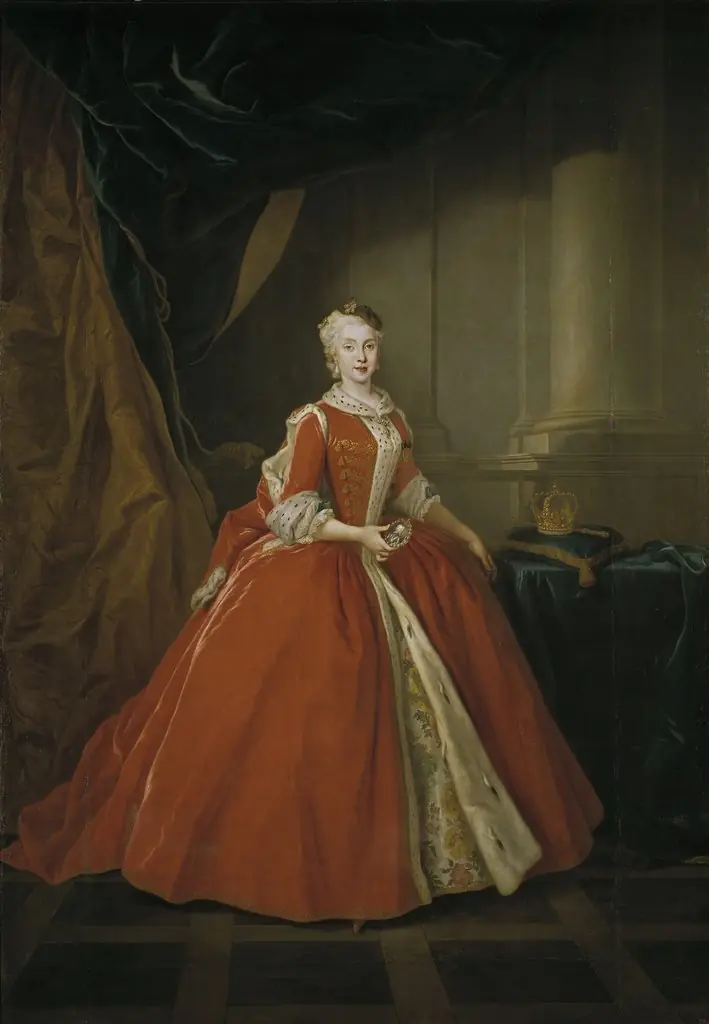 Maria Amalia de Saxony
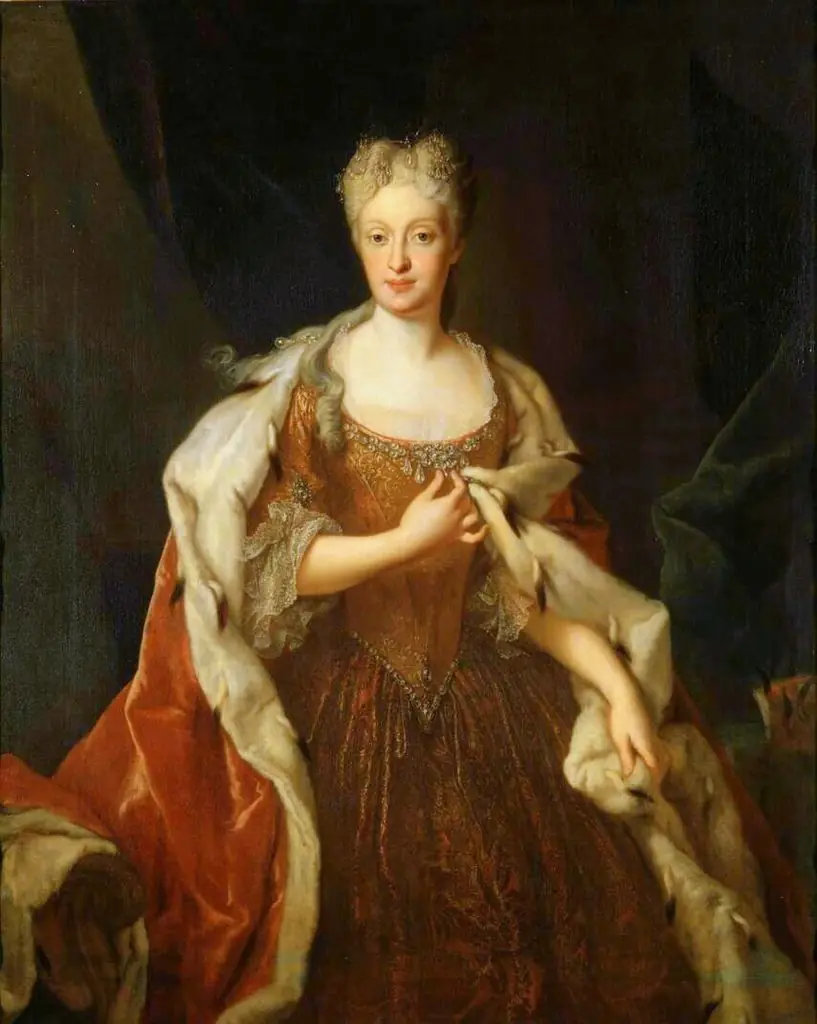 Porträt der Maria Josepha of Austria (1699-1757), Electress of Saxony and Queen of Poland
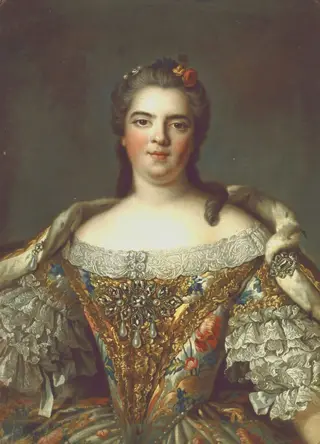 Louise-Élisabeth de France, Duchess of Parma (1727–1759)