Artwork
Carp Banners in Kyoto
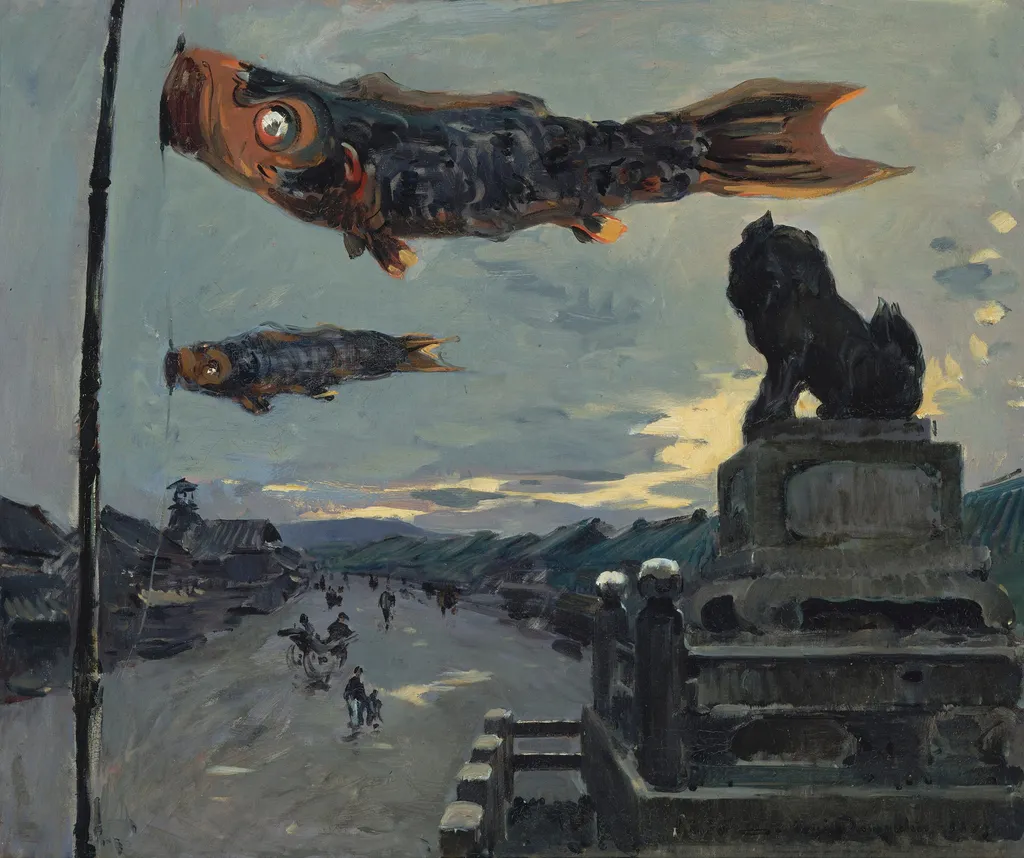
Carp Banners in Kyoto is an oil painting by the Post-Impressionist artist Louis Dumoulin. It dates from 1894 and is held in the collection of the Museum of Fine Arts Boston.
About this work
Overview
Louis Dumoulin, a French artist born in Paris in 1860, painted Carp Banners in Kyoto in 1894 using oil on canvas.
Louis Dumoulin, a French artist born in Paris in 1860, painted Carp Banners in Kyoto in 1894 using oil on canvas. The work emerged from his time in East Asia, particularly following an official trip to Japan in 1888. It captures a moment of daily life in Kyoto, blending Western painting techniques with Japanese visual culture. The painting is now part of the Museum of Fine Arts, Boston’s collection.
Subject & Meaning
The painting portrays traditional koinobori, carp-shaped windsocks, flying above a Kyoto street during a seasonal celebration. These banners symbolize strength and perseverance in Japanese culture, often displayed for Children’s Day. Below, pedestrians and equestrians move along a quiet urban thoroughfare, while a stone dog statue anchors the foreground. The scene suggests a quiet fusion of public ritual and ordinary life.
Technique & Style
Dumoulin employed loose brushwork and vivid color contrasts, reflecting post-impressionist influences. The banners are rendered with bold orange and black forms, their exaggerated eyes and open mouths adding rhythmic energy. The sky, rendered in soft blues with scattered clouds, contrasts with the grounded architecture and figures. Perspective and scale are subtly manipulated to emphasize the banners’ dominance over the urban landscape.
History & Provenance
Created after Dumoulin’s 1888 diplomatic mission to Japan, the painting reflects his firsthand observations of Japanese customs. It remained in private hands until entering the Museum of Fine Arts, Boston’s collection, where it has been preserved as part of the museum’s broader holdings of 19th-century Orientalist and cross-cultural works. Its provenance traces directly to the artist’s post-travel period in Europe.
Context
In the late 19th century, European artists increasingly turned to Asia for subject matter, drawn by exoticism and aesthetic novelty. Dumoulin’s work aligns with this trend but distinguishes itself through its restrained observation rather than romanticized fantasy. The depiction of Kyoto’s streets and seasonal banners reveals an interest in authentic cultural detail, not merely decorative spectacle.
Legacy
Though not widely known today, Dumoulin’s painting contributes to a lesser-discussed strand of Western art that engaged with Japan beyond surface exoticism. It stands as a quiet record of cultural exchange, offering insight into how a European painter interpreted and translated Japanese traditions through the lens of post-impressionist technique. The work remains a reference point in studies of cross-cultural representation in art.
Own this work as a print
Artist & collection
Artist
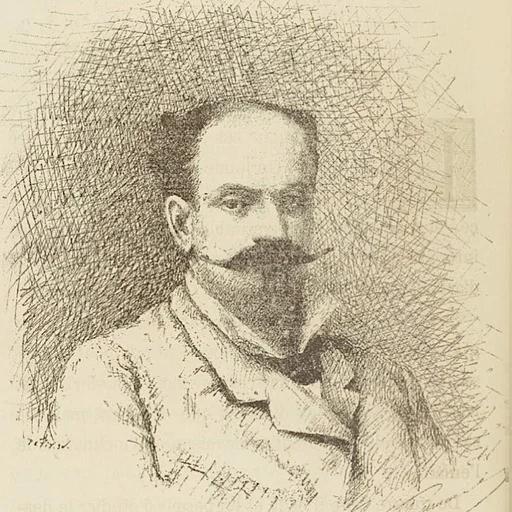
Louis-Jules Dumoulin (Paris, 1860–1924) was a French artist and painter. He traveled in East Asia and was the founder of the Société Coloniale des Artistes Français in 1908. Dumoulin made his first major trip outside…