Artwork
Egypt and Nubia, Volume II: Hermont, Ancient Hermonthis
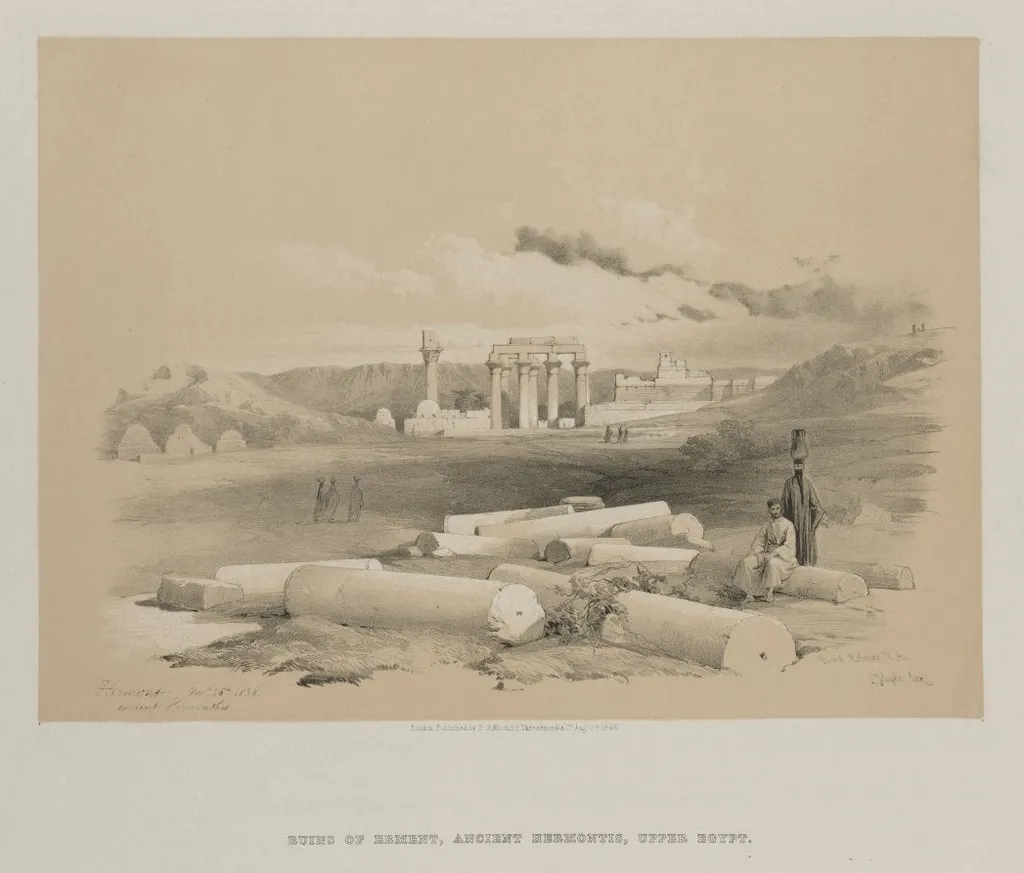
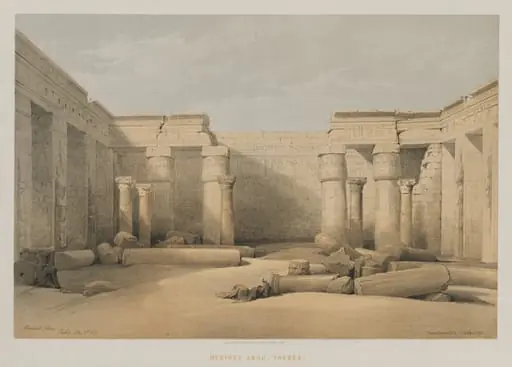
Egypt and Nubia, Volume II: Hermont, Ancient Hermonthis is a print by the Romanticist artist Louis Haghe. It dates from 1848 and is held in the collection of the Cleveland Museum of Art.
- Accession no.
- 2012.213
- Credit line
- Bequest of John Bonebrake
About this work
Overview
Created in 1848 by Louis Haghe, this lithograph is part of a two-volume series documenting archaeological sites in Egypt and Nubia.
Created in 1848 by Louis Haghe, this lithograph is part of a two-volume series documenting archaeological sites in Egypt and Nubia. Haghe, a Belgian artist based in London, collaborated with William Day to produce detailed topographical prints for a European audience fascinated by ancient civilizations. The work belongs to a broader wave of illustrated travel literature that sought to record monuments before they deteriorated further or were altered by modern intervention.
Subject & Meaning
The scene portrays the ruins of Hermonthis, an ancient temple complex dedicated to the war god Montu. The fragmented architecture and isolated figures suggest abandonment and the passage of time. The solitary human presence, walking and seated, emphasizes solitude and contemplation, inviting reflection on the impermanence of human achievement against enduring landscapes.
Technique & Style
Haghe employed fine-line lithography to capture subtle textures: the weathering of stone, the drapery of clothing, and the gradations of cloud cover. The composition balances architectural ruin with natural elements, using atmospheric perspective to recede the distant columns into a hazy horizon. The dramatic sky, rendered with soft tonal contrasts, enhances the mood without overt sentimentality.
History & Provenance
The print was produced by Day & Haghe, a leading London lithographic firm known for high-quality color prints. It was issued as part of a commercial publication aimed at collectors and scholars, reflecting the Victorian era’s institutional interest in Egyptology. The series was based on field sketches and surveys conducted during European expeditions, later refined in the studio for publication.
Context
This work emerged during a period of heightened European engagement with Egypt’s past, spurred by Napoleon’s campaign and the decipherment of the Rosetta Stone. While scientific documentation was a goal, the aesthetic treatment aligns with Romantic sensibilities, emphasizing ruin, scale, and mood over strict archaeological accuracy. Such images helped shape Western perceptions of ancient Egypt as both majestic and melancholic.
Legacy
Haghe’s lithographs contributed to the visual archive of Egypt’s monuments before widespread tourism and excavation altered their condition. Though later superseded by photography, his prints remain valued for their precision and compositional nuance. They represent a transitional moment in archaeological illustration, bridging artistic interpretation and emerging empirical methods.
Artist & collection

Artist
Louis Haghe (17 March 1806 – 9 March 1885) was a lithographer and watercolourist from the Netherlands and then the United Kingdom.

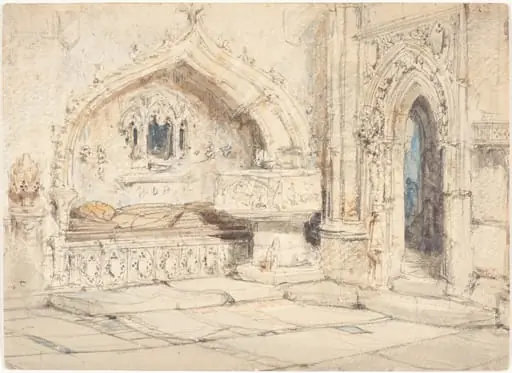 Interior of a Church with a Wall Tomb and Medieval Font
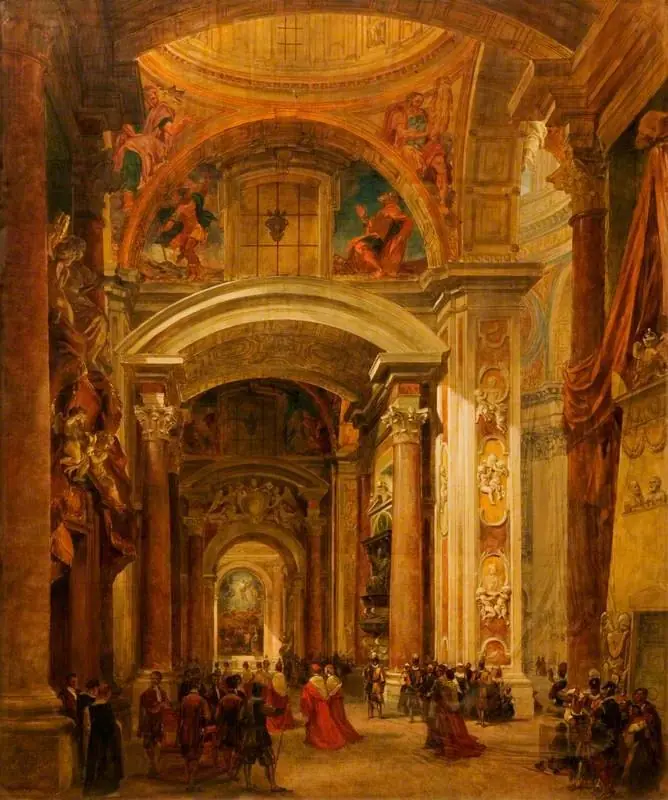 Interior of St Peter's, Rome
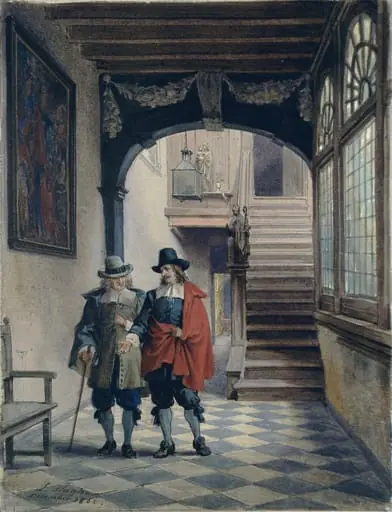 The Corridor, Brewer's Hall, Antwerp
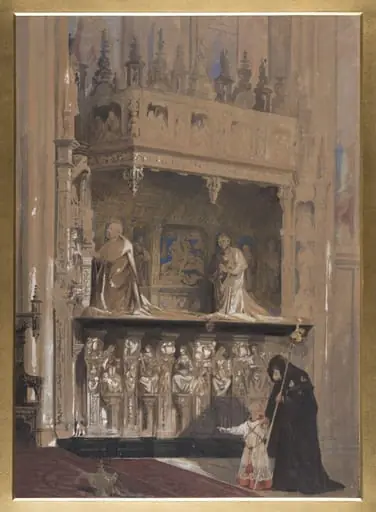 Monument of the Cardinald D'Amboise in Rouen Cathedral
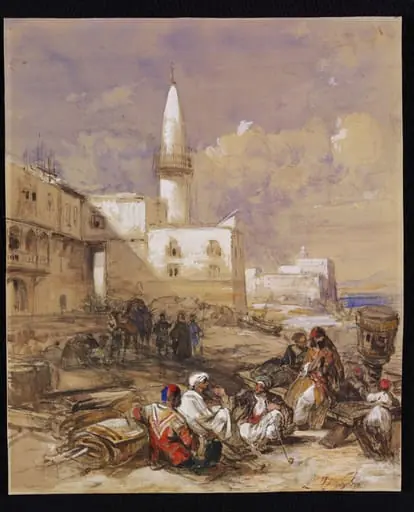 The Quay at Suez
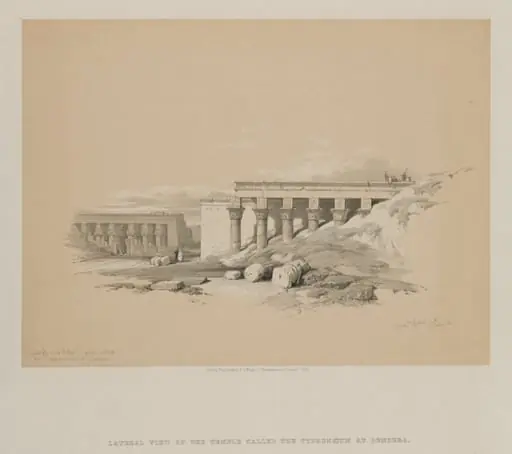 Egypt and Nubia, Volume II: Lateral View of the Temple called The Typhonoeum at Dendera
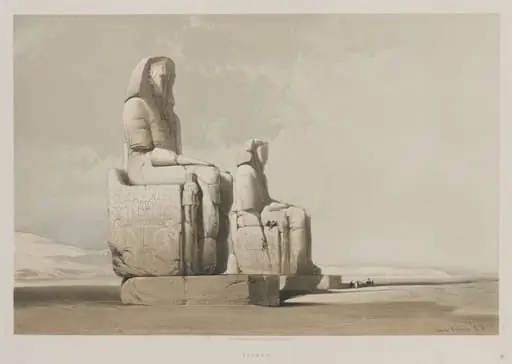 Egypt and Nubia, Volume I: Thebes
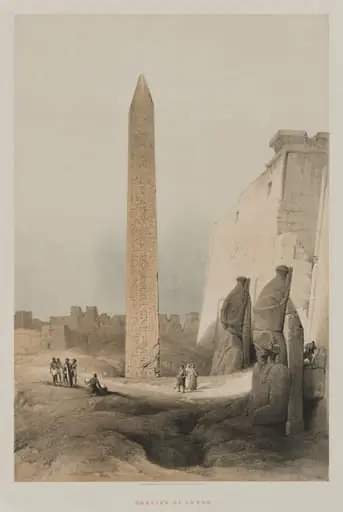 Egypt and Nubia, Volume I: Luxor
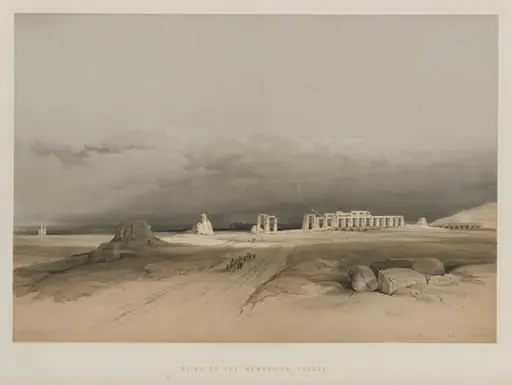
- Egypt and Nubia, Volume II: Ruins of Memnonium, Thebes
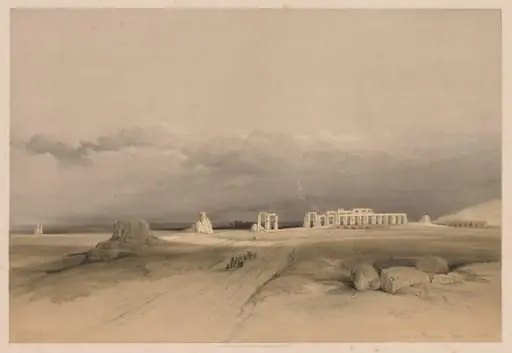 Egypt and Nubia: Volume II - No. 8, Ruins of the Memnonium, Thebes
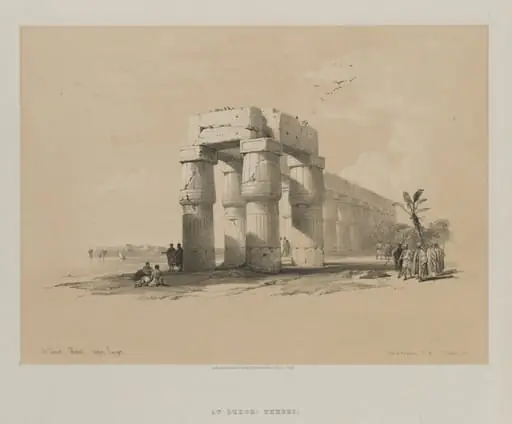 Egypt and Nubia, Volume I: At Luxor, Thebes, Upper Egypt
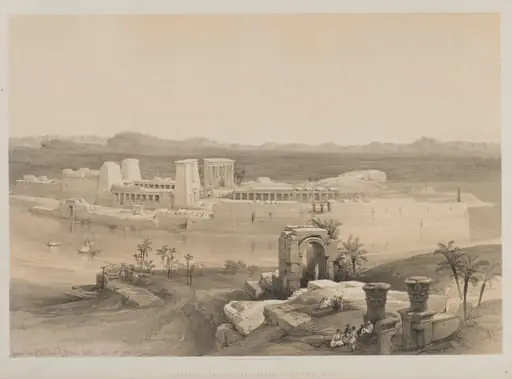 Egypt and Nubia, Volume I: General View of the Island of Philae, Nubia
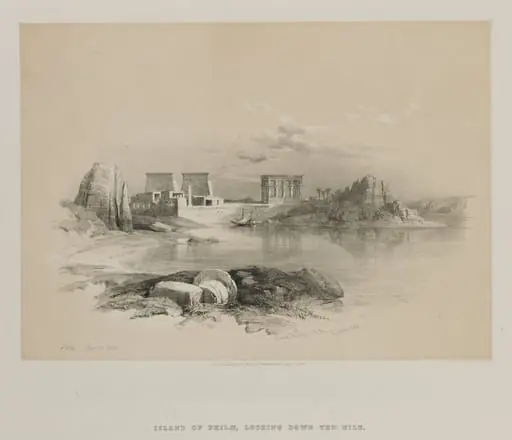 Egypt and Nubia, Volume II: Philae
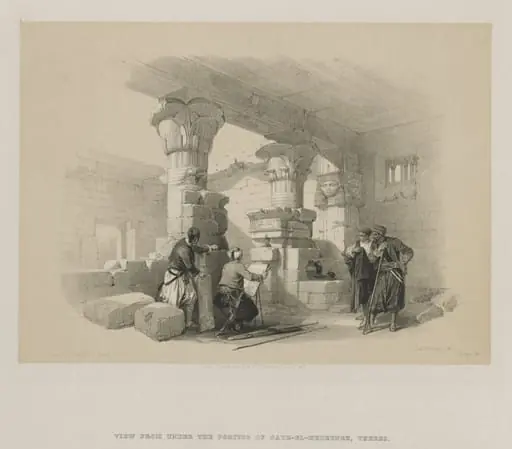 Egypt and Nubia, Volume II: Dayr-El-Medeeneh, Thebes
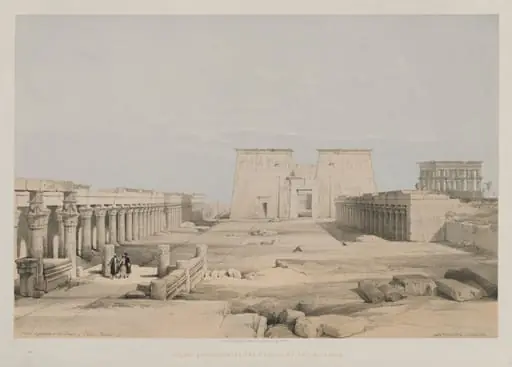 Egypt and Nubia, Volume I: Grand Approach to the Temple of Philae, Nubia
 Egypt and Nubia, Volume II: Medinet Abou, Thebes