Artwork
Egypt and Nubia, Volume III: Interview with the Viceroy of Egypt, at his Palace, Alexandria
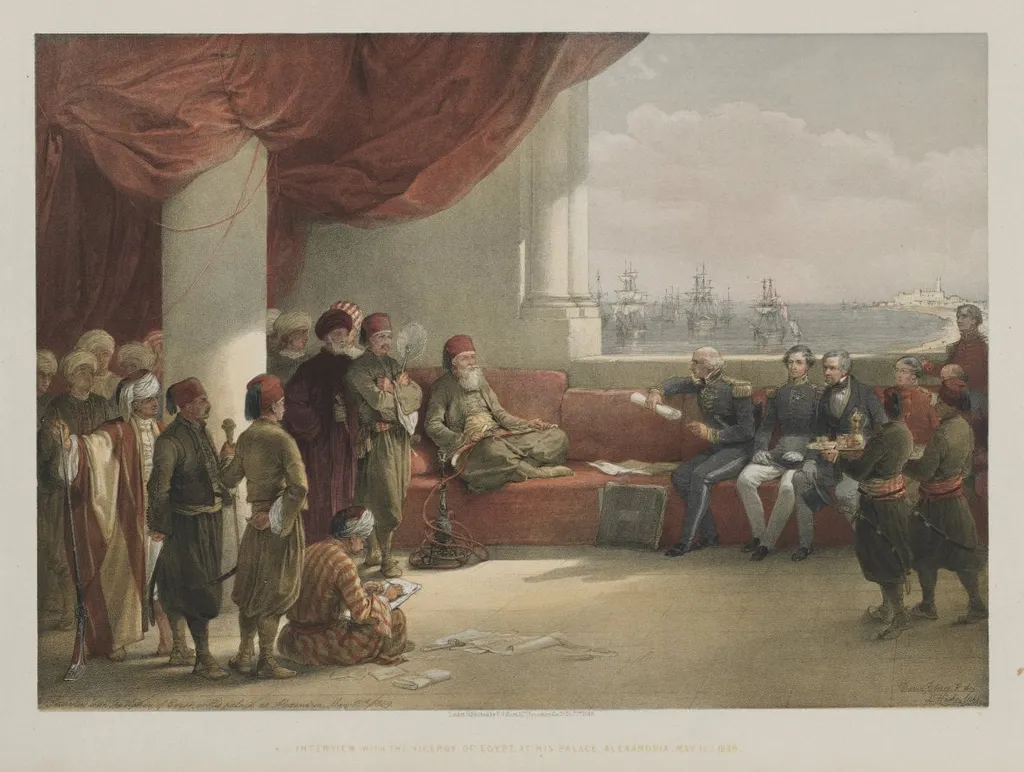
Egypt and Nubia, Volume III: Interview with the Viceroy of Egypt, at his Palace, Alexandria is a print by the Romanticist artist Louis Haghe. It dates from 1848 and is held in the collection of the Cleveland Museum of Art.
- Accession no.
- 2012.163
- Credit line
- Bequest of John Bonebrake
About this work
Overview
Haghe, trained in watercolor and lithography, collaborated with William Day to establish the influential London firm Day & Haghe.
Created in 1848 by British lithographer Louis Haghe, this print is part of a three-volume series documenting Egypt and Nubia. Haghe, trained in watercolor and lithography, collaborated with William Day to establish the influential London firm Day & Haghe. The image captures a formal encounter at the Viceroy’s palace in Alexandria, rendered through detailed lithographic technique to convey both architectural grandeur and the nuanced interactions of its participants.
Subject & Meaning
The scene portrays a diplomatic meeting between the Viceroy of Egypt and a group of officials, including military officers and local dignitaries dressed in varied attire, European uniforms, Ottoman-style robes, and turbans. One figure writes at a low table, another holds a document, suggesting administrative or political discourse. The setting implies a moment of cross-cultural negotiation, where imperial authority and regional tradition coexist within the same space.
Technique & Style
Haghe employed lithography to achieve fine tonal gradations and precise detail. Light is carefully modulated to model forms, with soft highlights on faces and deep shadows beneath furniture and drapery enhancing spatial depth. The composition is structured around a central column and framed by heavy red curtains, guiding the viewer’s eye through the room.
The rendering of textures, fabric, stone, paper, reflects a commitment to observational accuracy typical of mid-19th-century documentary printmaking.
History & Provenance
The print was produced as part of a larger illustrated travel series commissioned during a period of heightened European interest in the Eastern Mediterranean. Published in London, it was likely intended for an audience of scholars, diplomats, and collectors. Haghe’s association with Day & Haghe ensured wide distribution, and the work remains a documented artifact of British visual engagement with Egyptian governance under Muhammad Ali’s dynasty.
Context
In the 1840s, Egypt was a semi-autonomous province of the Ottoman Empire under the rule of Muhammad Ali Pasha, whose modernizing reforms attracted foreign attention. Alexandria, as a key port, became a hub for diplomatic activity. This image reflects the layered cultural presence in the city, European military advisors, Ottoman-style administration, and local elites, captured at a time when Western powers were increasingly involved in regional affairs.
Legacy
Haghe’s work contributed to the visual record of 19th-century Egypt, influencing later ethnographic and travel publications. While not overtly romanticized, its attention to costume, architecture, and social interaction aligns with broader trends in documentary illustration. The print endures as a primary source for understanding how Western artists interpreted and mediated encounters between European and Middle Eastern institutions during the colonial era.
Artist & collection

Artist
Louis Haghe (17 March 1806 – 9 March 1885) was a lithographer and watercolourist from the Netherlands and then the United Kingdom.

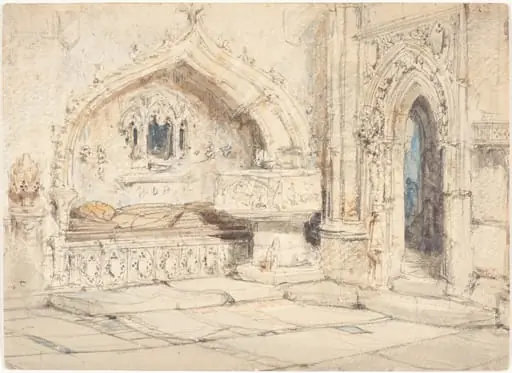 Interior of a Church with a Wall Tomb and Medieval Font
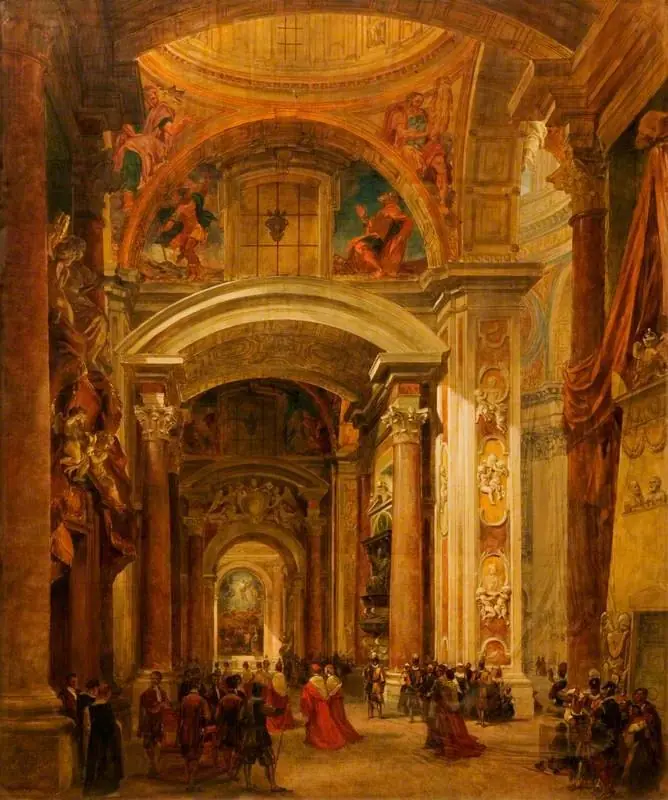 Interior of St Peter's, Rome
 The Corridor, Brewer's Hall, Antwerp
 Monument of the Cardinald D'Amboise in Rouen Cathedral
 The Quay at Suez
 Egypt and Nubia, Volume II: Lateral View of the Temple called The Typhonoeum at Dendera
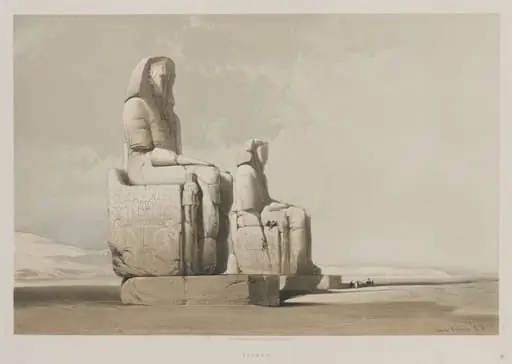 Egypt and Nubia, Volume I: Thebes
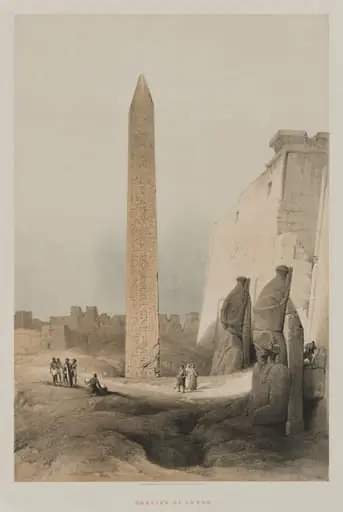 Egypt and Nubia, Volume I: Luxor
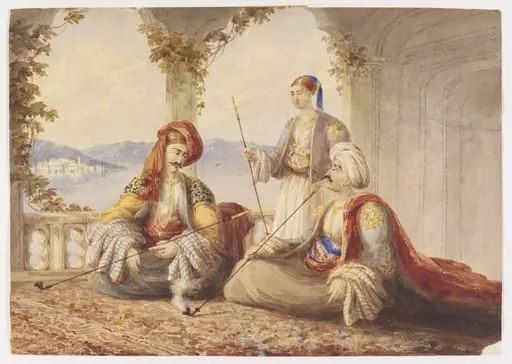 Two Turks, with a Servant, smoking on a Terrace overlooking a Lake or Sea in Turkey or Greece
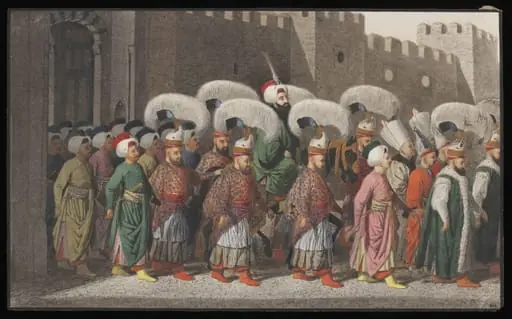 The Sultan riding out in procession to Friday Prayers
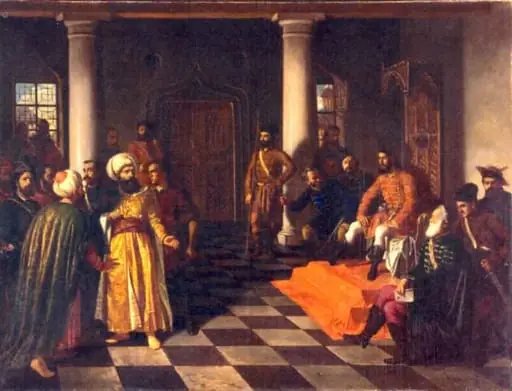 Vlad Țepeș și solii turci
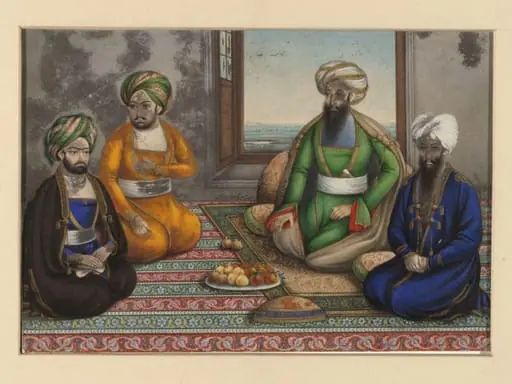 Dost Muhammad (d.1863), Amir of Afghanistan, with his three sons, Muhammad Akram Khan, Haidar Khan and Abdul Ghani Khan, seated on a carpet
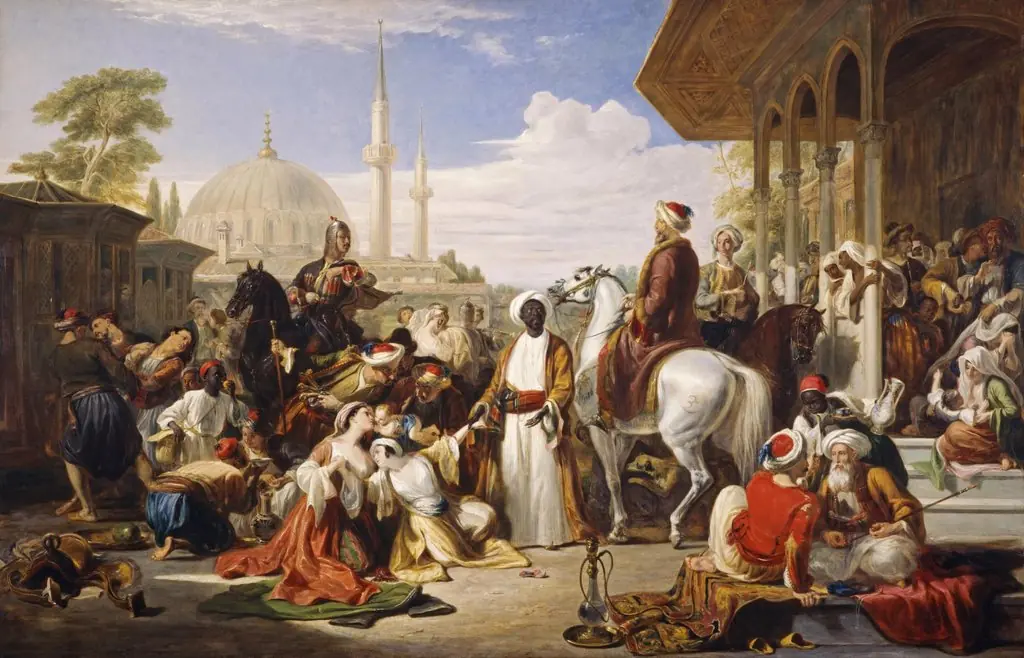 The Slave Market, Constantinople
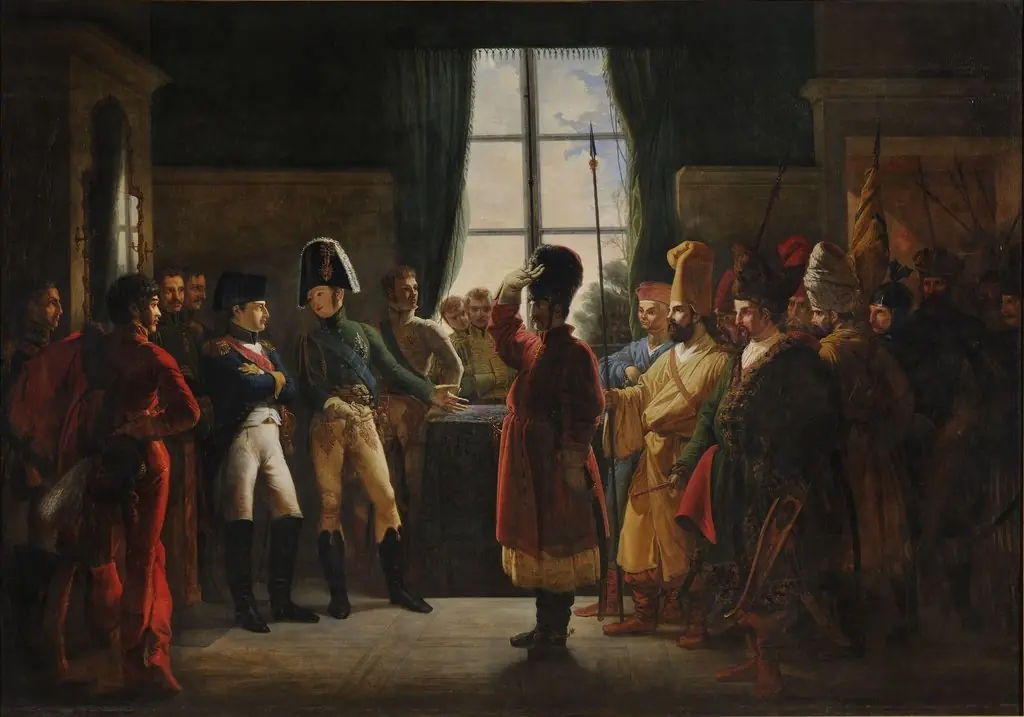 Alexander I presents to Napoleon I the Kalmyks, Cossacks and Baskirs of the Russian army, July 9, 1807
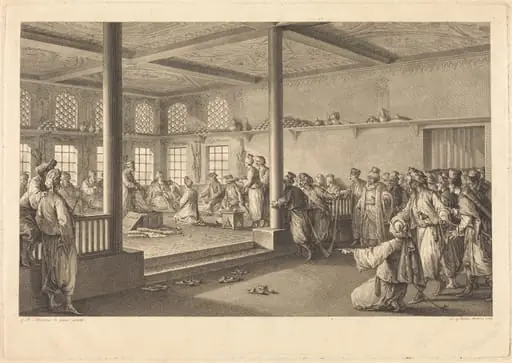 Réception de Choiseul-Gouffier chez Hassan-Tchousch-Oglou
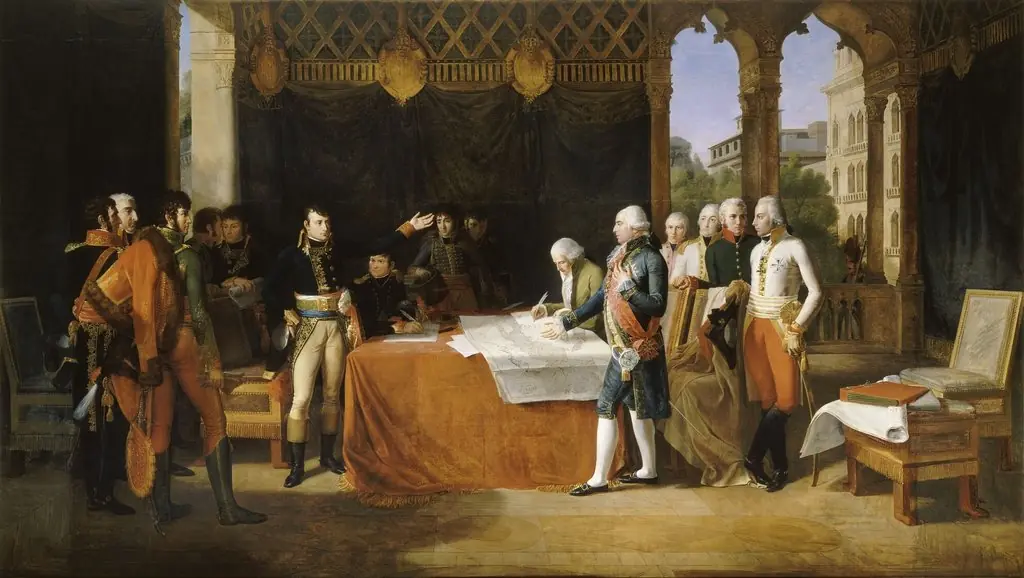 Treaty of Loeben, April 17, 1797
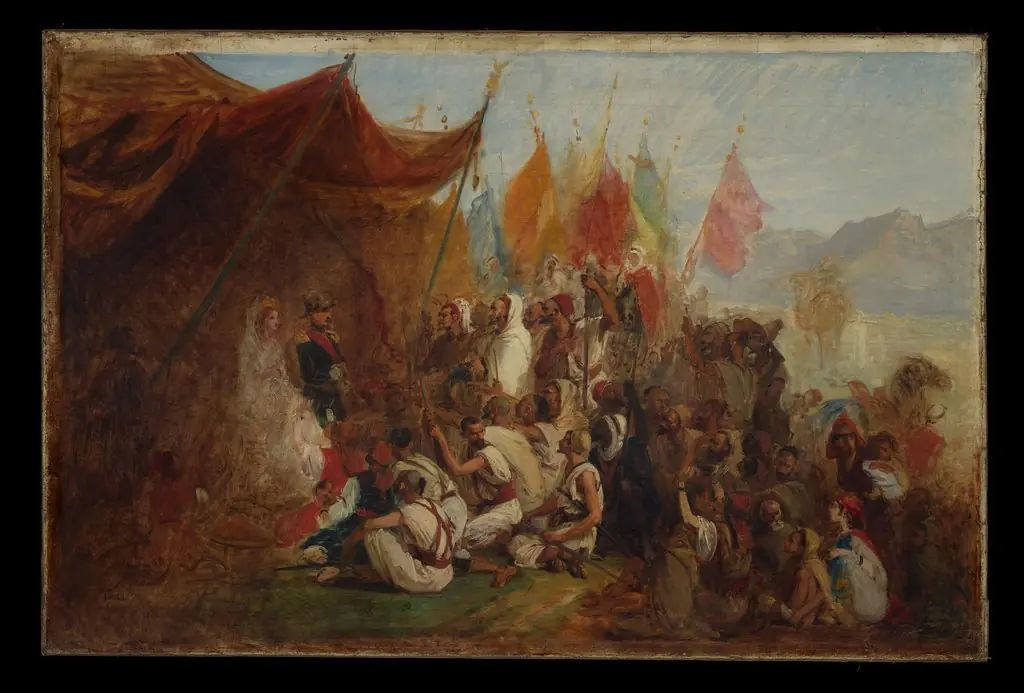 Sketch for "Reception of Emperor Napoleon III and Empress Eugénie by the Kabyle Leaders at Algiers on September 18, 1860"
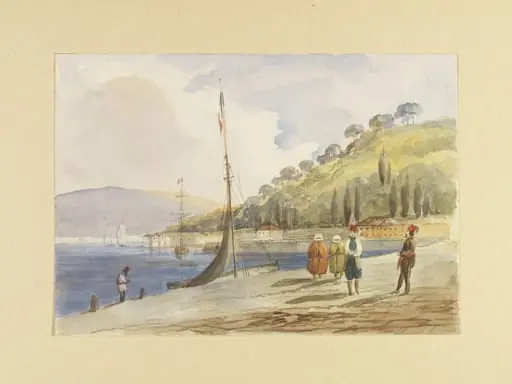 Therapia
 The Slave Market, Constantinople
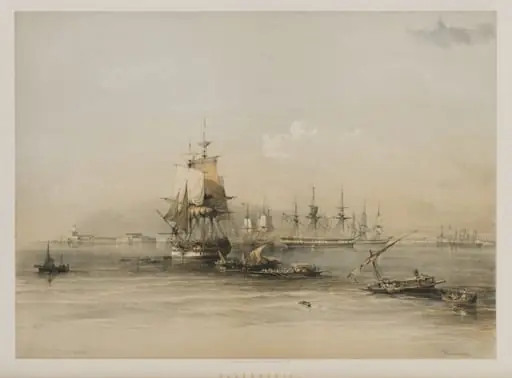
- Egypt and Nubia, Volume III: Alexandria