Artwork
Gate of the Hoosseinabad Bazar, Lucknow
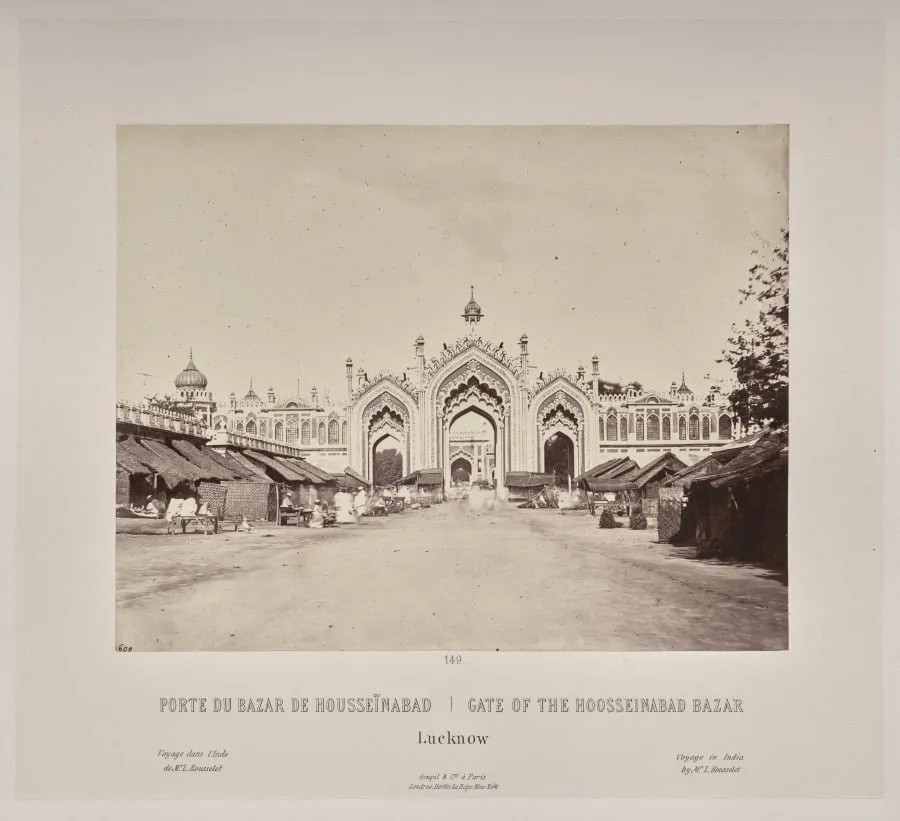
Gate of the Hoosseinabad Bazar, Lucknow is a photography by the Impressionist artist Louis-Théophile Marie Rousselet. It dates from 1866 and is held in the collection of the Cleveland Museum of Art.
- Accession no.
- 2022.58.28
- Credit line
- Alma Kroeger Fund
About this work
A tall, arched gateway stands in bright sunlight, its red bricks and white trim framing a busy street.
A tall, arched gateway stands in bright sunlight, its red bricks and white trim framing a busy street. People, carts, and horses fill the scene, while shadows stretch long across the ground.
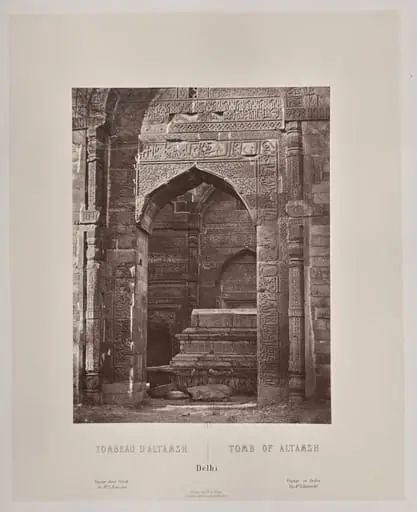
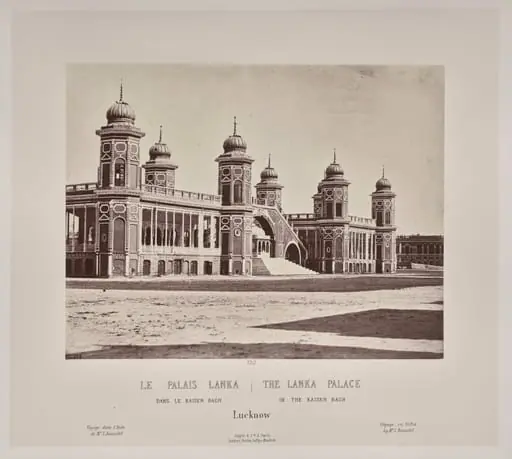
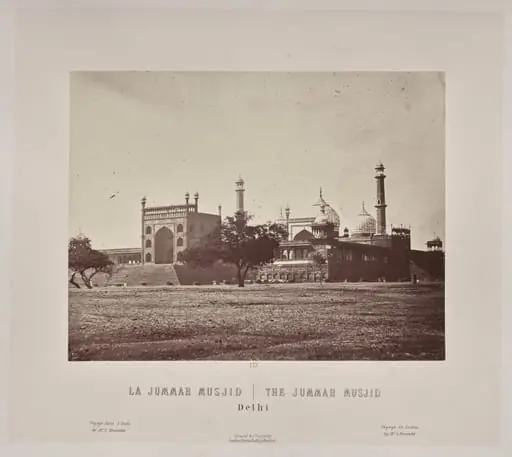
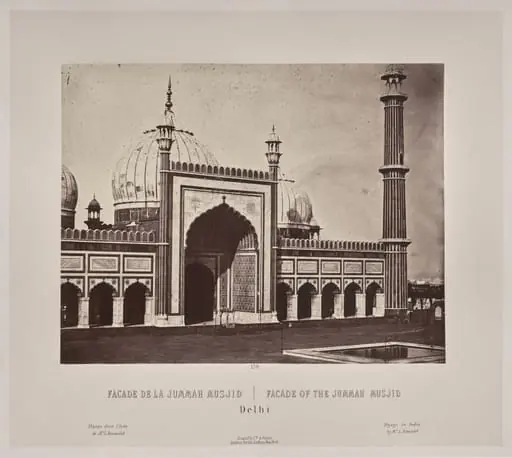
Rousselet drew this while traveling in India, but he wasn’t happy with his sketches. So he learned photography there and started taking pictures instead. The mix of drawing and photography was still new in the 1860s.
To see more of his India travels, look up Louis-Théophile Marie Rousselet (French, 1845–1929).
Overview
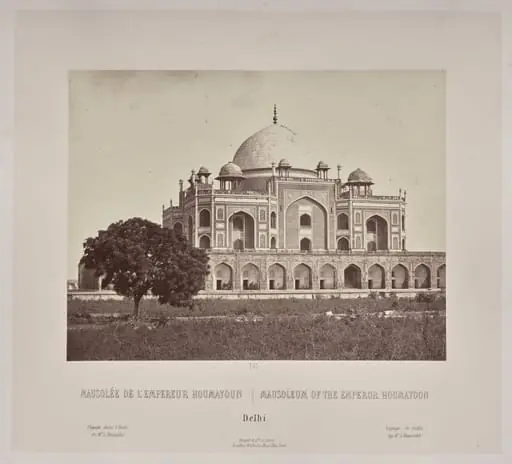
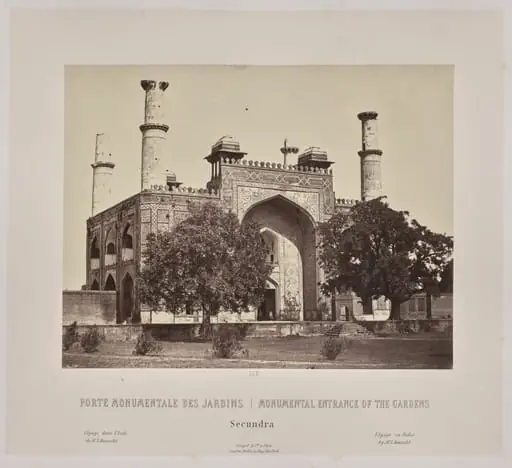
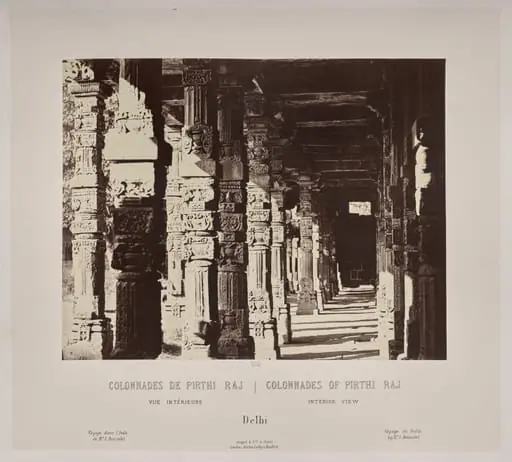
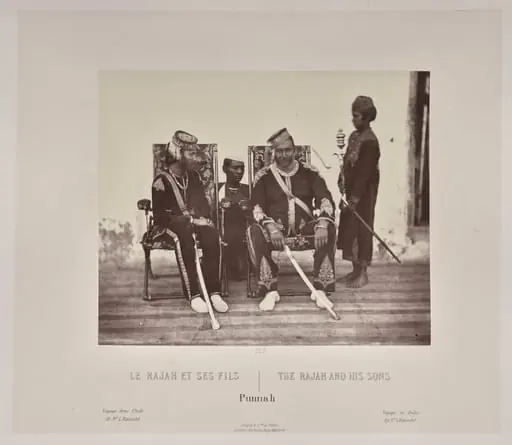
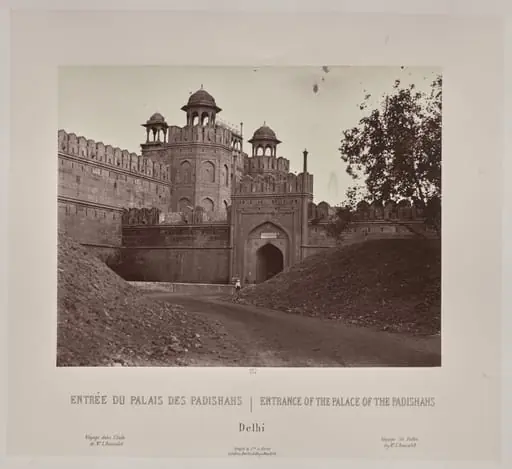
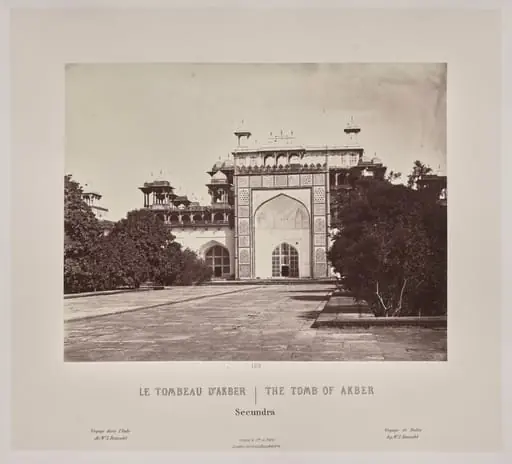
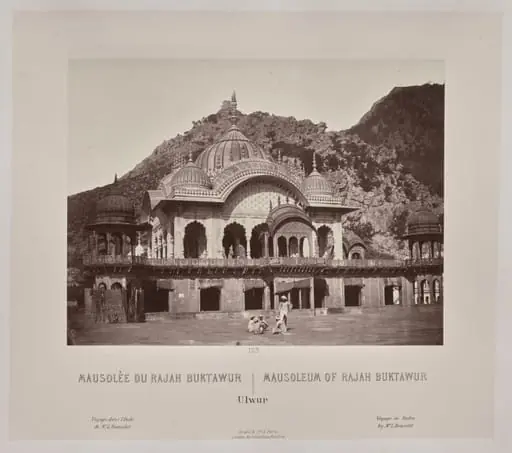
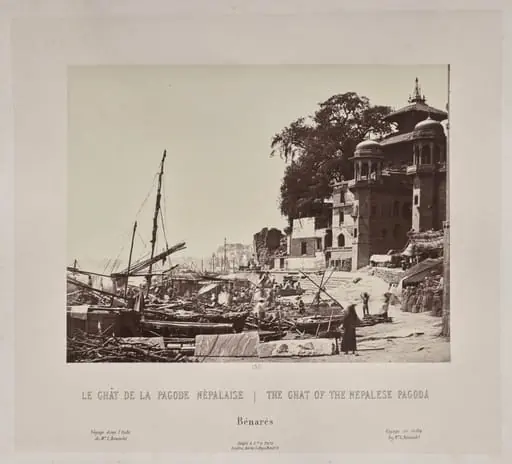
Taken in the 1860s, this photograph captures the Gate of the Hussainabad Bazar in Lucknow, one of many images Louis-Théophile Rousselet produced during his travels across northern India. Dissatisfied with his initial sketches, he taught himself photography on-site, adopting the medium to more accurately convey the architectural and atmospheric details he encountered. His work reflects a transitional moment in visual documentation, blending traditional artistic intent with emerging photographic technology.
Subject & Meaning
The gate serves as both a structural landmark and a threshold of daily life. Framed by sunlight, its red brick and white stonework contrast with the bustling activity below, pedestrians, carts, and animals moving through the shadowed street. The image conveys not just architectural grandeur but the lived reality of urban commerce, suggesting the gate as a nexus between ceremonial monument and ordinary existence in colonial-era India.
Technique & Style
Rousselet employed early photographic methods to achieve sharp tonal contrasts and precise detail, particularly in the play of light and shadow across the gateway’s surfaces. His compositional choices emphasize verticality and depth, guiding the viewer’s eye from the arch’s crown down to the crowded foreground. The image avoids romanticization, instead presenting a clear, unembellished record of form and movement.
History & Provenance
Rousselet captured this image during a multi-year journey through northern India, where he documented sites of historical significance from Varanasi to Alwar. The photograph was later included in a published volume of his travels, among the earliest photographic records of Indian architecture by a European traveler. Its survival in institutional collections attests to its value as both documentary evidence and a product of 19th-century visual exploration.
Context
In the 1860s, photography was still a novel tool for recording cultural heritage, especially in regions under British colonial influence. Rousselet’s decision to learn the technique mid-travel reflects a broader shift among European travelers seeking objective documentation. His work intersects with colonial ethnography but also preserves indigenous urban spaces in their active, unposed state, offering a rare glimpse beyond official narratives.
Legacy
Rousselet’s photographs from India contributed to a growing archive of South Asian architecture, influencing later scholars and preservationists. His shift from drawing to photography marked a personal evolution in visual representation, and his images remain valuable for their technical clarity and unidealized portrayal of 19th-century Indian urban life. They stand as early examples of photography’s role in shaping cross-cultural understanding.
Artist & collection
Artist
Louis-Théophile Marie Rousselet
Louis-Théophile Marie Rousselet (1845–1929) was a French artist.