Artwork
Venus and Adonis
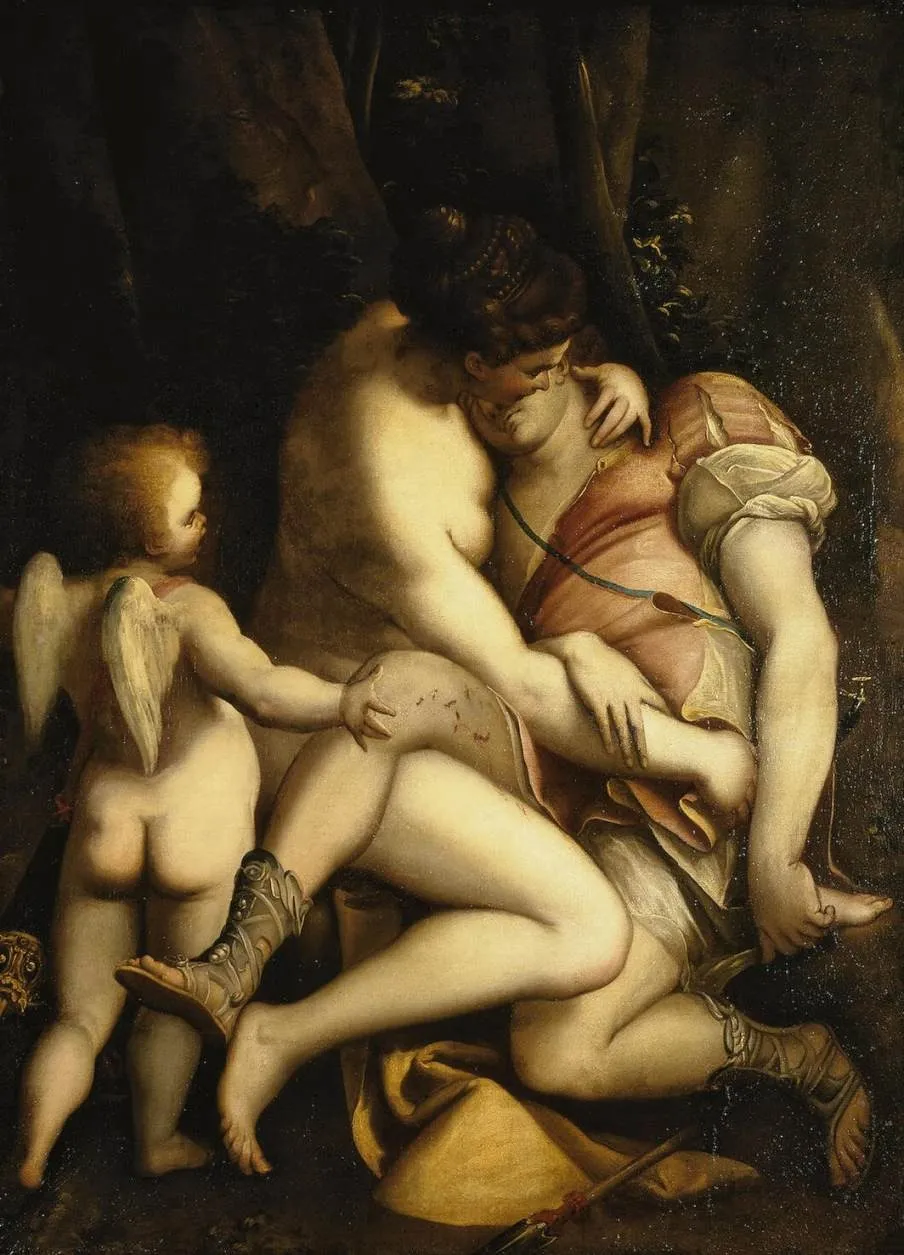
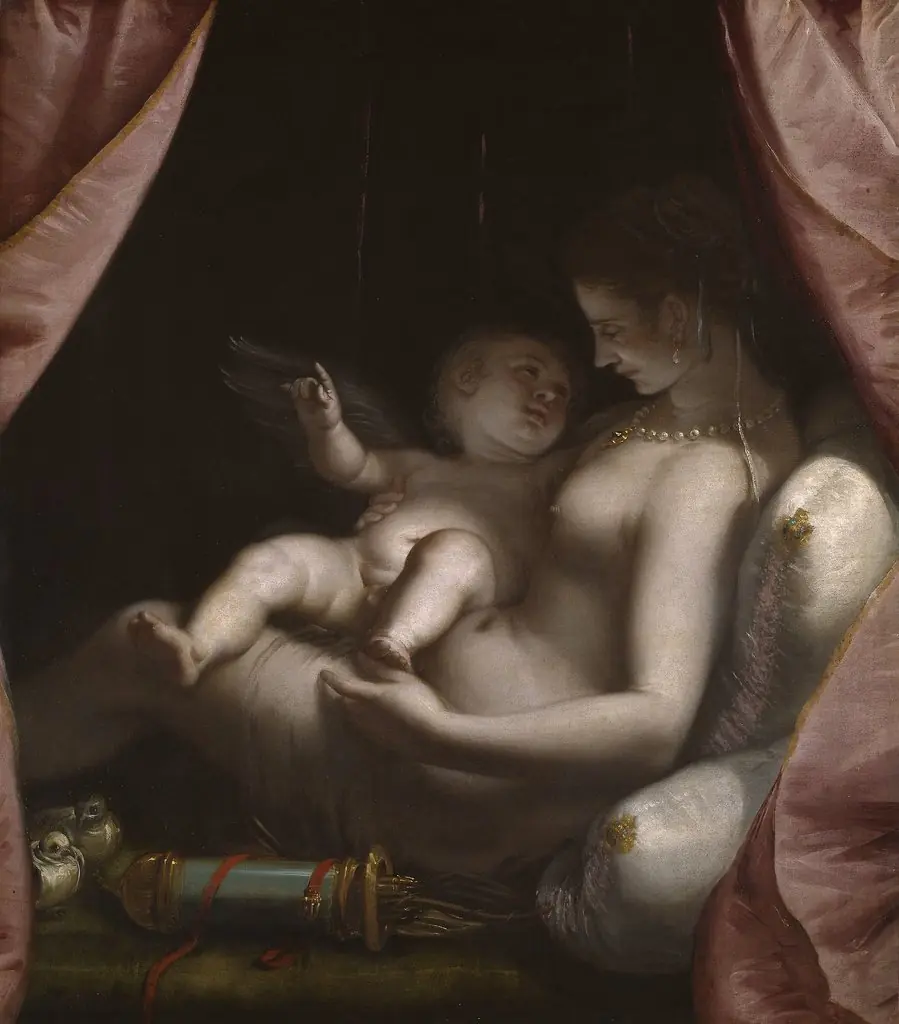
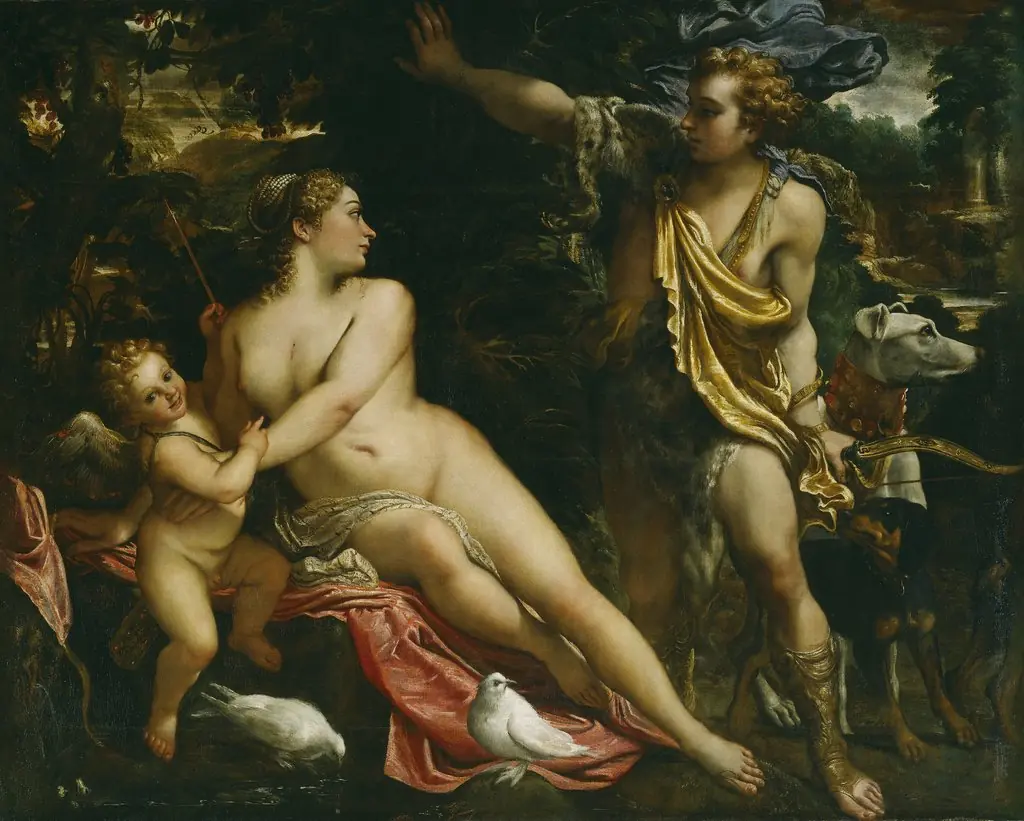
Venus and Adonis is an oil painting by the Mannerist artist Luca Cambiaso. It dates from 1565 and is held in the collection of the Hermitage Museum.
About this work
Subject & Meaning
The composition emphasizes the tension between desire and fate, as the goddess’s pleas confront Adonis’s resolve to pursue the hunt that will lead to his death.
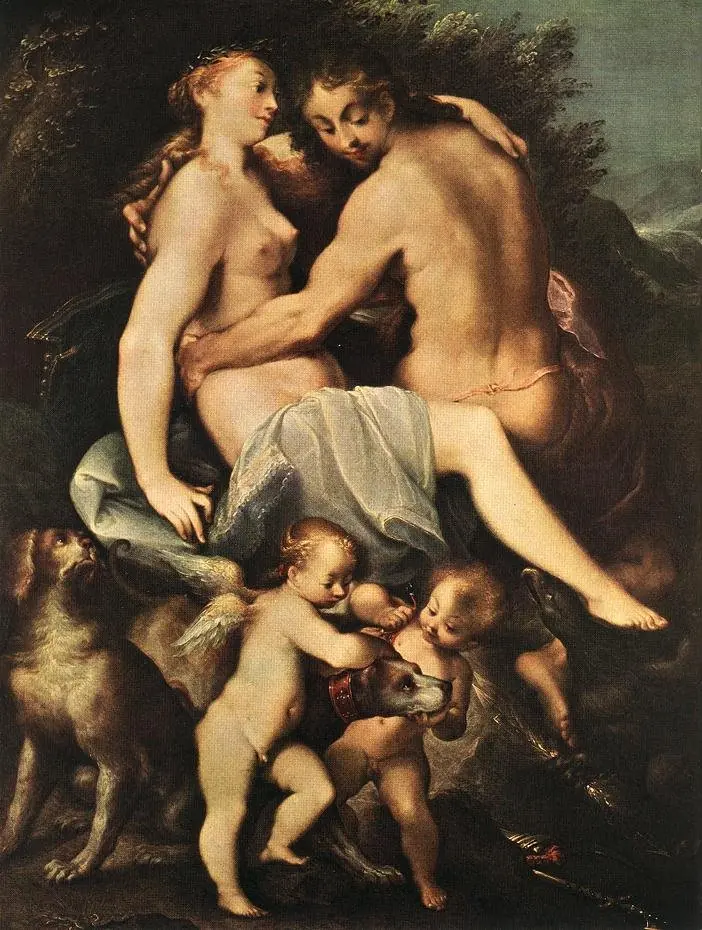
The painting depicts the classical myth of Venus and Adonis. In the scene, Venus, identifiable by her nudity and presence among amorini, attempts to restrain Adonis, who is poised to leave with a hunting spear. The composition emphasizes the tension between desire and fate, as the goddess’s pleas confront Adonis’s resolve to pursue the hunt that will lead to his death.
The inclusion of amorini heightens the emotional charge, underscoring Venus’s vulnerability and the inevitability of Adonis’s tragic end. The narrative reflects Ovid’s Metamorphoses, where Venus’s foreknowledge of Adonis’s fate underscores the futility of love against destiny.
Technique & Style
The painting is executed in oil on canvas, employing a smooth, blended technique characteristic of late Renaissance mannerism. The composition balances soft chiaroscuro with precise figure modeling, emphasizing sensuality through delicate brushwork and subtle color transitions. The canvas support shows no visible damage, and the surface remains intact with original varnish layers preserved.
The work depicts Venus and Adonis in an intimate mythological scene, rendered with graceful gestures and a harmonious palette that highlights the figures' emotional connection. The formal balance between the reclining nude and the attentive Cupid underscores the painting's elegant stylization, reflecting Cambiaso's mastery of narrative clarity and refined technique.
History & Provenance
Luca Cambiaso created the mythological painting Venus and Adonis in 1565. Executed in oil on canvas, the work was produced in Italy. The painting measures 130 cm in height and 94 cm in width. It is currently held in the collection of the Hermitage Museum.
Overview
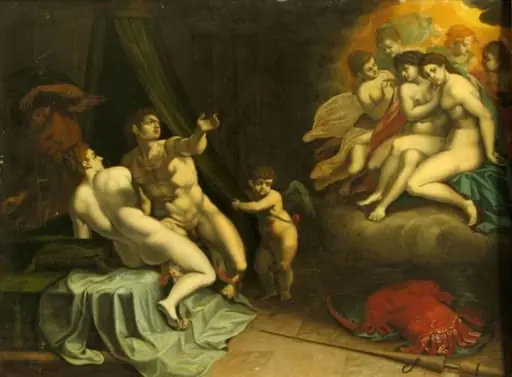
Luca Cambiaso’s oil on canvas, dated 1565, portrays the myth of Venus and Adonis. The work belongs to the collection of the State Hermitage Museum in St. Petersburg. It presents a nocturnal scene in which the goddess lies reclined on the body of the mortal hunter, while a winged child observes the encounter.
Context
Created during the late Renaissance, the work reflects the period’s fascination with mythological subjects and the revival of classical motifs. Cambiaso’s treatment of the Venus‑Adonis narrative aligns with contemporary interests in human emotion, anatomical precision, and the theatrical use of light.
Artist & collection
Artist
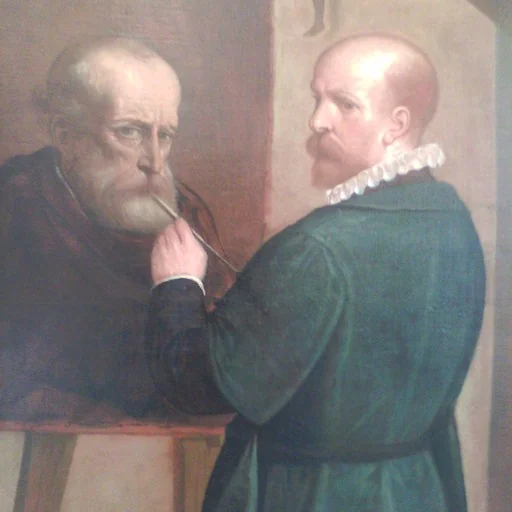
Luca Cambiaso was an Italian painter and draughtsman and the leading artist in Genoa in the 16th century.