Artwork
Venus, Adonis and Cupid
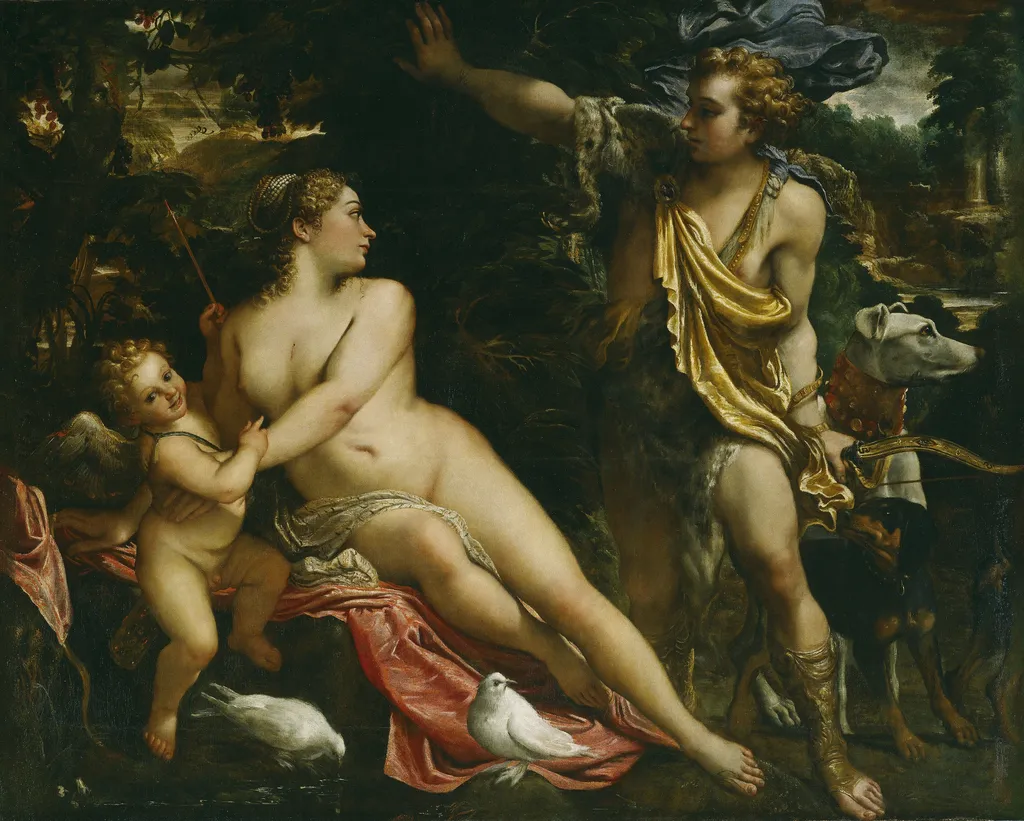
Venus, Adonis and Cupid is an oil painting by the Early Baroque Italian artist Annibale Carracci. It dates from 1596 and is held in the collection of the Museo del Prado.
About this work
An oil painting by Annibale Carracci, now in the collection of the Museo del Prado. It entered the Spanish royal collection in 1664 and has stayed there ever since.
Subject & Meaning
Based on Ovid's Metamorphoses, the painting depicts the moment Venus first encounters Adonis, immediately after being struck by Cupid's arrow.
Based on Ovid's Metamorphoses, the painting depicts the moment Venus first encounters Adonis, immediately after being struck by Cupid's arrow. The narrative focuses on the instant of mutual attraction rather than Adonis's subsequent death. Iconographically, Venus is portrayed nude with a visible wound on her chest, signifying her sudden passion, while Cupid points to this injury and engages the viewer with a knowing glance.
Adonis appears as a heroic hunter draped in animal skins and holding a bow, accompanied by hunting dogs. The composition includes two doves, traditional symbols of love, within a detailed forest landscape. By choosing this specific encounter over the more common depiction of Adonis's departure, the work emphasizes emotional tension and sensuality through the figures' intense eye contact and classical, sculptural forms.
Technique & Style
The work is executed in oil paint on a canvas support. Annibale Carracci employed a combination of loose and fine brushstrokes to achieve a naturalistic appearance, while maintaining accurate detailing in elements such as Venus's pearl-threaded hair, the reliefs on Adonis's sandals, the decorative bow, and the greyhound's collar. The figures are arranged along a strong diagonal, modeled with chiaroscuro that gives them three-dimensional volume, and the palette blends muted background tones with vivid highlights on the flesh, reflecting Venetian coloristic influences and the example of Titian, Correggio and Veronese.
Prior to a mid-20th-century restoration, the paint layer was obscured by repaints, oxidized varnish and surface dirt; cleaning and technical analysis (including X-ray) revealed pentimenti, most notably that Adonis originally held a lance instead of a bow, and restored the painting's original pictorial quality, confirming its status as an autograph Carracci.
History & Provenance
The painting Venus, Adonis and Cupid is attributed to Annibale Carracci and dated to c. 1596. Evidence of its early provenance traces to the Genoese aristocrat Giovanni Francesco Serra (1609–1656), whose collection included the work by 1656. After Serra's death, his heirs sold the painting at auction in Naples in 1664, where it was acquired for Philip IV of Spain by Gaspar de Bracamonte Guzmán, acting on the king's behalf.
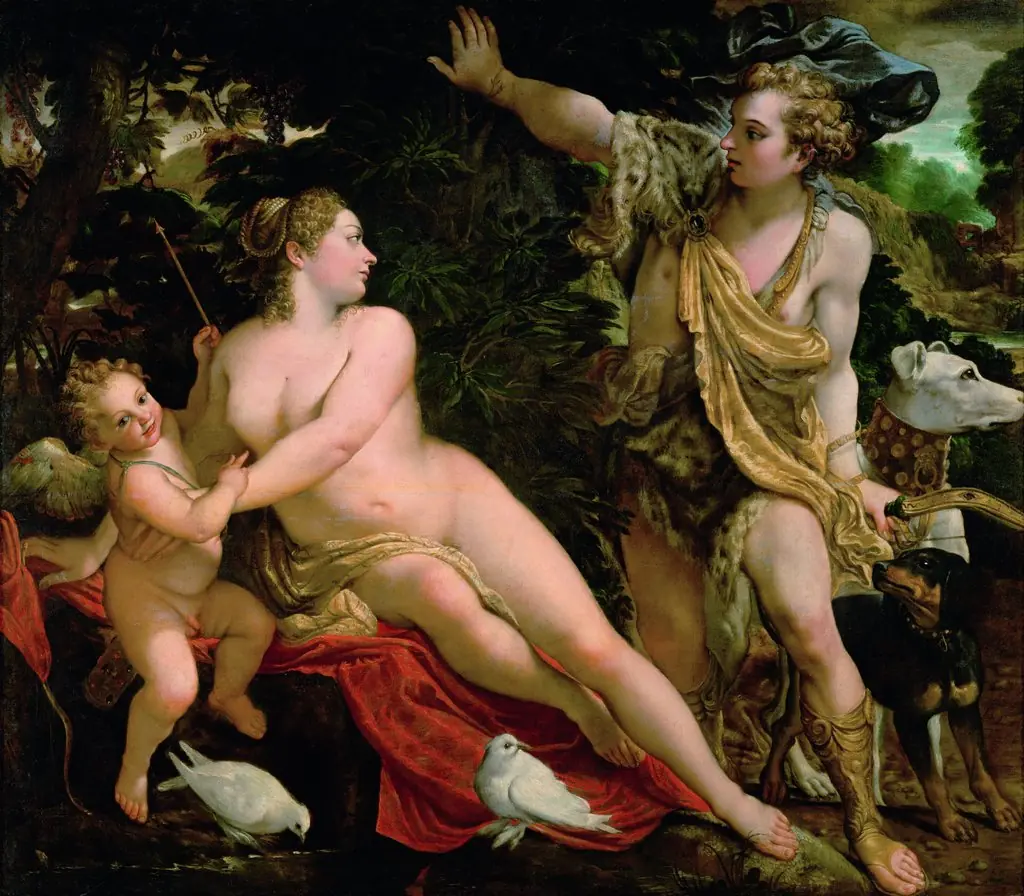
Recorded in the 1666 inventory of the Spanish royal collection at the Alcázar, the work entered the holdings of the Museo del Prado in Madrid, where it has remained since. A later replica, long considered autograph, is preserved in the Kunsthistorisches Museum, Vienna.
The work was first listed in the 1664 sale catalog and subsequently recorded in the 1666 inventory of the Alcázar royal collections. It was featured in a 1970 exhibition reassessing 17th-century Italian painting at the Casón del Buen Retiro, and following a major restoration in 2005 it was exhibited alongside works by Titian and Veronese. Preparatory drawings are held in the Royal Academy of Fine Arts of San Fernando, the Uffizi, and the British Museum.
Context
Critics historically recognized this work as Annibale Carracci's deliberate emulation of Titian, a connection noted in the 1664 sale catalog of Giovanni Francesco Serra's collection. Scholarship identifies the painting as a pivotal synthesis of Venetian colorism and classical Roman form, marking Carracci's role in transitioning art from Mannerism to the Baroque. While earlier damaged conditions led some to mistakenly deem it a copy of a Viennese version, post-1970 restoration and analysis confirmed the Prado canvas as the autograph original and the Vienna piece as a replica.
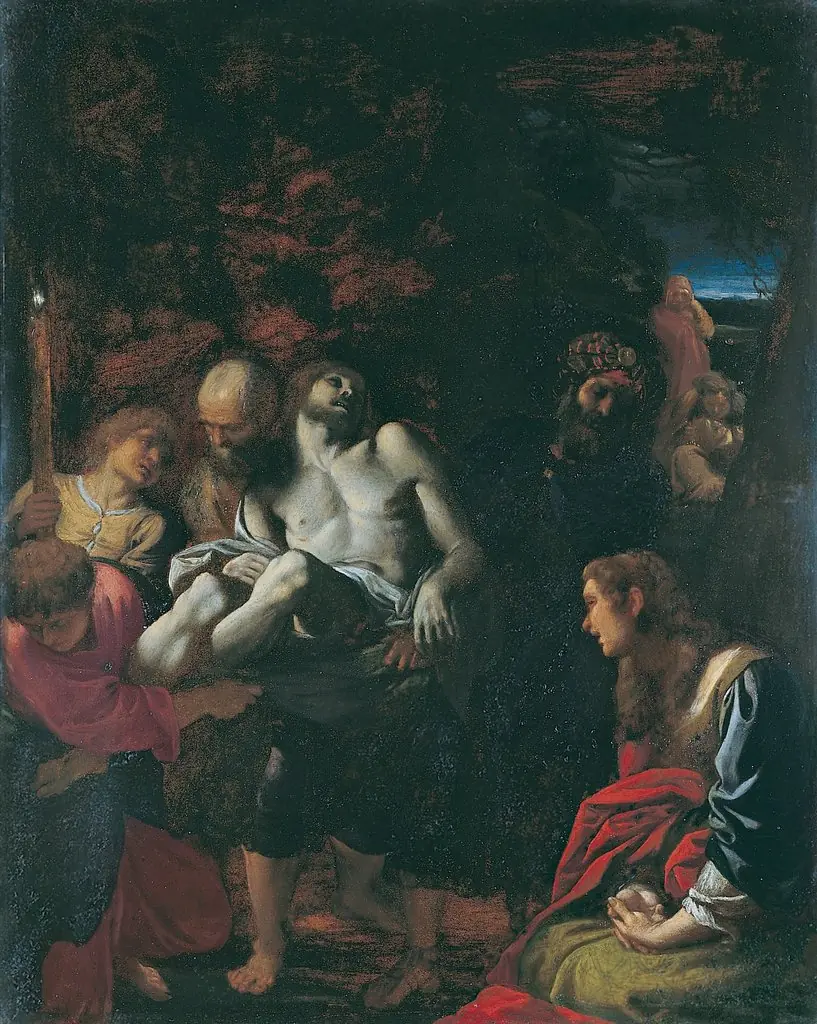
The work is situated within Carracci's broader oeuvre as a bridge between his naturalistic genre scenes and later monumental classical projects like the Farnese Gallery. Its renewed appreciation in the late twentieth century highlighted its importance alongside works by Veronese and Correggio, securing its status as a masterpiece of Bolognese painting.
Legacy
Historically regarded as a masterpiece, the painting's reputation suffered for decades due to overpainting and oxidized varnish, leading critics to dismiss it as a mere copy of a variant held in Vienna. Its status was revitalized following a 1970 exhibition in Madrid, which began reassessing neglected seventeenth-century Italian works. Subsequent restoration confirmed the canvas as Annibale Carracci's original autograph work, establishing it as the model for the Viennese version rather than a derivative.
The 2005 post-restoration exhibition further cemented its standing by displaying it alongside comparable mythological works by Titian and Veronese. The composition's influence extended to printmaking, notably through a 1655 etching by Luigi Pellegrino Scaramuccia and later engravings by Spanish artists Rafael Esteve and Pedro Pascual Moles.
Overview
Annibale Carracci's "Venus, Adonis and Cupid," an oil painting from approximately 1595, resides in the Museo del Prado, Madrid. This work exemplifies the artist's pivotal role in the shift from Mannerist conventions towards the emerging Baroque style in Italian art. It showcases a classical mythological scene, rendered with a naturalistic approach that would influence subsequent generations of painters.
Own this work as a print
Artist & collection
Artist
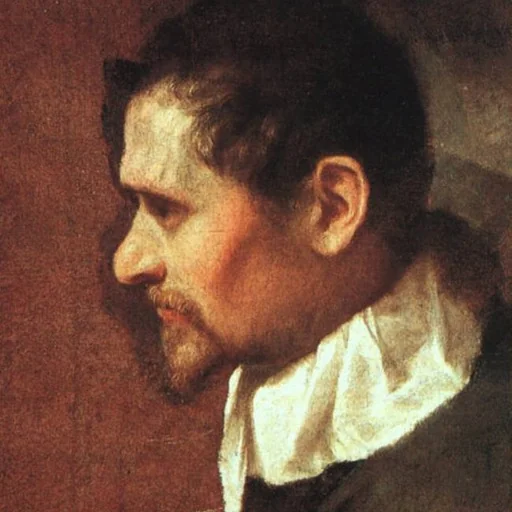
Annibale Carracci ( kə-RAH-chee, UK also kə-RATCH-ee, Italian:; November 3, 1560 – July 15, 1609) was an Italian painter and instructor, active in Bologna and later in Rome.

 Venus and Adonis
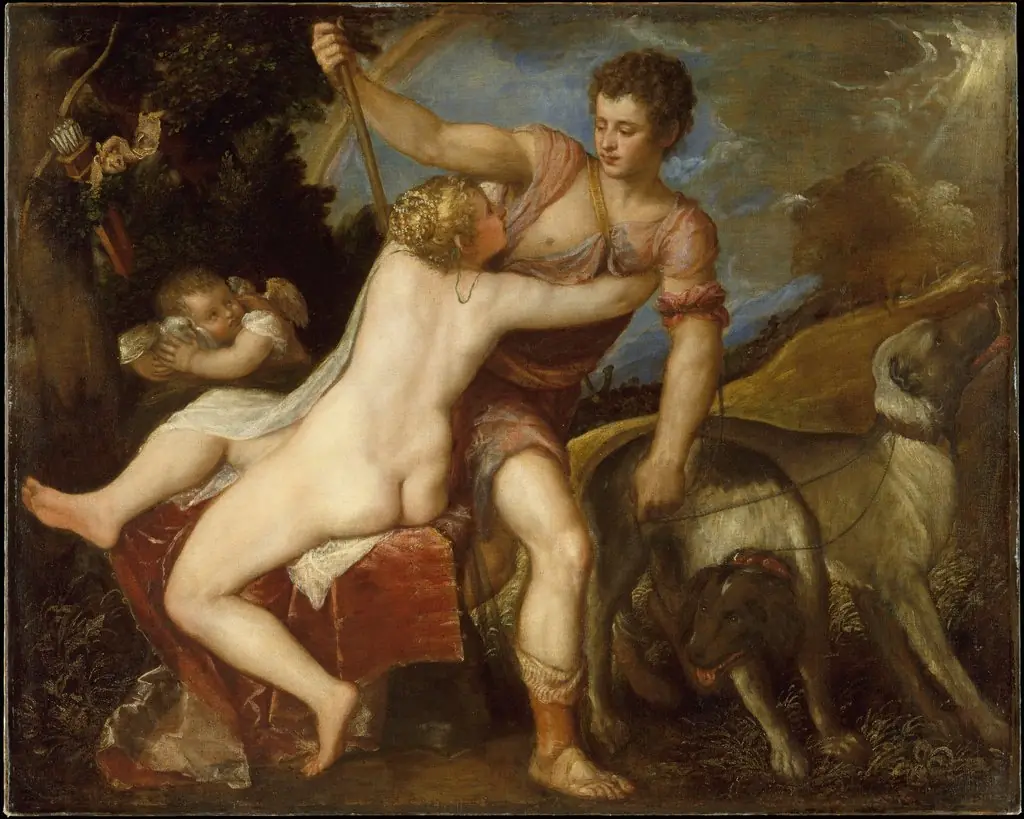
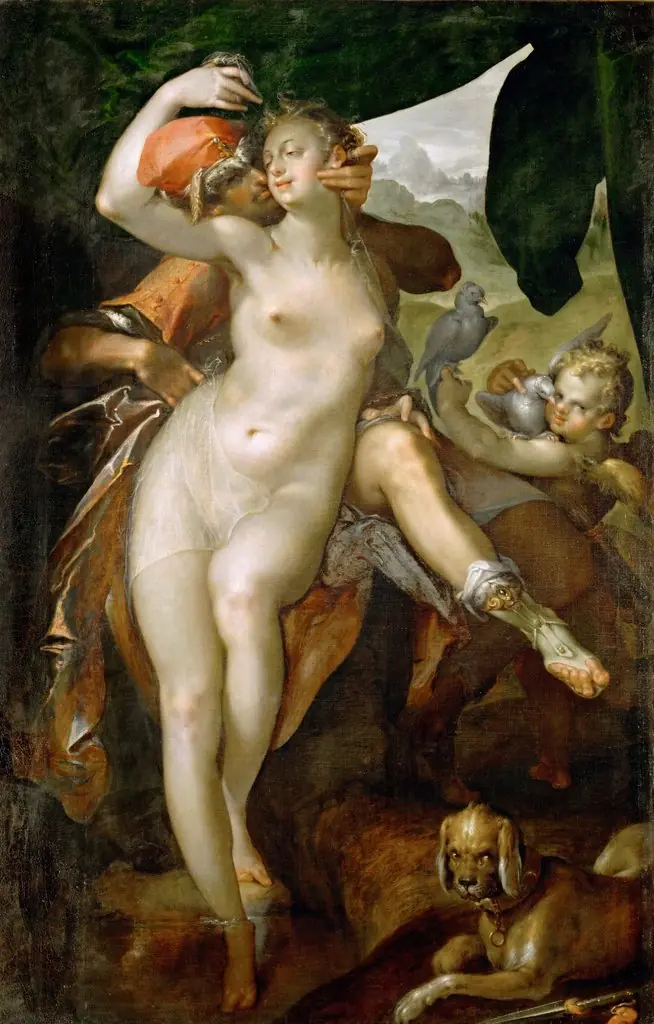 Venus and Adonis
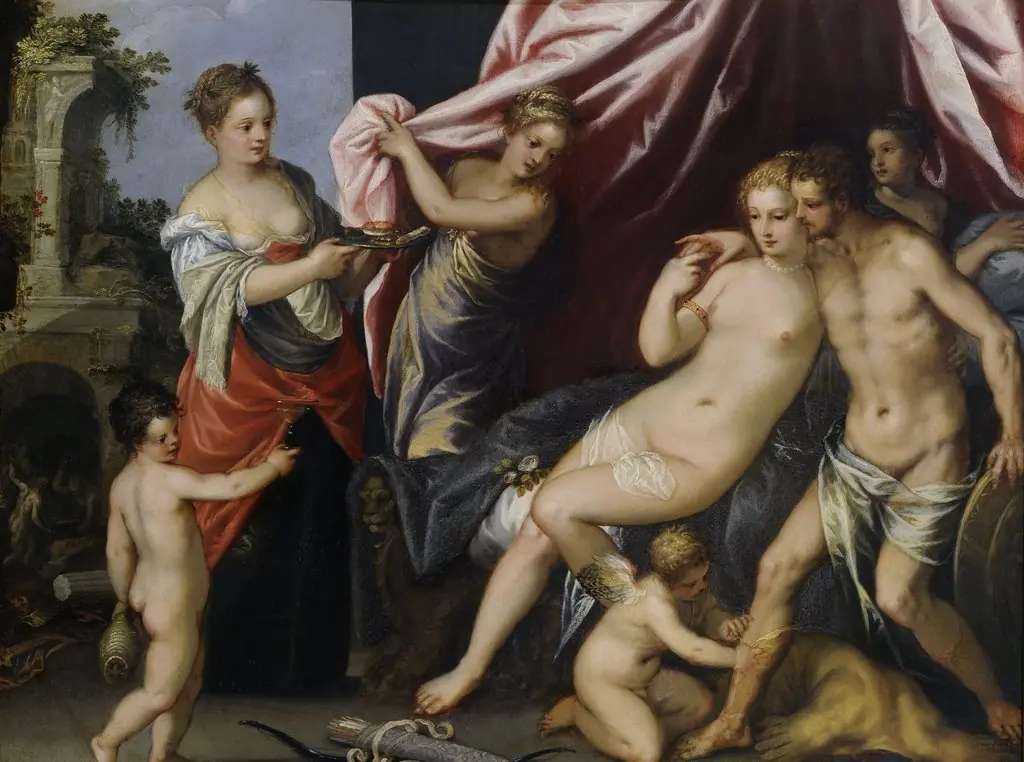 Venus and Mars
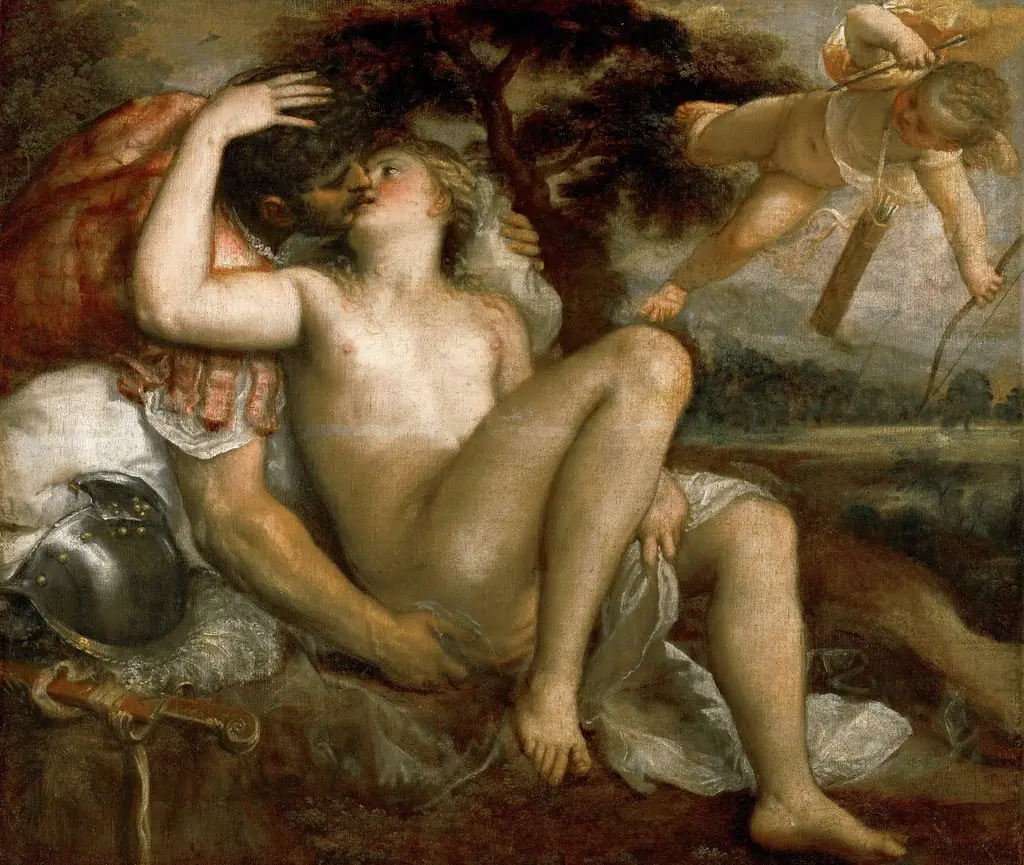 Mars, Venus and Amor
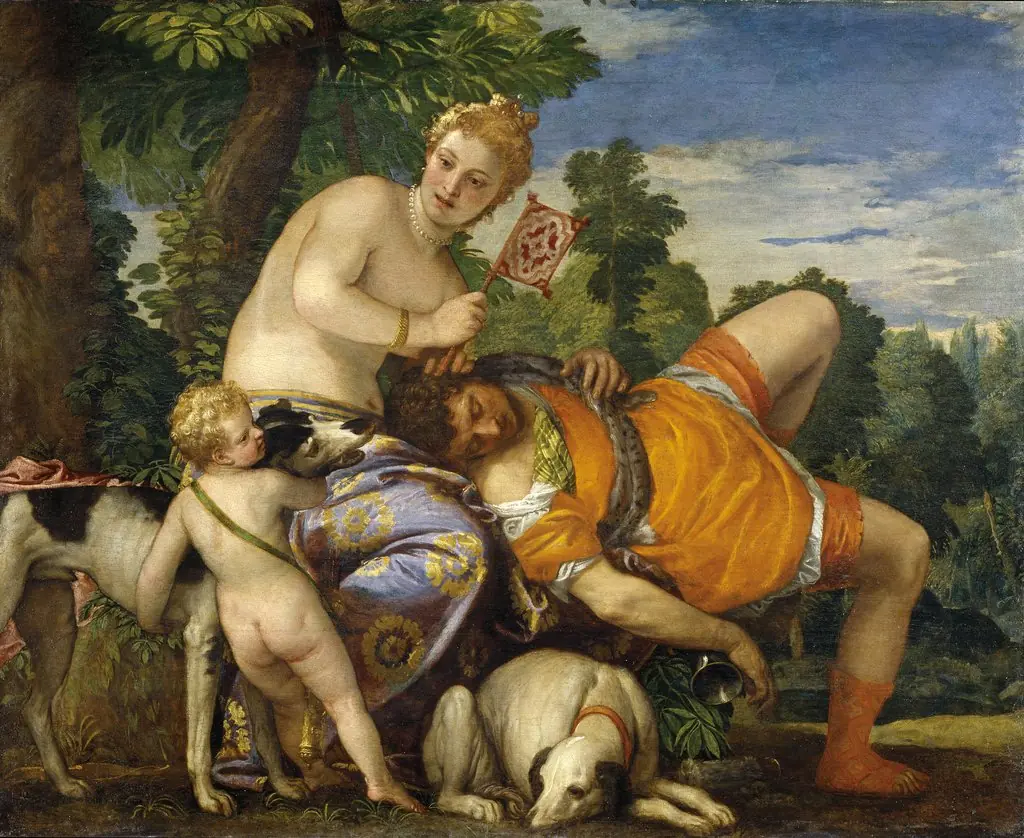 Venus and Adonis
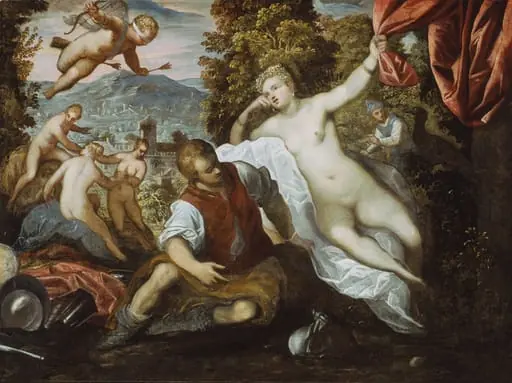 Venus and Mars with Cupid and the Three Graces in a Landscape
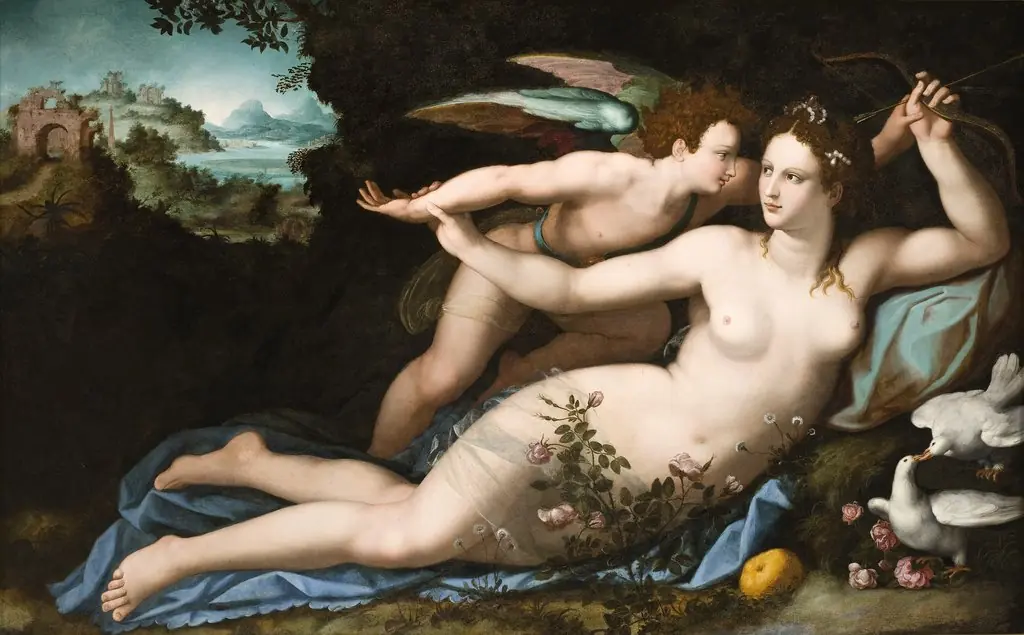 Venus disarming Cupid
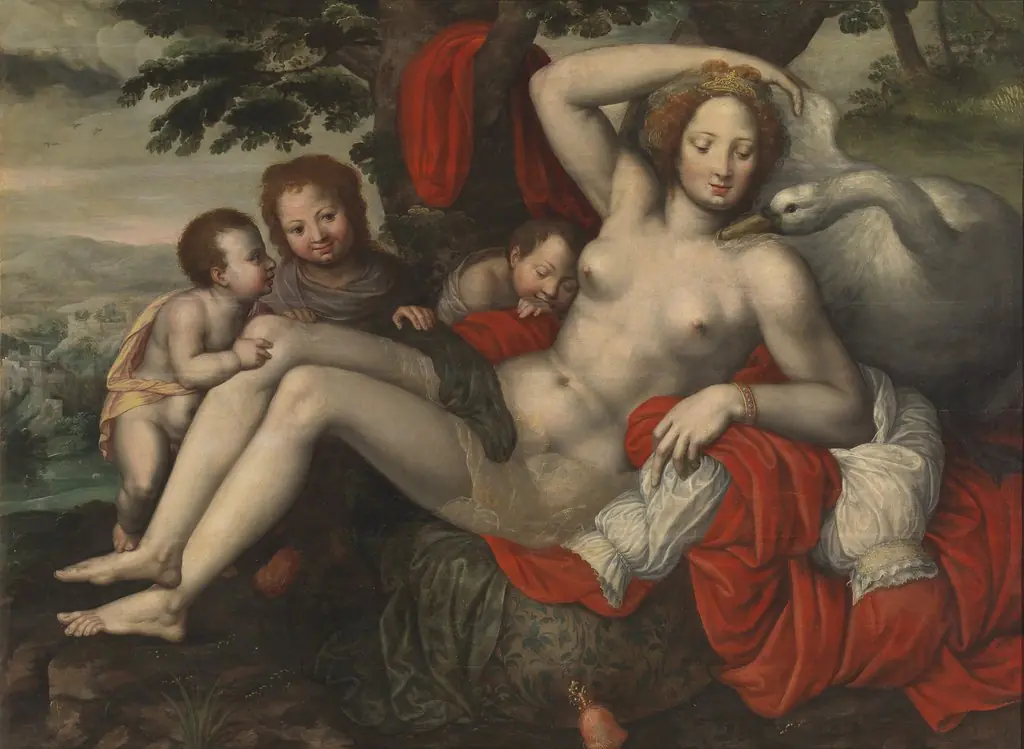 Leda and the Swan
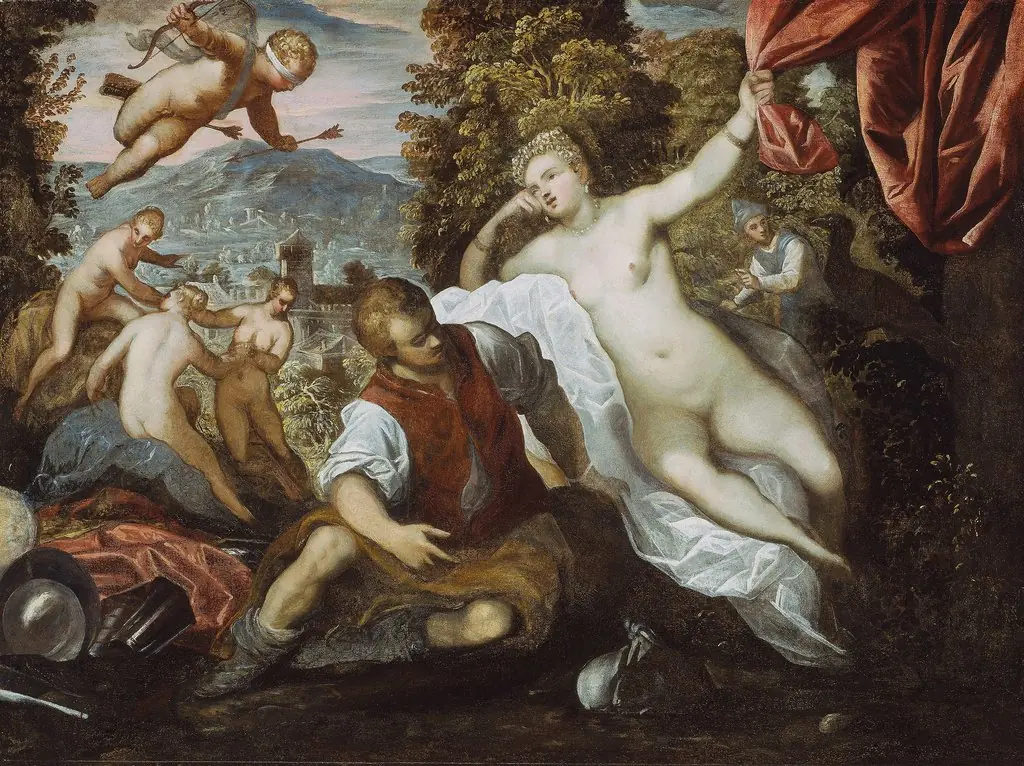 Venus and Mars with Cupid and the Three Graces in a Landscape
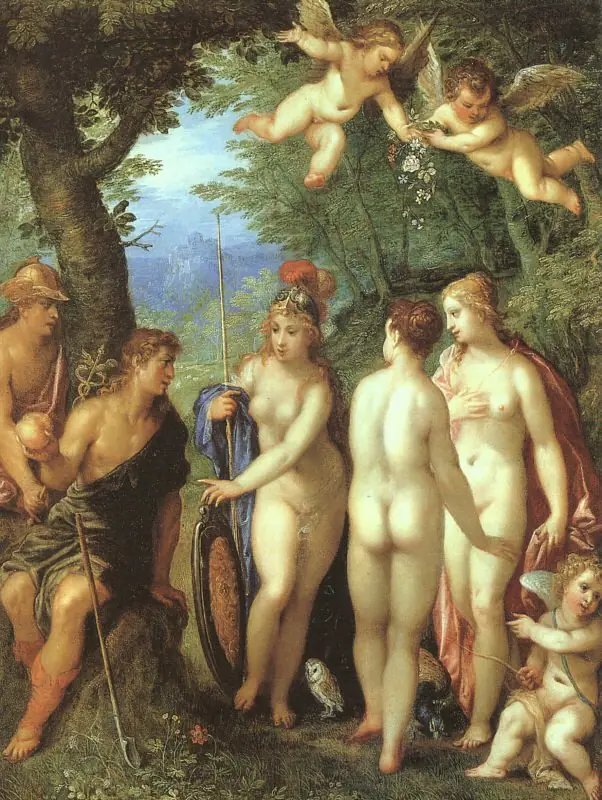 The Judgement of Paris by Hendrick van Balen
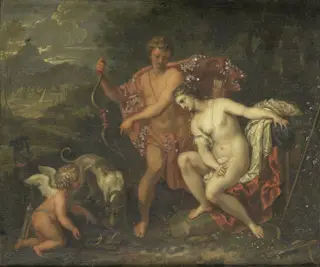 Meleager and Atalanta
- Venus, Adonis and Cupid