Artwork
Viaje de Jacob a Caná
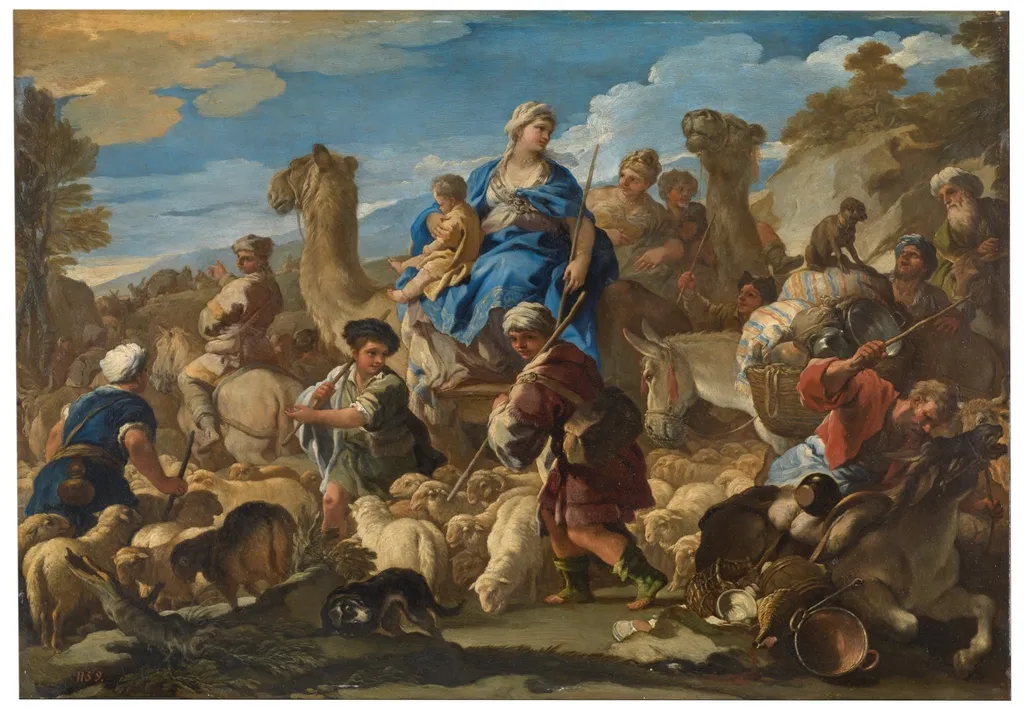
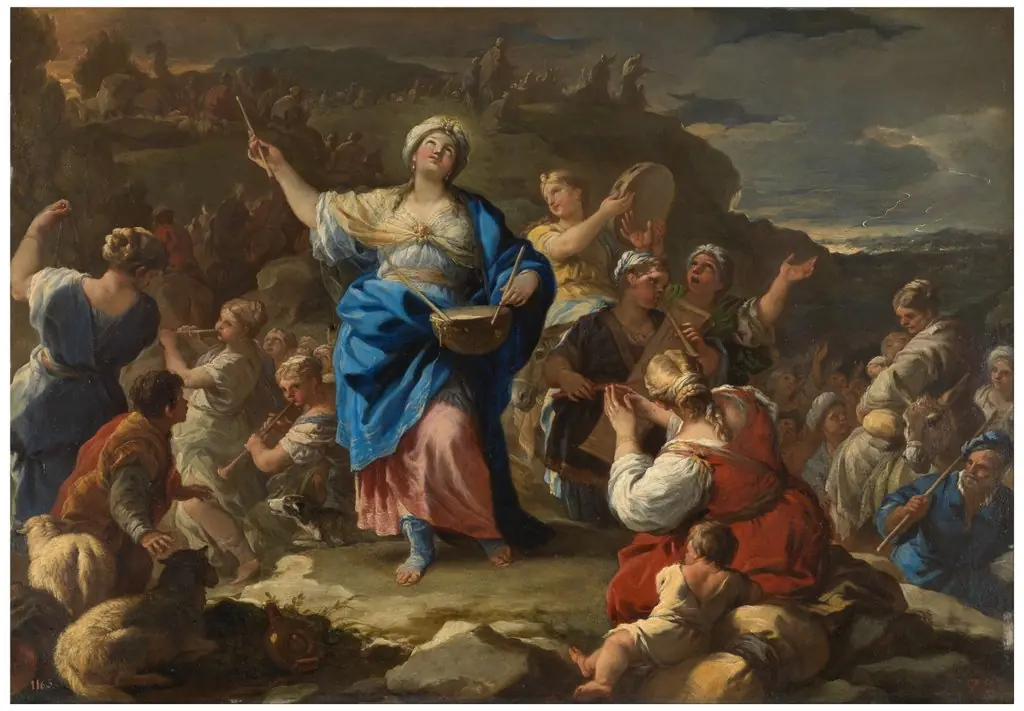
Viaje de Jacob a Caná is an oil painting by the Early Baroque Italian artist Luca Giordano. It dates from 1694 and is held in the collection of the Museo del Prado.
About this work
Subject & Meaning
The inclusion of such details reflects Baroque interest in vivid, narrative-rich scenes that blend the sacred story with everyday material culture.
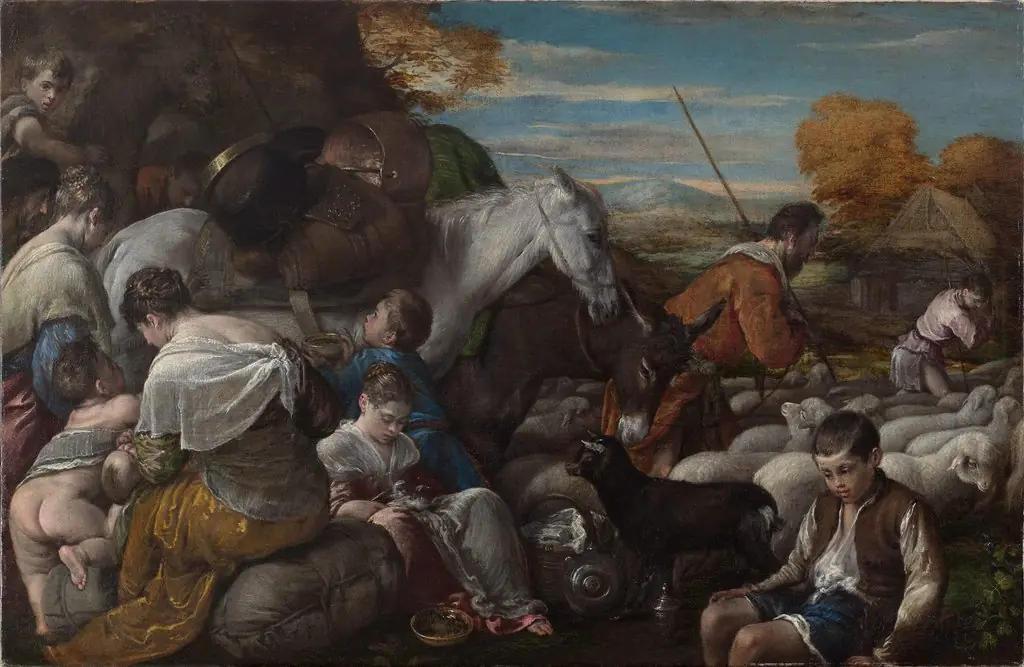
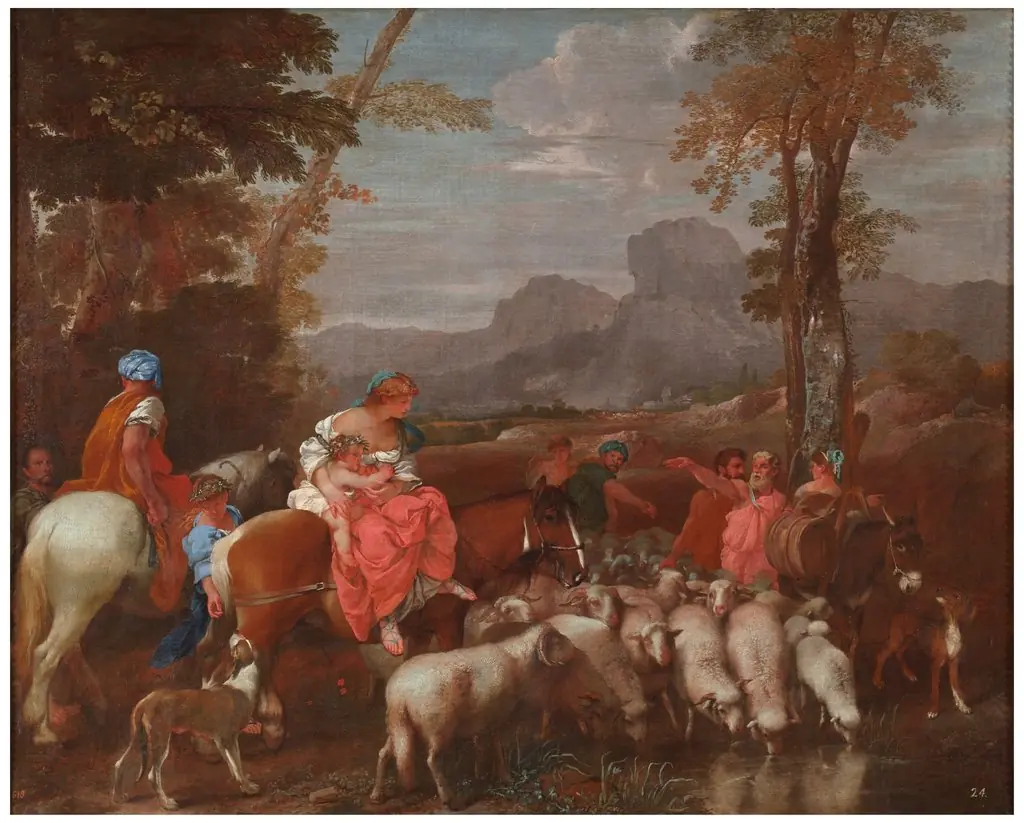
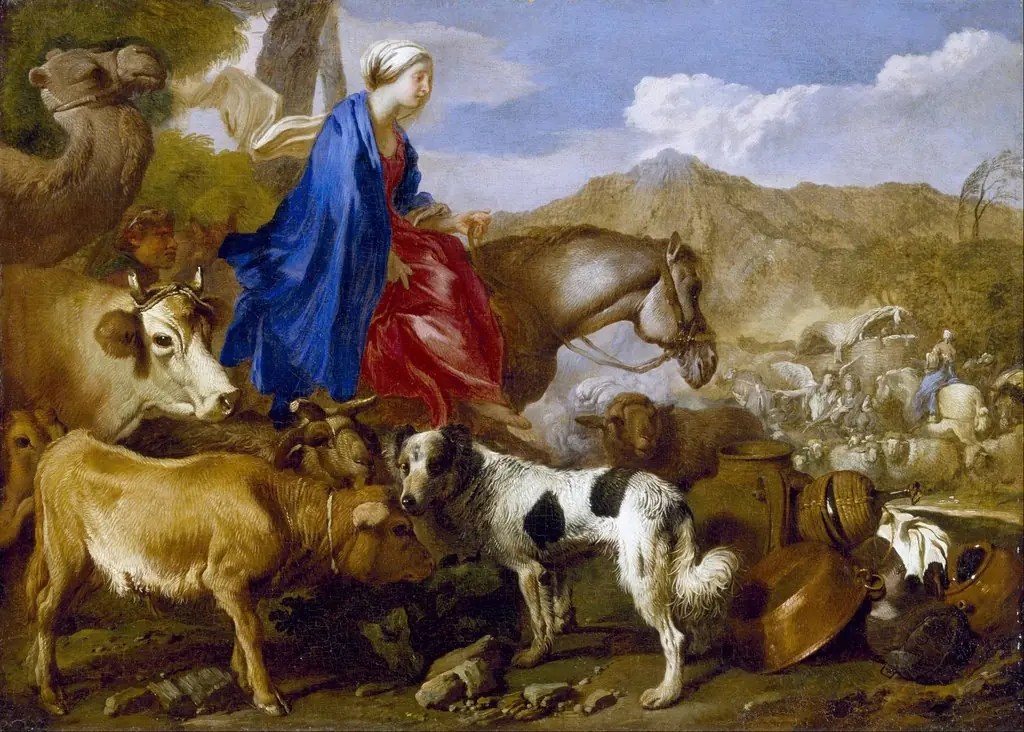
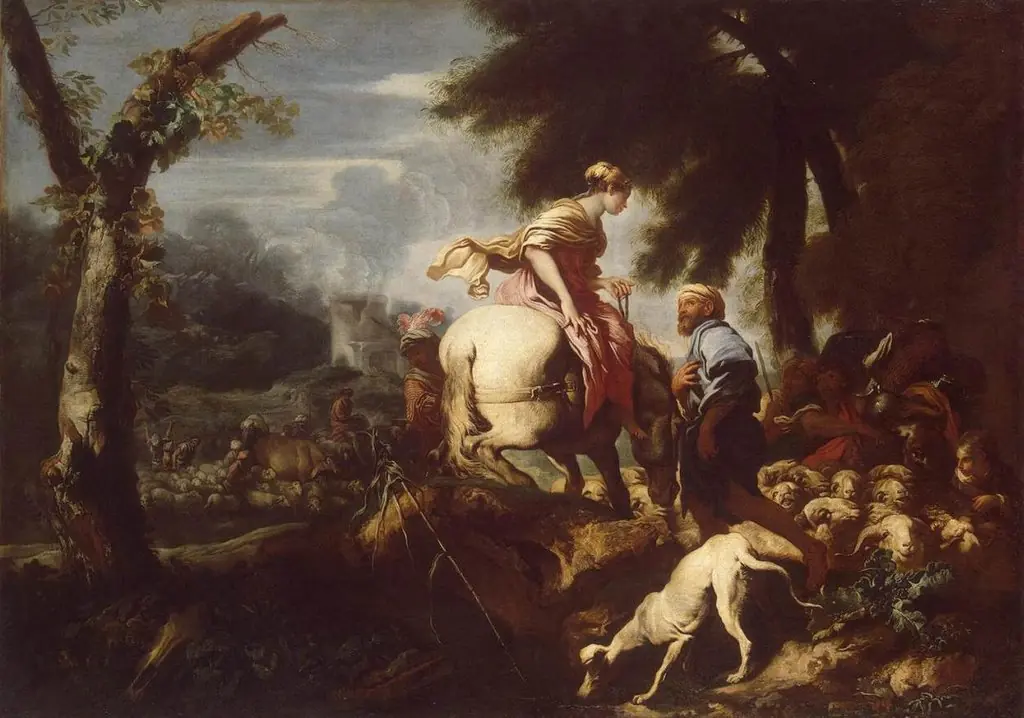
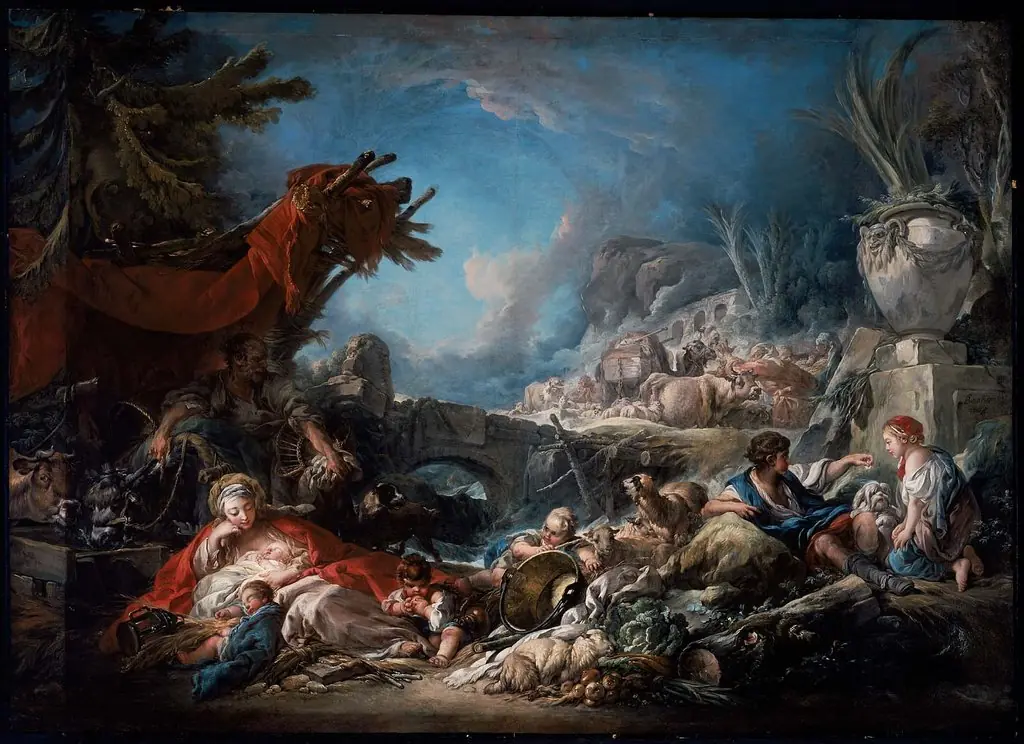
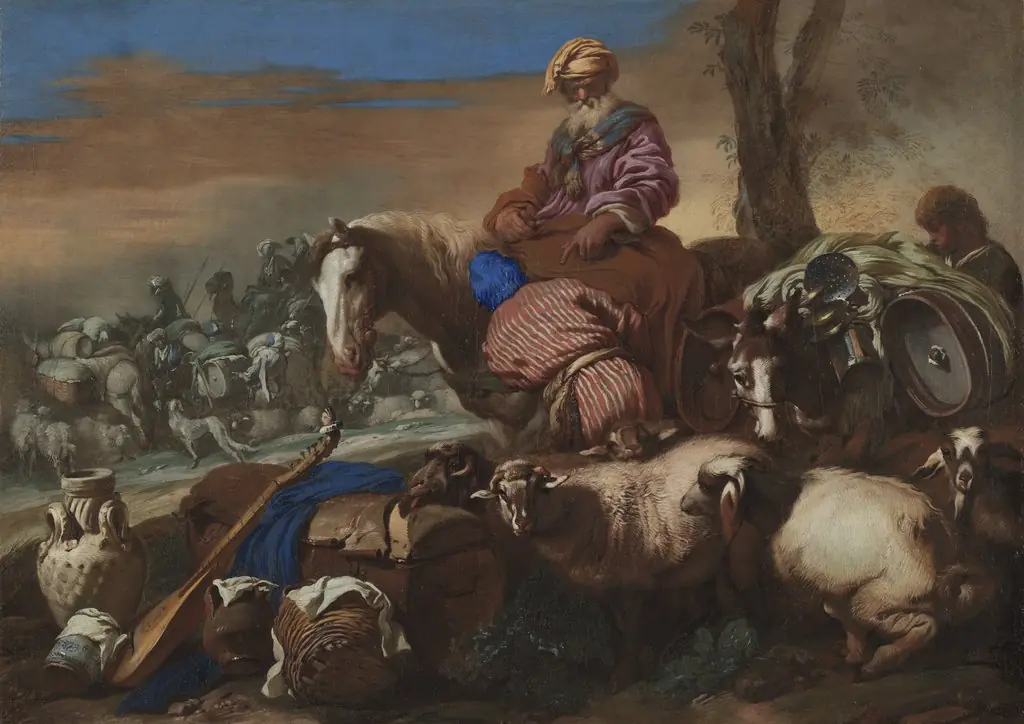
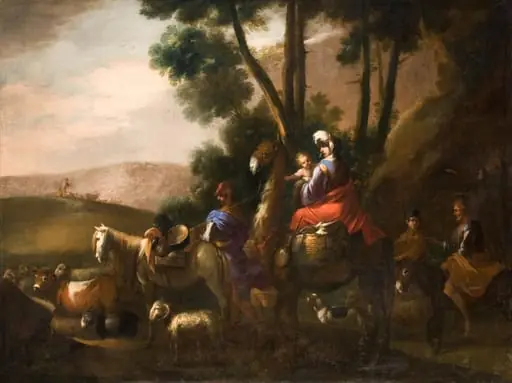
The work illustrates the biblical episode of Jacob’s journey to Canaan, as indicated by its title. It presents the patriarch Jacob together with Rebecca, his mother‑in‑law, amid a domestic setting that includes a kitchen utensil and a group of livestock, goat, horse, donkey and camel. These elements function symbolically, emphasizing the ordinary household context of the narrative and highlighting themes of migration, divine promise, and familial ties.
The inclusion of such details reflects Baroque interest in vivid, narrative-rich scenes that blend the sacred story with everyday material culture.
Technique & Style
Luca Giordano's Viaje de Jacob a Caná, executed in 1687, is an oil painting created on a support incorporating copper leaf. The work measures 59 cm in height and 84 cm in width. Stylistically, the composition depicts a narrative scene populated by figures including Jacob and Rebecca, alongside various animals such as a goat, horse, donkey, and camel.
The inclusion of kitchen utensils further defines the visual content of the piece. The application of copper leaf alongside oil paint suggests a specific material approach characteristic of the artist's handling of the medium during this period.
History & Provenance
Luca Giordano created the oil painting Viaje de Jacob a Caná in 1687. The work was executed on a support combining oil paint with copper leaf. Historical records indicate that the painting was owned by Ferdinand VII of Spain. It is currently held in the collection of the Museo del Prado.
Viaje de Jacob a Caná is held in the Museo del Prado. The painting entered the Spanish royal collection under Ferdinand VII of Spain, who is recorded as a former owner. It is catalogued as part of the museum's holdings of works by Luca Giordano.
No specific inventory or accession number is recorded in the available sources, and no exhibition history beyond its presence in the Museo del Prado collection is documented.
Overview
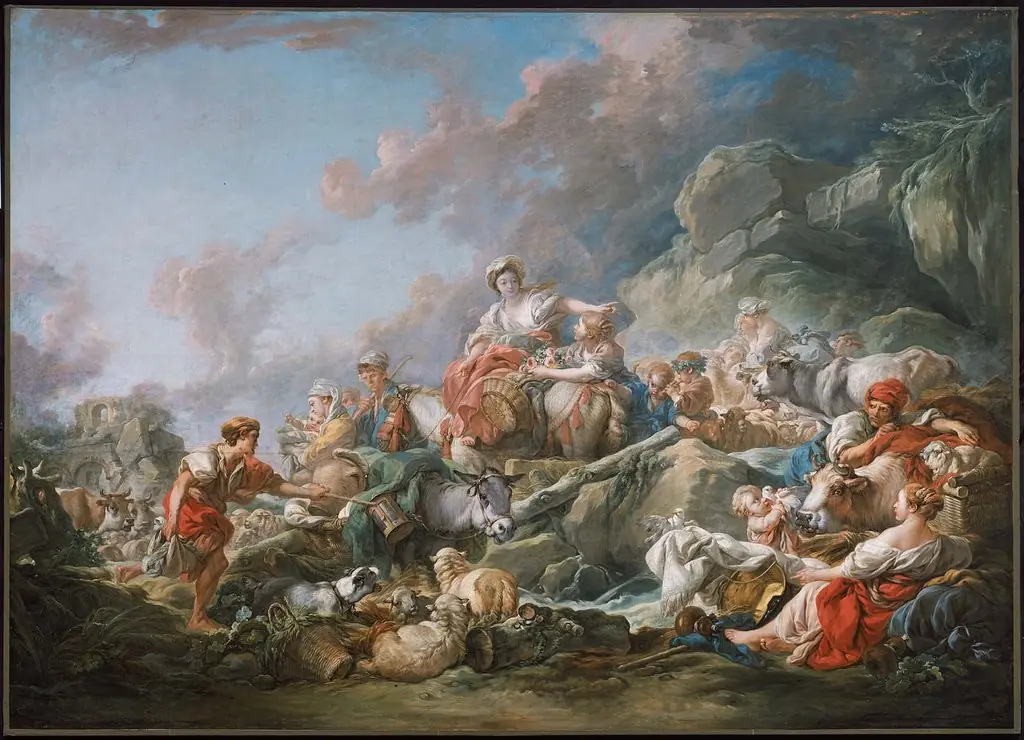
Luca Giordano's Viaje de Jacob a Caná, executed in 1694, depicts the biblical patriarch Jacob leading his family and flocks from Mesopotamia to Canaan. The composition captures a dynamic migration across a rugged, rocky landscape under a luminous sky. Central to the scene is a woman in blue holding an infant, standing on a cart drawn by a donkey, symbolizing the vulnerable core of the journey.
Surrounding this focal point, numerous figures engage in the labor of travel: men herd sheep, carry bundles, and guide a camel and a horse, creating a sense of organized movement and narrative urgency. Giordano employs his characteristic late-Baroque style, utilizing rapid, fluid brushwork and a vibrant palette to convey the energy of the procession. Painted during the artist's mature period, shortly before his departure for Spain, this work exemplifies his ability to synthesize complex biblical narratives with theatrical composition and atmospheric depth.
The painting reflects the artist's mastery in balancing detailed figural groups with expansive, sun-drenched settings, a hallmark of his prolific output in the late 17th century.
Own this work as a print
Artist & collection

Artist
Luca Giordano was an Italian late-Baroque painter and printmaker in etching. Giordano was one of the most celebrated artists of the Neapolitan Baroque, whose vast output included altarpieces, mythological paintings and…