Artwork
Rubens painting ‘The Allegory of Peace’
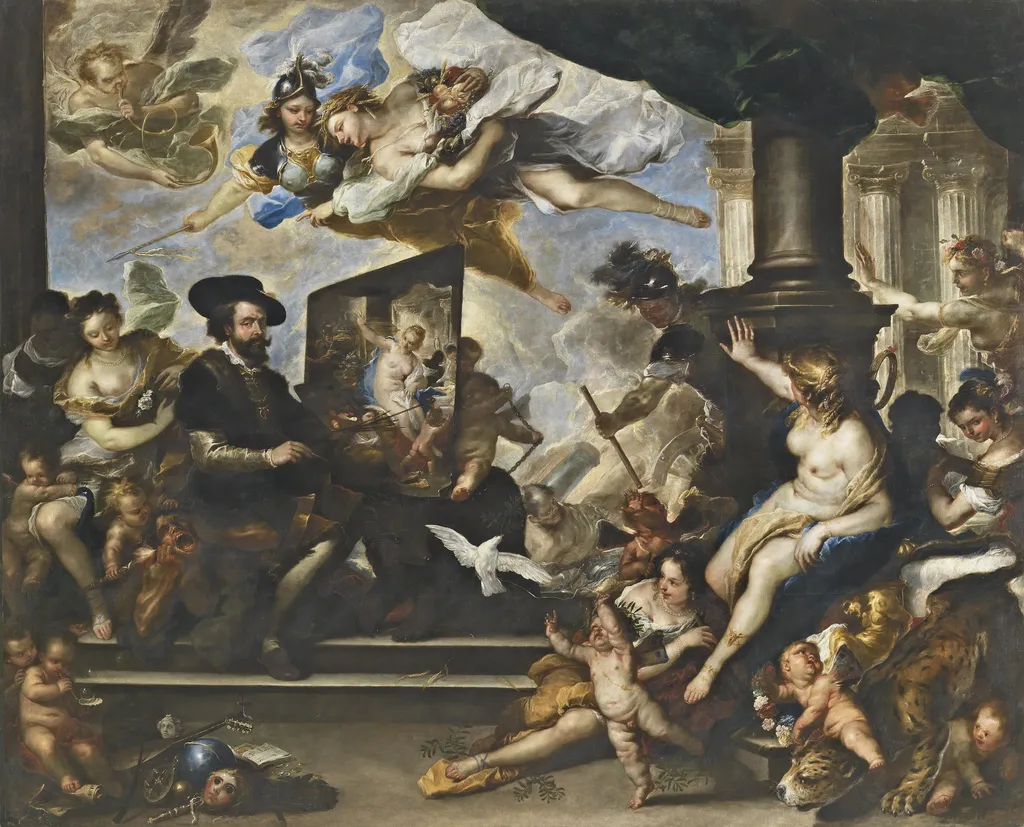
Rubens painting ‘The Allegory of Peace’ is an oil painting by the Early Baroque Italian artist Luca Giordano. It dates from 1660 and is held in the collection of the Museo del Prado.
About this work
Technique & Style
The work is held in the Museo del Prado, Madrid, within the Royal Palace collection, having entered the Spanish royal holdings under Ferdinand VII of Spain.
The Allegory of Peace is executed in oil paint on canvas, a standard support for large-scale allegorical compositions of the period. The work measures 337 cm in height by 414 cm in width, indicating an ambitious, room-dominating format suited to its grand allegorical subject.
The painting belongs to the genre of allegory and incorporates a dense iconographic programme, depicting body armor, a combat helmet, a scientific instrument, a trumpet, a book, sculpture, a painting, and an orb. This accumulation of symbolic objects reflects Luca Giordano's characteristic handling of complex, multi-figure allegories, in which attributes of war, learning, and the arts are juxtaposed to convey a unified message of peace.
Dated to 1660, the canvas was produced during Giordano's mature Neapolitan period, when his fluid brushwork and bright palette were well established. The work is held in the Museo del Prado, Madrid, within the Royal Palace collection, having entered the Spanish royal holdings under Ferdinand VII of Spain.
Context
The Allegory of Peace (1660) is an oil on canvas measuring 337 cm × 414 cm that belongs to the allegorical genre and was painted by Luca Giordano. The composition combines symbols of peace, body armor, combat helmet, scientific instrument, trumpet, book, sculpture, painting, and orb, reflecting Baroque visual strategies for diplomatic themes. As part of Giordano’s oeuvre produced for the Spanish court, the work entered the royal collection of Ferdinand VII and is now displayed in the Museo del Prado, Royal Palace of Madrid.
Contemporary scholarship interprets the painting as a culmination of Giordano’s synthesis of Italian dynamism with Spanish ornamental tradition, marking a notable episode in the development of European allegorical painting.
Overview
The work titled Rubens painting ‘The Allegory of Peace’, executed in oil paint by Luca Giordano around 1660, is a complex allegorical composition. This painting, currently housed at the Museo del Prado, presents a vibrant and densely populated scene. It combines classical and symbolic elements to convey its central theme, utilizing a dynamic arrangement of figures and objects. The work exemplifies Giordano's characteristic approach to large-scale narrative painting.
Subject & Meaning
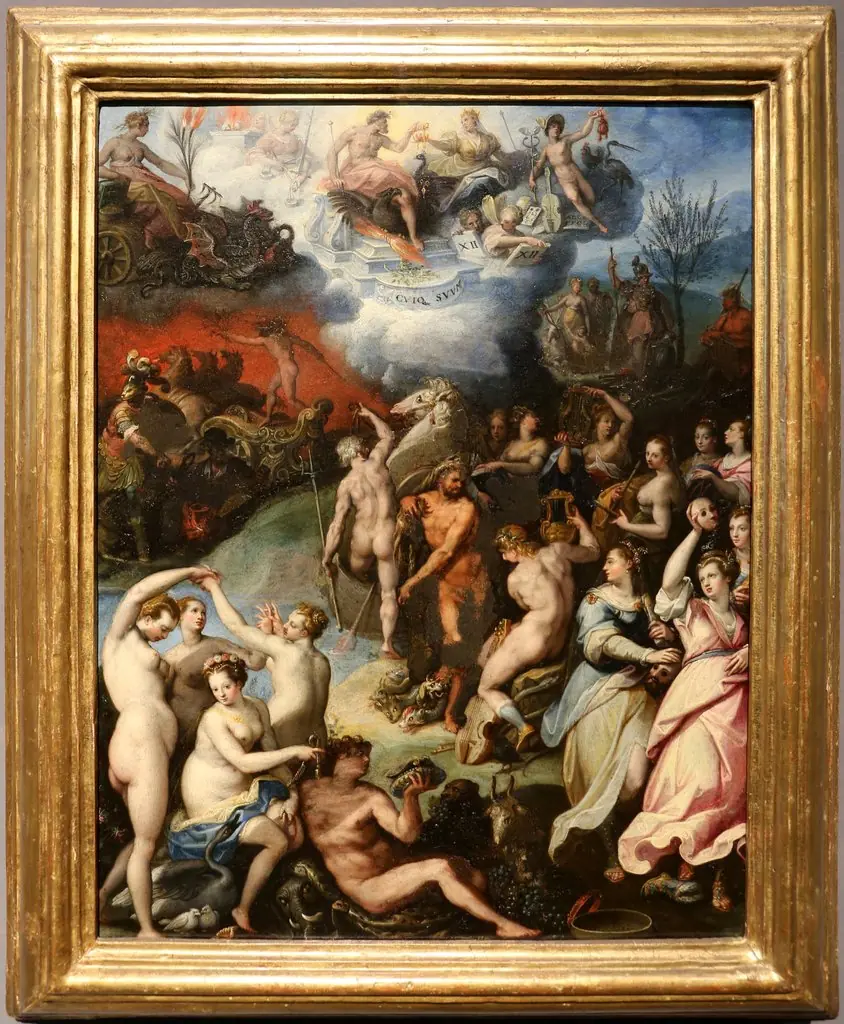
The painting visually articulates the concept of peace through a rich array of symbolic imagery. Central to the composition is a figure, possibly an artist, holding a paintbrush, surrounded by various half-naked figures. Objects like body armor, a combat helmet, and a trumpet lie discarded, suggesting the cessation of conflict.
A floating woman and numerous cherubs further enhance the allegorical narrative, implying a divine or triumphant aspect to the arrival of peace and the flourishing of arts and knowledge, represented by books and classical ruins.
Own this work as a print
Artist & collection

Artist
Luca Giordano was an Italian late-Baroque painter and printmaker in etching. Giordano was one of the most celebrated artists of the Neapolitan Baroque, whose vast output included altarpieces, mythological paintings and…

- The Apotheosis of Henri IV
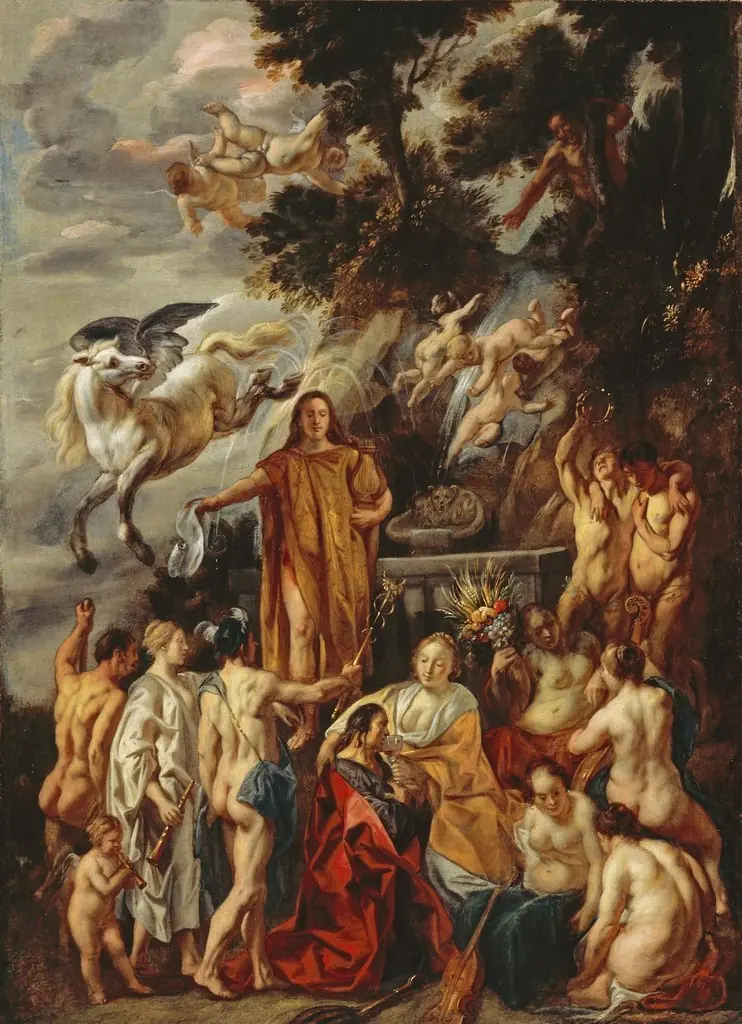 Allegory of the Poet
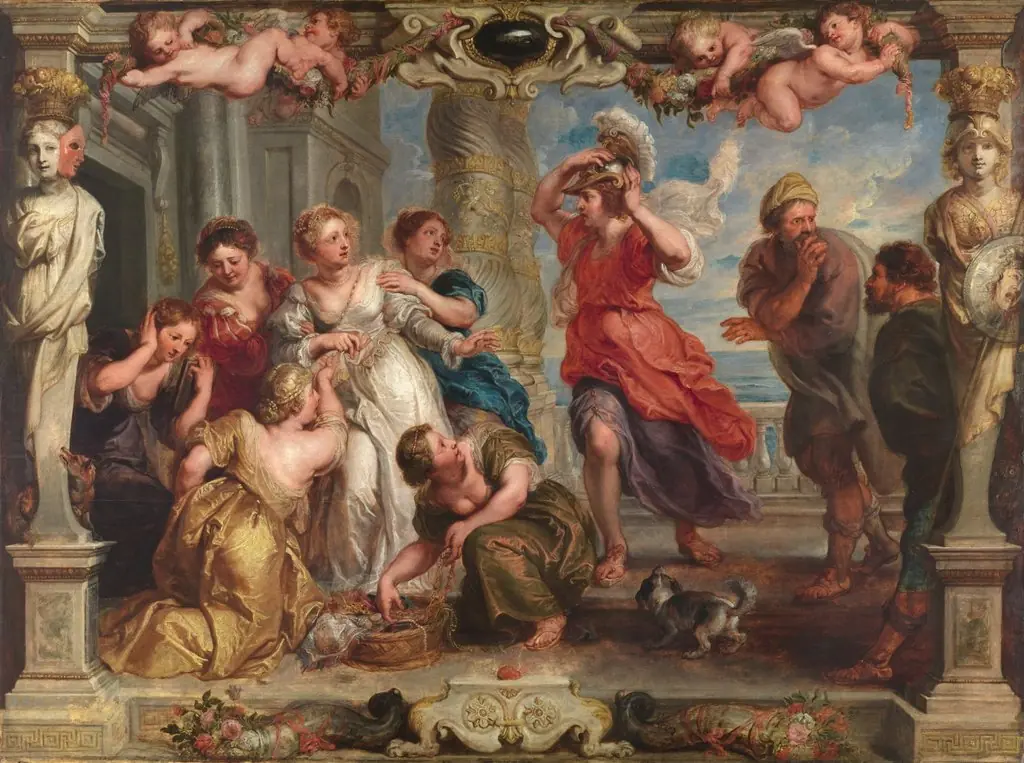 Achilles discovered Among the Daughters of Lycomedes
 The Triumph of Rome: The Youthful Emperor Constantine Honouring Rome
 Triumph of Time
 Allegory on Science. Minerva and Cronus protect Science against Envy and Ignorance
 Bacchus and Ariadne
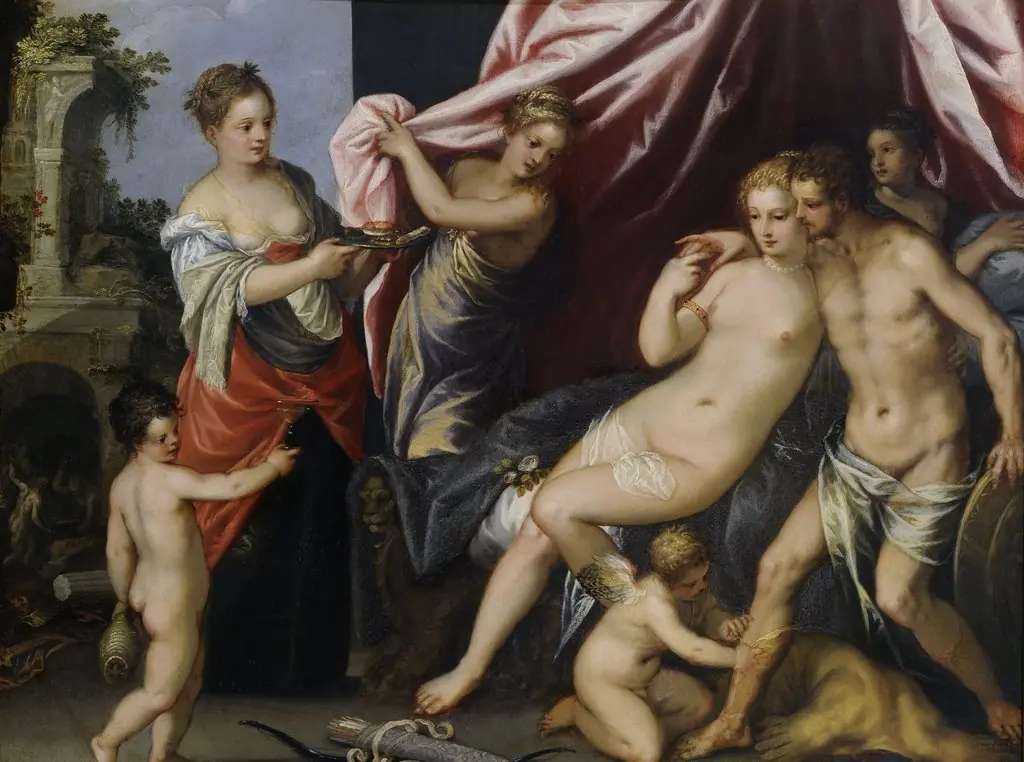 Venus and Mars
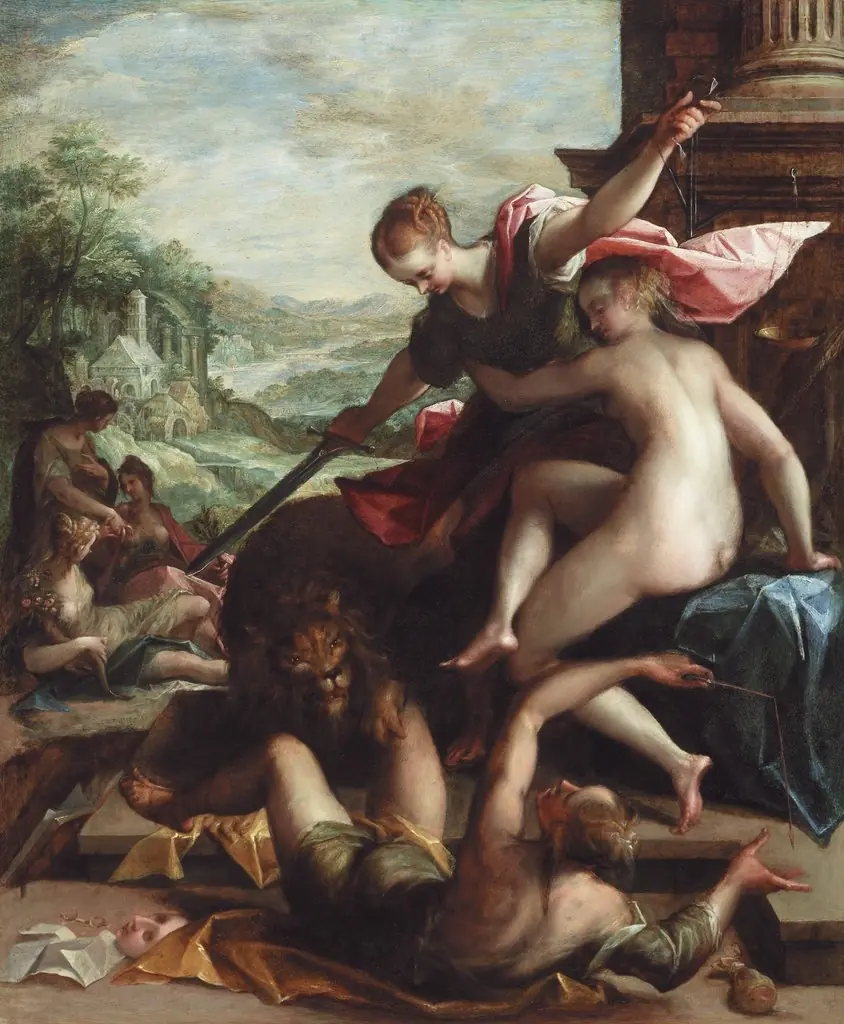 The Triumph of Truth
 Gastmahl des Achelous
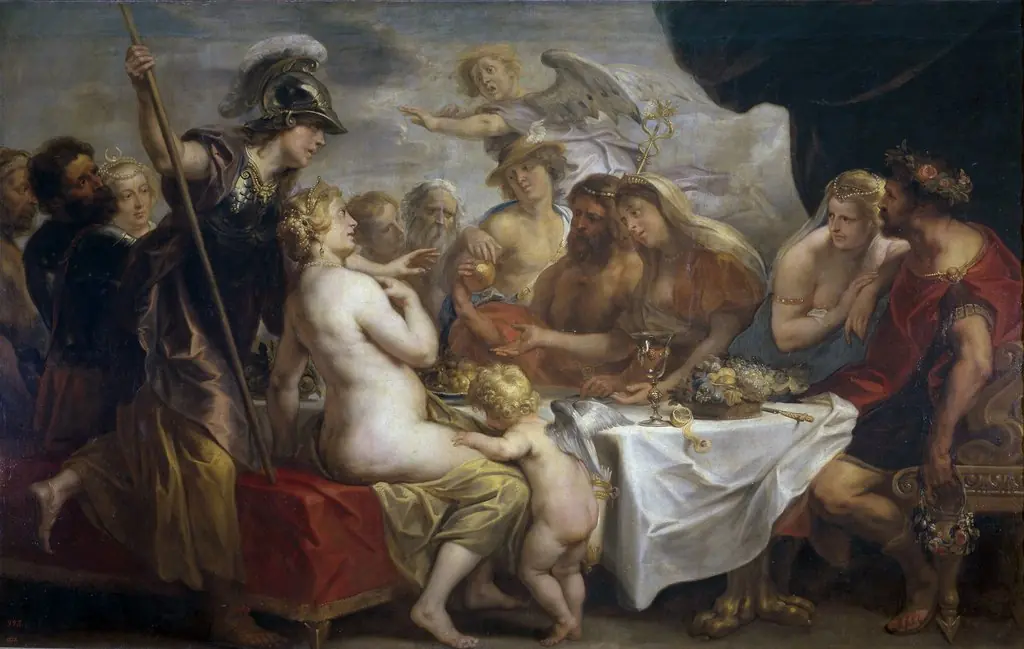 The wedding of Thetis and Peleus
 Hercules Musagetes and the gods of Olympus