Artwork
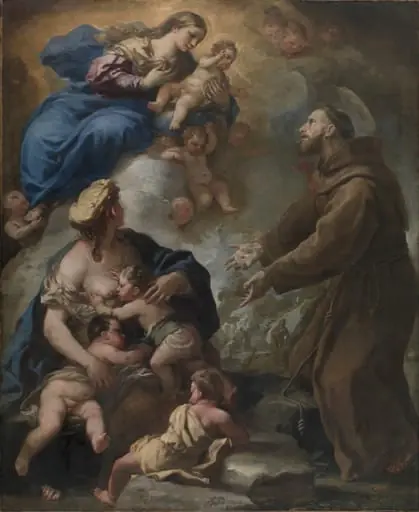
The Virgin and Child Appearing to Saint Francis of Assisi
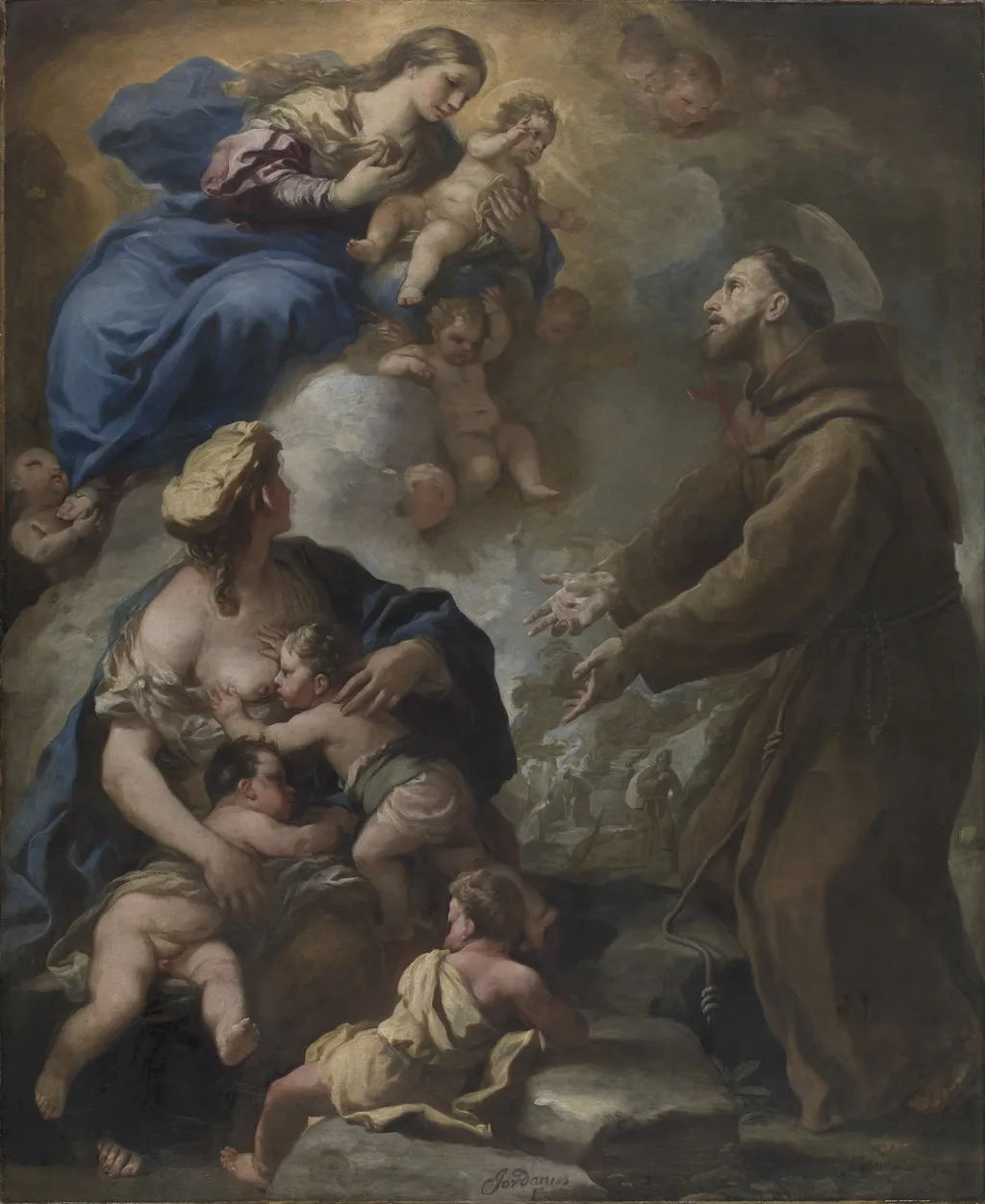
The Virgin and Child Appearing to Saint Francis of Assisi is an oil painting by the High Baroque Italian artist Luca Giordano. It dates from 1692 and is held in the collection of the Cleveland Museum of Art.
About this work
Subject & Meaning
According to the Wikidata record, the work portrays Mary, the Christ Child, and Francis of Assisi as its central figures.
The painting depicts a vision in which the Virgin Mary and the Christ Child appear to Saint Francis of Assisi, a subject rooted in Franciscan devotional tradition. According to the Wikidata record, the work portrays Mary, the Christ Child, and Francis of Assisi as its central figures. The encounter represents a mystical moment of divine revelation, in which the saint is granted a direct apparition of the Virgin and her Son, underscoring themes of humility, contemplation, and spiritual intimacy central to Franciscan piety.
As a religious work by Luca Giordano, the composition translates this visionary episode into a Baroque visual narrative, emphasizing the saint's receptive devotion before the sacred figures. The iconography situates Francis as the human recipient of a heavenly visitation, linking earthly asceticism with celestial grace through the presence of Mary holding the Christ Child.
Technique & Style
Created in 1684, this religious painting by Luca Giordano is executed in oil paint on a canvas support. The work measures 239.4 centimeters in height and 195.7 centimeters in width, indicating a substantial scale typical of major devotional commissions. As an Italian Baroque production, the piece depicts the Virgin Mary, the Christ Child, and Saint Francis of Assisi within a composition designed for significant visual impact.
The medium of oil on canvas allows for the rich coloration and dynamic handling characteristic of Giordano's style during this period. Currently held in the collection of the Cleveland Museum of Art, the painting retains its original classification as a religious artwork from late 17th-century Italy.
History & Provenance
The Virgin and Child Appearing to Saint Francis of Assisi was painted in 1684 by the Italian artist Luca Giordano, executed in oil on canvas in Italy. The work entered the collection of the Cleveland Museum of Art, where it is presently housed. No further details regarding earlier ownership, commission, or provenance are provided in the available sources.
The Virgin and Child Appearing to Saint Francis of Assisi by Luca Giordano is held in the collection of the Cleveland Museum of Art, accessioned as 1966.125. The painting entered the museum’s holdings in 1966, as recorded in its permanent collection database. Measuring approximately 239.4 cm in height and 195.7 cm in width, the work is executed in oil on canvas and is documented as a religious genre piece created in Italy during 1684.
Overview
The oil painting, titled "The Virgin and Child Appearing to Saint Francis of Assisi," captures a profound religious vision. It depicts a serene female figure holding an infant, surrounded by several children, some of whom appear to float. A bearded man, dressed in a brown monastic robe, stands nearby, his gaze and an upward-pointing hand directed towards the celestial manifestation. The entire scene unfolds beneath a soft, cloudy sky, illuminated by light emanating from the upper left.
Own this work as a print
Artist & collection

Artist
Luca Giordano was an Italian late-Baroque painter and printmaker in etching. Giordano was one of the most celebrated artists of the Neapolitan Baroque, whose vast output included altarpieces, mythological paintings and…


 The Virgin and Child Appearing to Saint Francis of Assisi
 The Vision of Saint Francis
 Lactatio of Saint Bernard of Clairvaux
 Die Fürbitte des Heiligen Gregor für die Seelen im Fegefeuer
 Coronation of the Virgin with Saints Joseph and Francis of Assisi
 The Vision of Saint Francis in the Portiuncula
 Portiuncula
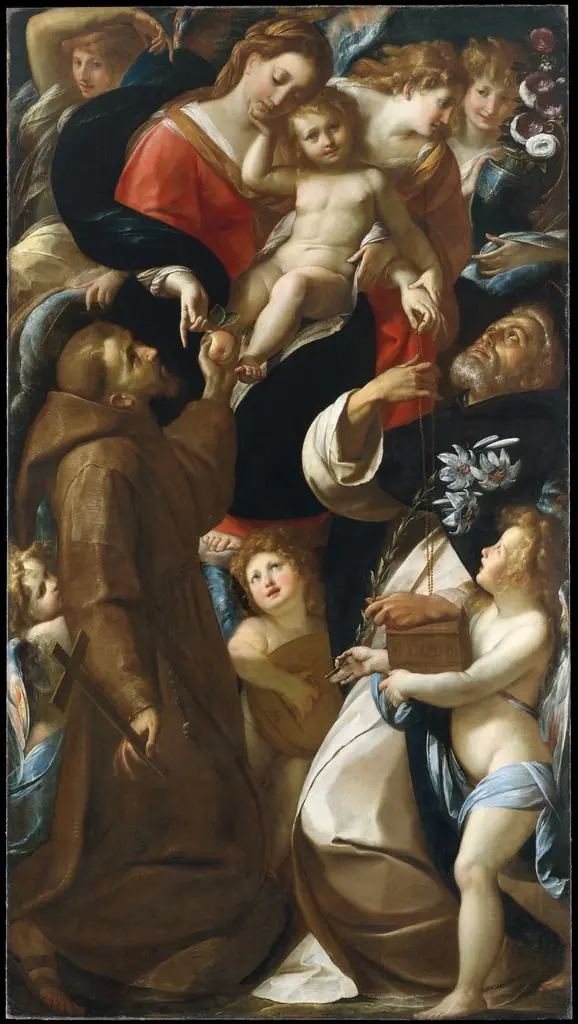 Madonna and Child with Saints Francis and Dominic and Angels
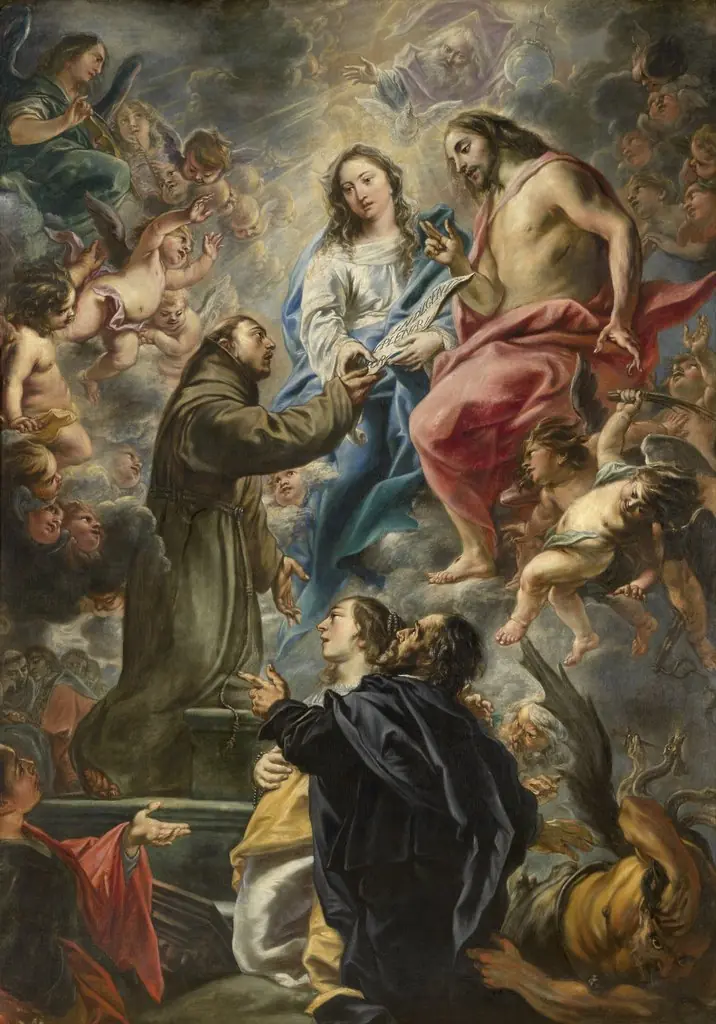 Portiuncula
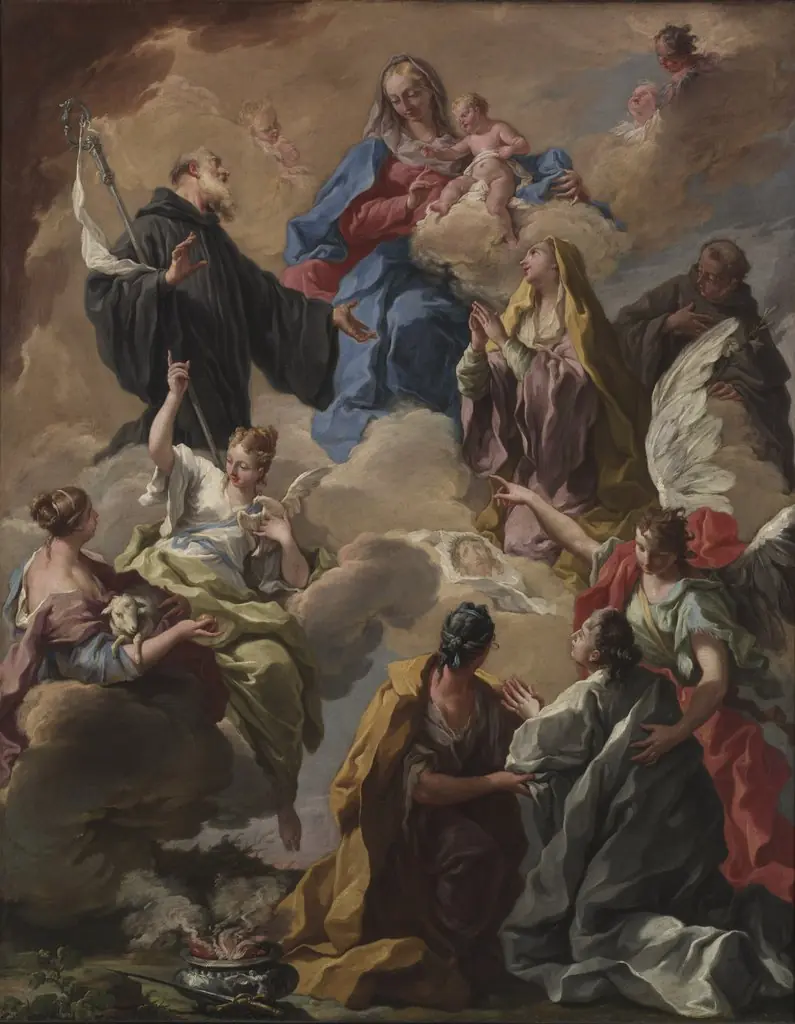 Saints Presenting a Devout Woman to the Virgin and Child