Artwork
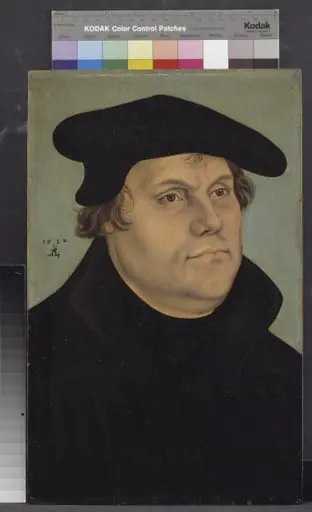
Portrait of Martin Luther
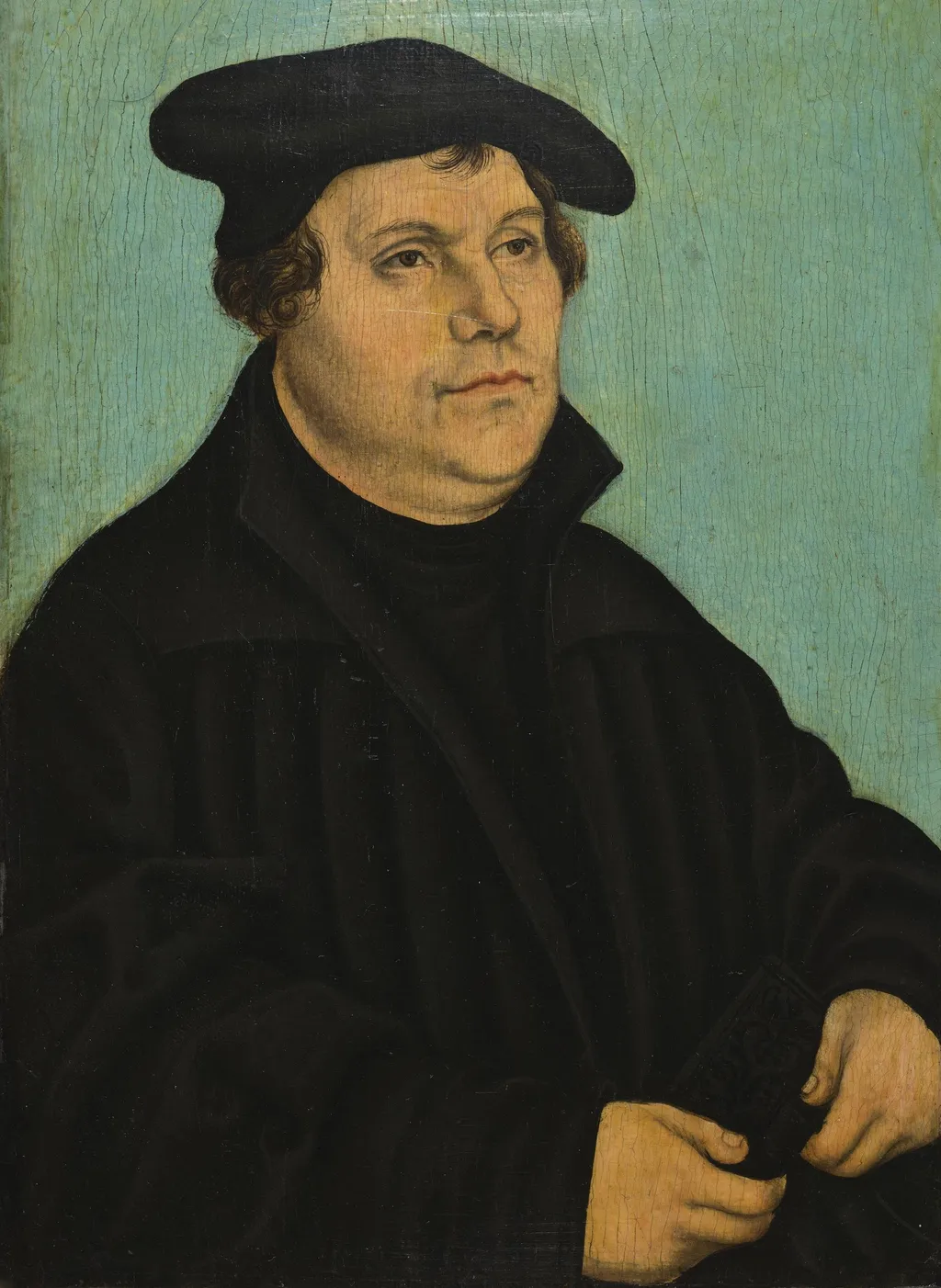
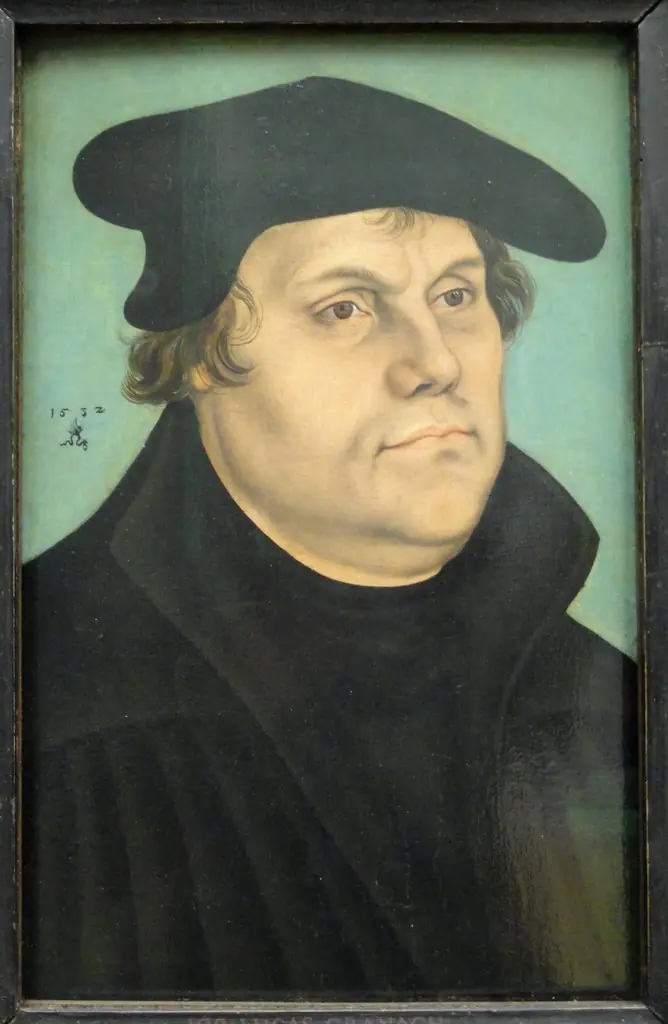
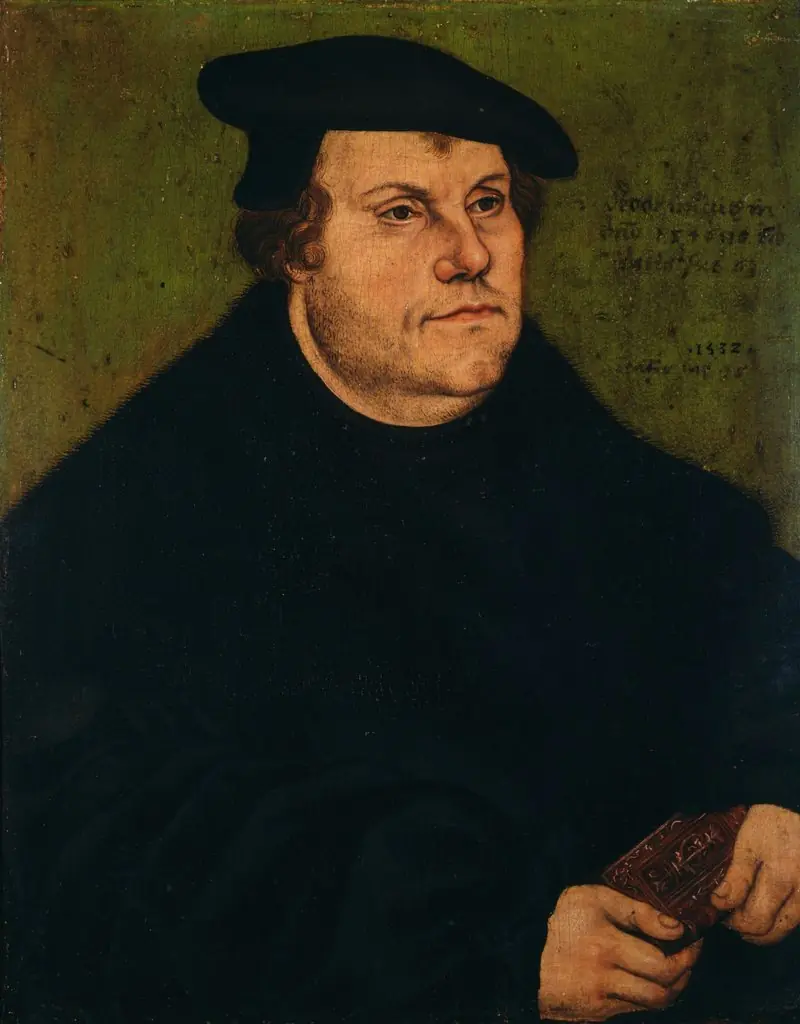
Portrait of Martin Luther is an oil painting by the Northern Renaissance artist Lucas Cranach the Elder. It dates from 1532 and is held in the collection of the Hermitage Museum.
About this work
Overview
Portrait of Martin Luther is an oil on panel painting by the German Renaissance artist Lucas Cranach the Elder, dated to 1532.
Portrait of Martin Luther is an oil on panel painting by the German Renaissance artist Lucas Cranach the Elder, dated to 1532. The work measures 19.5 cm in height and 14 cm in width, making it an intimate, small-scale portrayal of the Protestant reformer. It was created in Germany and is currently housed in the Hermitage Museum. As one of numerous portrayals of Luther produced by Cranach and his workshop, the painting forms part of a broader iconographic series that visually defined the Reformation. The 1532 portrait belongs to a later cycle of designs initiated between 1528 and 1532, distinguishing it from Cranach's earlier 1525 and 1526 depictions of the theologian.
Subject & Meaning
The painting depicts Martin Luther in a half-length, frontal pose against a flat, pale turquoise background. Luther is dressed in a dark, heavy garment with a high collar that fully covers his neck and shoulders, and he wears a soft, wide-brimmed black hat. His hands are visible at the lower right, resting one over the other in a clasped manner. The iconography is strictly focused on the sitter, devoid of jewelry, insignia, or additional objects, and the plain background lacks any landscape, interior, or architectural elements. This lack of flattery and absence of extraneous detail emphasizes a strict ethical stance and the serious, hard expression characteristic of Reformation portraiture. A closely related 1532 panel in Regensburg bears the inscription In Silentio Et Spe Erit Fortitudo Vestra, underscoring the theological virtues of silence and hope associated with the reformer's steadfast resolve.
Technique & Style
Executed in oil on a wooden panel, the painting demonstrates the controlled, meticulous technique of the Northern Renaissance. The palette is restrained, dominated by the deep blacks of the costume and hat, which contrast sharply with the muted, cool background. Cranach rendered the flesh tones with subtle modeling, applying pinkish highlights to the cheeks and lips. Light falls evenly from the left, illuminating the left side of the face and hands while casting soft shadows on the right. The brushwork is smooth and carefully blended in the facial features, transitioning to a more uniform and flat application in the costume and background. The surface currently exhibits extensive craquelure throughout, with fine vertical cracking particularly visible in the background.
History & Provenance
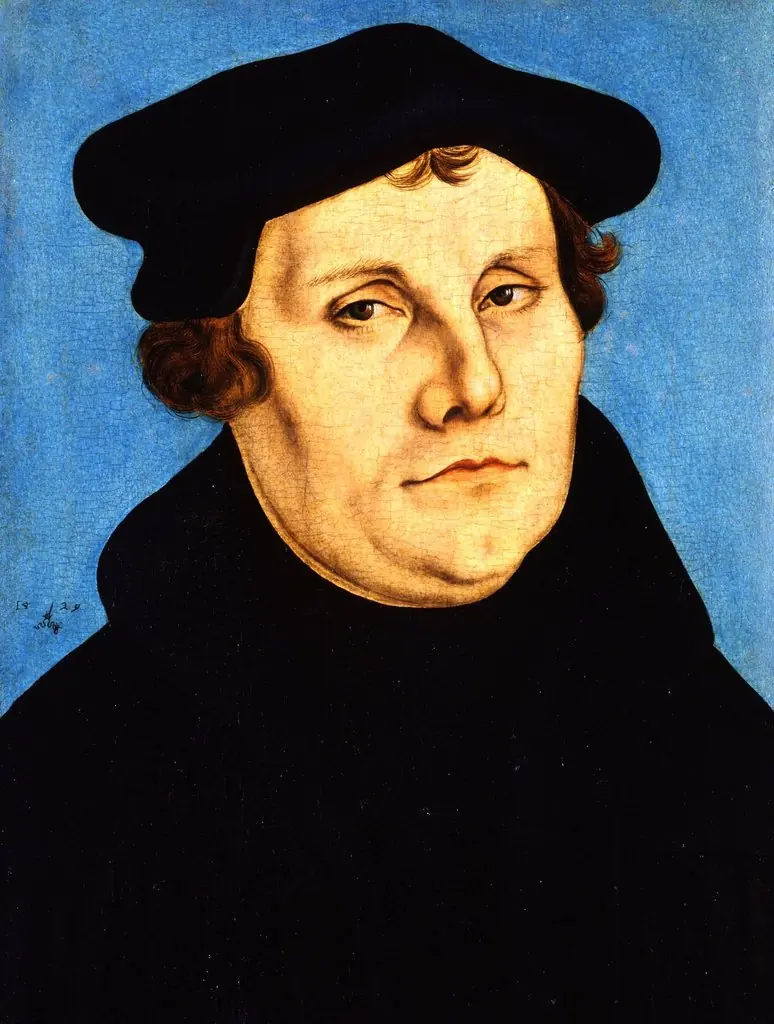
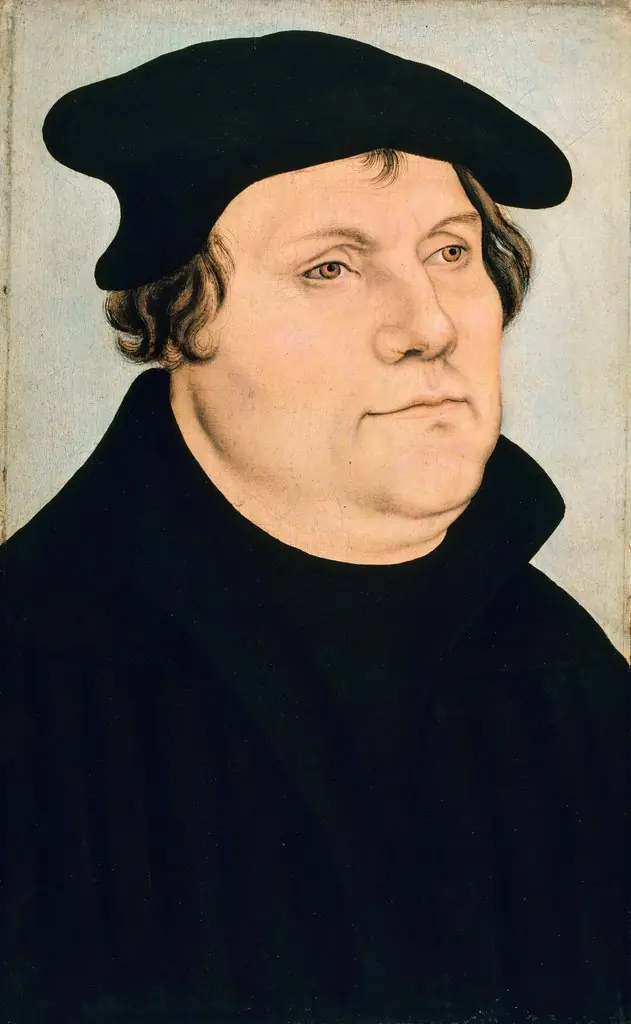
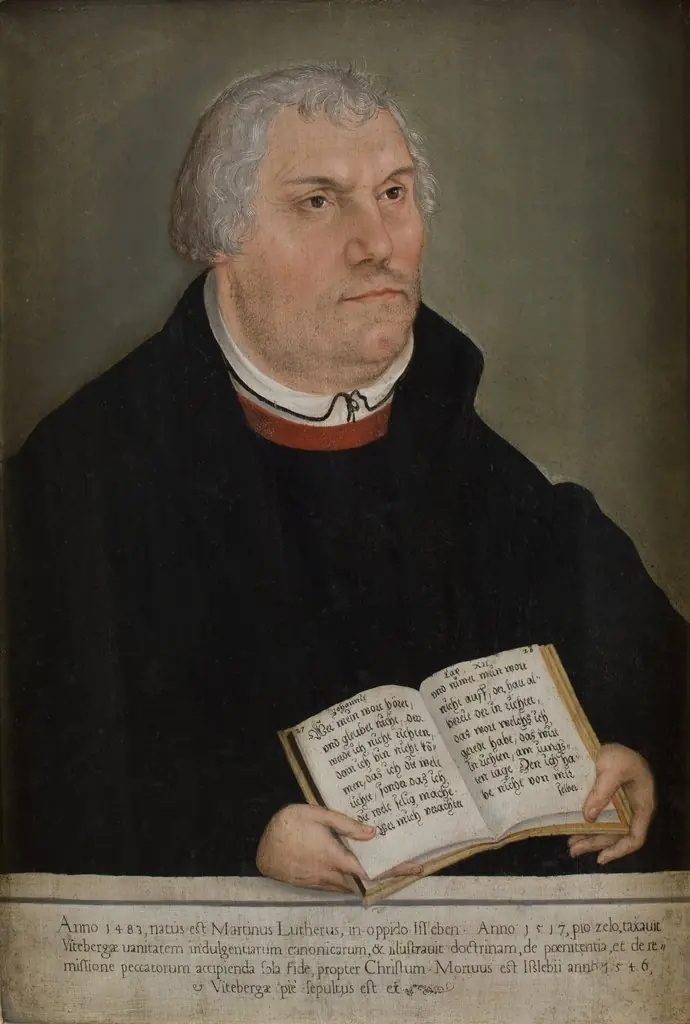
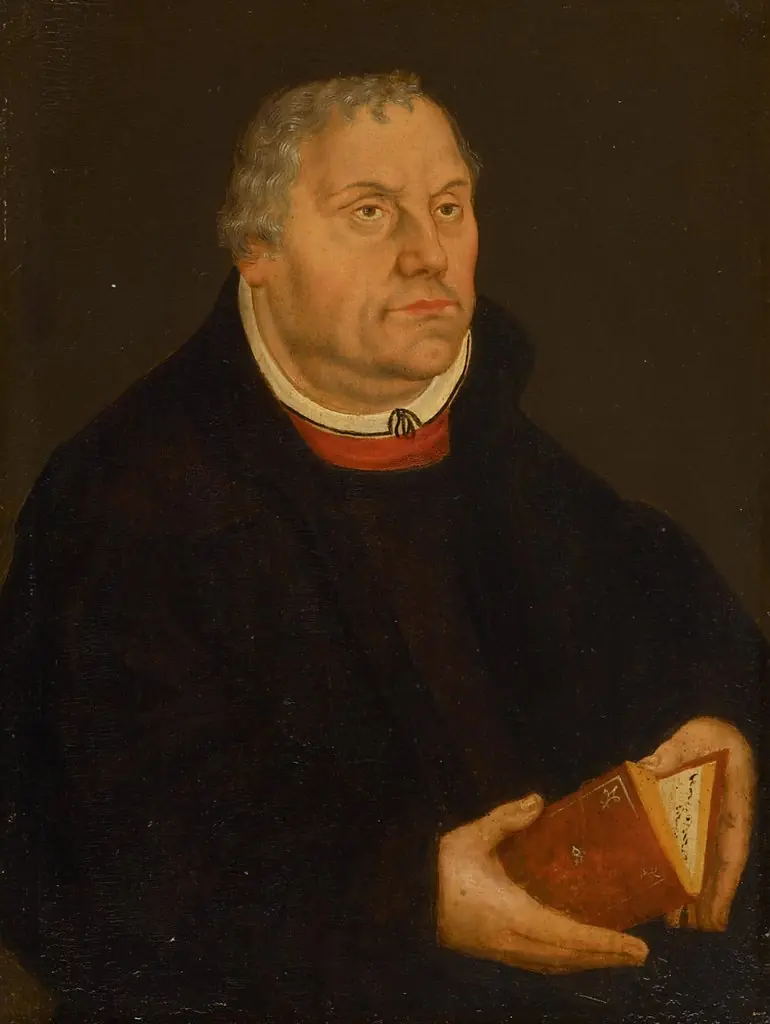
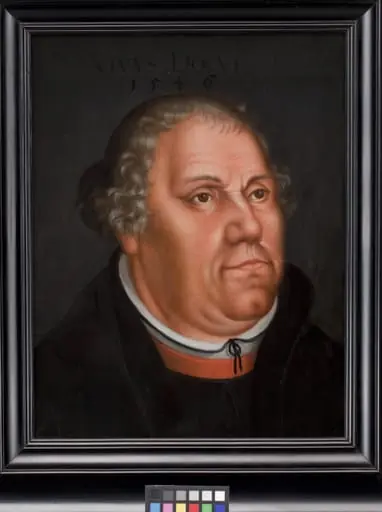
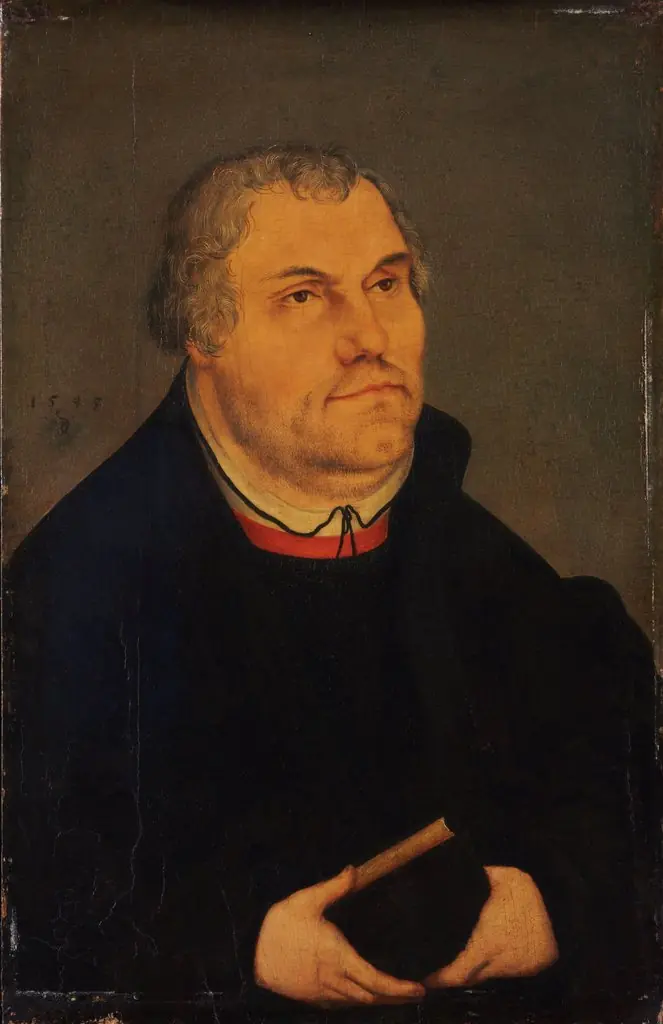
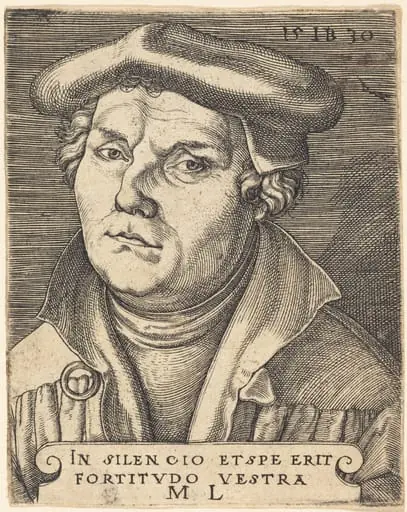
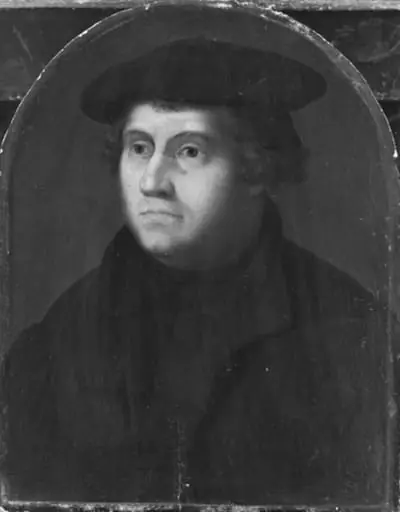
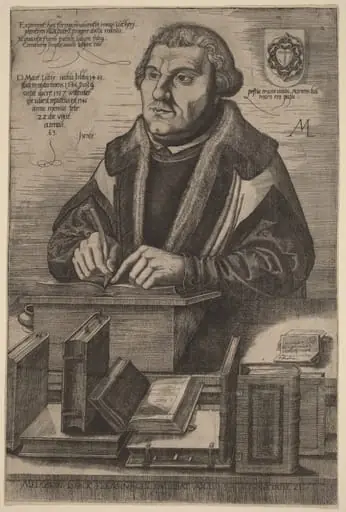
Lucas Cranach the Elder and his prolific workshop produced countless painted and printed portraits of Martin Luther, often making it difficult for scholars to determine the exact extent of autograph contribution. These portraits frequently served as diptychs, paired with depictions of Luther's wife, Katharina von Bora, or his close associate Philipp Melanchthon. The 1532 Hermitage panel belongs to a specific group of later portraits based on new designs developed between 1528 and 1532, following an initial series from 1525 and 1526. While the specific provenance chain for the Hermitage canvas is not fully documented in available records, contemporary attributions for the 1532 Regensburg variant note scholarly debate between an autograph execution by Lucas Cranach the Elder and a workshop production, reflecting the collaborative nature of Cranach's studio practices.
Context
Lucas Cranach the Elder was a central figure in the artistic landscape of northeastern Germany during the first half of the 16th century, regarded alongside Hans Holbein the Younger and Albrecht Durer as a leading representative of the German Renaissance. Active in Wittenberg for 49 years, Cranach was situated at the center of the Protestant movement and maintained a close friendship with Luther, ultimately becoming his appointed portrait painter. Beyond his Lutheran portraiture, Cranach also produced designs for the woodcuts of Luther's 1522 German translation of the New Testament. However, his artistic output was not strictly confined to Protestant themes, as he continued to paint mythological and biblical scenes, images of saints, and even portraits of religious opponents such as Cardinal Albert of Brandenburg.
Legacy
The painted effigies of Martin Luther by Lucas Cranach the Elder have become emblematic representations of the Reformation over time. By establishing a standardized, unflattering, and serious visual vocabulary for the reformer, Cranach's portraits solidified an image of strict ethical conviction that visually anchored the Protestant movement. The widespread dissemination of these portraits, often produced in serial pairs with Katharina von Bora or Philipp Melanchthon, established a lasting template for Reformation iconography. These works continue to define the historical perception of Luther's visage and remain central to the study of how art was mobilized to shape religious and political identity in 16th century Europe.
Own this work as a print
Artist & collection
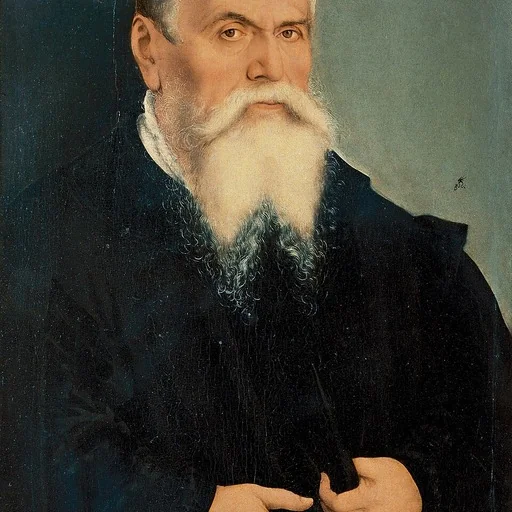
Artist
Lucas Cranach the Elder was a German Renaissance painter and printmaker in woodcut and engraving.