Artwork
Rough sea with ships
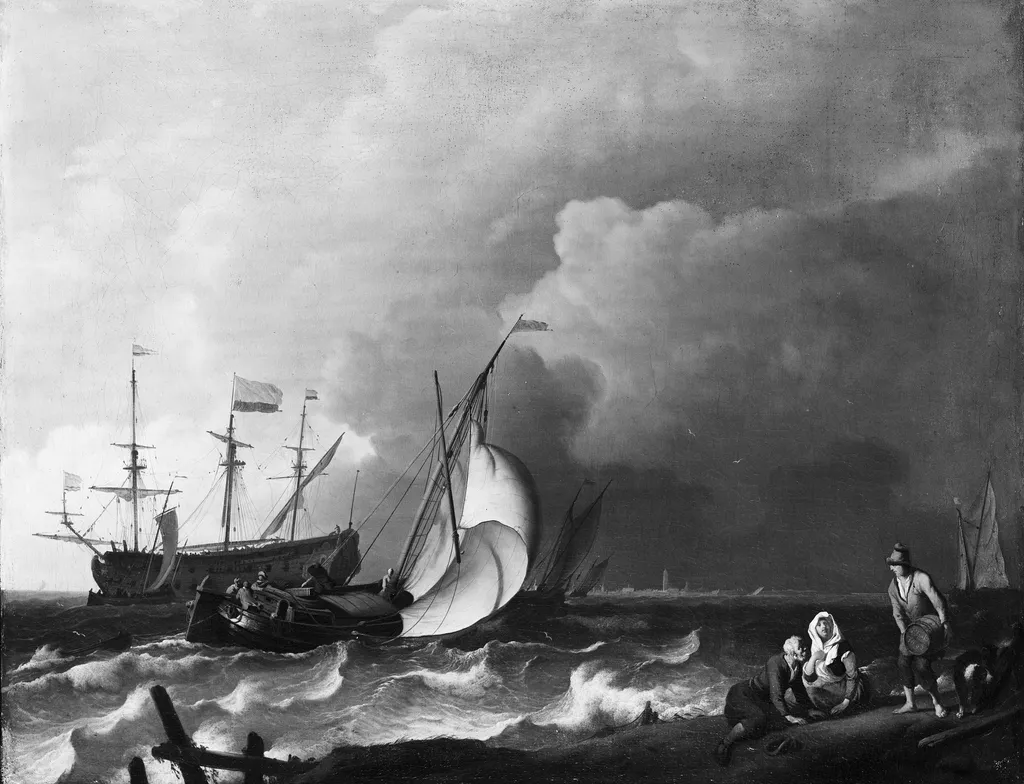
Rough sea with ships is an oil painting by the Dutch Golden Age artist Ludolf Bakhuizen. It dates from 1696 and is held in the collection of the Rijksmuseum.
About this work
Subject & Meaning
On the right shore, a man and a woman sit together as a second man approaches carrying a barrel, accompanied by his dog.
Ludolf Bakhuizen's "Rough sea with ships" presents a turbulent maritime scene dominated by a wildly swelling sea. In the foreground, a tjalk (a Dutch flat-bottomed sailing vessel) carries billowing sails, while a large Dutch men-of-war rides at anchor in the left background. On the right shore, a man and a woman sit together as a second man approaches carrying a barrel, accompanied by his dog.
The horizon reveals the silhouetted contours of a city, backlit by the sun so that it stands out sharply against the dark sky; the identity of this city remains unknown, though the work may have originally formed a pendant with Bakhuizen's "Het IJ voor Amsterdam," also held by the Rijksmuseum. The painting's signature and date, "L. Bakh. / 1692," appear on the lid of the barrel held by one of the foreground figures.
As a marine subject, the work belongs to a tradition in which Dutch artists celebrated the nation's maritime power, juxtaposing small coastal craft and great warships to evoke both everyday seafaring life and naval strength. The contrast between the restless sea and the calm figures on shore introduces a human counterpoint to the elemental drama, while the sunlit cityscape on the horizon anchors the scene in a recognisable Dutch coastal context.
Technique & Style
Rough sea with ships is an oil painting on canvas by Ludolf Bakhuizen, classified as a marine work and dated 1692. The canvas measures 53.5 cm in height by 69 cm in width. The signature and date 'L. Bakh. / 1692' are placed in the lower left, inscribed on the lid of a barrel held by one of the figures in the right foreground.
Stylistically, the composition contrasts a turbulent foreground sea with a calmer background in which a large Dutch ship of the line rides at anchor. The handling of light is notable: a sunlit city on the horizon is rendered sharply against a dark sky, though the specific city depicted remains unidentified. The painting was originally conceived as part of a pair, having been auctioned in 1808 with a pendant work.
History & Provenance
The painting is signed and dated 1692 at lower left on the lid of a barrel held by one of the figures, fixing its creation year.
The work entered the recorded market when it appeared in the sale of Pieter Leendert de Neufville (the elder) in Amsterdam on 19 June 1765, having previously belonged to a collector named Van den Enden. By 1782 it was owned by Gerrit van der Pot, lord of Groeneveld, in Rotterdam, who had acquired it from J. de Neufville. The painting was purchased by the Rijksmuseum at the Van der Pot estate sale in Rotterdam on 6 June 1808.
Ludolf Bakhuizen's 1692 marine painting Rough sea with ships is held by the Rijksmuseum in Amsterdam. The work was acquired by the museum on June 6, 1808, following the estate auction of the Rotterdam collector Gerrit van der Pot. Prior to this acquisition, the painting was part of the collection of Pieter Leendert de Neufville, having possibly been sold at his auction in 1765, before passing to Van der Pot in 1782.
The source material does not list specific inventory or accession numbers for the work. While the painting was sold with a pendant in 1808, no specific exhibition history is recorded in the provided texts.
Context
Ludolf Bakhuizen’s Rough sea with ships (1692) is widely recognized as a quintessential example of Dutch Golden Age marine painting, celebrated for its dramatic rendering of stormy waters and meticulous depiction of contemporary Dutch shipping. Scholars emphasize Bakhuizen’s mastery in capturing atmospheric turbulence and the technical precision of ship rigging, aligning the work with the era’s broader emphasis on maritime prowess and global trade.
The painting’s critical reception has historically underscored its dynamic composition and emotional intensity, positioning it within the genre’s tradition of evoking both awe and peril. Its inclusion in the Rijksmuseum’s collection since 1808 reflects its sustained institutional significance, while its documented pendant relationship to Het IJ voor Amsterdam (also in the Rijksmuseum) situates it within a broader narrative of Dutch landscape and marine art of the late seventeenth century.
Overview
Rough sea with ships is a 1696 oil painting by Ludolf Bakhuizen, a prominent Dutch artist of maritime scenes.
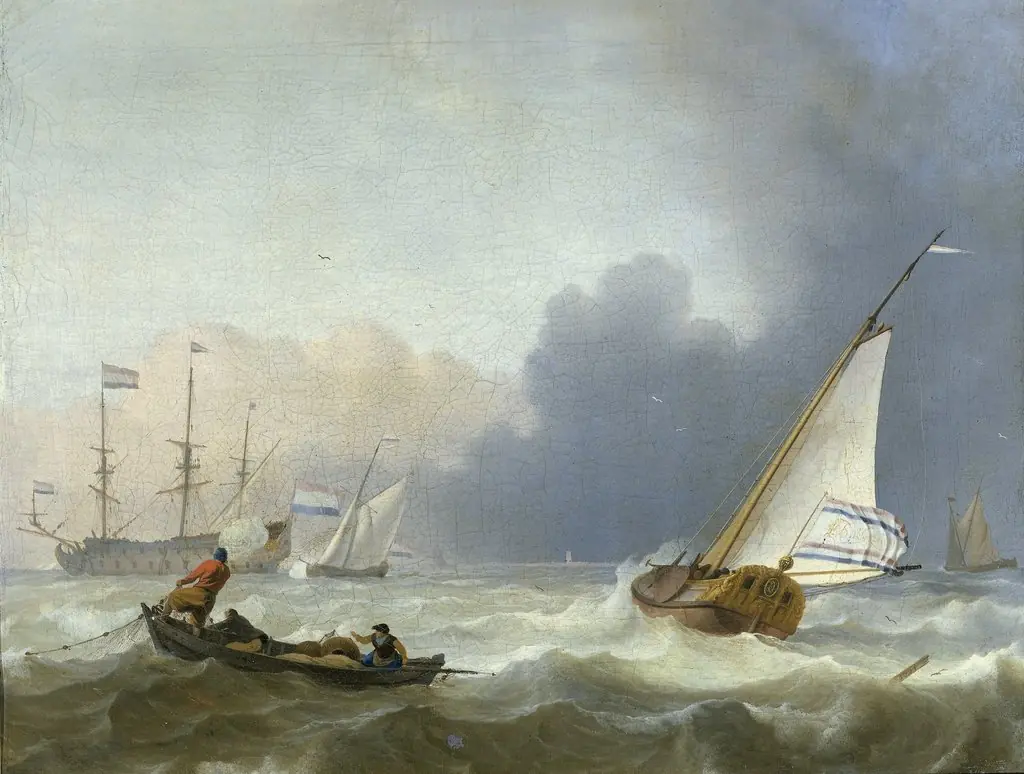
Own this work as a print
Artist & collection
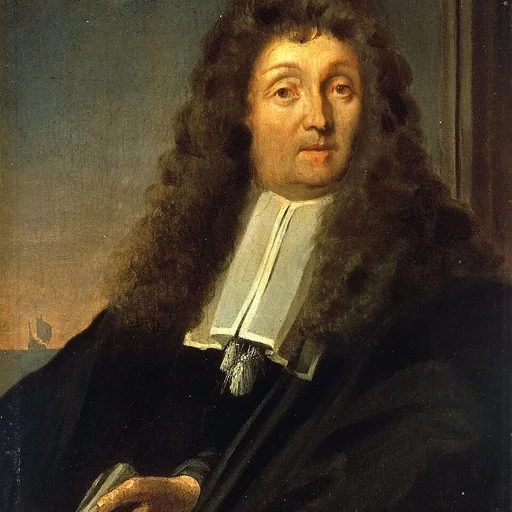
Artist
Ludolf Bakhuizen (28 December 1630 or 1632 – 7 November 1708) was a German-born Dutch painter, draughtsman, calligrapher and printmaker.

 Ships in Distress off a Rocky Coast
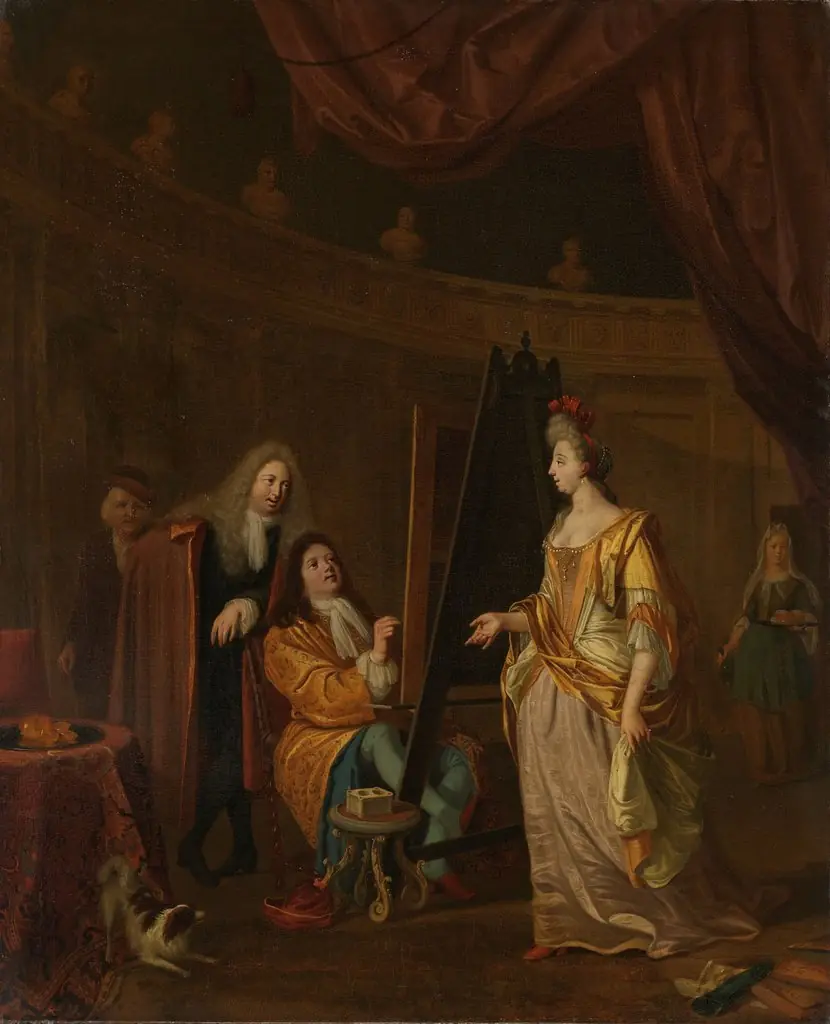 An artist in his studio, painting the portrait of a lady
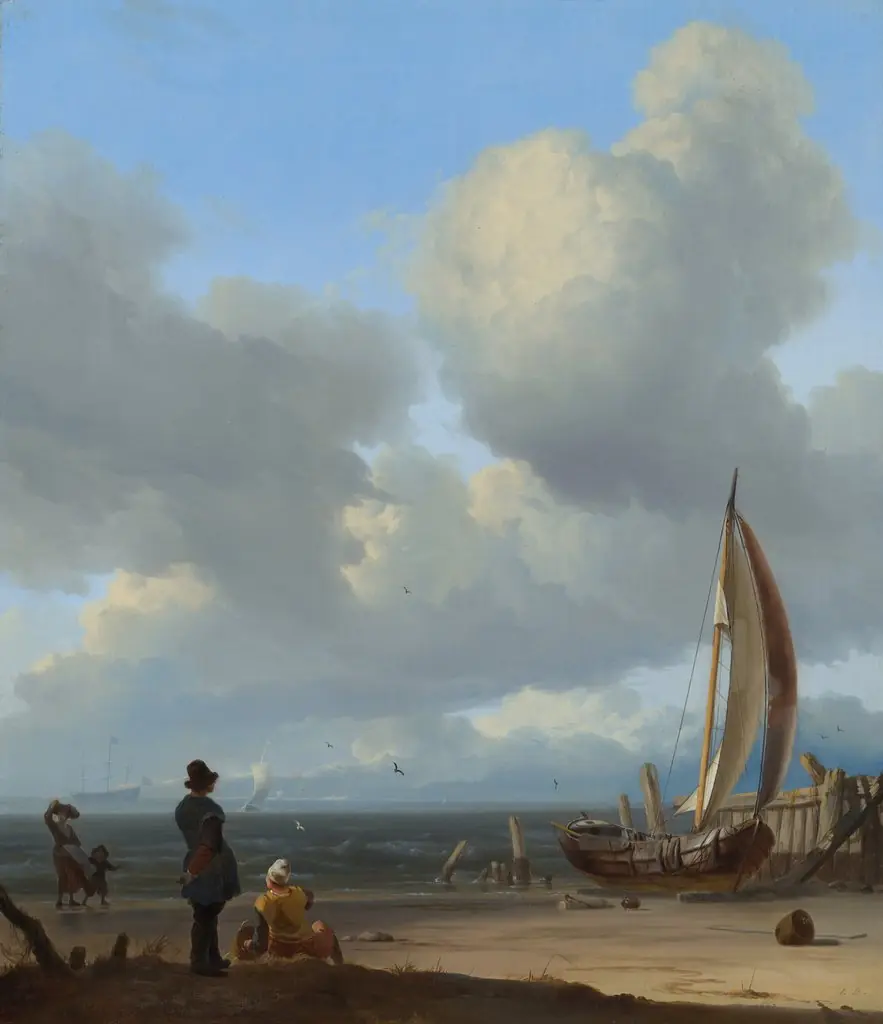 An extensive seascape with figures by a boat on a shore near Huisduinen
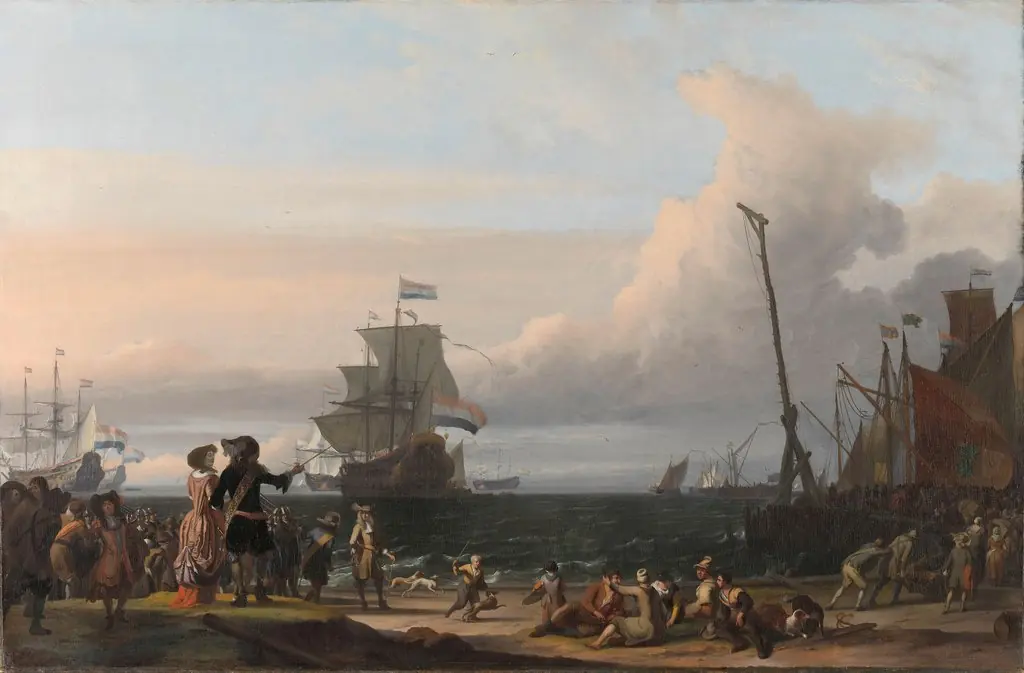 Dutch ships in the roads of Texel; in the middle the 'Gouden Leeuw,' the flagship of Cornelis Tromp
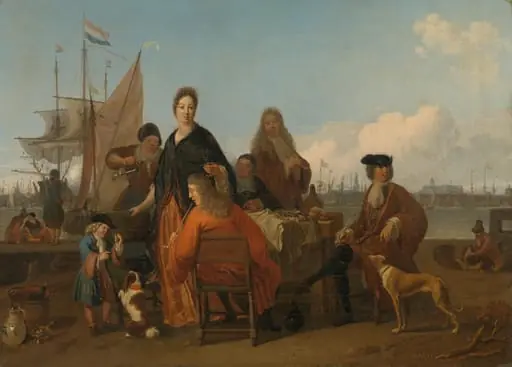 The Bakhuysen and de Hooghe Families dining at the Mosselsteiger (Mussel Pier) on the Y, Amsterdam
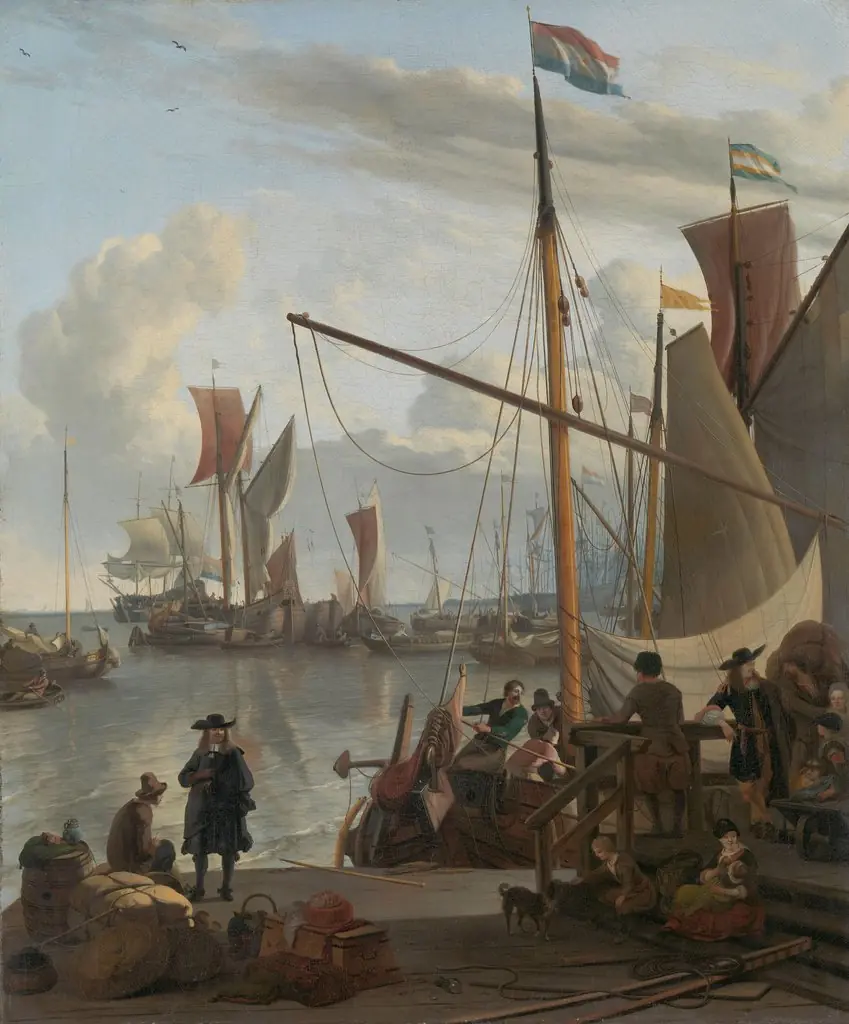 The Y at Amsterdam, seen from the Mosselsteiger (mussel pier)
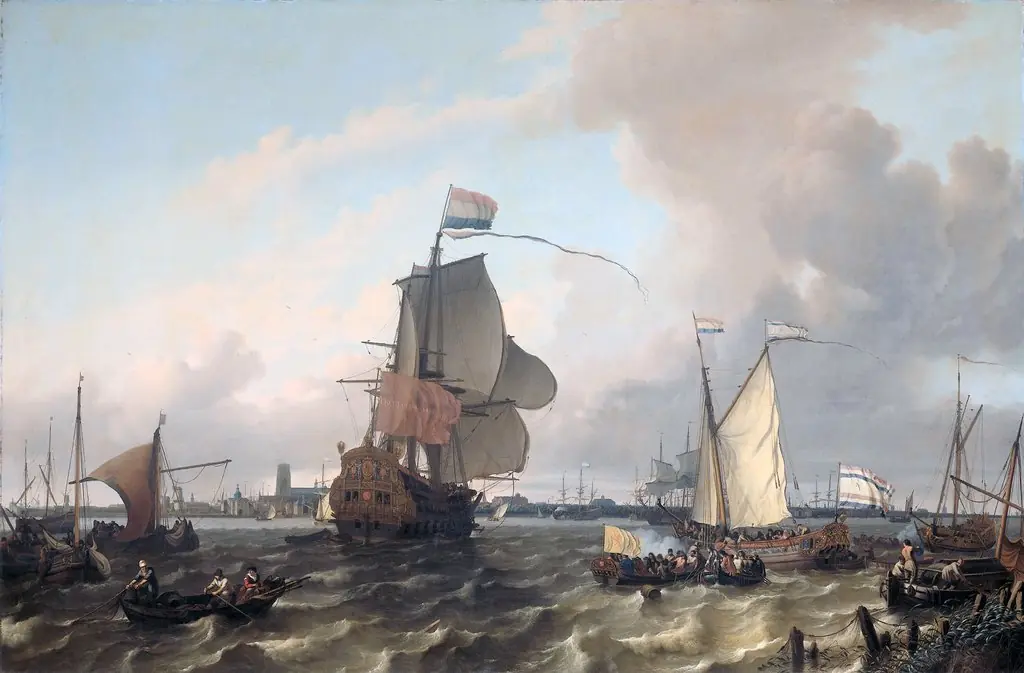 The Man-of-War Brielle on the River Maas off Rotterdam
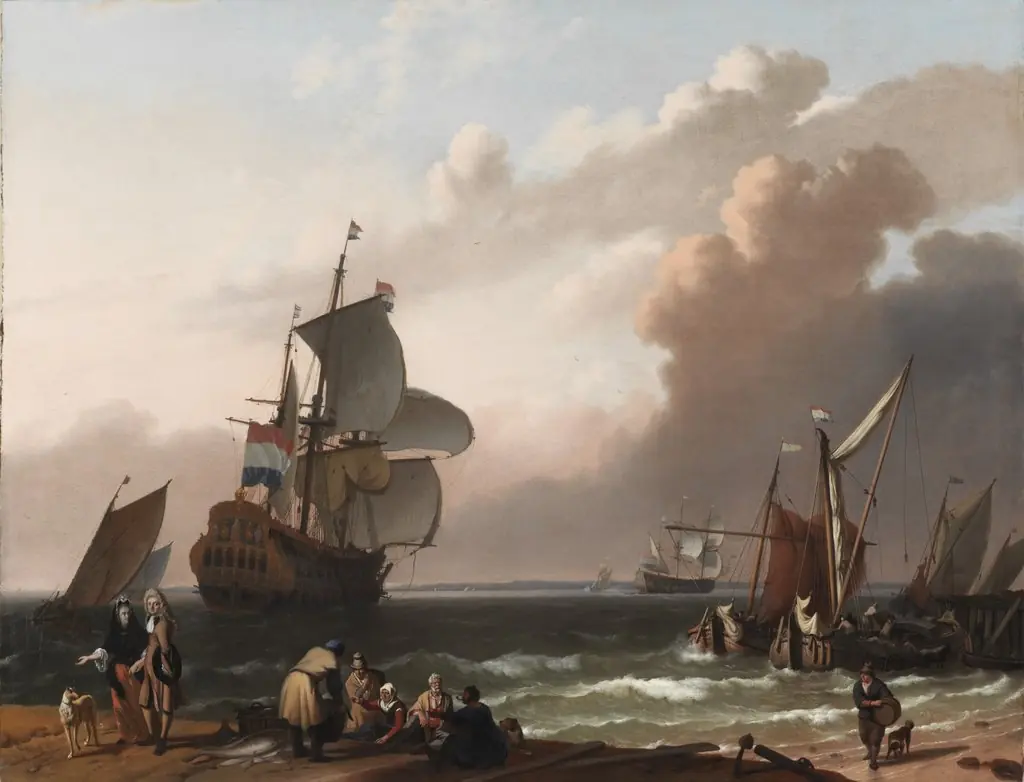 Warship and Dutch Sailboats near the Shore