Artwork
Ships in light breeze
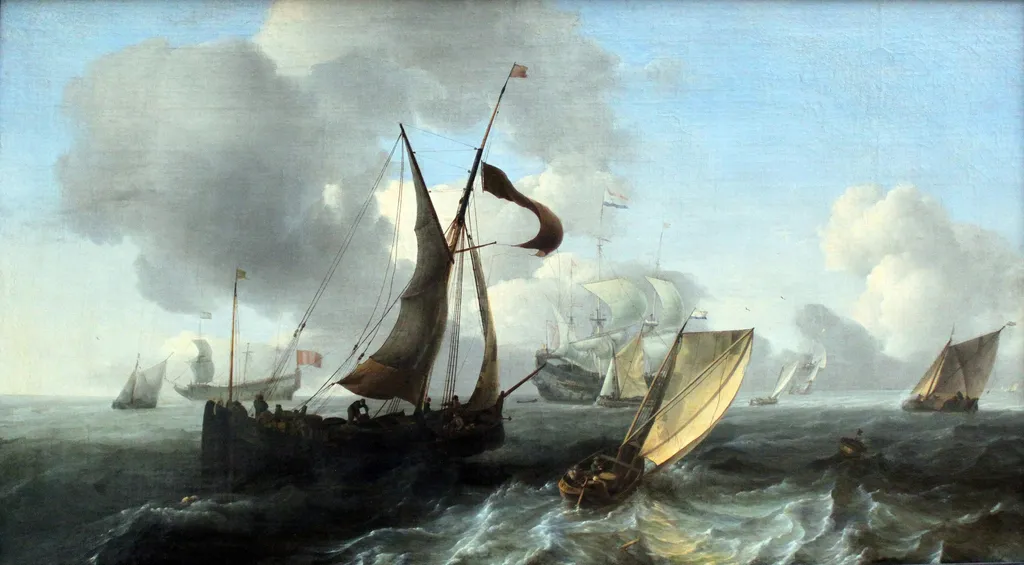
Ships in light breeze is an oil painting by the Dutch Golden Age artist Ludolf Bakhuizen. It dates from 1664 and is held in the collection of the Gemäldegalerie Berlin.
About this work
Overview
Ships in light breeze is a marine painting executed in oil on canvas by the German-born Dutch artist Ludolf Bakhuizen in 1664.
Ships in light breeze is a marine painting executed in oil on canvas by the German-born Dutch artist Ludolf Bakhuizen in 1664. Measuring 56 by 97 centimeters, the work is held in the Gemaldegalerie Berlin. Created during the decade that established Bakhuizen's reputation as a leading maritime painter in the Netherlands, the picture exemplifies his ability to capture the atmospheric conditions and nautical activity of the Dutch Golden Age.
Subject & Meaning
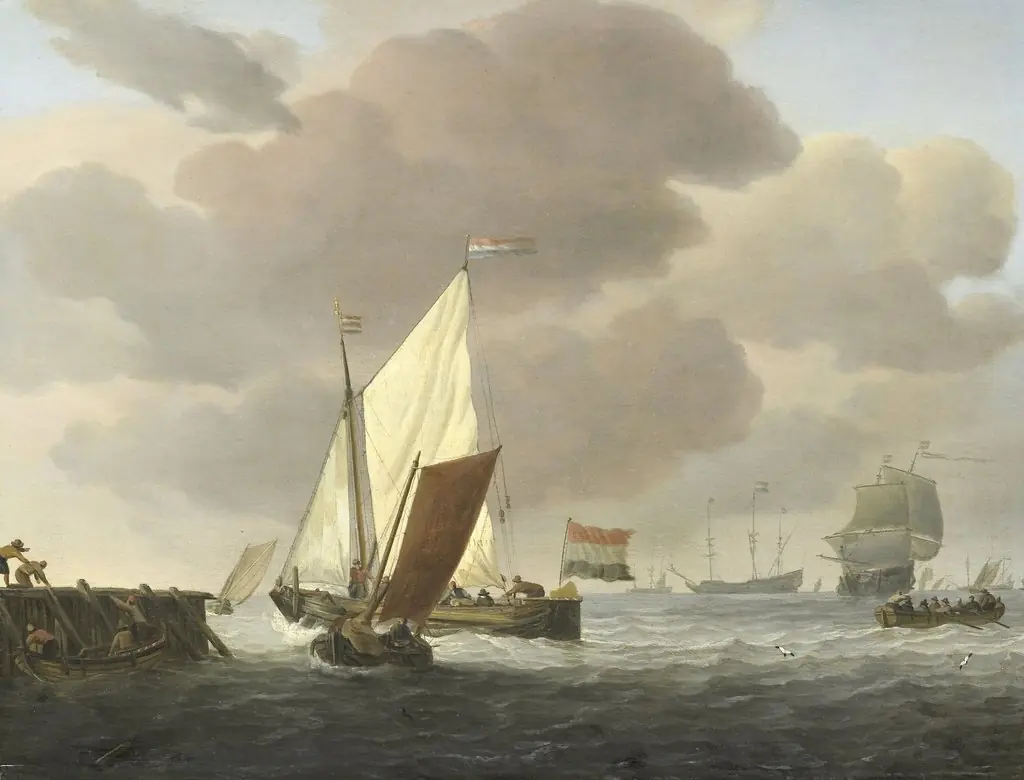
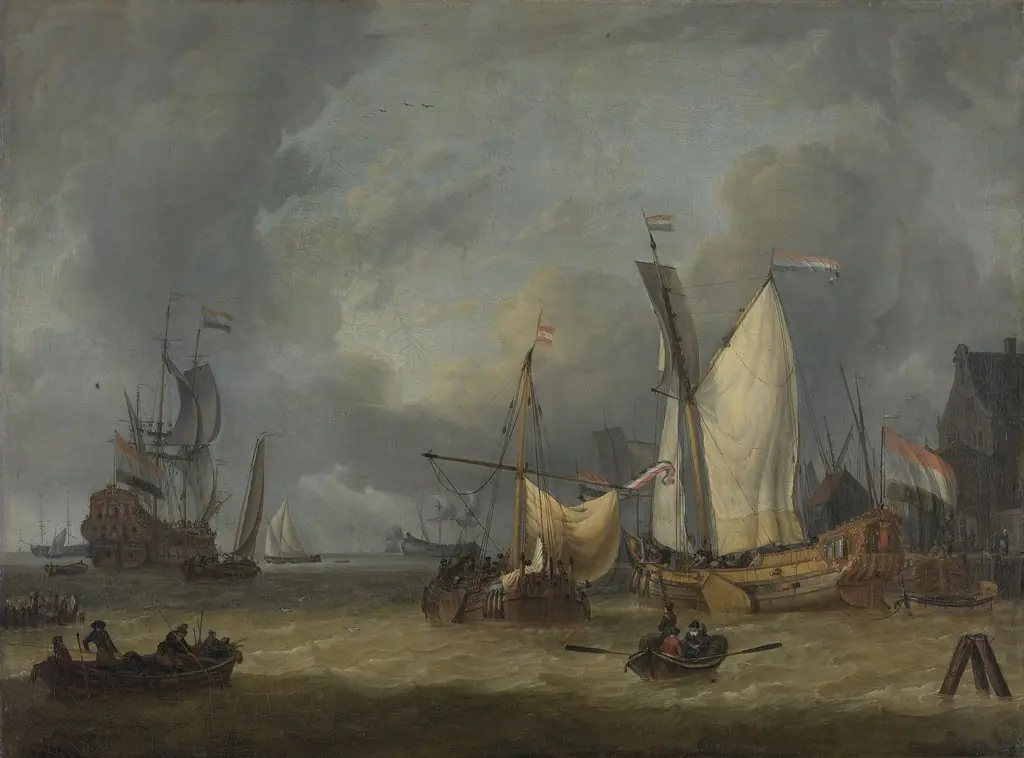
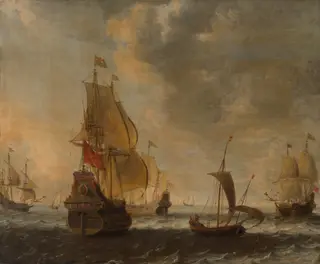
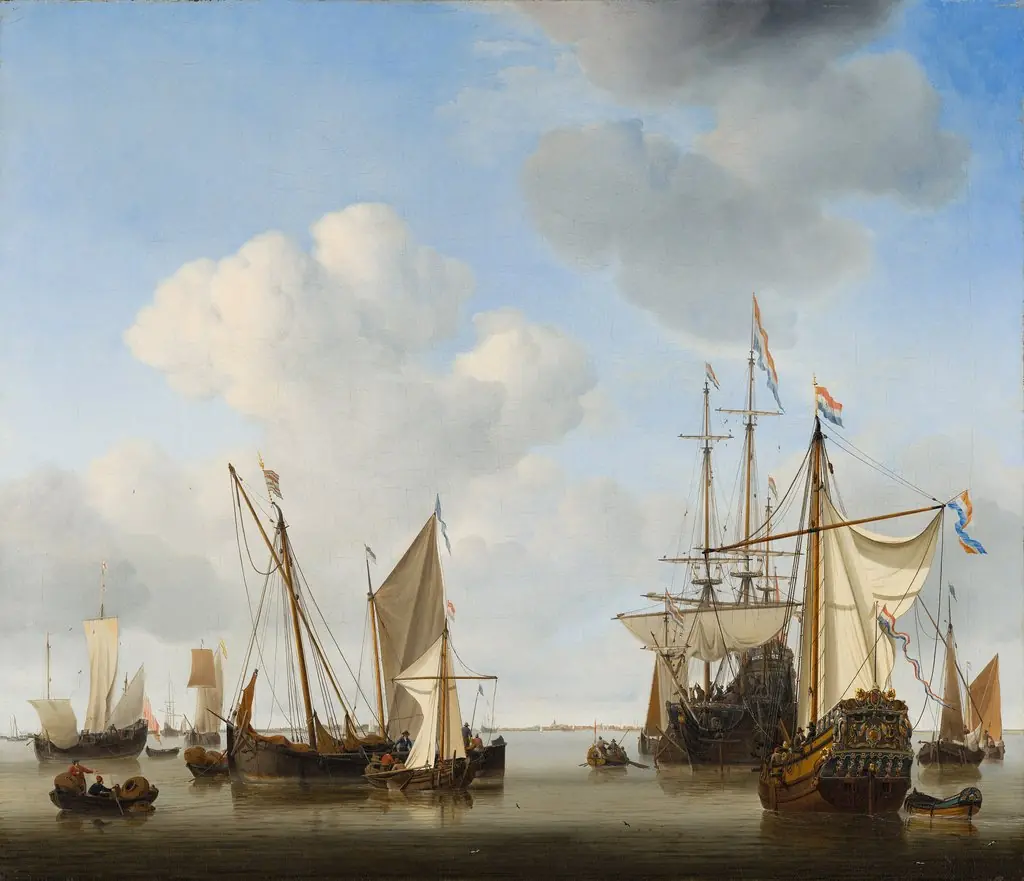
The composition presents multiple sailing vessels navigating a choppy sea beneath a partly cloudy sky. A large ship with billowing sails and figures on deck dominates the left foreground, while a smaller boat with a single sail cuts through the waves to the right. Additional vessels of varying sizes recede into the middle ground and distance, some veiled by atmospheric haze. Touches of red and blue on the flags provide focal points. The scene captures the vitality of seafaring life, emphasizing the interplay between human endeavor and the natural elements.
Technique & Style
Bakhuizen employed a palette dominated by blues, grays, whites, and browns to render the maritime environment. Light falls from the upper left, illuminating the sails and casting shadows on the water, which is animated by white-capped waves. The brushwork is smooth and controlled, featuring fine detail in the rigging of the ships and softer, blended handling for the sky and distant elements. This polished, naturalistic finish aligns with the style of his early 1660s output, which moved away from the silvery tonalities of his teachers toward a more direct observation of nature.
History & Provenance
The painting is dated 1664, a pivotal year for Bakhuizen just one year after he joined the Amsterdam painters guild. By 1665, his rising prominence secured him a prestigious commission from the Amsterdam burgomasters. The subsequent departure of his main competitors, Willem van de Velde the Elder and Younger, for England in 1672 solidified his position as the preeminent marine painter in the Netherlands. Ships in light breeze ultimately entered the collection of the Gemaldegalerie Berlin, where it remains accessible as part of the museum's holdings of Dutch marine art.
Context
Bakhuizen trained as a clerk in Emden before moving to Amsterdam around 1650, where he initially worked as a calligrapher and draughtsman. He learned oil painting from Hendrick Jacobsz. Dubbels and Allaert van Everdingen, and was profoundly influenced by the pen drawings of Willem van de Velde I. Unlike the Van de Veldes, who prioritized exact technical details of ships, Bakhuizen focused on the weather, atmospheric effects, and figures. He frequently ventured onto the sea in an open boat to study storms directly, a dedication to realism that earned him visits from European elites including Cosimo III de Medici and Peter the Great.
Legacy
Bakhuizen's intense realism and dramatic maritime scenes influenced later artists, most notably Joseph Mallord William Turner, who found inspiration in the Dutchman's pre-romantic compositions during the early nineteenth century. The appreciation of Bakhuizen's work in Britain was substantial; the art dealer John Smith catalogued 155 of his paintings in 1835. Today, his prolific output is widely represented in major collections, with over a hundred paintings of three-masted ships alone attributed to him, securing his legacy as a defining figure of Dutch marine painting.
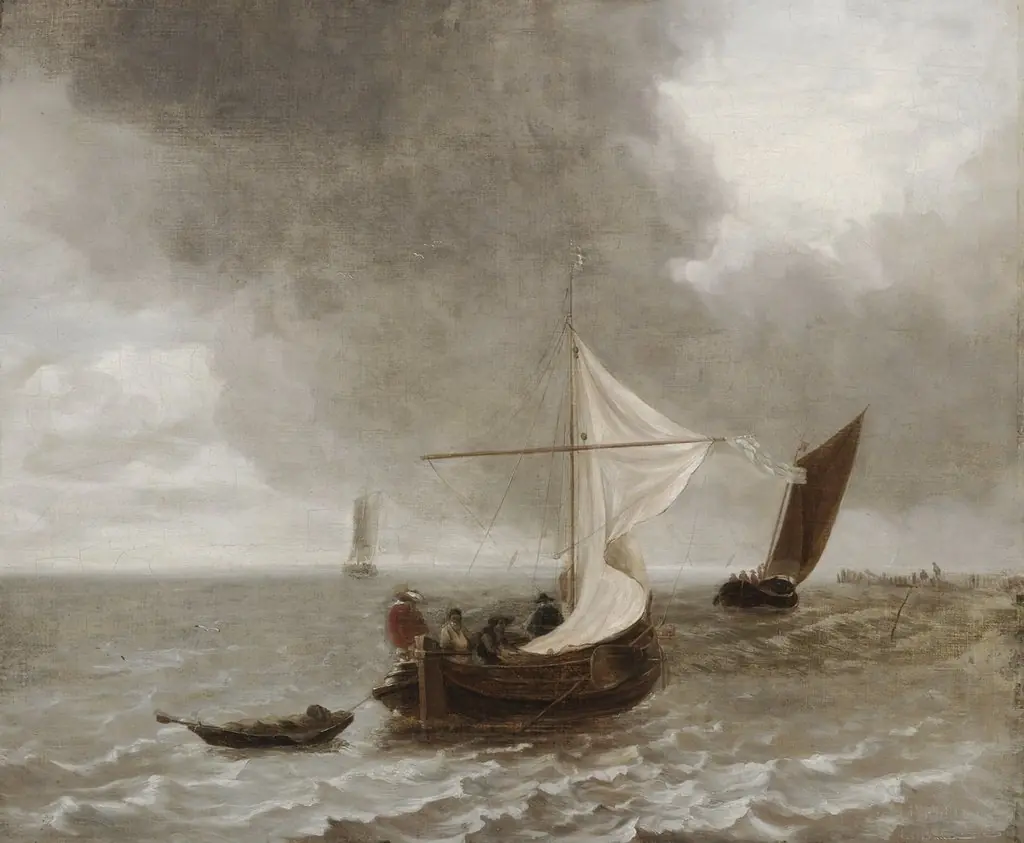
Artist & collection
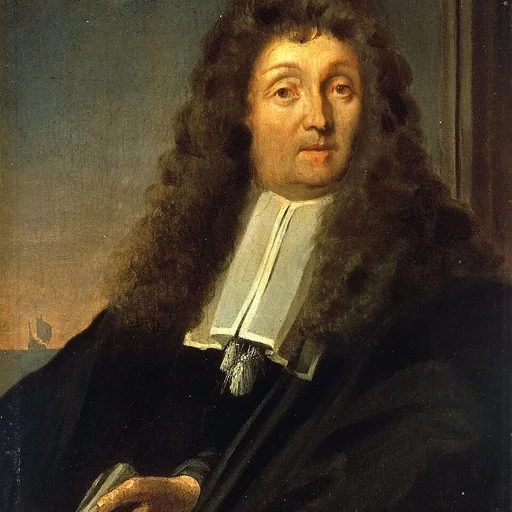
Artist
Ludolf Bakhuizen (28 December 1630 or 1632 – 7 November 1708) was a German-born Dutch painter, draughtsman, calligrapher and printmaker.

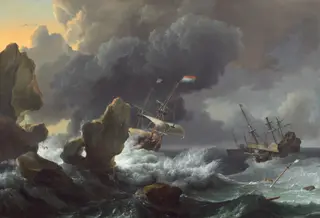 Ships in Distress off a Rocky Coast
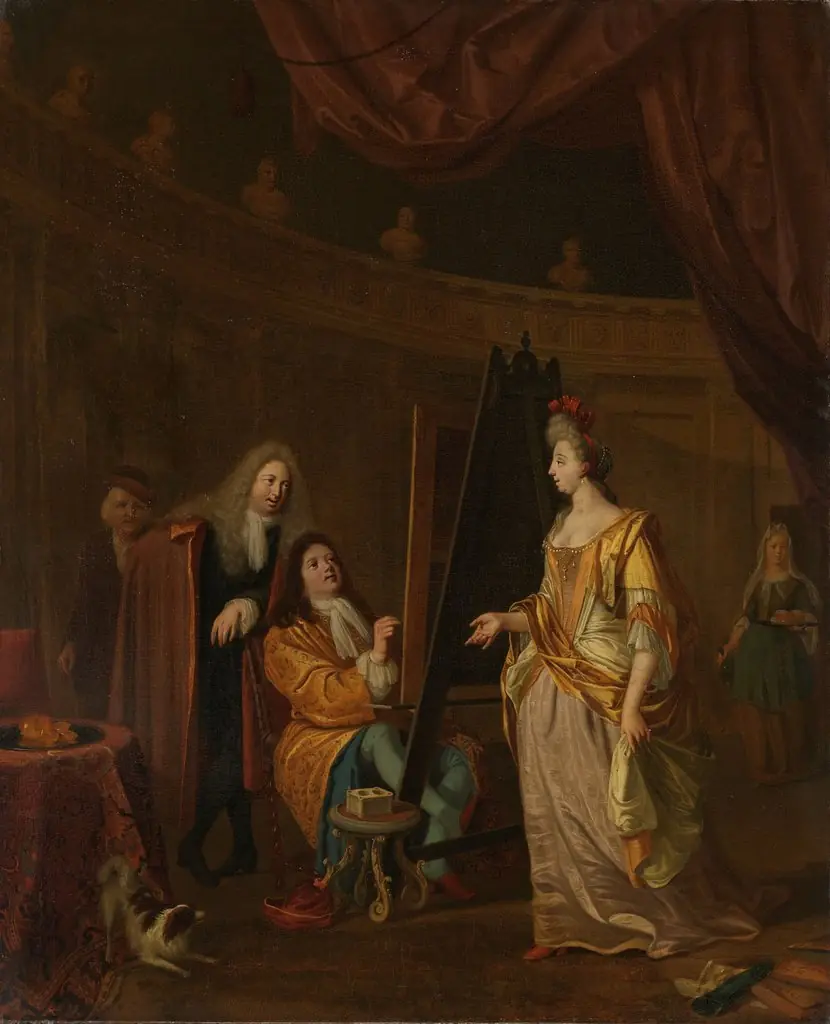 An artist in his studio, painting the portrait of a lady
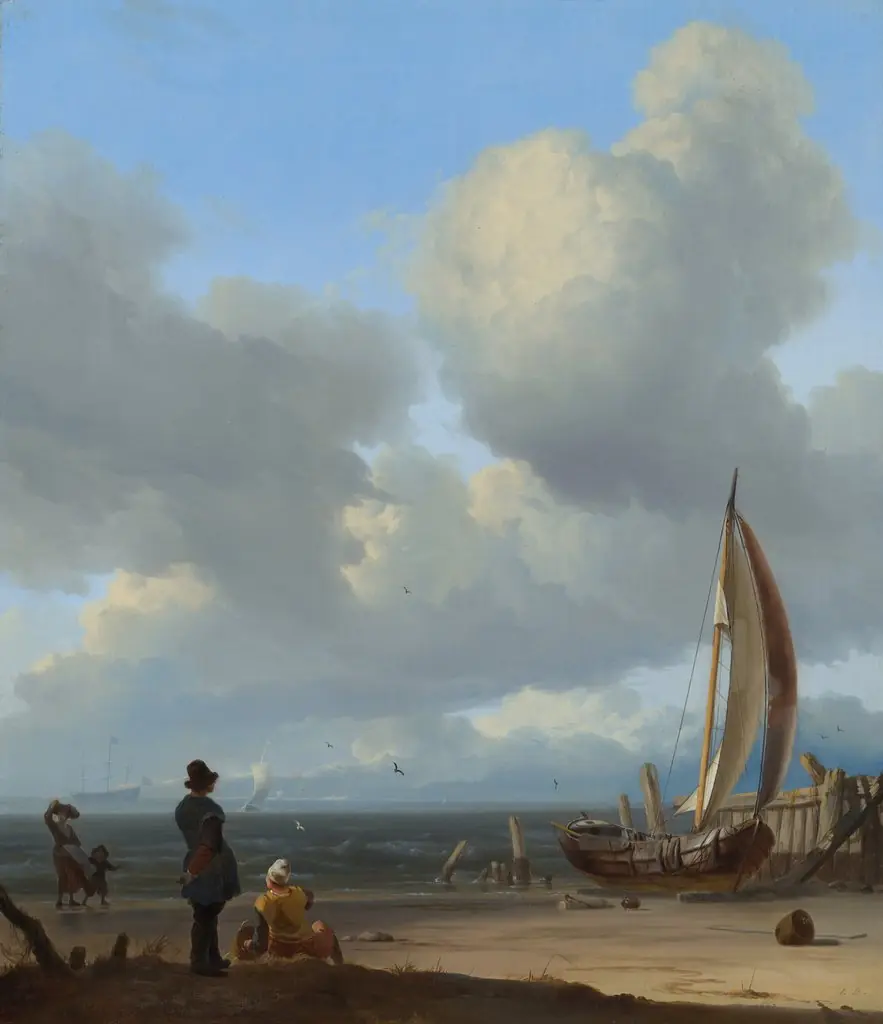 An extensive seascape with figures by a boat on a shore near Huisduinen
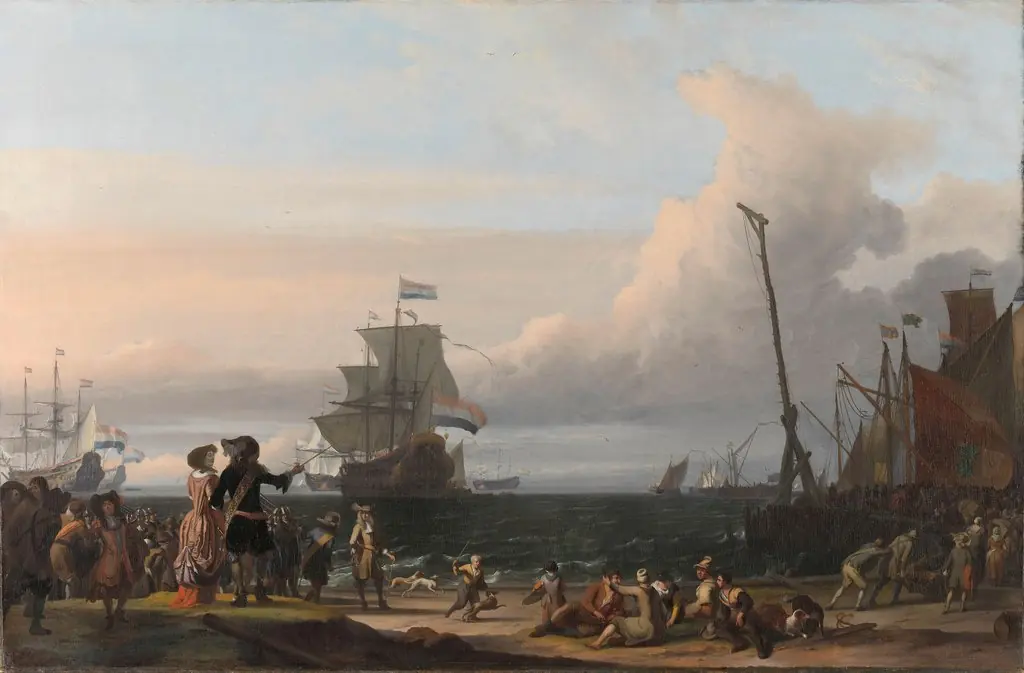 Dutch ships in the roads of Texel; in the middle the 'Gouden Leeuw,' the flagship of Cornelis Tromp
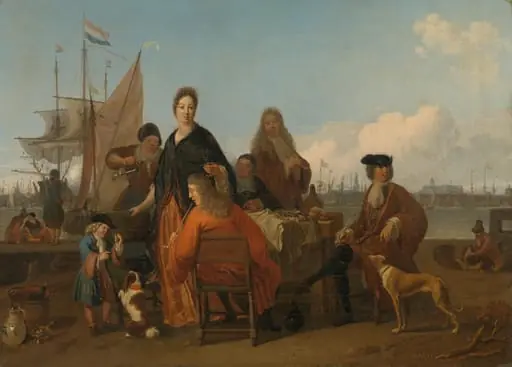 The Bakhuysen and de Hooghe Families dining at the Mosselsteiger (Mussel Pier) on the Y, Amsterdam
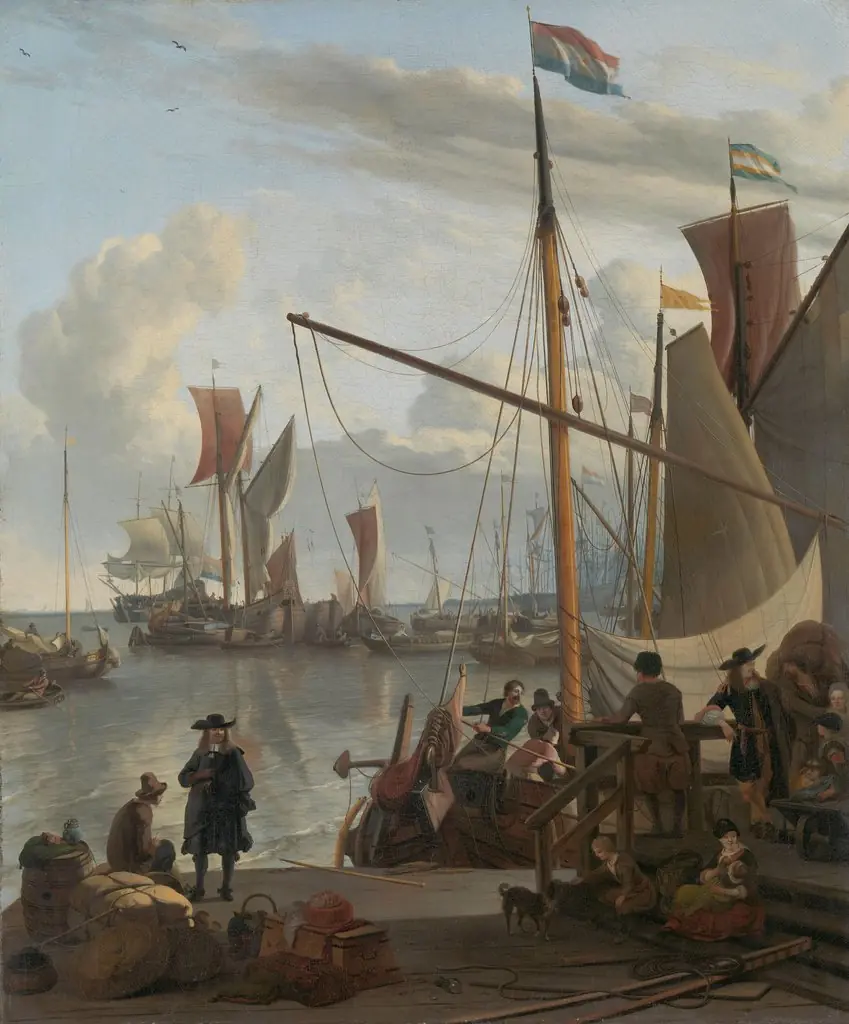 The Y at Amsterdam, seen from the Mosselsteiger (mussel pier)
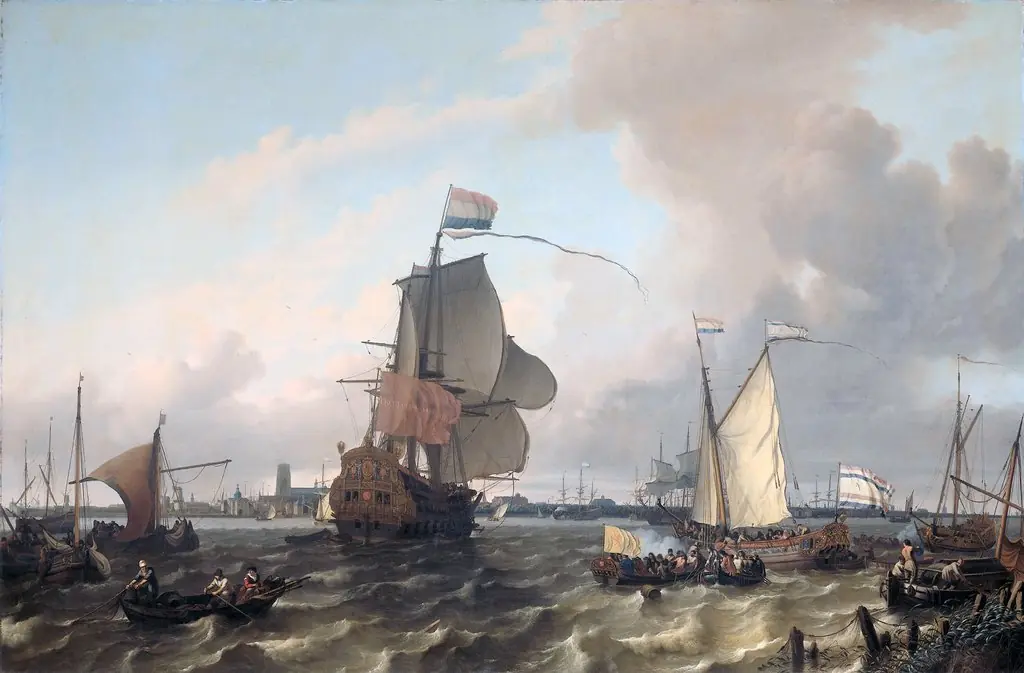 The Man-of-War Brielle on the River Maas off Rotterdam
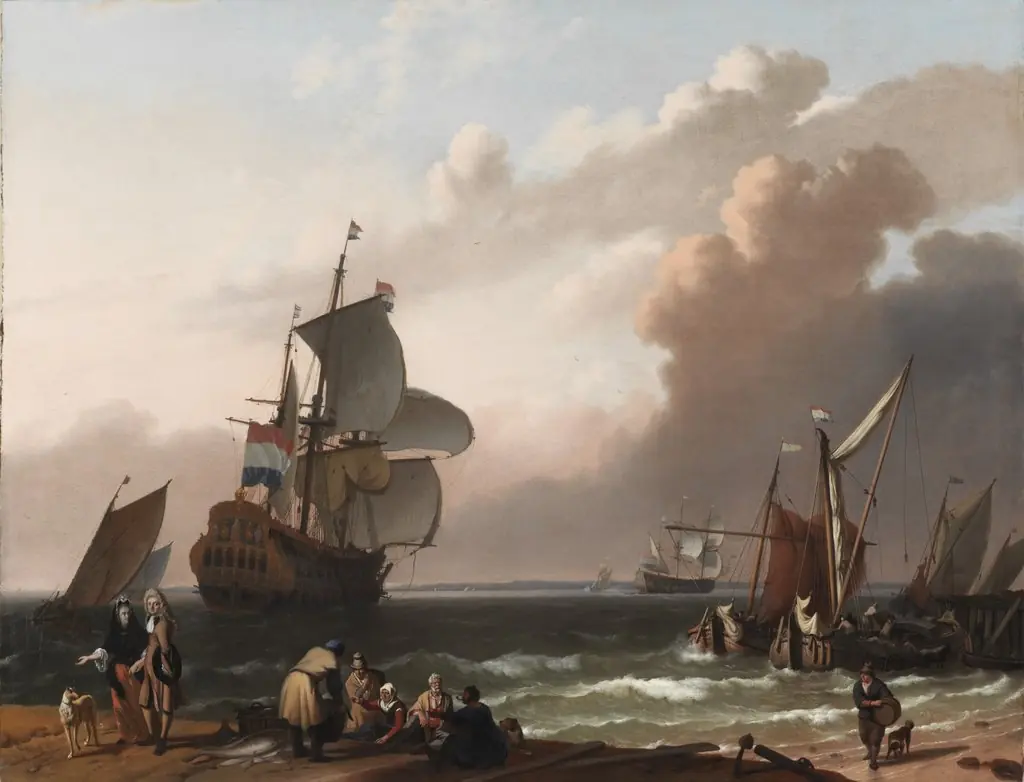 Warship and Dutch Sailboats near the Shore