Artwork
For the Poor
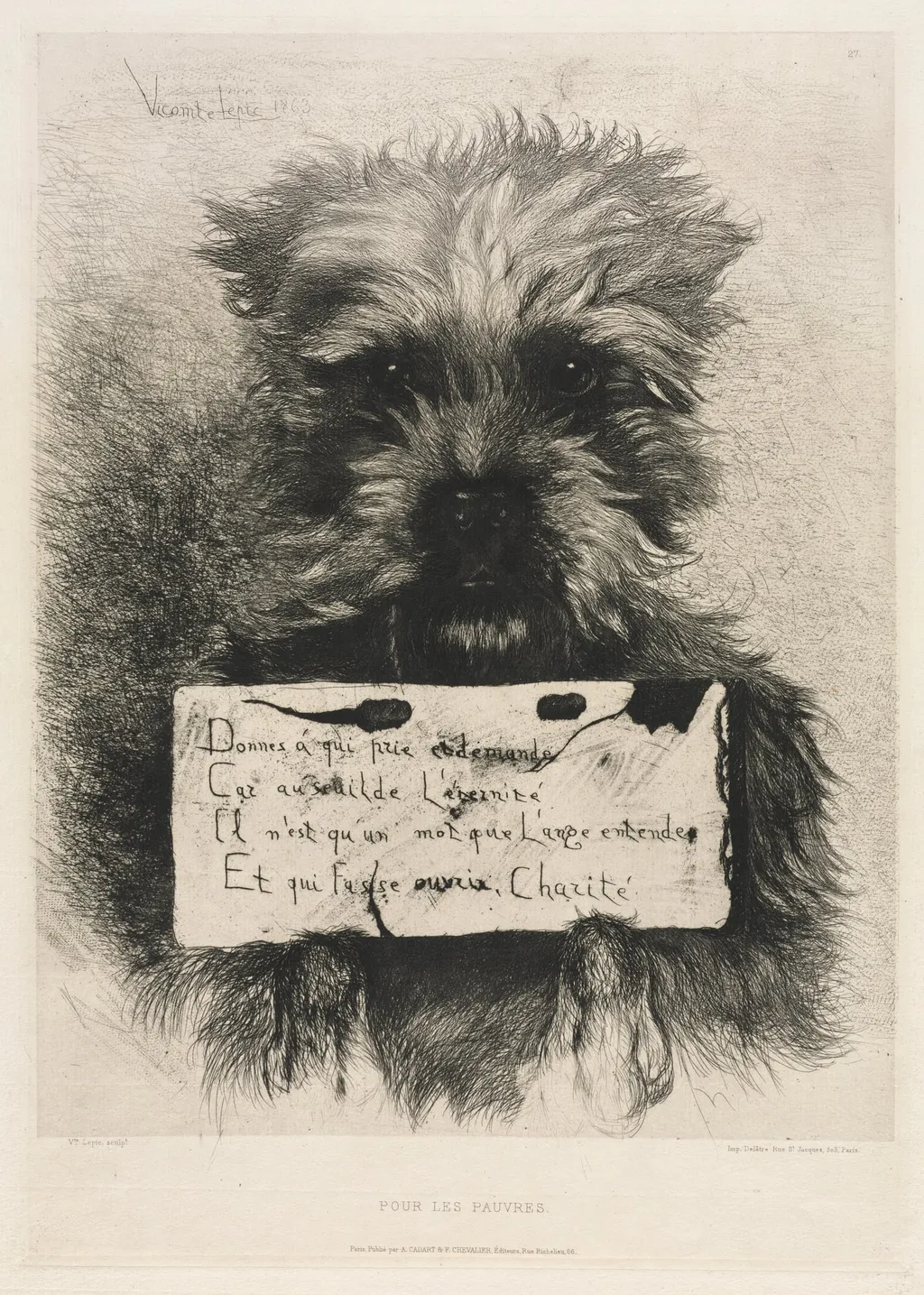
For the Poor is a print by the Impressionist artist Vicomte Lepic Ludovic Napoléon. It dates from 1863 and is held in the collection of the Cleveland Museum of Art.
- Accession no.
- 1999.281
- Credit line
- Gift of Harvey and Penelope D. Buchanan
About this work
Overview
The piece is part of the Cleveland Museum of Art’s collection and reflects his engagement with social themes through unconventional imagery.
Created in 1863 by Ludovic Napoléon Lepic, For the Poor is a small-scale print that departs from his later marine subjects. Lepic, a French aristocrat and art patron with ties to the Impressionists, produced this work during a period of experimental printmaking. The piece is part of the Cleveland Museum of Art’s collection and reflects his engagement with social themes through unconventional imagery.
Subject & Meaning
The image centers on a shaggy dog holding a sign with indistinct black lettering on a white field. The animal’s direct gaze toward the viewer suggests an appeal for attention or sympathy. While the text is unreadable, the composition invites interpretation as a symbolic plea on behalf of the marginalized. The dog, neither anthropomorphized nor sentimentalized, functions as a quiet, ambiguous emblem of poverty.
Technique & Style
Lepic rendered the dog’s fur with meticulous, textured strokes, emphasizing individual strands and shadowed volume. The background is deliberately voided, isolating the figure against a flat plane. This reduction of context and focus on tactile detail aligns with emerging realist tendencies in printmaking, though the work lacks the loose brushwork typical of Impressionist painting.
History & Provenance
Lepic, who became Comte in 1875, was active in Parisian artistic circles and collected works by contemporaries such as Degas. For the Poor was produced early in his career, before his reputation as a marine painter solidified. The print entered the Cleveland Museum of Art’s collection through documented acquisition, though its original circulation or exhibition history remains largely unrecorded.
Context
In 1863, France was undergoing social and political shifts following the 1848 revolutions. Artistic attention to everyday life and the urban poor was growing, though often mediated through idealized or moralizing lenses. Lepic’s choice to depict a dog as a silent advocate for the destitute reflects a subtle, non-didactic approach to social commentary uncommon in mainstream art of the time.
Legacy
Though not widely reproduced or studied, For the Poor stands as a rare example of Lepic’s engagement with social themes outside his later marine subjects. Its quiet, enigmatic tone distinguishes it from overtly political imagery of the era. The work contributes to broader discussions about the role of animals and anonymity in 19th-century visual culture, particularly within print media.
Own this work as a print
Artist & collection
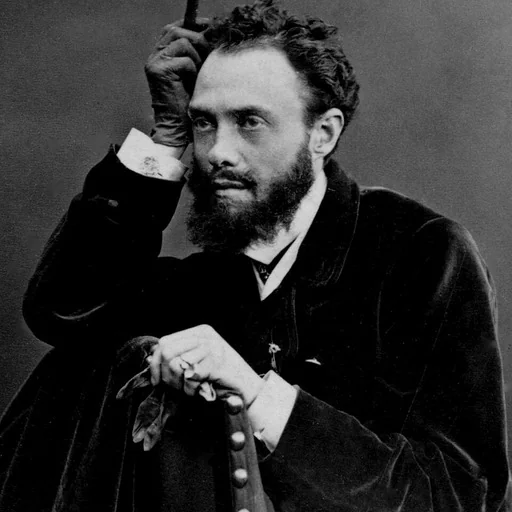
Artist
Vicomte Lepic Ludovic Napoléon
Ludovic-Napoléon Lepic (17 December 1839 – 27 October 1889) was a French artist, archaeologist and patron of the arts.

![Studies of Dogs and a Seated Boy [recto], by James Goodwyn Clonney](https://artifactworldgallery.com/img/james-goodwyn-clonney--studies-of-dogs-and-a-seated-boy-recto--440d550e9055fba3-w320.webp)