Artwork
Venus beweint den toten Adonis
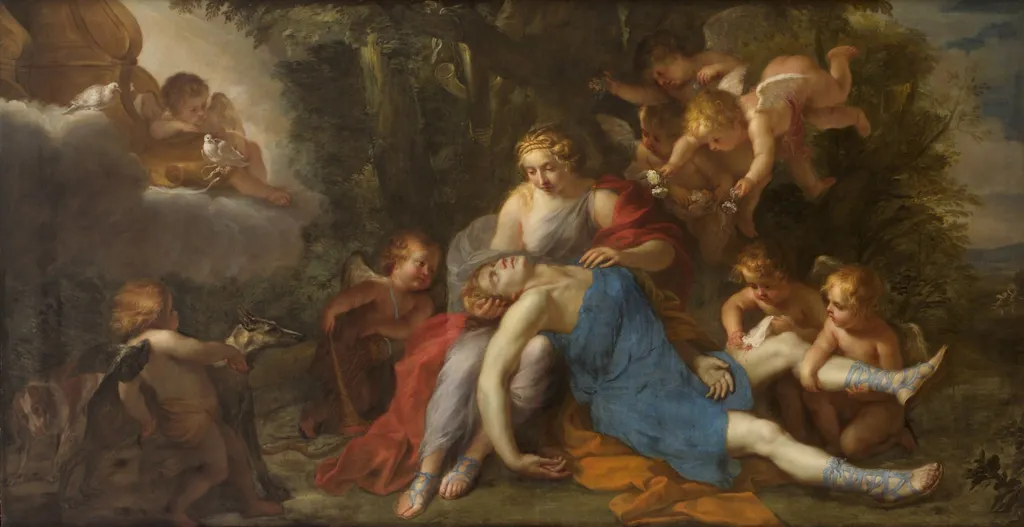
Venus beweint den toten Adonis is an oil painting by the Early Baroque Italian artist Luigi Primo. It dates from 1656 and is held in the collection of the Kunsthistorisches Museum.
About this work
Subject & Meaning
The painting depicts the mythological scene of Venus mourning the dead Adonis, a subject drawn from classical Ovidian tradition in which the goddess of love grieves over the slain hunter. The work belongs to the genre of mythological painting and centers on the figures of Venus and Adonis, whose lifeless body forms the emotional core of the composition. The narrative draws on the myth of Adonis's death, traditionally caused by a wild boar, and Venus's lament, a theme that allowed Baroque artists to explore themes of love, loss, and the transience of beauty through the device of the grieving goddess bent over her mortal lover.
Rendered in oil on canvas, the large horizontal format, measuring 173 by 332 centimeters, accommodates the extended reclining figure of Adonis alongside the mourning Venus, lending the scene a processional, altarpiece-like gravity despite its secular mythological character.
Technique & Style
The painting Venus beweint den toten Adonis by Luigi Primo was executed in oil paint on canvas in 1656. It measures 173 cm in height by 332 cm in width and was created as a mythological work. The composition depicts Venus mourning the dead Adonis, rendered with the formal qualities characteristic of Baroque mythological painting in the collection of the Kunsthistorisches Museum.
History & Provenance
No information on a specific commission or detailed chain of custody beyond these holders is documented in the available sources.
Venus beweint den toten Adonis is an oil-on-canvas painting by Luigi Primo dated 1656, depicting Venus mourning the dead Adonis. The work is held in the collection of the Kunsthistorisches Museum, where it remains located. Earlier ownership records trace the painting to Louis Cousin, with the provenance further associated with Gentile.
No information on a specific commission or detailed chain of custody beyond these holders is documented in the available sources.
Legacy
The painting influenced 18th-century French academic circles, particularly through its emotional portrayal of mythological grief. Art historians note its role in advancing narrative complexity within Baroque mythological painting.
The work remains part of the permanent collection at the Kunsthistorisches Museum in Vienna, where it is studied as a key example of 17th-century mythological art.
Scholarly discourse continues to reference its compositional innovations in depictions of Venus and Adonis, shaping later interpretations of the myth.
The painting's condition and conservation history are documented in museum records, reflecting ongoing efforts to preserve its structural integrity.
Overview
Luigi Primo, a Flemish-born artist who worked primarily in Italy, painted Venus beweint den toten Adonis in 1656 with oil on canvas. The composition belongs to the early Italian Baroque period and is part of the Kunsthistorisches Museum’s holdings.
Context
The work reflects the Baroque fascination with dramatic mythological narratives, integrating both Northern European attention to detail and the Italian emphasis on movement and emotional intensity. Such hybrid styles were typical of artists who migrated between the two artistic centers during the period.
Artist & collection
Artist
Louis Cousin, in Italy mainly known as Luigi Primo or Luigi Gentile (c. 1605–1667) was a Flemish painter of the Baroque period, who was active in Italy for a major part of his career. Working in a style, which combined…

- Diana and Endymion
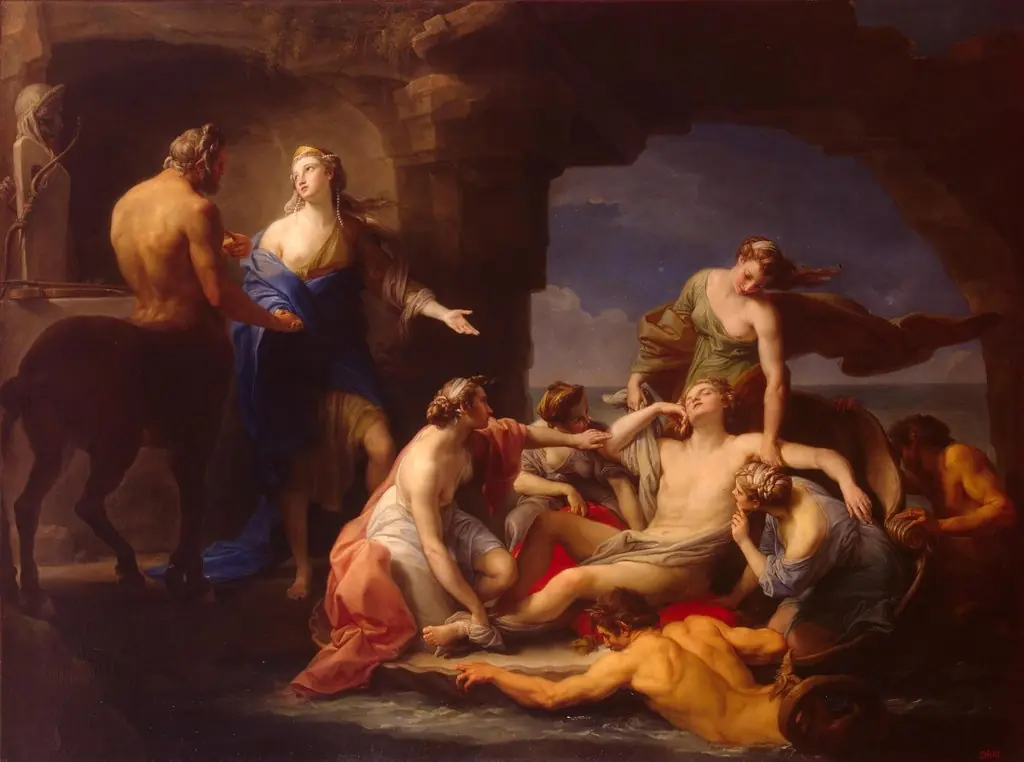 Thetis takes Achilles from the Centaur Chiron
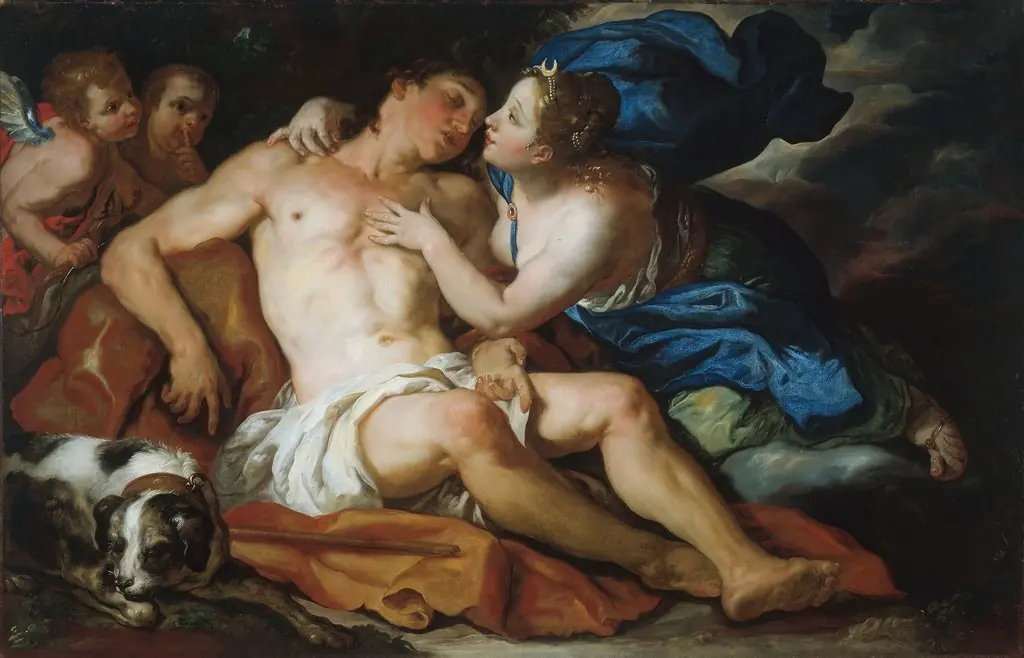 Diana and Endymion
 Mercury Rescues the Disguised Io after Beheading Argus
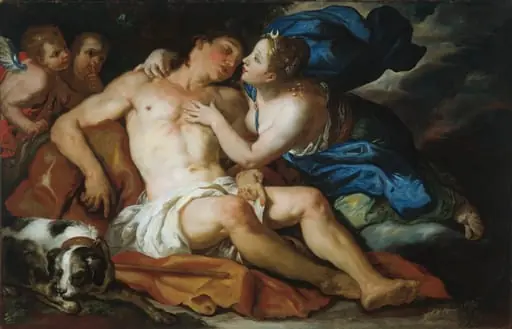
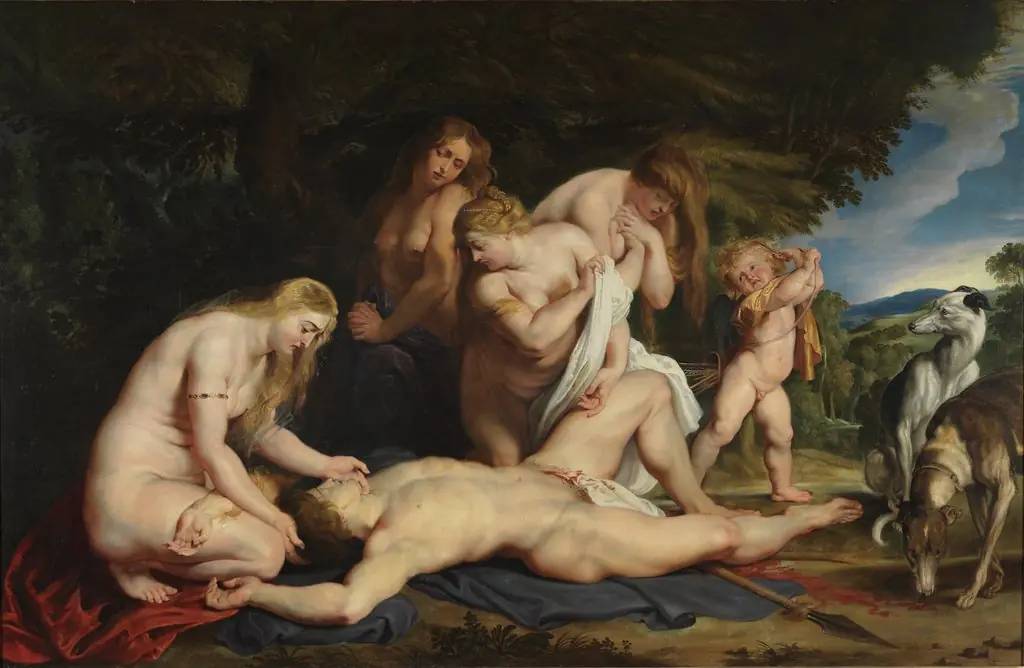 The Death of Adonis
 Hero laments the dead Leander
 Bacchus and Ariadne
 Mercury Takes Bacchus to be Brought up by Nymphs
 The Abduction of Orithyia
 Rinaldo and Armida
 Psyche is awakened from fainting by Cupid's arrow
 Mythological Scene