Artwork
The Death of Adonis
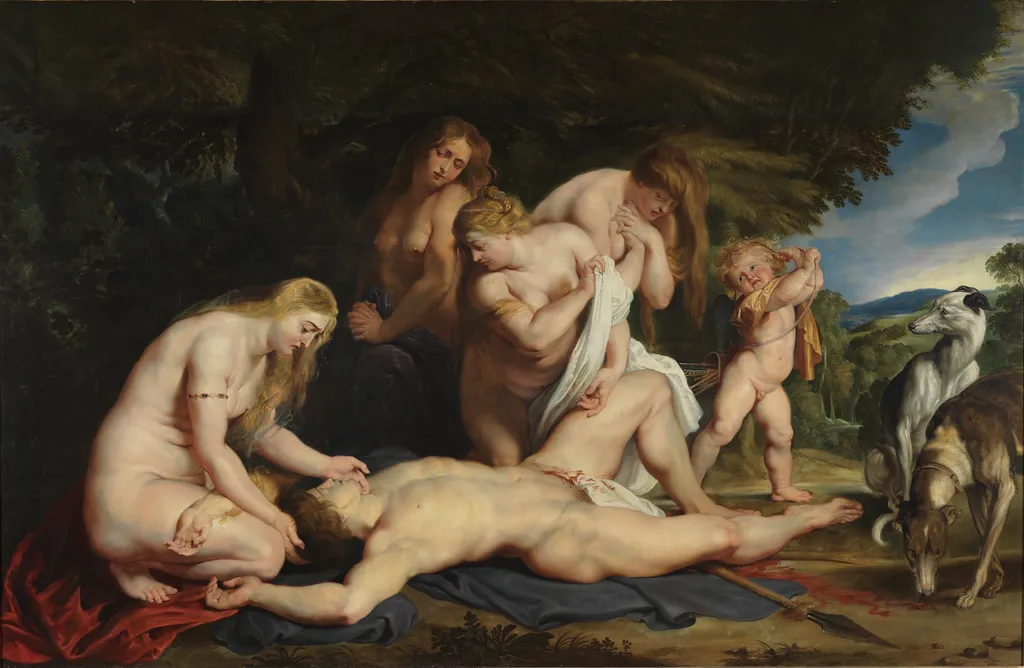
The Death of Adonis is an oil painting by the Flemish Baroque painting artist Peter Paul Rubens. It dates from 1614 and is held in the collection of the Israel Museum.
About this work
Subject & Meaning
Peter Paul Rubens's painting depicts the mythological episode of Adonis's death, an event caused by the fangs of a wild boar sent by the goddess Artemis.
Peter Paul Rubens's painting depicts the mythological episode of Adonis's death, an event caused by the fangs of a wild boar sent by the goddess Artemis. The composition centers on the lifeless, bloodied body of the hunter, who is surrounded by mourning figures including Venus (the Roman equivalent of Aphrodite), her son Cupid (Eros), and the Three Graces. This specific moment of tragedy and grief is rendered with explicit indicators of sadness, such as weeping and the physical proximity of the mourners to the corpse.
The narrative draws directly from Ovid's Metamorphoses, illustrating one of the most frequently represented scenes in art history regarding this myth. The work serves as a visual lamentation, emphasizing the sorrow of the divine lovers over the mortal hunter's untimely demise.
Technique & Style
Executed circa 1614, this mythological work by Peter Paul Rubens is an oil painting on canvas. The composition depicts the deceased Adonis surrounded by mourning figures, including Venus, Cupid, and the Three Graces, set against a rural landscape featuring trees and hills. Rubens renders the scene with a focus on the physical forms of the figures, capturing details such as the nudity of the subjects and the emotional intensity of their grief over the god's death by wild boar.
The large-scale support measures 212 cm in height and 325 cm in width, allowing for a expansive arrangement of the celestial and earthly elements involved in the narrative.
History & Provenance
The Death of Adonis was painted by Peter Paul Rubens around 1614, following the artist's period in Italy. The work was produced in the County of Flanders and takes as its subject the mythological death of Adonis, drawn from Ovid's Metamorphoses.
The painting subsequently entered the collection of the Israel Museum in Jerusalem, where it is currently held. It was donated to the museum by Saul P. Steinberg. The canvas measures 212 cm in height by 325 cm in width and is executed in oil on canvas.
The work has been included in the exhibition "The touch of Pygmalion. Rubens and sculpture in Rome."
The painting is held in the Israel Museum in Jerusalem. It bears the inventory number 1977-0-153. The work entered the museum through a donation by Saul P. Steinberg. It has been featured in exhibitions focusing on Rubens and sculpture in Rome, including 'The Touch of Pygmalion: Rubens and Sculpture in Rome'.
Context
Painted c. 1614, The Death of Adonis belongs to Peter Paul Rubens's mythological output following his Italian sojourn, a formative period that shaped his treatment of classical narrative. The canvas illustrates the death of Adonis, killed by a boar sent by Artemis, with Venus, Cupid and the Three Graces mourning him, a subject drawn from Ovid's Metamorphoses. The episode of Adonis's death is among the most frequently represented moments in art history, treated by painters such as Juan Bautista Martínez del Mazo, Nicolas Poussin and Jusepe de Ribera, and also surviving in other media, including a mosaic at the Roman villa of Carranque in Toledo, Spain.
The painting was exhibited in "The Touch of Pygmalion: Rubens and Sculpture in Rome," situating it within scholarly discussion of Rubens's engagement with antique sculpture during his Roman years. It was later donated to the Israel Museum in Jerusalem by Saul P. Steinberg, where it remains part of the collection.
Legacy
The subject of Adonis's death is recognized as one of the most frequently depicted moments in art history. Rubens's 1614 interpretation joins works by other significant artists who treated the same mythological episode, including Juan Bautista Martínez del Mazo, Nicolas Poussin, and Jusepe de Ribera. The narrative of Adonis being killed by a wild boar sent by Artemis has also been rendered in diverse formats beyond oil painting, such as a mosaic located at the Roman Villa of Carranque in Toledo, Spain.
The specific painting by Rubens has been preserved in the Israel Museum in Jerusalem since its donation by Saul P. Steinberg. Its status as a key representation of the myth ensures its continued relevance in the study of Baroque mythology and the visual history of the Adonis legend.
Overview
Executed around 1614, this oil painting by Peter Paul Rubens depicts the mythic scene of Adonis’s death. The composition centers on the lifeless figure of Adonis, surrounded by a group of nude women and a child within a forest clearing, while distant trees and a landscape frame the tableau. The work now belongs to the Israel Museum in Jerusalem.
Own this work as a print
Artist & collection
Artist
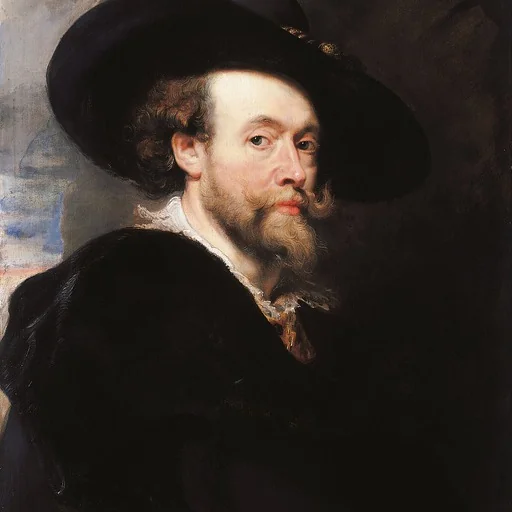
Sir Peter Paul Rubens ( ROO-bənz; Dutch:; 28 June 1577 – 30 May 1640) was a Flemish artist and diplomat.

 Cimone and Efigenia
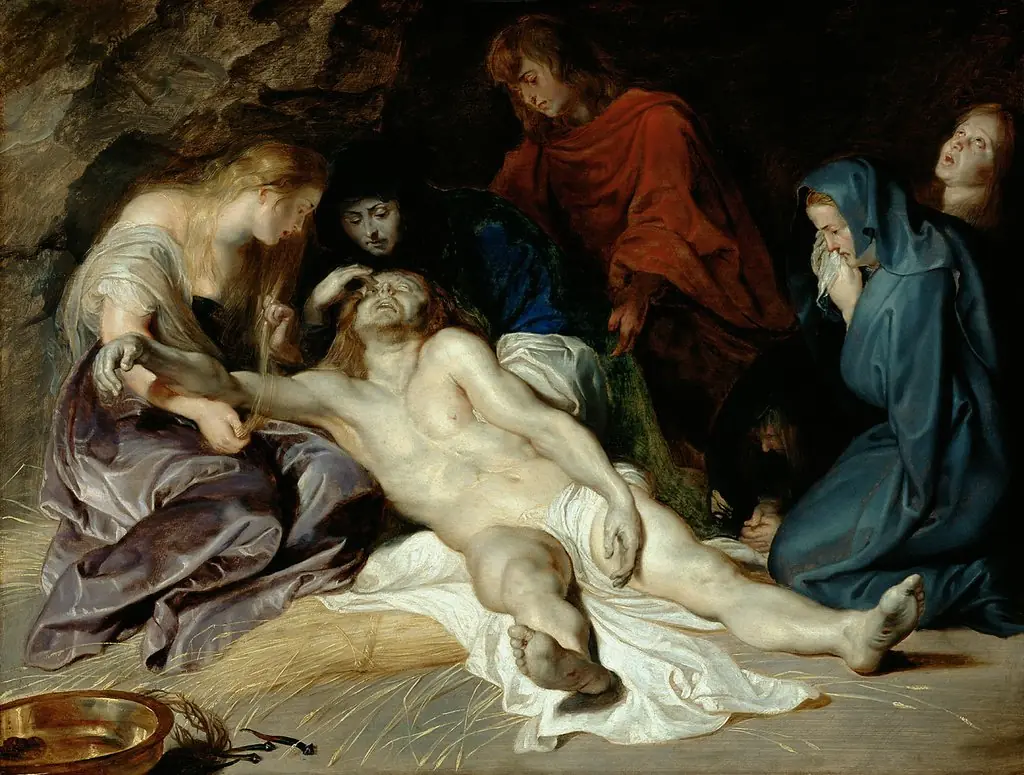 Lamentation of Christ
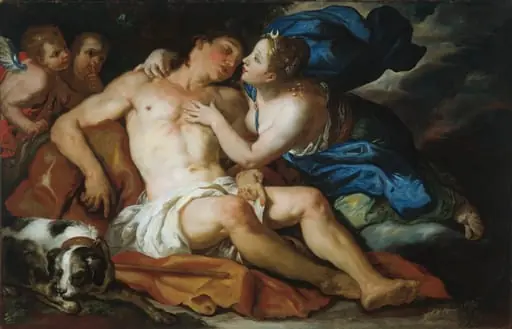 Diana and Endymion
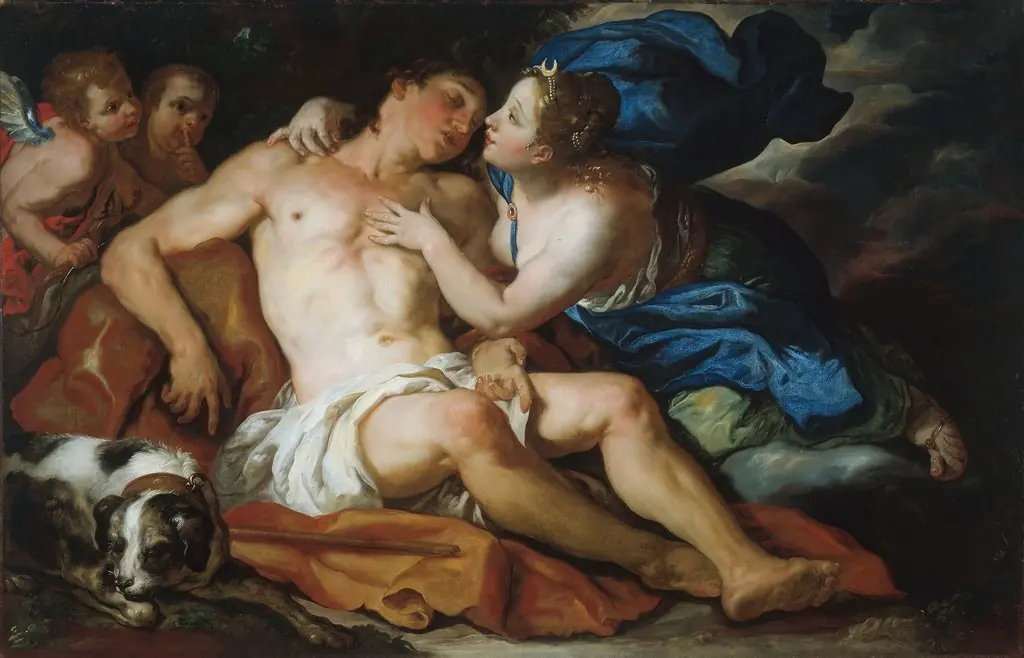 Diana and Endymion
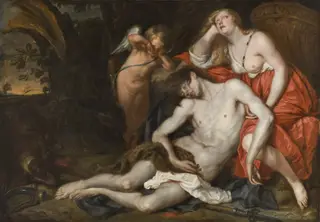
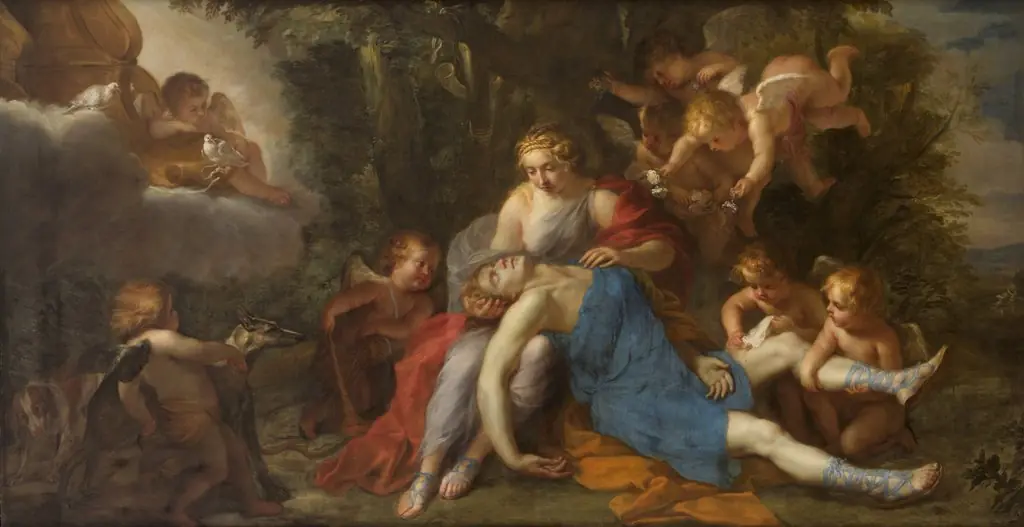 Venus beweint den toten Adonis
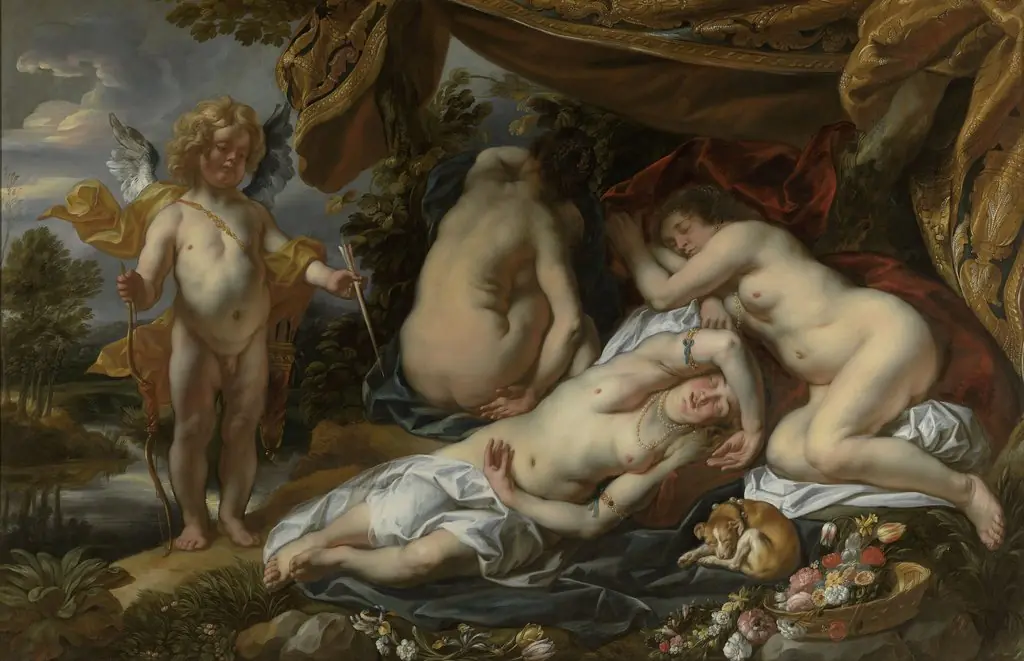 Cupid and Psyche
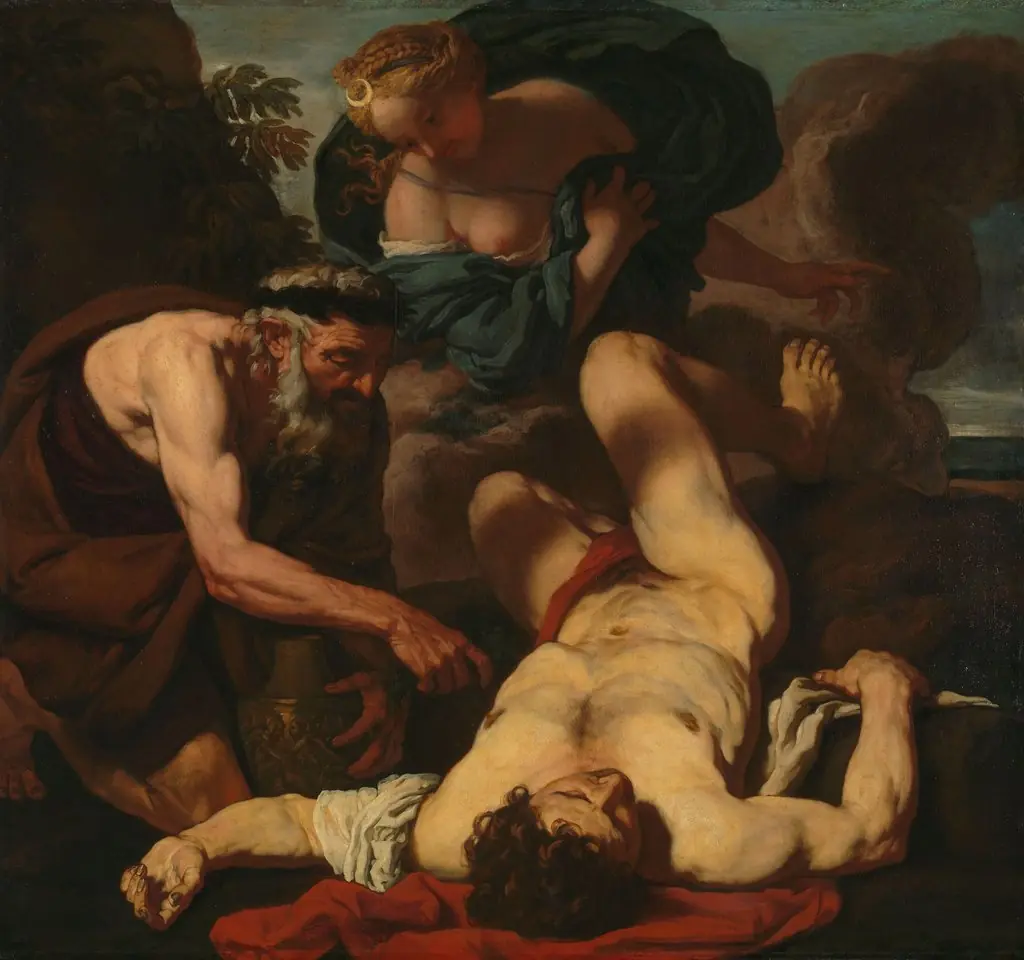 Selene and Endymion
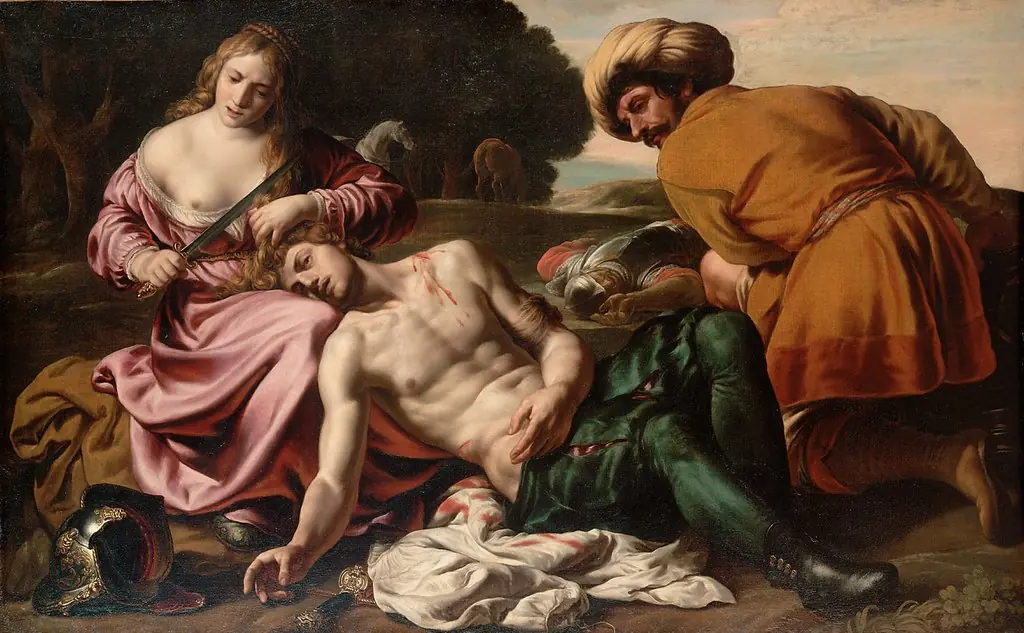 Erminia finds the wounded Tancred
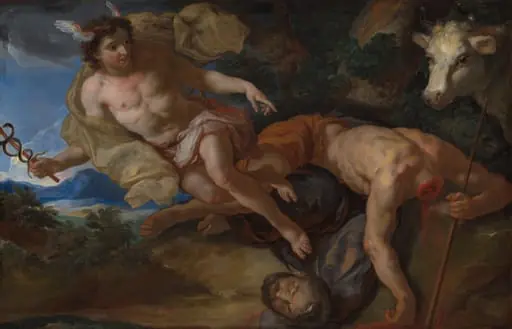 Mercury Rescues the Disguised Io after Beheading Argus
 Untitled
 Gemeine Jeuchts Beeldt. Allegori på ungdommens fristelser
- Venus Bewailing the Death of Adonis