Artwork
An Officer in Billeted Quarters
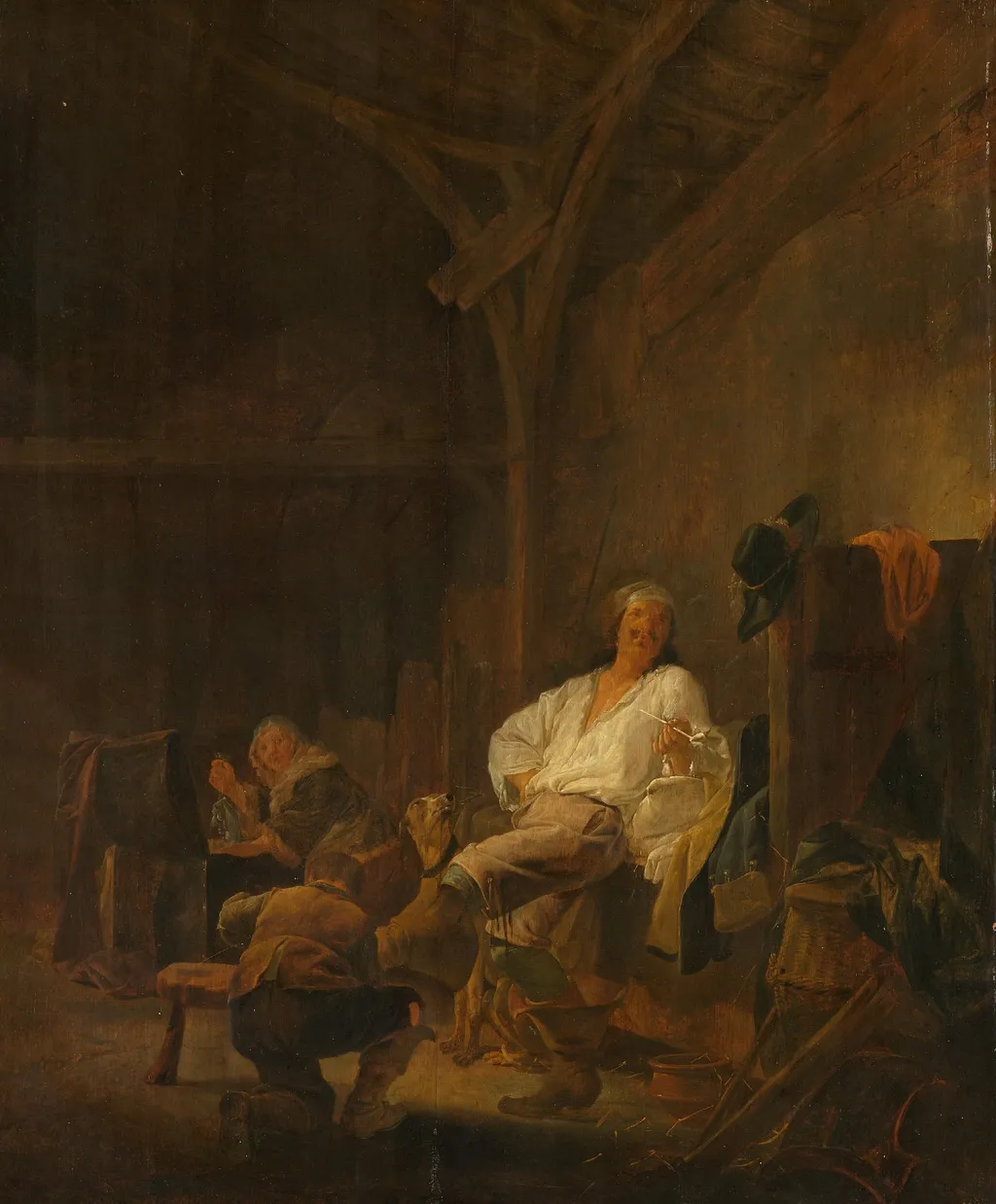
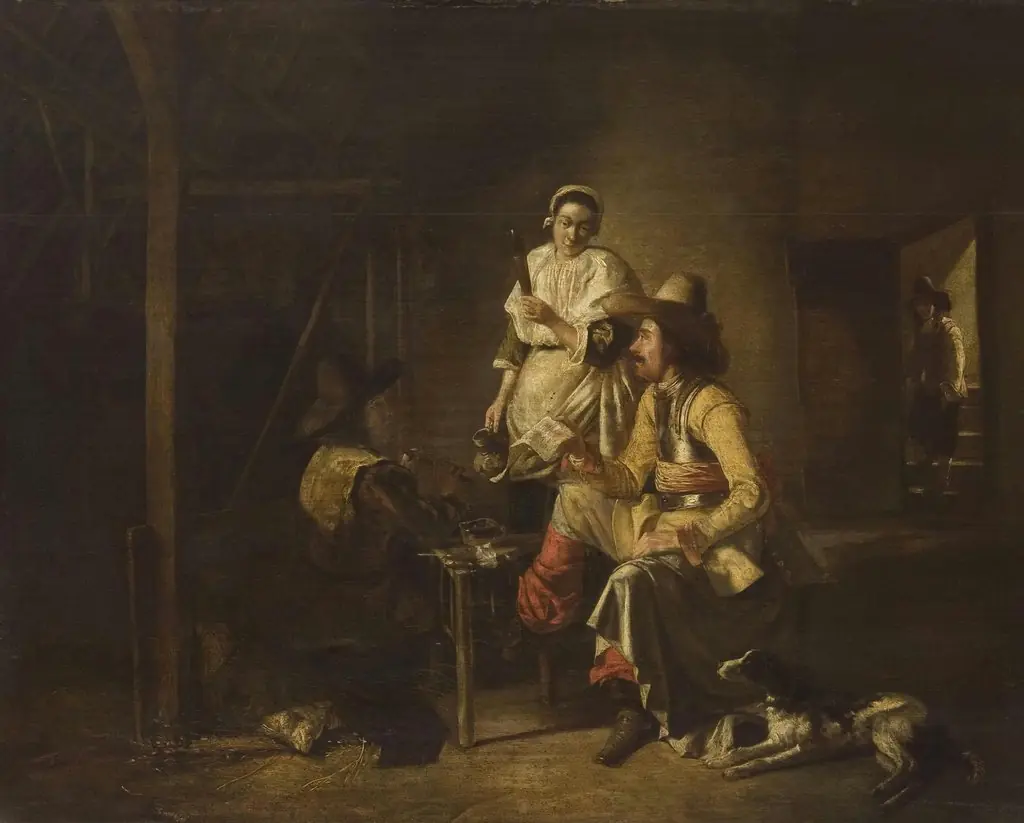
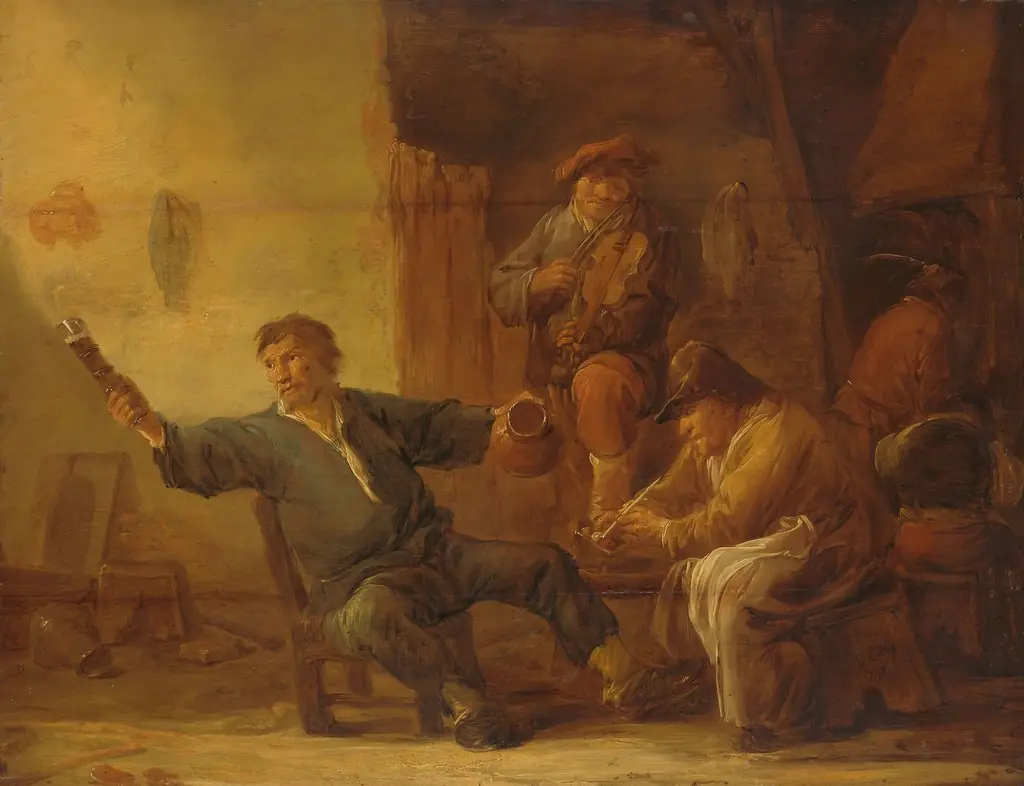
An Officer in Billeted Quarters is an unspecified painting by the Dutch Golden Age artist Marten Stoop. It dates from 1647 and is held in the collection of the Rijksmuseum.
About this work
Overview
Painted in 1647 by Maerten Stoop, An Officer in Billeted Quarters depicts a quiet, interior moment of military life during the mid-seventeenth century.
Painted in 1647 by Maerten Stoop, An Officer in Billeted Quarters depicts a quiet, interior moment of military life during the mid-seventeenth century. The composition centers on a seated officer resting on a wooden bench within a dimly lit barn or rustic dwelling. A young boy attends to the soldier, pulling off his boots, while the officer smokes a pipe, his posture suggesting fatigue from duty.
In the background, a woman bends over an open trunk, adding a layer of domestic activity to the scene. Stoop, a Dutch Golden Age painter known for his genre scenes of soldiers and camp life, captures the mundane reality of billeting, the practice of housing soldiers in private homes. The work avoids dramatic conflict, focusing instead on the weary interaction between the occupier and the local inhabitants.
The lighting emphasizes the textures of the wooden bench and the figures' clothing, creating an intimate atmosphere. This painting reflects Stoop's contribution to the genre of military genre painting, which often portrayed soldiers not as heroes but as ordinary individuals navigating the disruptions of war. The date 1647 places the work during the later stages of the Eighty Years' War, a period when such scenes were common in Dutch art.
Subject & Meaning
The work captures a moment of everyday life during military occupation, illustrating how the presence of soldiers permeates civilian spaces. By focusing on the mundane tasks of boot removal and luggage handling, the painting reflects the subtle intrusions of war into ordinary routines and the shared humanity of both the officer and the household members.
Technique & Style
The artist renders the scene with careful attention to light and texture, allowing the soft illumination to fall on the officer’s coat and the wooden surfaces. Fine brushwork defines the figures’ gestures, while muted colour tones convey the subdued mood of the interior, emphasizing realism over dramatization.
Context
Created in the period when billeting of troops was common, the painting offers a visual record of the social arrangements imposed by wartime authorities. It situates the viewer within a private domestic setting, highlighting the intersection of military presence and civilian life in a historically specific environment.
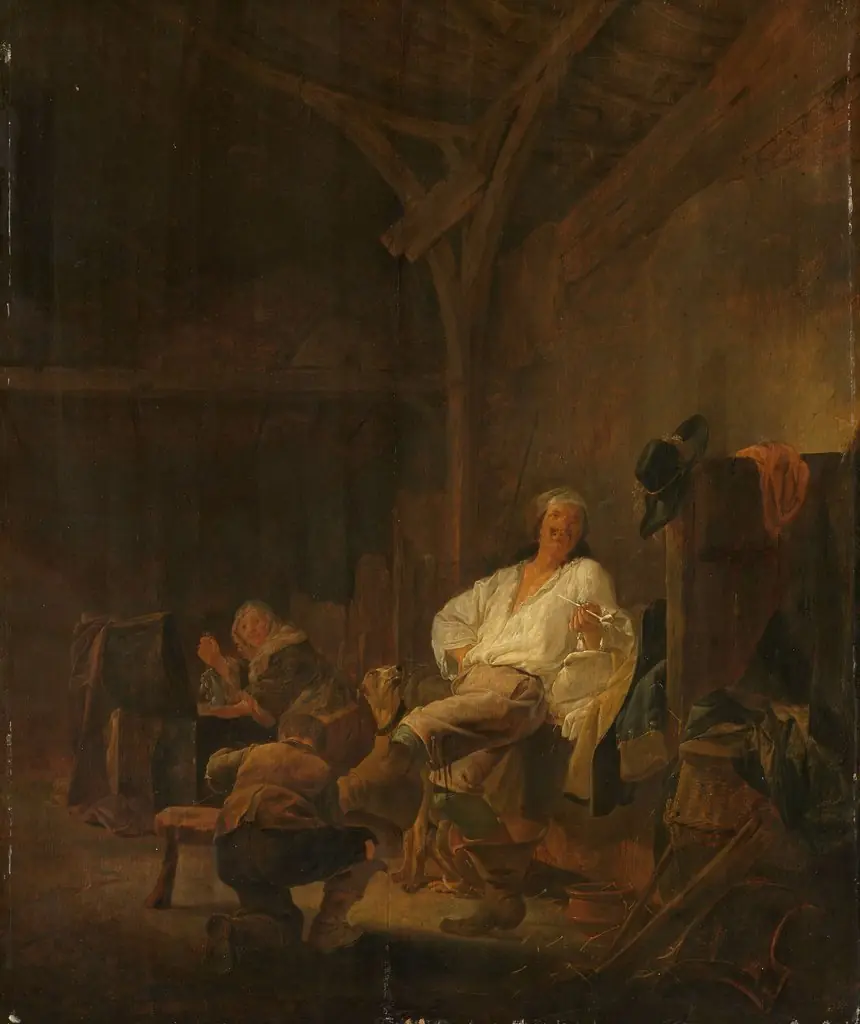
Own this work as a print
Artist & collection