Artwork
Madonna and Child
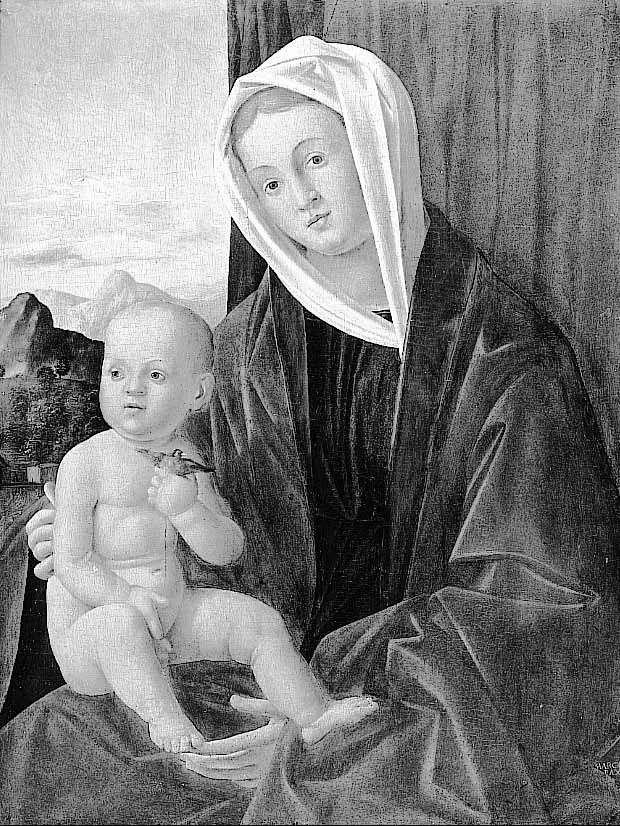
Madonna and Child is a paint painting by the Early Renaissance artist Marco Basaiti. It is held in the collection of the Gemäldegalerie Berlin.
About this work
Overview
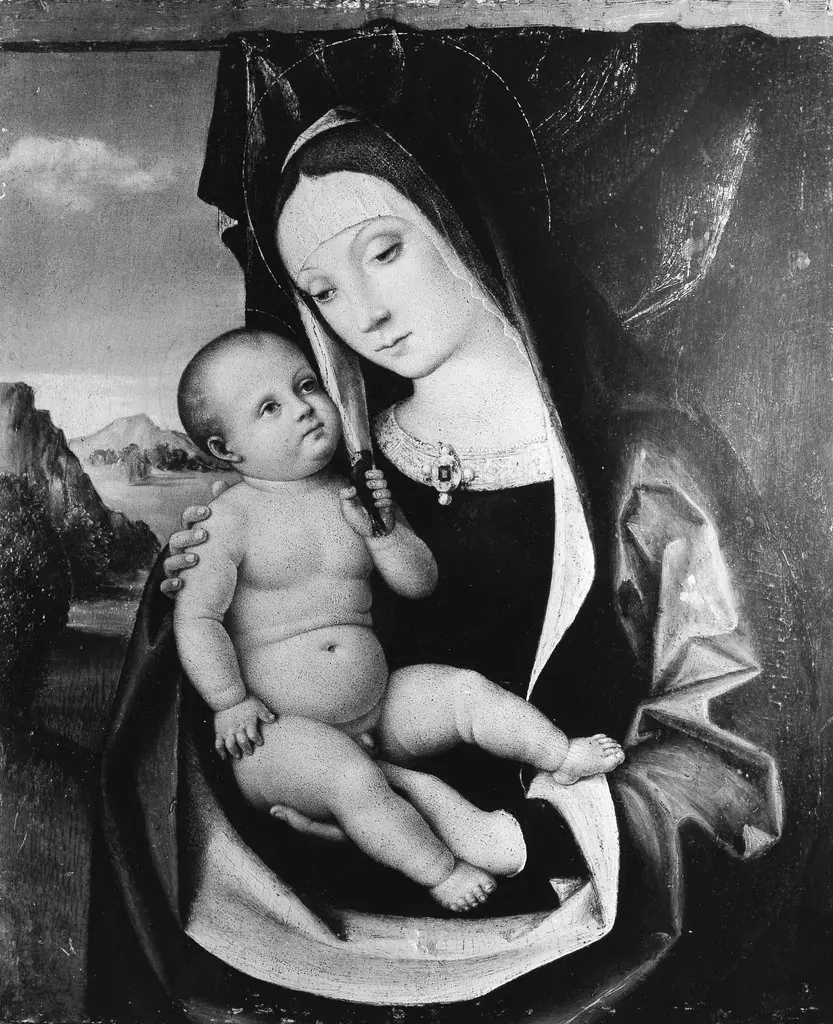
The painting depicts the Virgin Mary holding the Christ Child on her lap, situated before a curtain and an open landscape.
Marco Basaiti, an Italian painter active between 1496 and 1530, produced multiple versions of the Madonna and Child. Among these is a devotional panel dated circa 1510, measuring 62.5 by 49.5 cm and executed in tempera on a poplar panel. The painting depicts the Virgin Mary holding the Christ Child on her lap, situated before a curtain and an open landscape. The work is currently housed at the Georgia Museum of Art at the University of Georgia, Athens.
Subject & Meaning
The painting portrays the Virgin Mary as a maternal figure holding the infant Christ. Mary takes up most of the panel, functioning as an intermediary between humanity and God. All elements of the composition center on the life of Christ, particularly the bird he grasps in one hand. This bird symbolizes the soul that flies away at death, likely intended to be a goldfinch, which, according to legend, was stained by a drop of Christ's blood. Mary supports the child's back with her right hand and rests her left hand beneath his feet, while the infant looks outward and her gaze is directed slightly beyond the viewer.
Technique & Style
Rendered in muted tones of black, white, and gray, the composition is frontal and stable, with the figures occupying the central space. The artist applied paint smoothly, with careful blending in the flesh tones and more linear folds in the drapery. Light falls evenly across the figures, modeling their rounded forms, while the dark garment shows lighter highlights along its edges. A heavy curtain falls to the right, and an open landscape with mountains and sky appears to the left, receding through atmospheric softening of distant forms. The surface shows fine craquelure throughout. Basaiti's working method sometimes involved partial tracings to compose scenes, reusing figure solutions across multiple panels.
History & Provenance
The Georgia Museum panel bears a stamp and inscription from the Galleria Manfrin in Venice on its reverse, and it has been identified as number 333 in the 1856 Catalogo dei quadri esistenti nella Galleria Manfrin in Venezia. However, the 1912 description by J. A. Crowe and G. B. Cavalcaselle, which mentions a child playing with a bird and a cartello inscribed Marcus Baxaiti, does not correspond precisely to this work. Count Alessandro Contini Bonacossi sold the painting to Samuel H. Kress on June 26, 1935. Kress gifted it to the National Gallery of Art in 1939, which deaccessioned it in 1952 and returned it to the Samuel H. Kress Foundation. The foundation then gifted it to the Georgia Museum of Art in 1961, where it holds the accession number 1961.1897.
Context
Basaiti operated within the broader context of North Italian Renaissance painting. Scholarly comparisons reveal his stylistic interrelations with contemporaries like Giovanni Battista Cima de Conegliano. For instance, a Virgin and Child in the Prado bears an apocryphal Cima signature but has been attributed to Basaiti because its figure of Mary presents an almost identical solution to a Basaiti panel in the Alte Pinakothek in Munich. This suggests Basaiti employed partial tracings to compose his scenes, a practice that sometimes led to misattributions of his work. The Georgia Museum panel itself demonstrates the complexities of connoisseurship, as early catalog descriptions of the Manfrin collection work diverge from the known painting.
Artist & collection
Artist
Marco Basaiti (c. 1470 – 1530) was a Venetian painter of the Renaissance who worked mainly in Venice and was a contemporary of Giovanni Bellini and Cima da Conegliano. He has been referred to by several names including…

 Madonna and Child
 Madonna and Child
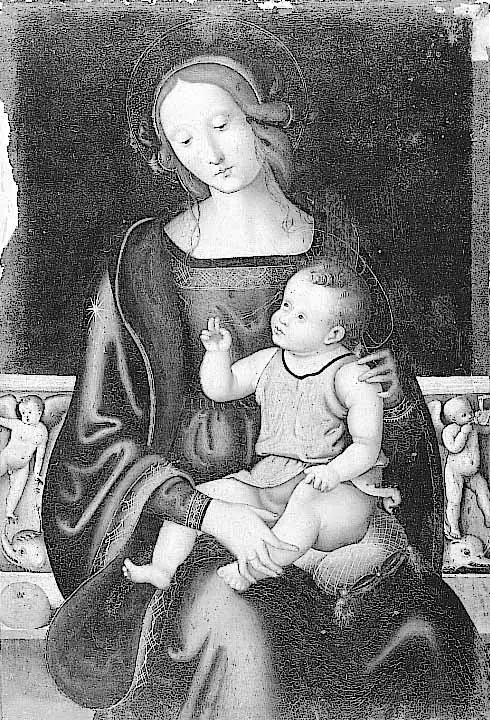 The Virgin and Child
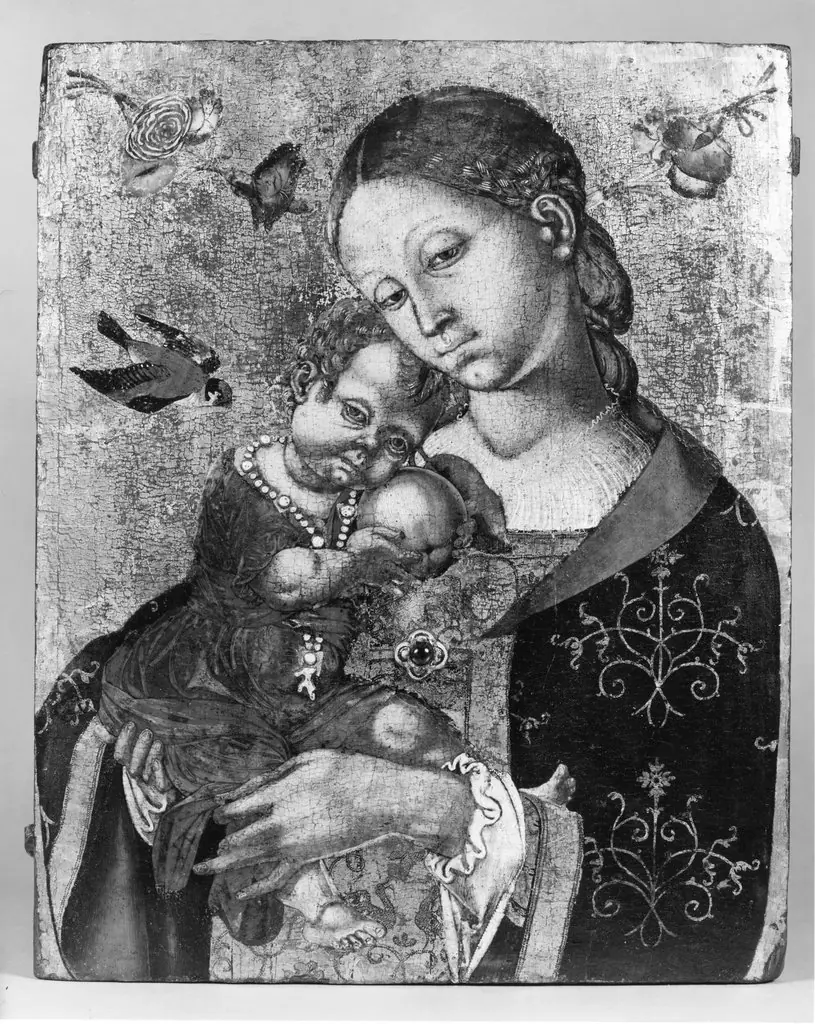 Madonna and Child
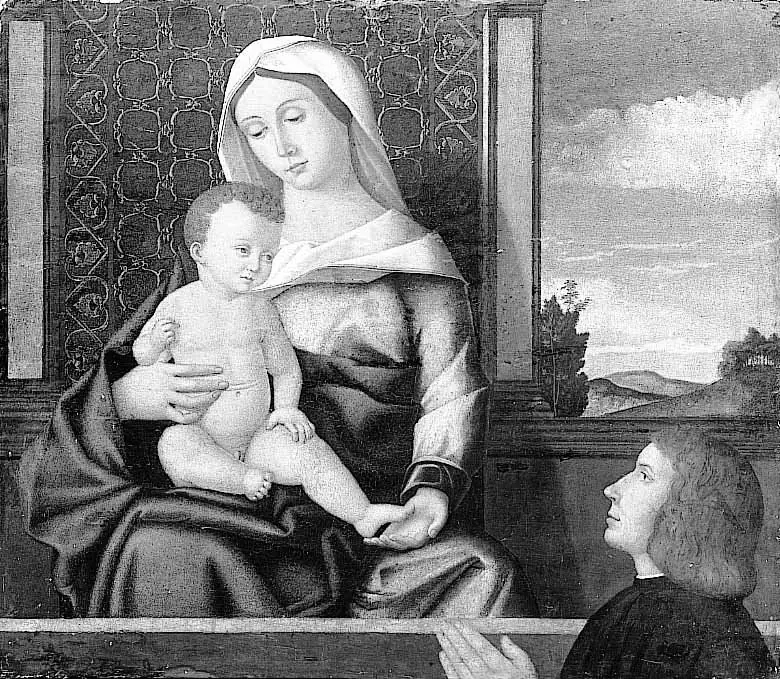 The Virgin and Child with a Donor
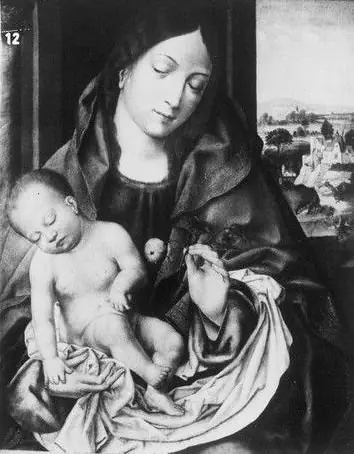 Maria met slapend kind op de arm
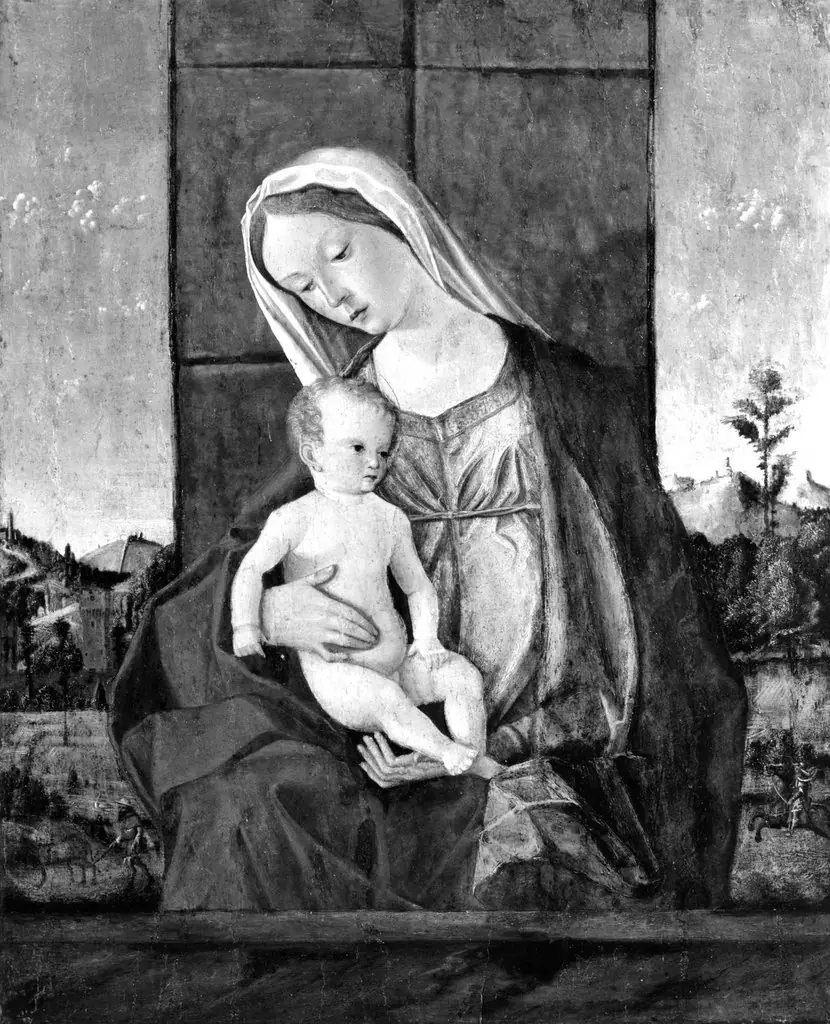 Madonna and Child
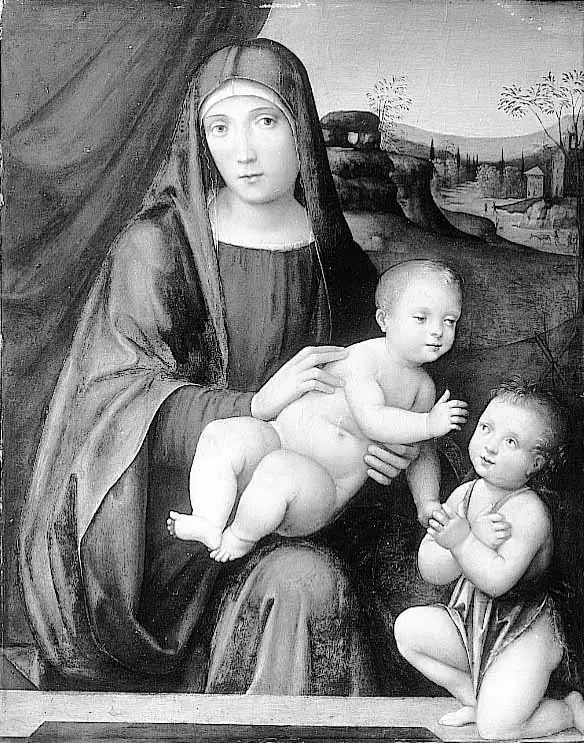 The Virgin and Child with the Young St. John
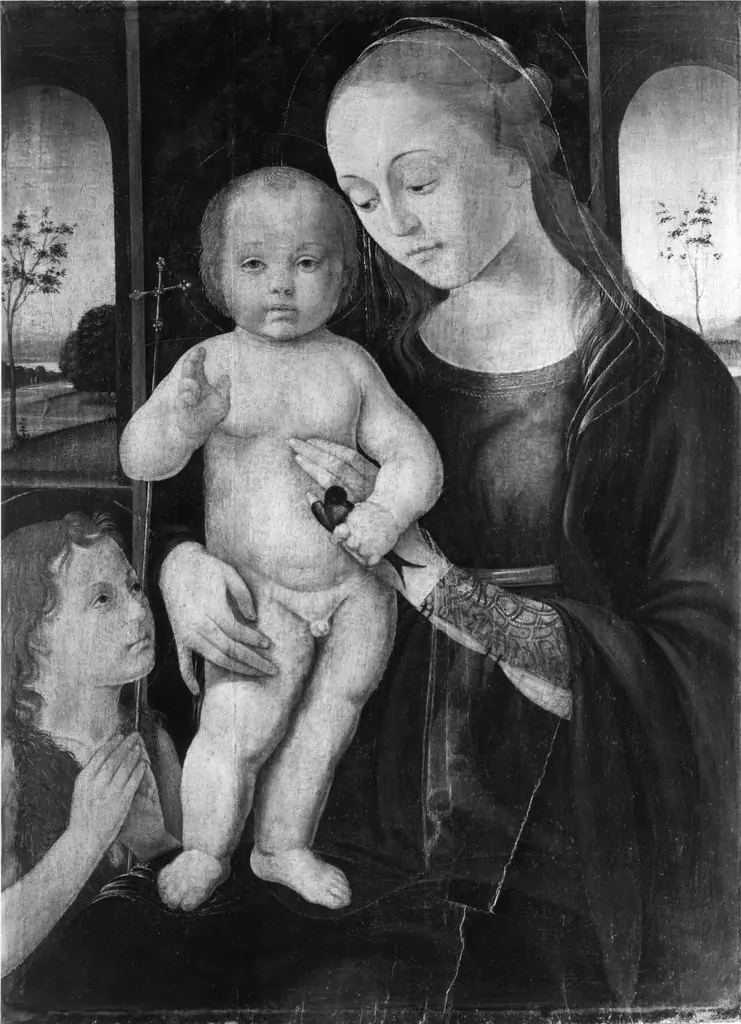 Madonna and Child with the Young St. John the Baptist
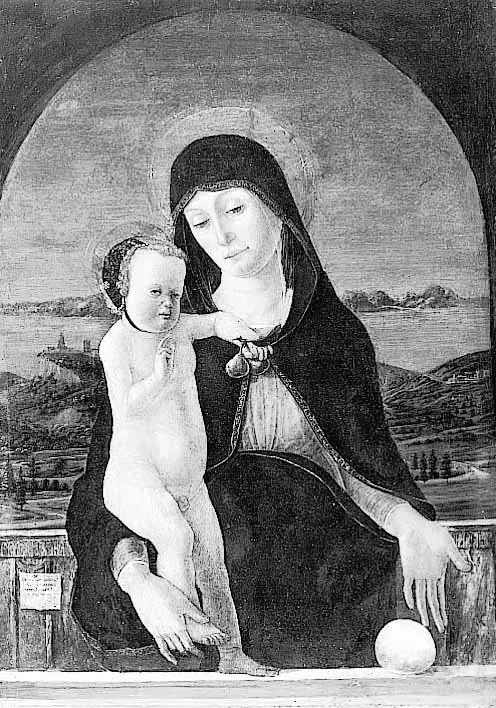 The Virgin and Child
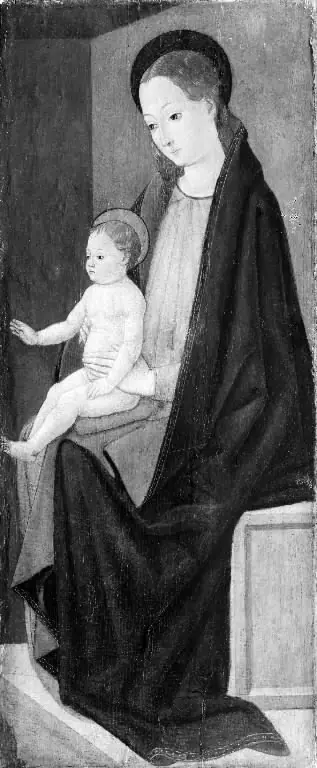 The Virgin and Child
- Madonna and Child