Artwork
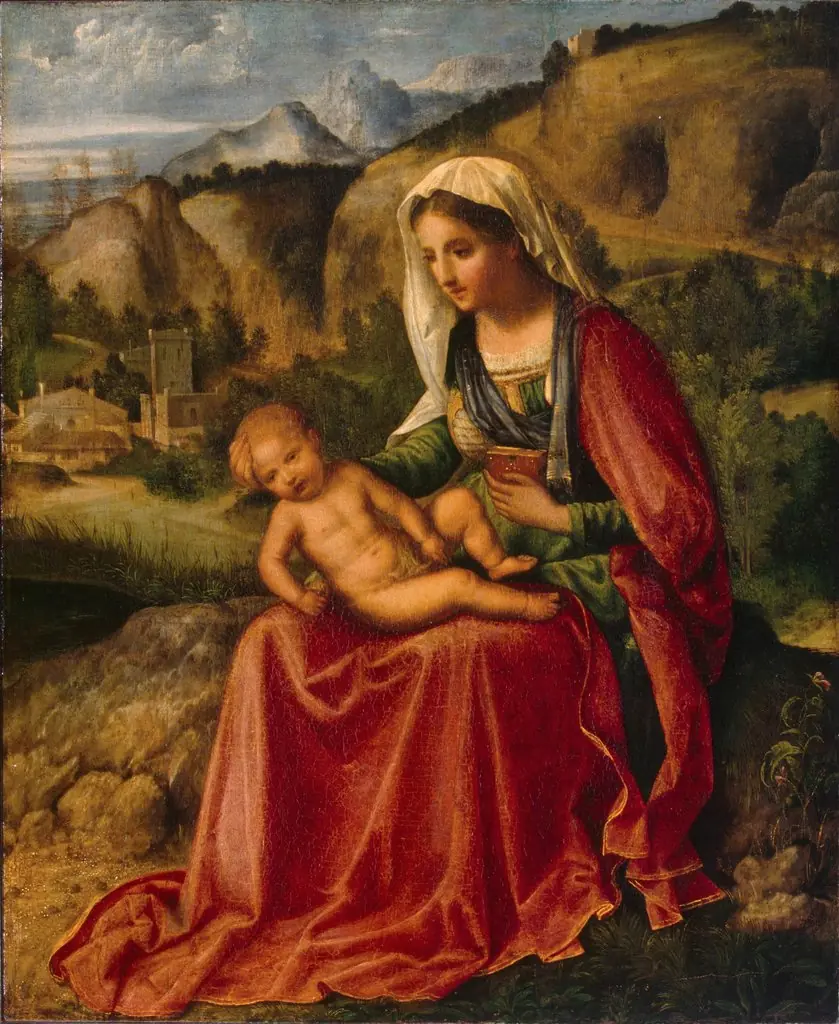
Madonna Adoring the Child
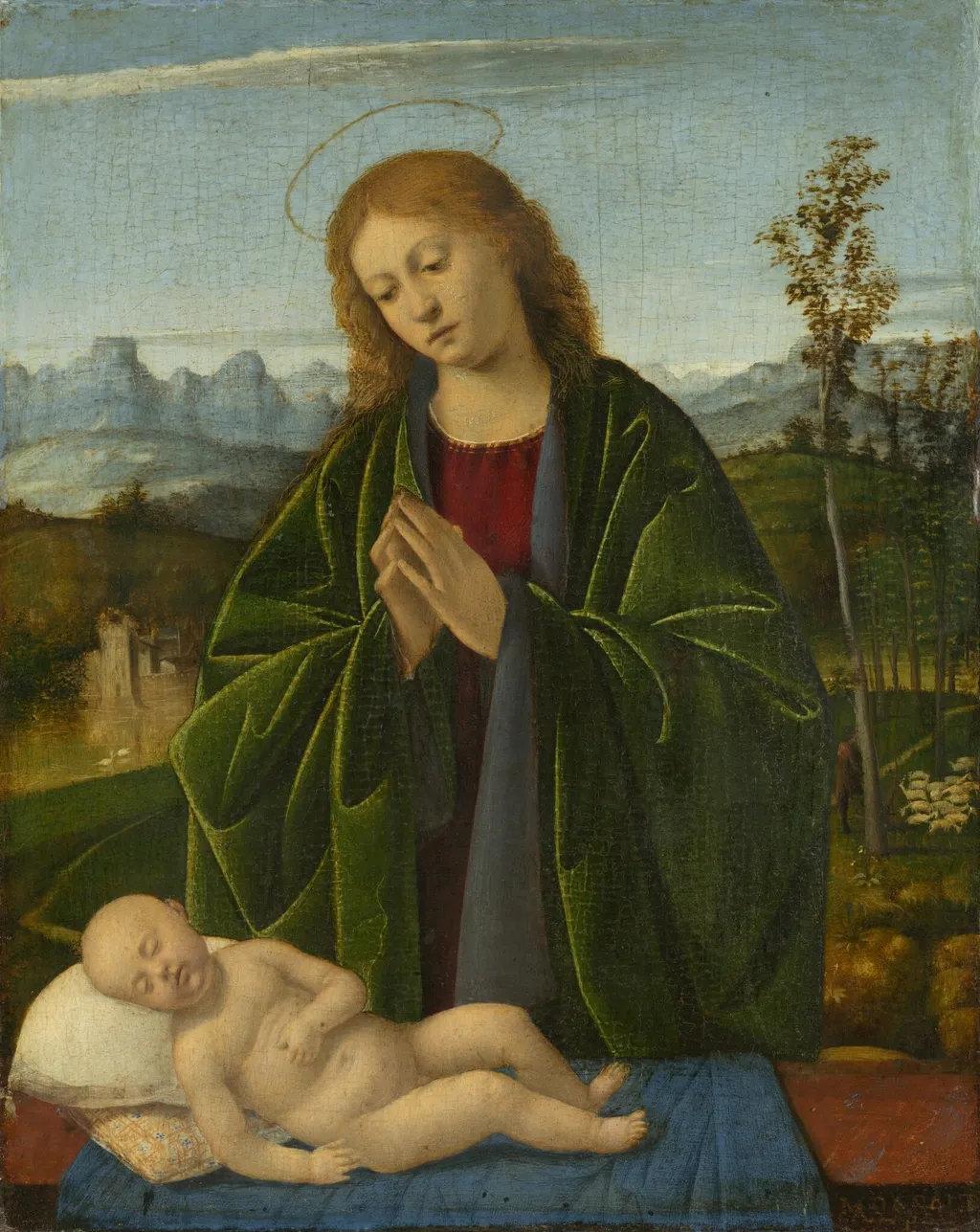
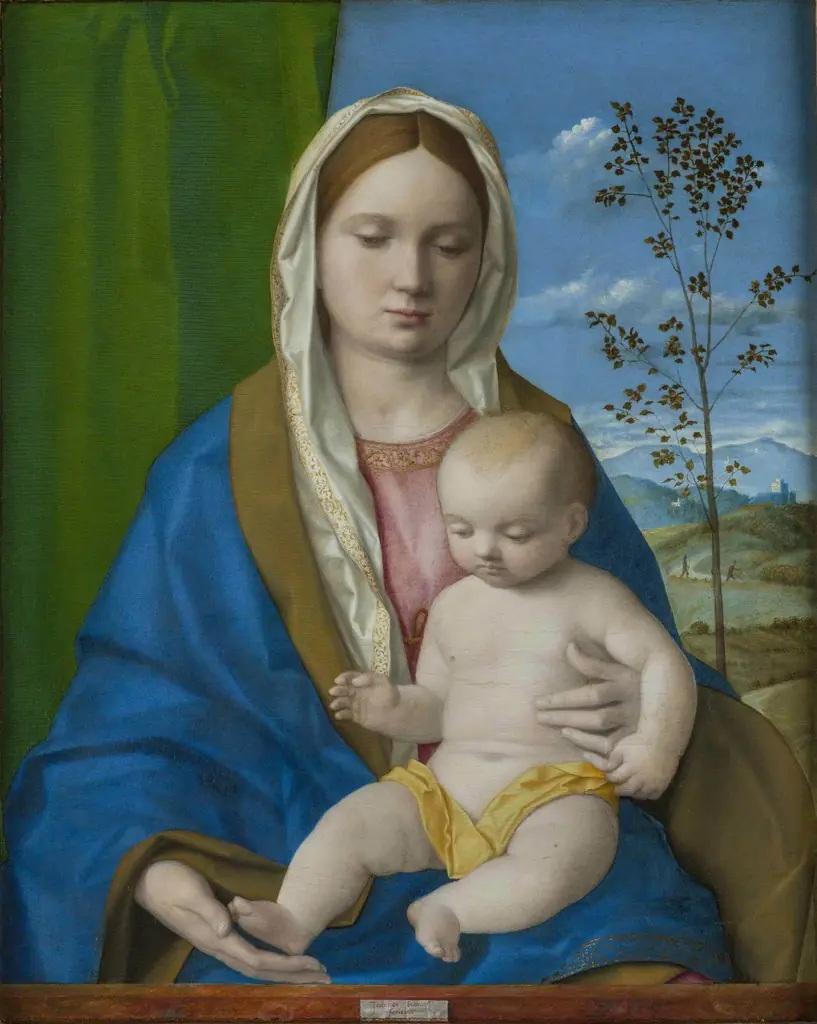
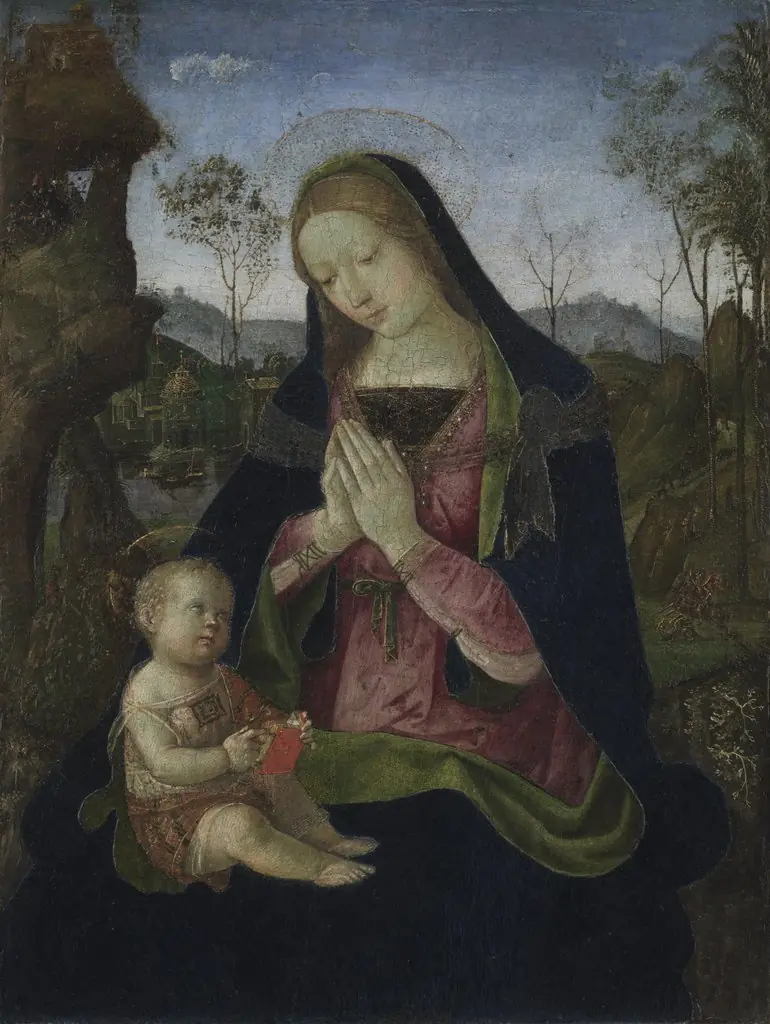
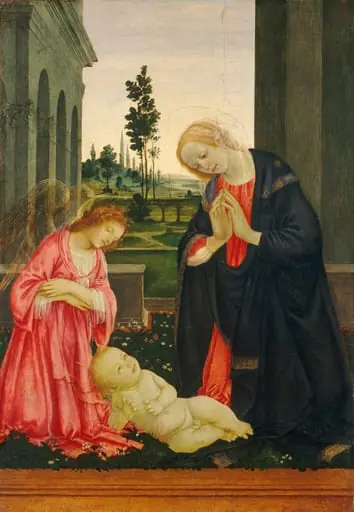
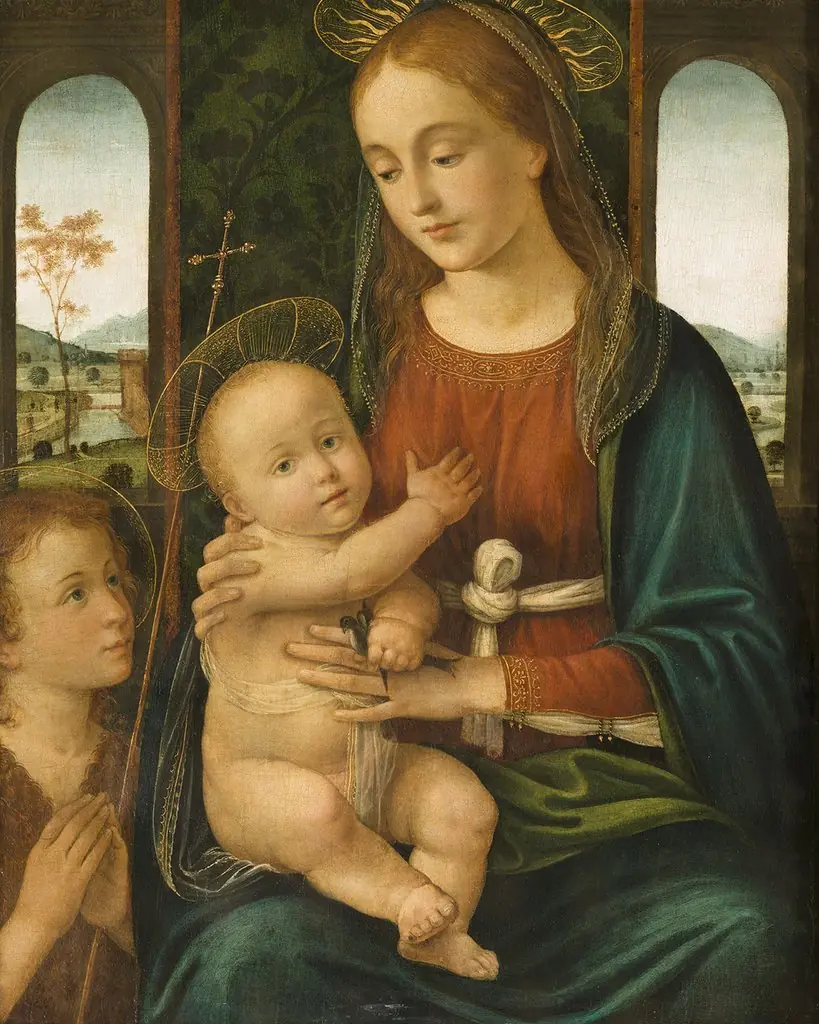
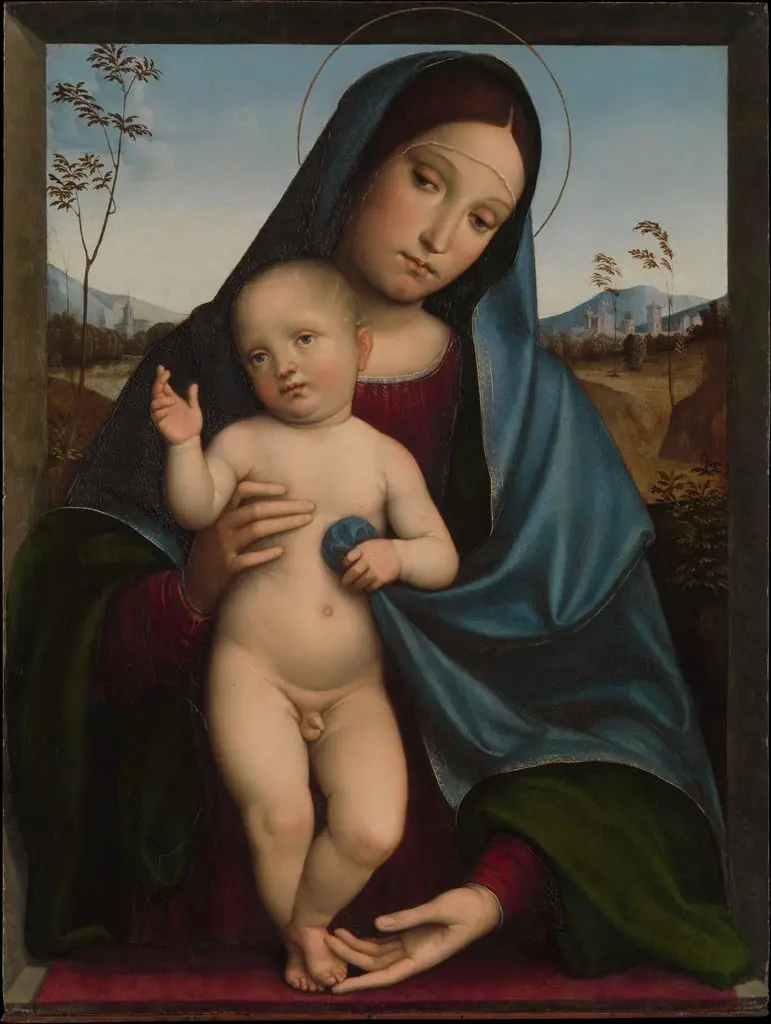
Madonna Adoring the Child is an oil painting by the Mannerist artist Marco Basaiti. It dates from 1520 and is held in the collection of the National Gallery of Art.
- Inscription
- Inscribed:lower right: M. BASAITI / P., painted over the original signature MARCHVS / BAXAITI P.
About this work
In a green landscape, the Virgin bends over the sleeping infant Christ in this small panel by Marco Basaiti, painted around 1520 for private devotion. A Venetian painter of probable Albanian origin, Basaiti signed it at lower right as "M. BASAITI / P.," covering an earlier inscription that read "MARCHVS / BAXAITI P."
Technique & Style
Marco Basaiti's Madonna Adoring the Child is executed in oil on panel, a medium widely used in Venetian religious painting of the early sixteenth century.
Marco Basaiti's Madonna Adoring the Child is executed in oil on panel, a medium widely used in Venetian religious painting of the early sixteenth century. The panel support is small, measuring 20.6 by 16.5 centimeters, suggesting it was intended for private devotion. The depiction of the Madonna and Child with a tree and a halo reflects the religious genre. No further details on handling or condition are recorded in the available sources.
History & Provenance
The painting is dated to 1520 on stylistic grounds. Its earliest recorded owner was the Contessa di Breganze in Venice, after which it entered the collection of Count Alessandro Contini Bonacossi (1878–1955) in Florence and Rome. In 1934 Contini Bonacossi sold the work to the Samuel H. Kress Foundation in New York, which gifted it to the National Gallery of Art, Washington, D.C., in 1939.
It remains there as part of the Samuel H. Kress Collection. No documentation of a specific commission or earlier creation history survives, and no exhibition history is recorded in the available sources.
Overview
This small oil painting by Marco Basaiti, created around 1520, depicts the Virgin Mary tenderly adoring the sleeping Christ Child within a rich, atmospheric landscape. Its modest dimensions suggest it was intended for personal devotion rather than public display. The Venetian artist's style in this work reflects a synthesis, drawing from the structured forms associated with Alvise Vivarini while incorporating the softer, more luminous qualities characteristic of Giovanni Bellini.
Subject & Meaning
The painting presents an intimate scene of the Virgin Mary contemplating the slumbering infant Jesus, a theme widely embraced for private prayer in early sixteenth-century Venice. Basaiti positions the Madonna close to the viewer, her pale skin and light brown hair framed by drapery that appears to extend beyond the picture plane. This compositional choice invites the beholder into the sacred moment, bridging the space between the devotional image and individual contemplation.
Context
Marco Basaiti remains a somewhat enigmatic figure in art history, with limited biographical information available. His presence is recorded only once, in the 1530 register of the Venetian painters' guild, confirming his activity within the city's artistic community. Although details of his life are scarce, he is understood to have been a Venetian artist, possibly of Albanian descent, whose work developed within the sphere of influence of artists like Alvise Vivarini.
Own this work as a print
Artist & collection
Artist
Marco Basaiti (c. 1470 – 1530) was a Venetian painter of the Renaissance who worked mainly in Venice and was a contemporary of Giovanni Bellini and Cima da Conegliano. He has been referred to by several names including…