Artwork
Self-portrait with palette
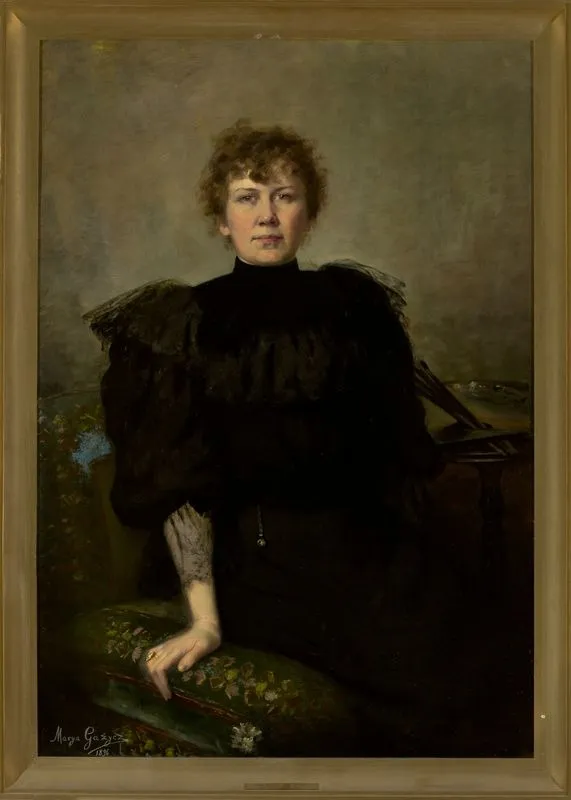
Self-portrait with palette is an oil painting by the Post-Impressionist artist Maria Gażycz. It dates from 1898 and is held in the collection of the National Museum in Warsaw.
About this work
Overview
Self-portrait with palette is an oil on canvas self-portrait painted in 1896 by the Polish artist Maria Gażycz (1860-1935).
Self-portrait with palette is an oil on canvas self-portrait painted in 1896 by the Polish artist Maria Gażycz (1860-1935). Measuring 115.5 by 80.5 centimeters, the painting is now held in the collection of the National Museum in Warsaw. The work is significant as a rare assertion of professional female artistic identity in late nineteenth-century Poland, depicting the artist with the tools of her trade at a time when women faced substantial barriers to formal art education and professional recognition. Gażycz painted this work near the end of her studies at the Académie Julian in Paris, where she had trained from 1891 to 1895 alongside other aspiring women artists.
Subject & Meaning
The painting presents Gażycz seated in a decorative armchair, her body turned slightly left while her gaze confronts the viewer directly. She wears a dark, high-necked dress with voluminous sleeves and lace cuffs, and a ring is visible on the finger of her right hand, which rests on a floral upholstered armrest. Behind her right shoulder, a painter's palette and brushes rest on a surface, explicitly asserting her identity as a professional artist rather than a dilettante. The restrained palette of blacks, deep browns, and olive greens, with pale flesh tones at her face and hand, creates a composition of contrasts that underscores the psychological intensity of the work. The almost emotionless face and intense gaze, noted by critics, lend the portrait a striking psychological expression. The self-portrait thus functions as both a declaration of artistic vocation and a negotiation of feminine propriety, presenting the artist as respectable and formally composed while unmistakably claiming her place within the professional art world.
Technique & Style
Gażycz executed the work in oil on canvas, employing smooth and blended brushwork in the face that contrasts with more textured handling in the background and dress. Light falls softly from the left, illuminating her face and hand while the dark dress absorbs shadow. The background is muted and atmospheric, rendered in gray-green tones that create a harmonious setting for the figure portrait. The composition is vertical and centered, formal in its presentation, with a signature appearing in the lower left corner. The technique reflects the academic training Gażycz received at the Académie Julian, where she would have studied under established masters in Paris, then the center of the art world. The handling demonstrates particular attention to the rendering of fabrics and textures, from the lace cuffs to the floral upholstery, while maintaining a cohesive tonal unity throughout.
History & Provenance
The painting dates to 1896, the year following Gażycz's completion of her studies at the Académie Julian in Paris. It represents a pivotal moment in her career, produced after her training abroad and before the personal tragedies that would reshape her life. Her husband Konstantin Gażycz died in 1900, and her subsequent religious conversion led her to enter the convent of the Sisters of Nazareth in Rome in 1906, taking the name Sister Paula. The work is now in the collection of the National Museum in Warsaw, though specific details of its acquisition and earlier ownership chain are not recorded in the available sources. The painting's survival and institutional preservation are notable given the destruction that affected many Polish cultural institutions and religious establishments during the twentieth century, including damage to the convent buildings where Gażycz lived during World War II.
Context
Gażycz's path to artistic training exemplifies the challenges faced by Polish women artists in the late nineteenth century. Born into a noble family in the Russian Empire, she began studies at Wojciech Gerson's drawing classes in Warsaw in 1874, and by hats were first presented at an exhibition organized by the Society for the Encouragement of the Fine Arts in Warsaw in 1878. Like other Polish women of her generation, she sought advanced training abroad due to the lack of university-level institutions accepting women in partitioned Poland. At the Académie Julian, she formed a significant friendship with Olga Boznańska, one of the most celebrated Polish painters of the era, and cared for Boznańska after the deaths of her father and fiancé. The two artists spent time together in Normandy. The self-portrait genre held particular significance for women artists as a means of asserting professional identity in a male-dominated field, and Gażycz's inclusion of the palette explicitly claims this traditionally masculine attribute of artistic labor.
Legacy
Self-portrait with palette stands as a document of the brief but significant period of Gażycz's professional artistic activity before her religious vocation. After 1906, her artistic output shifted dramatically in subject matter toward religious themes and depictions of peasant life, reflecting her new spiritual commitments. Works from her later period, including Peasant Woman and Peasant, adopted a more naturalistic and expressive aesthetic, and several are now in the collection of the Polish Museum of America in Chicago, likely brought by Sisters of Nazareth who established U.S. apostolates in the 1920s and 1930s. More than twenty works from her convent period remain in the properties of the Sisters of the Holy Family of Nazareth. The 1896 self-portrait, preserved in the National Museum in Warsaw, thus represents a crucial, increasingly rare artifact of Polish women's participation in the international art world of the late nineteenth century, before the traumas of the twentieth century reshaped both Poland's borders and its cultural heritage.
Artist & collection
Artist
Maria Gażycz, née Maria Nowina-Chrzanowska (20 March 1860, Vishera, Kursk Governorate – 13 September 1935, Grodno) was a Belarusian-born Polish figure painter, art restorer, and nun in the order of the Sisters of the Holy Family of…

- Self-portrait
 Bildnis Marie Meyer-Bindschedler
 Portrait of O. Buryshkina
 Felicia Kirchdorffer, die Nichte des Künstlers
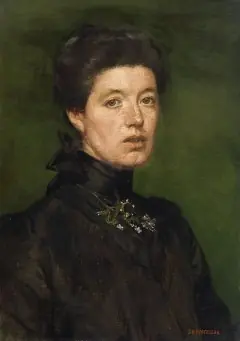 Self-Portrait
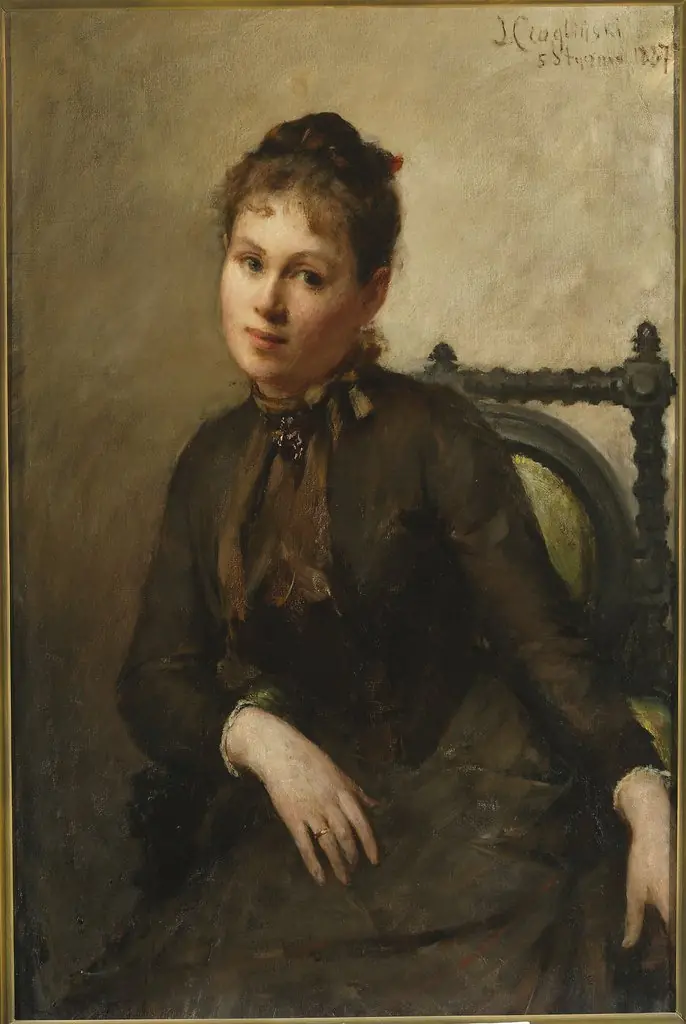 Portrait of Helena Piltz née Rymowicz
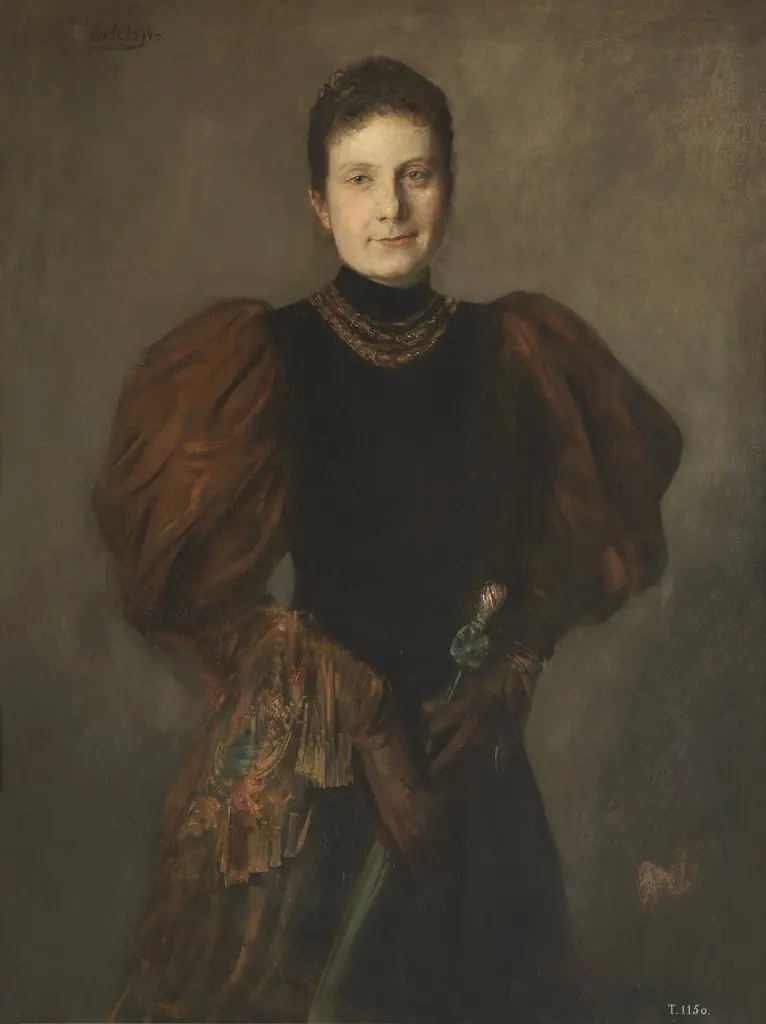 Infanta María de la Paz de Borbón, daughter of Isabella II
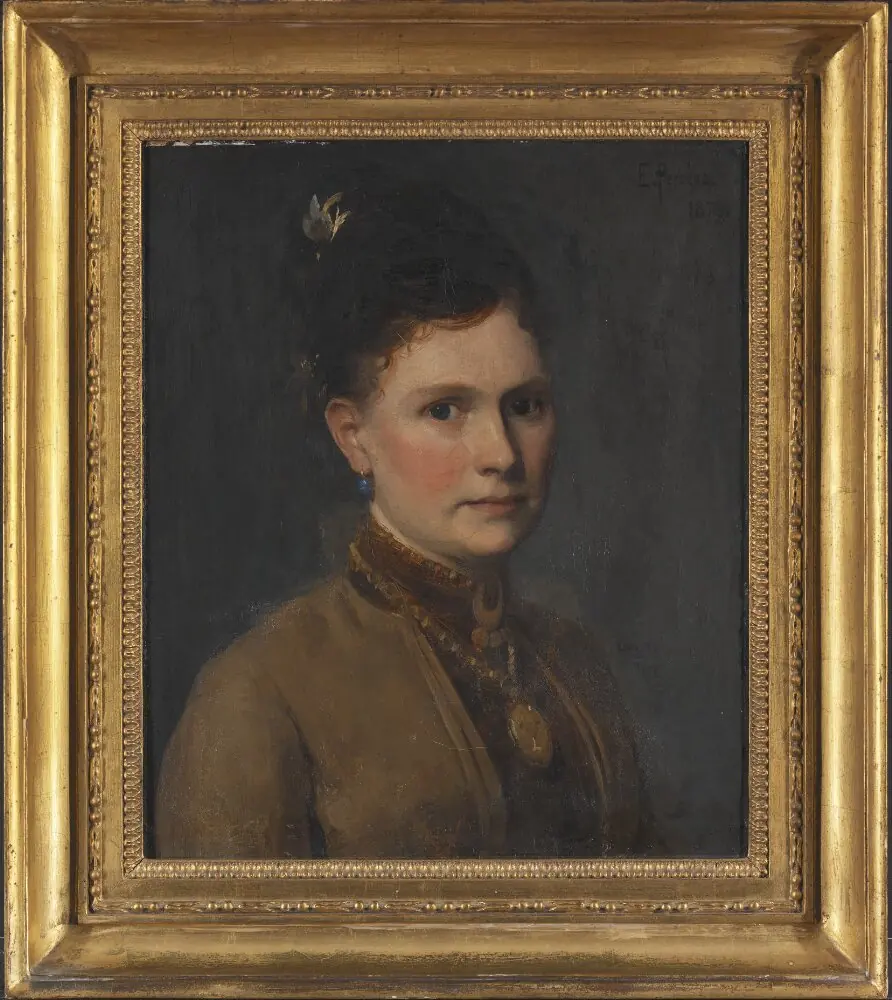 Maria Agnes Claesson (1843- efter 1903), gift med konstnären Edvard Perséus
 Self-portrait
 Portrait of a French Woman
 Portrait of Sofia Nikolaevna Kramskoy, the Artist's Wife
 Portræt af fru Thora Bendix (Anne Victoria, f. Sundberg)