Artwork
Sir Francis Drake
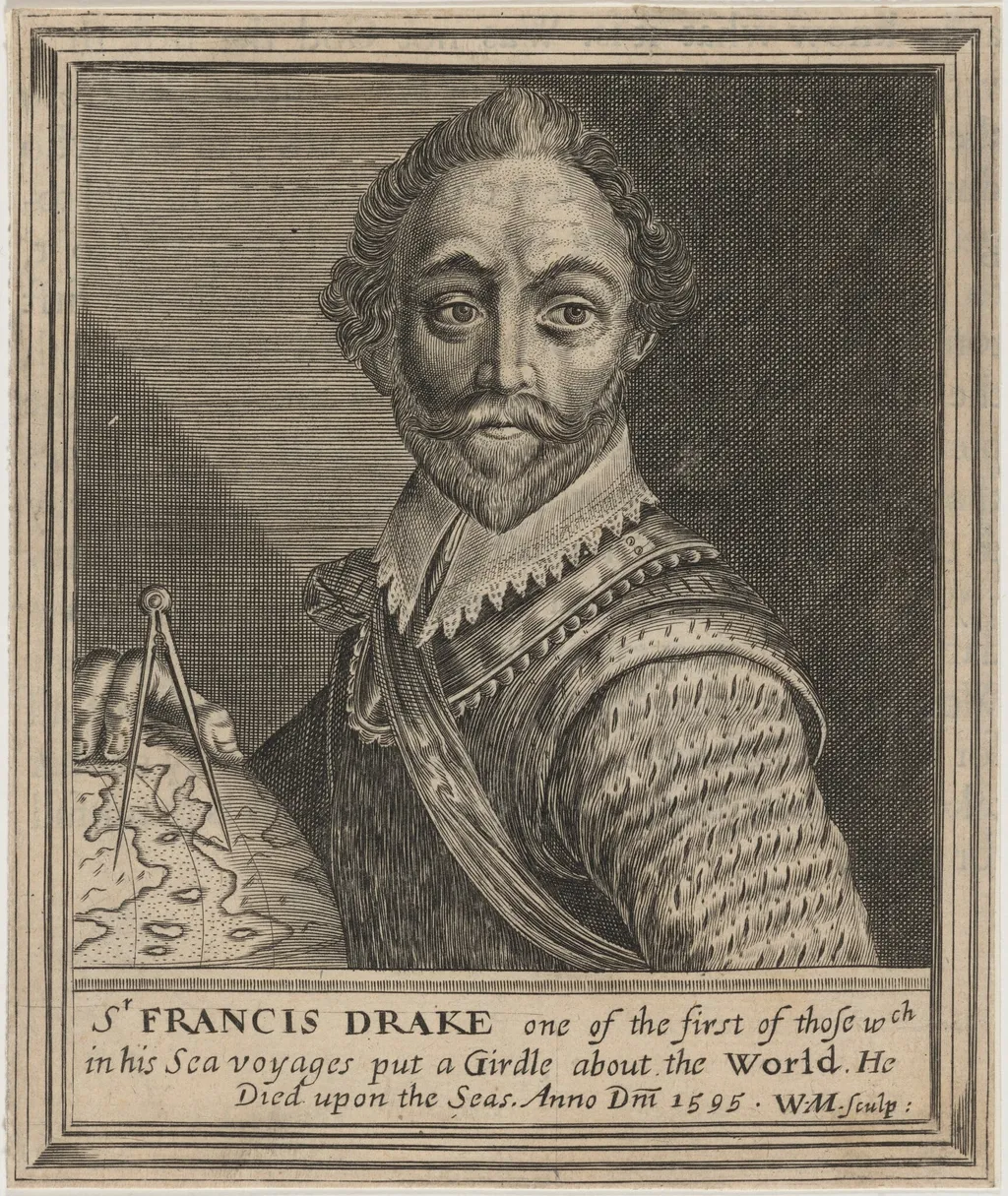
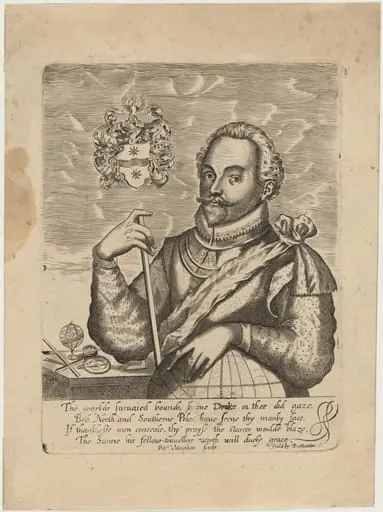
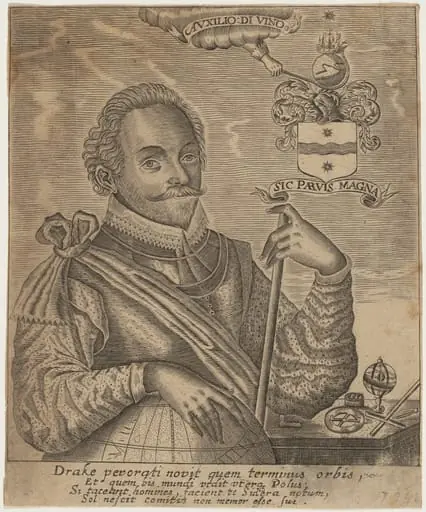
Sir Francis Drake is an ink print by the Baroque artist William Marshall. It dates from 1642 and is held in the collection of the National Gallery of Art.
About this work
Overview
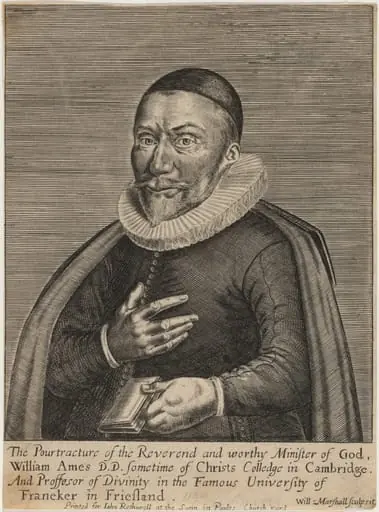
Rendered in monochrome, the portrait emphasizes his stern expression and elaborate attire, framed by a ruffled collar and heavy cloak.
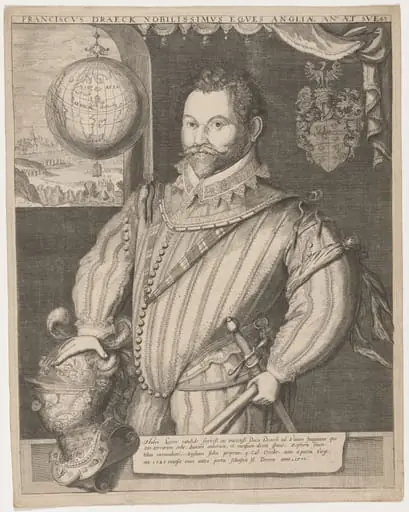
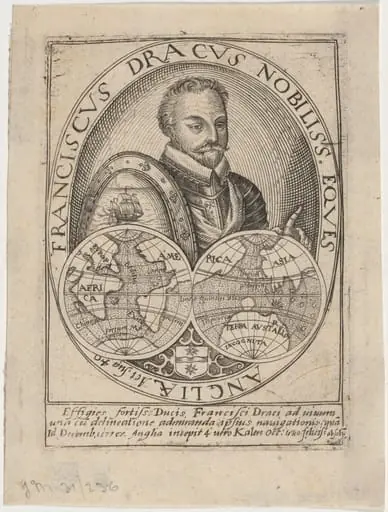
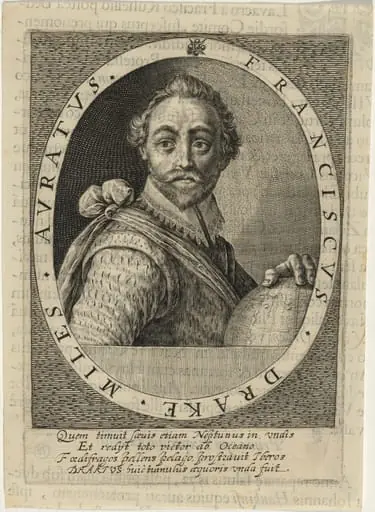
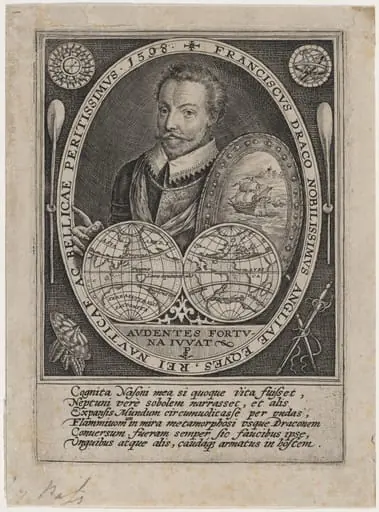
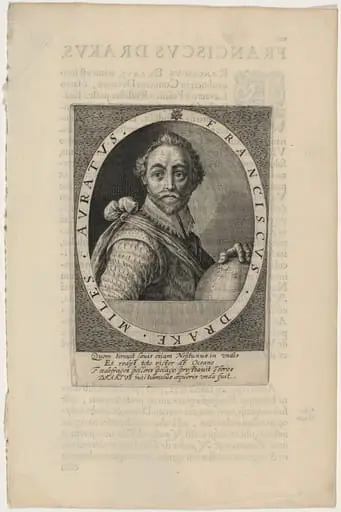
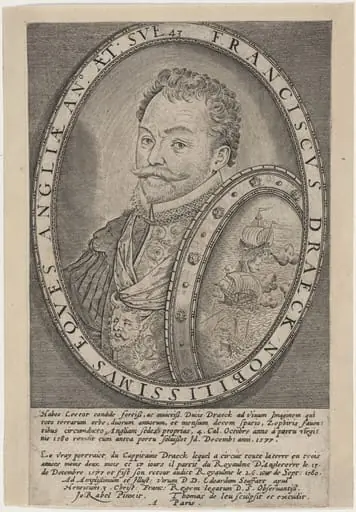
This 1642 engraving by William Marshall depicts Sir Francis Drake, the English navigator and privateer. Rendered in monochrome, the portrait emphasizes his stern expression and elaborate attire, framed by a ruffled collar and heavy cloak. A small, simplified illustration of a ship and a map appears in the upper corner, subtly reinforcing his maritime legacy. The composition is restrained, prioritizing textual identification and symbolic detail over dramatic flair.
Subject & Meaning
The portrait presents Drake not as a hero in action, but as a figure of authority and experience. His beard and steady gaze convey maturity and command, while the inclusion of a staff suggests leadership. The miniature ship and map behind him are not decorative but referential, linking his identity to his circumnavigation of the globe. The inscription confirms his historical role, anchoring the image in factual commemoration rather than myth.
Technique & Style
Marshall employed fine, controlled lines typical of 17th-century engraving to model texture and form. The ruffles of the collar, the folds of the cloak, and the contours of Drake’s face are built through cross-hatching and delicate stippling. The background elements are rendered with minimal detail, contrasting with the precision of the portrait. This technique allowed for reproducibility and clarity, suited to the print’s function as a widely distributed likeness.
History & Provenance
Created in 1642, during the early years of the English Civil War, the engraving emerged in a period when public memory of Elizabethan figures was being reevaluated. Marshall, a known printmaker and publisher, likely produced this as part of a series of notable Englishmen. Its survival suggests continued interest in Drake’s legacy, even as political tides shifted. No early ownership records are documented, but its existence implies circulation among educated audiences.
Context
In the 1640s, printed portraits of explorers served both educational and patriotic purposes. Drake, though deceased for over half a century, remained a symbol of English maritime ambition. His image, often paired with narratives of global exploration, was used to reinforce national identity.
This engraving reflects a broader trend of using print media to preserve and disseminate the likenesses of historical figures to a literate public.
Legacy
Marshall’s engraving became one of the most widely reproduced images of Drake in the 17th century. Its formal composition influenced later portraiture of explorers, establishing a visual template for authority and seafaring achievement. Though not the first depiction of Drake, its clarity and accessibility ensured its endurance in printed collections, contributing to the enduring iconography of the navigator in British cultural memory.
Own this work as a print
Artist & collection