Artwork
Sir Francis Drake
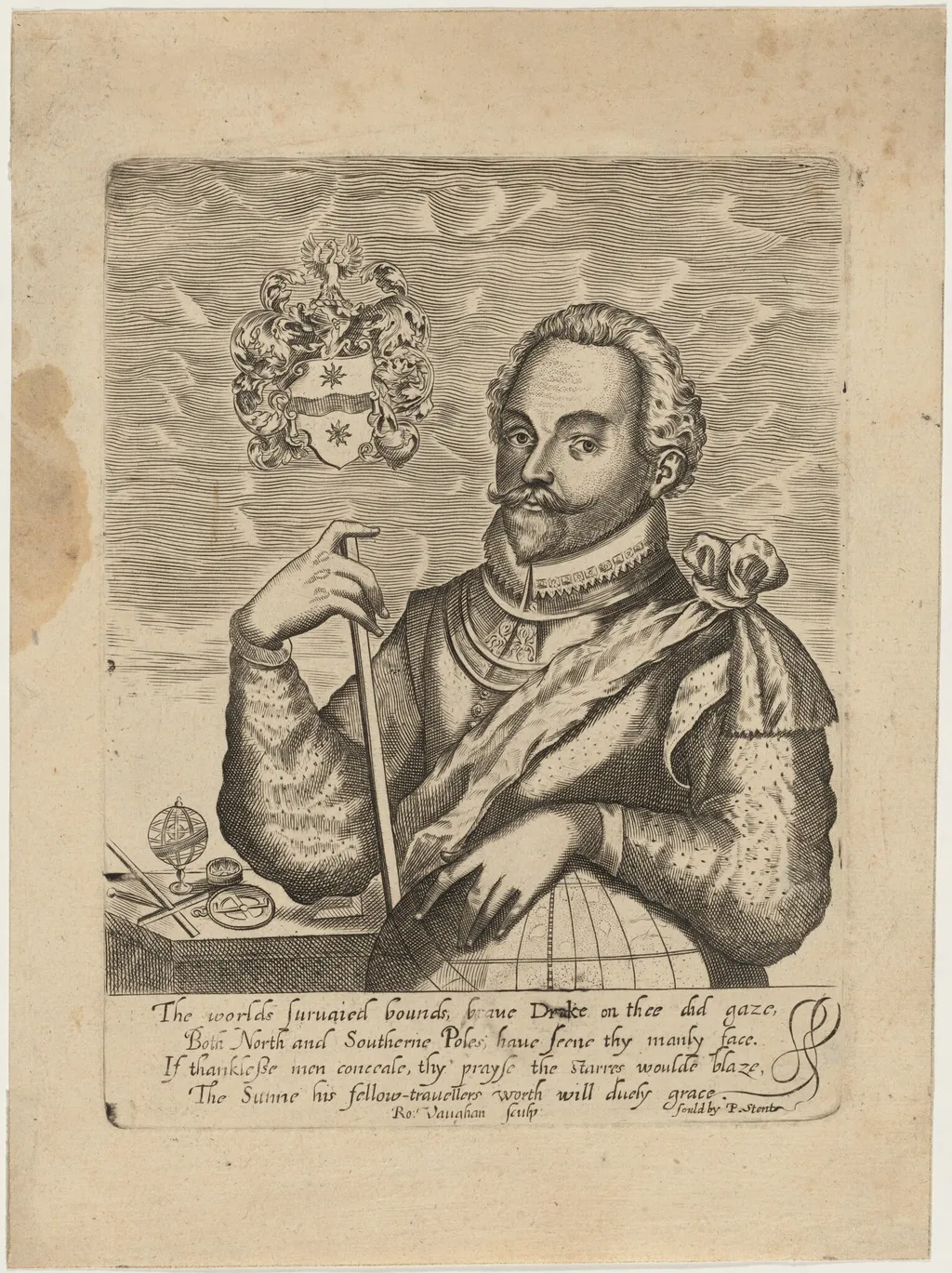
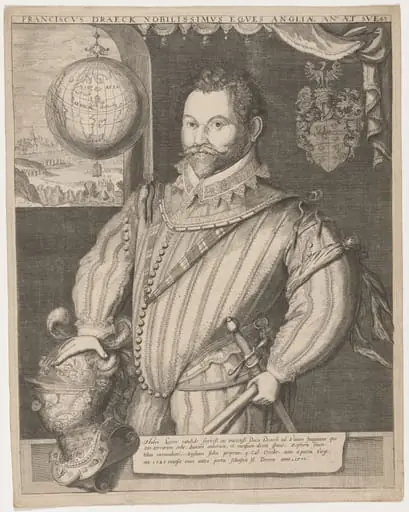
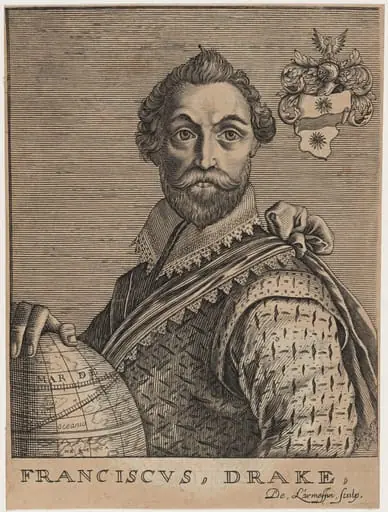
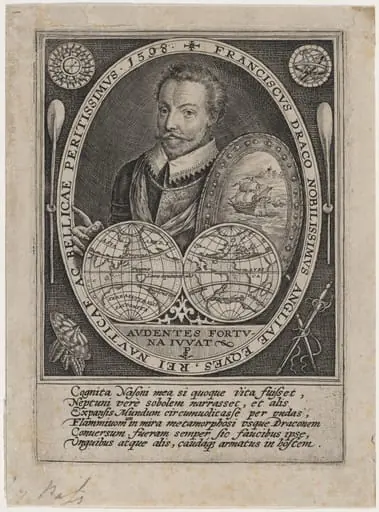
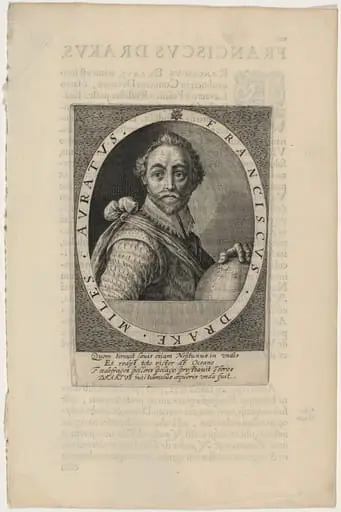
Sir Francis Drake is an ink print by the Renaissance artist Robert Vaughan. It dates from 1640 and is held in the collection of the National Gallery of Art.
About this work
Overview
Created in 1640 by Robert Vaughan, this engraving presents a formal portrait of Sir Francis Drake, the renowned English explorer and privateer.
Created in 1640 by Robert Vaughan, this engraving presents a formal portrait of Sir Francis Drake, the renowned English explorer and privateer. The composition depicts Drake in three-quarter view, characterized by a full beard and mustache, dressed in a dark cloak over a doublet with a prominent ruffled collar. He holds a cane in his right hand, signifying his status and authority.
To his left, a table displays an array of objects that function as iconographic attributes of his life's work: a globe representing his circumnavigation of the globe, a compass symbolizing his navigational expertise, and a quill pen indicating his role as a chronicler and administrator. The inclusion of these specific items serves to memorialize Drake's contributions to English maritime expansion and naval power. As an engraving produced nearly sixty years after Drake's death, the work reflects the enduring legacy of the explorer during the mid-seventeenth century, likely intended for inclusion in a biographical collection or as a standalone commemorative print.
Vaughan's rendering captures the dignified bearing associated with national heroes of the Elizabethan era, utilizing the fine lines of the engraving medium to delineate the textures of the fabric and the metallic sheen of the navigational instruments.
Subject & Meaning
The composition includes a table laden with a globe, a compass, and a quill, symbols that allude to Drake’s maritime exploits, navigation skills, and the record‑keeping of his voyages. These attributes collectively emphasize his identity as an explorer and naval commander.
Technique & Style
Vaughan employs meticulous cross‑hatching to model flesh, fabric, and metal, achieving a sense of texture and depth characteristic of mid‑17th‑century English engraving. The precise line work and balanced arrangement reflect the period’s emphasis on detailed, realistic portraiture.
History & Provenance
Created in 1640, the print was produced shortly after Drake’s death (1596) and circulated as a commemorative image of the national hero. It has survived in several collections, illustrating the continued interest in his legacy during the early Stuart era.
Context
The engraving belongs to a broader tradition of portrait prints that celebrated England’s maritime achievements during the age of exploration. By featuring navigational instruments, the work aligns with contemporary propaganda that linked individual heroism to the nation’s expanding global presence.
Own this work as a print
Artist & collection