Artwork
Sir Francis Drake
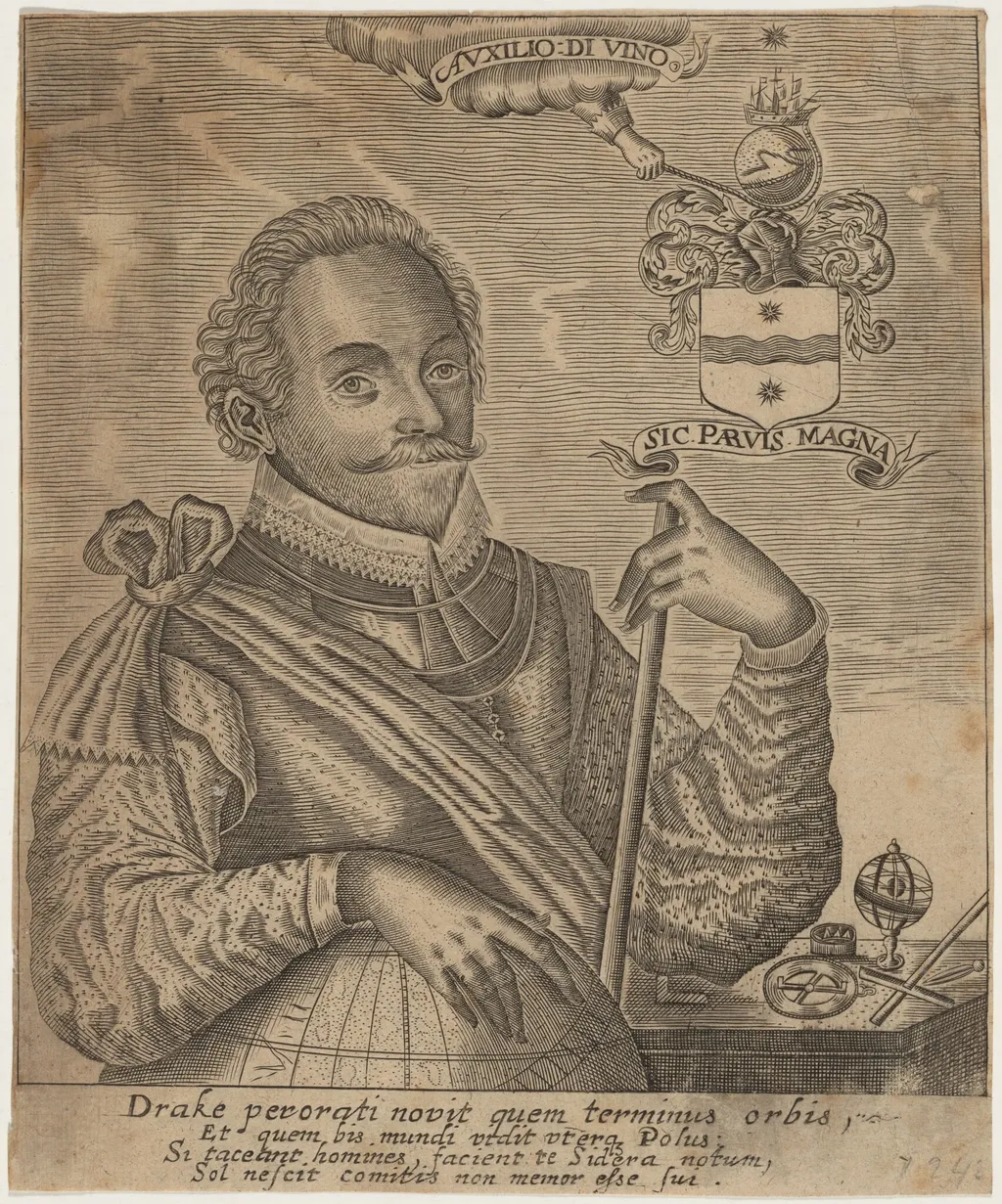
Sir Francis Drake is an ink print by the Renaissance artist Robert Vaughan. It dates from 1640 and is held in the collection of the National Gallery of Art.
About this work
Overview
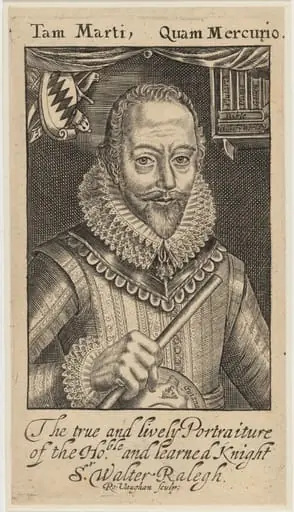
Created in 1640 by Robert Vaughan, this engraving presents a formal portrait of Sir Francis Drake, the renowned English explorer and privateer.
Created in 1640 by Robert Vaughan, this engraving presents a formal portrait of Sir Francis Drake, the renowned English explorer and privateer. The composition centers on Drake in three-quarter view, depicted with a serious expression, a detailed beard and mustache, and dressed in the fashion of the late Elizabethan era, featuring a ruffled collar and layered robes. He holds a rolled map in one hand and a small globe in the other, iconographic elements that directly reference his historic circumnavigation of the globe and his role as a navigator.
Behind the figure, a coat of arms rests upon a scroll, signifying his noble status and achievements, while a ship sails in the background beneath a starry sky, further emphasizing his maritime legacy. Although Drake died in 1596, Vaughan produced this work in 1640, likely as part of a series of historical portraits intended to commemorate England's naval heroes during the early Stuart period. The image relies on established visual conventions of the time to construct an authoritative likeness, serving as a posthumous tribute to one of England's most celebrated sea captains.
Subject & Meaning
The figure’s ruffled collar, layered robes, and meticulously rendered beard convey the dignified bearing of a 16th‑century sea captain. The map and globe he bears serve as visual shorthand for his role in charting new routes and claiming territories, while the surrounding Latin inscriptions underscore his prominence within the naval and imperial hierarchies of his era.
Technique & Style
Executed as an engraving, the work relies on incised lines to achieve fine detail and tonal variation. Vaughan’s handling of cross‑hatching creates depth in the fabrics and facial features, while the contrast between the dark foreground and the lighter background sky accentuates the central figure. The composition balances portraiture with emblematic elements typical of early modern printmaking.
History & Provenance
Created in 1640, the print emerged several decades after Drake’s death, reflecting a period of renewed interest in his exploits during the English Commonwealth and early Restoration. It was likely produced for a market of collectors and patrons seeking visual commemorations of national heroes, and copies circulated among private libraries and antiquarian collections.
Context
The engraving belongs to a broader tradition of commemorative portrait prints that celebrated England’s maritime expansion. By the mid‑17th century, such images functioned both as historical records and as propaganda, reinforcing narratives of English naval superiority and the legitimacy of overseas ventures.
Legacy
Vaughan’s depiction contributed to the visual canon of Drake, influencing later representations in paintings, statues, and printed media. The engraving’s emphasis on cartographic symbols helped cement the association between Drake’s name and the age of discovery, a link that persists in scholarly and popular portrayals of the explorer.
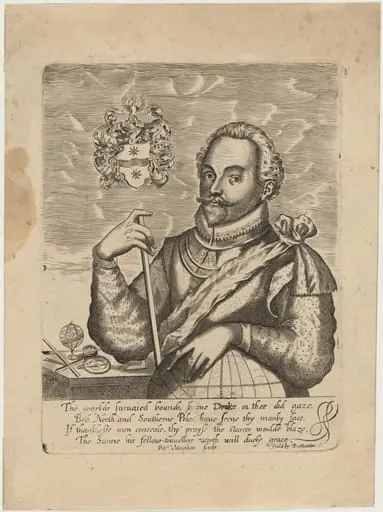
Own this work as a print
Artist & collection