Artwork
The Nativity
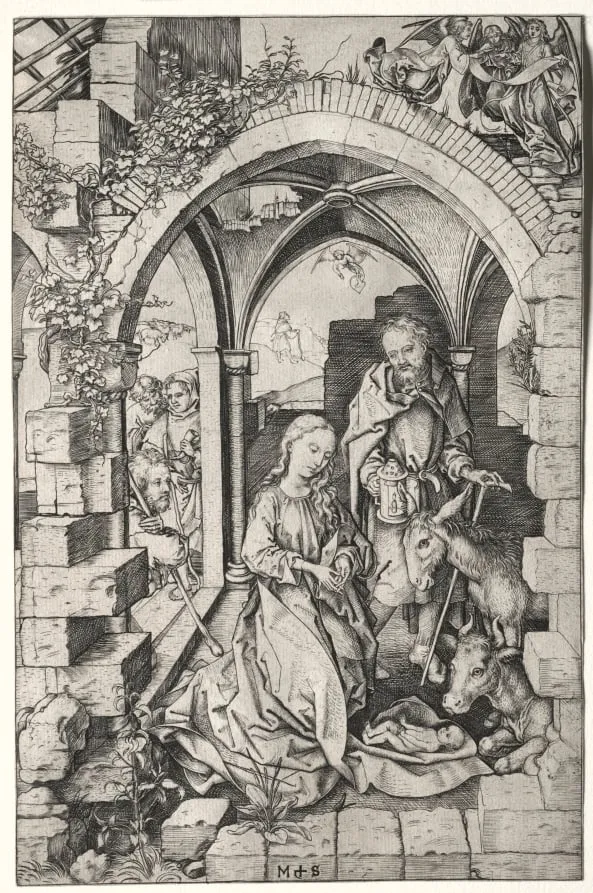
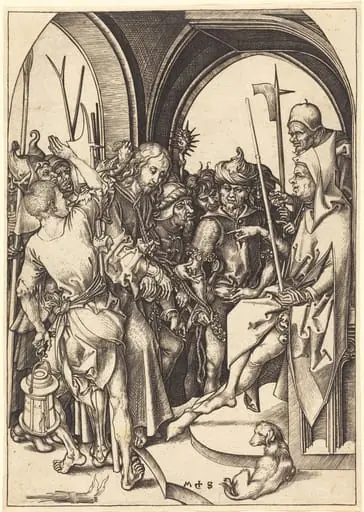
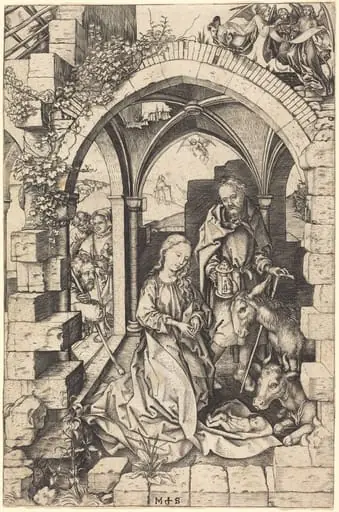
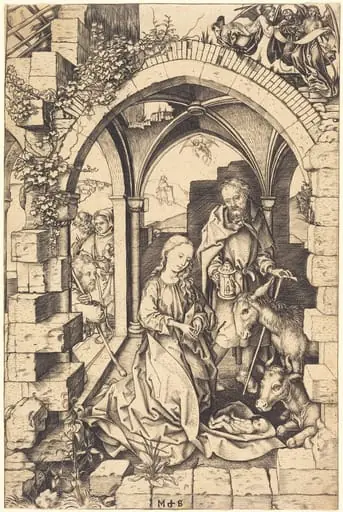
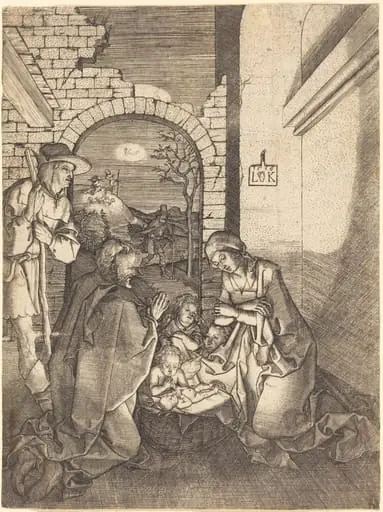
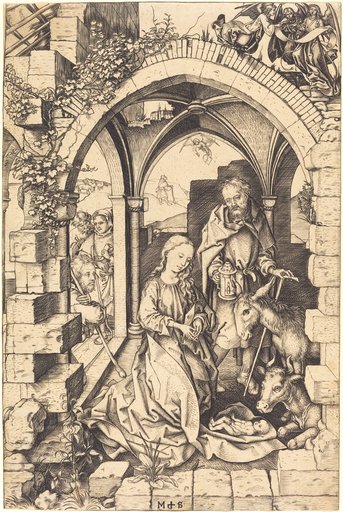
The Nativity is a print by the Renaissance artist Martin Schongauer. It dates from 1472 and is held in the collection of the Cleveland Museum of Art.
- Accession no.
- 1939.448
- Credit line
- Dudley P. Allen Fund
About this work
Overview
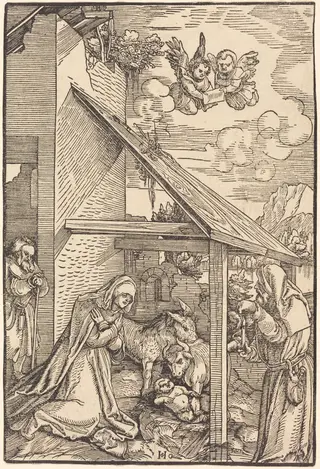
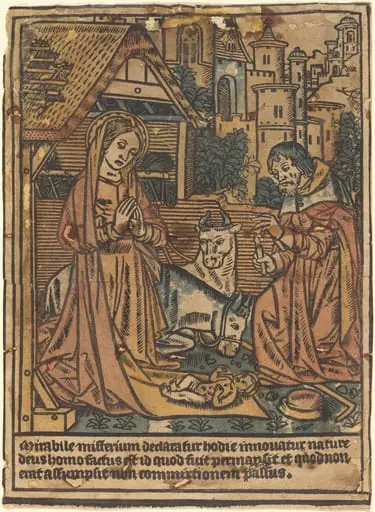
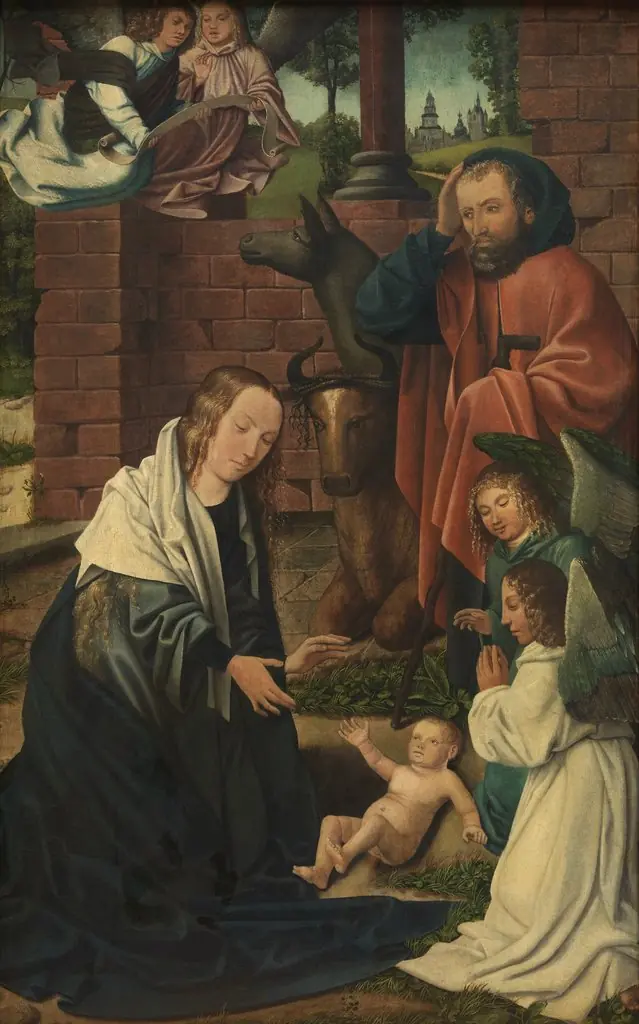
This engraving by Martin Schongauer depicts the Nativity as a quiet, intimate moment rather than a grand spectacle.
This engraving by Martin Schongauer depicts the Nativity as a quiet, intimate moment rather than a grand spectacle. It is the first of four planned scenes from the Life of the Virgin, though the full series was never completed. The composition centers on Mary’s reverent posture, Joseph’s watchful presence, and the animals nearby, all framed within the crumbling architecture of a Gothic ruin. The use of engraved lines creates subtle tonal contrasts, emphasizing the spiritual atmosphere.
Subject & Meaning
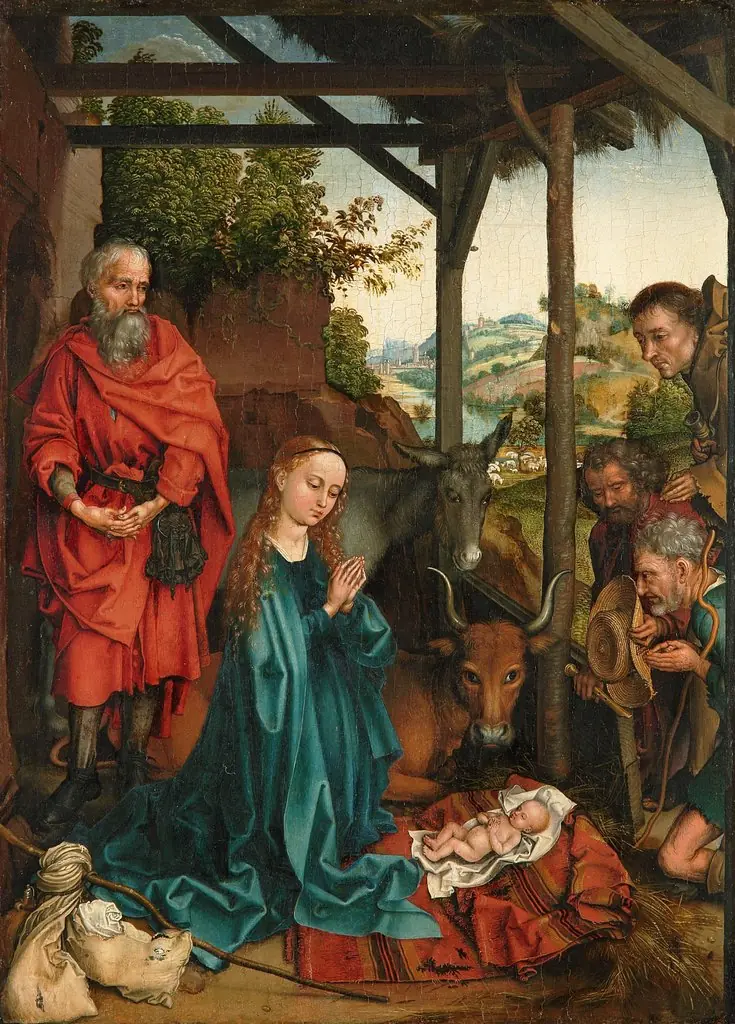
The scene captures Mary in prayer, kneeling beside the newborn Christ, who rests on her cloak on the bare ground. Joseph, holding a lantern, observes them with quiet devotion. The ox and donkey, traditional symbols of humility and witness, loom in the shadows.
Angels sing above, while shepherds below are alerted by a celestial messenger. The emphasis on solitude and tenderness suggests a personal, inward experience of the divine, contrasting with more theatrical depictions of the event.
Technique & Style
Schongauer employed fine, precise engraving lines to model form and light, achieving a remarkable range of tonal depth. The lantern’s glow is rendered through delicate hatching that fades into surrounding darkness, a technique known as chiaroscuro. The architectural ruins are detailed with intricate cross-hatching, while the figures are softened by contrast.
This mastery of metal engraving positioned Schongauer among the earliest German artists to elevate printmaking as a serious artistic medium.
History & Provenance
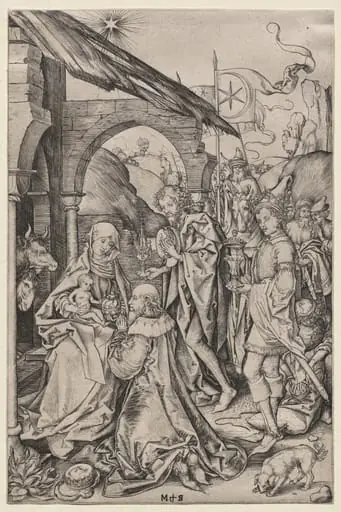
Created around 1470–1480, this engraving was part of a planned but unfinished series on the Virgin’s life. The other three known plates, Adoration of the Magi, Flight into Egypt, and Death of the Virgin, are held in separate collections. The Nativity print entered the museum’s holdings in 1942, its provenance tracing back through European private collections. Its survival in good condition reflects its early popularity and the durability of copperplate engraving.
Context
In late 15th-century Germany, religious imagery was increasingly produced for private devotion, and prints offered accessible, reproducible alternatives to paintings. Schongauer’s work responded to this demand, blending Northern European attention to detail with devotional intimacy. The ruined Gothic setting may reflect contemporary interest in medieval ruins as symbols of spiritual transition, while the shepherds’ inclusion aligns with popular liturgical narratives of the time.
Legacy
Schongauer’s Nativity influenced generations of Northern artists, particularly in the use of light and emotional restraint. His technical precision in engraving set a standard for printmakers, including Albrecht Dürer, who admired and copied his work. Though the full series was never completed, this single plate endured as a model of quiet sacred narrative, demonstrating how printmaking could convey profound spiritual moments with minimal means.
Artist & collection
Artist
Martin Schongauer (c. 1450–1453, Colmar – 2 February 1491, Breisach), also known as Martin Schön ("Martin beautiful") or Hübsch Martin ("pretty Martin") by his contemporaries, was an Alsatian engraver and painter. He…