Artwork
Tiger and Dragon: Dragon
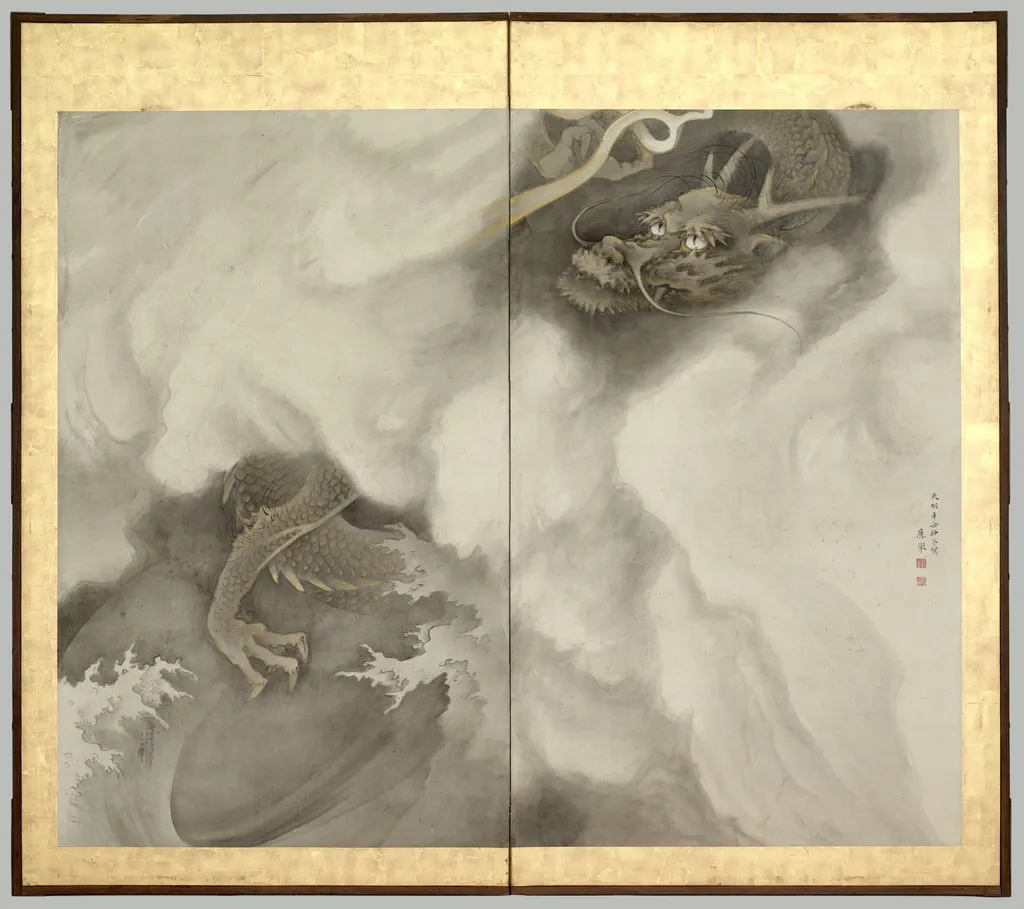
Tiger and Dragon: Dragon is an unspecified painting by the Maruyama Shijo artist Maruyama Ōkyo. It dates from 1791 and is held in the collection of the Detroit Institute of Arts.
About this work
Overview
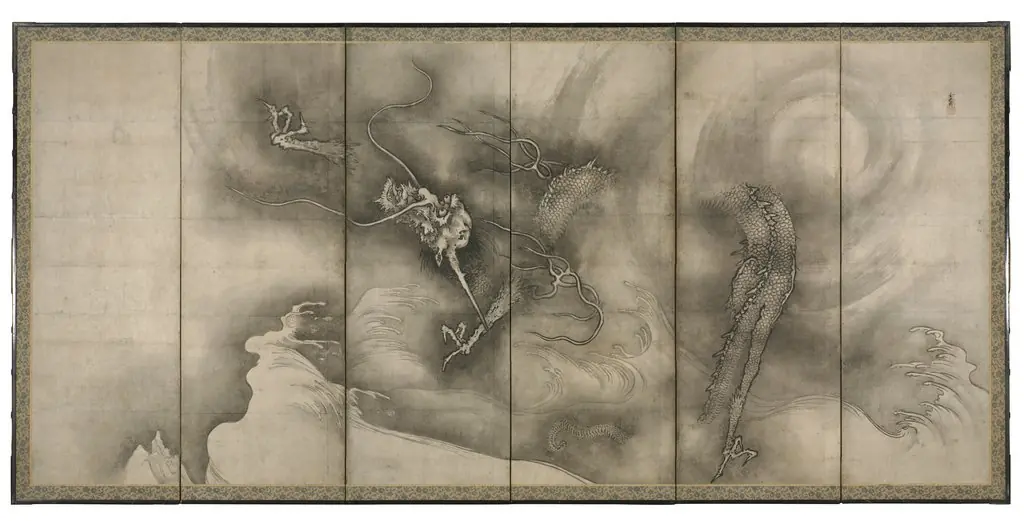
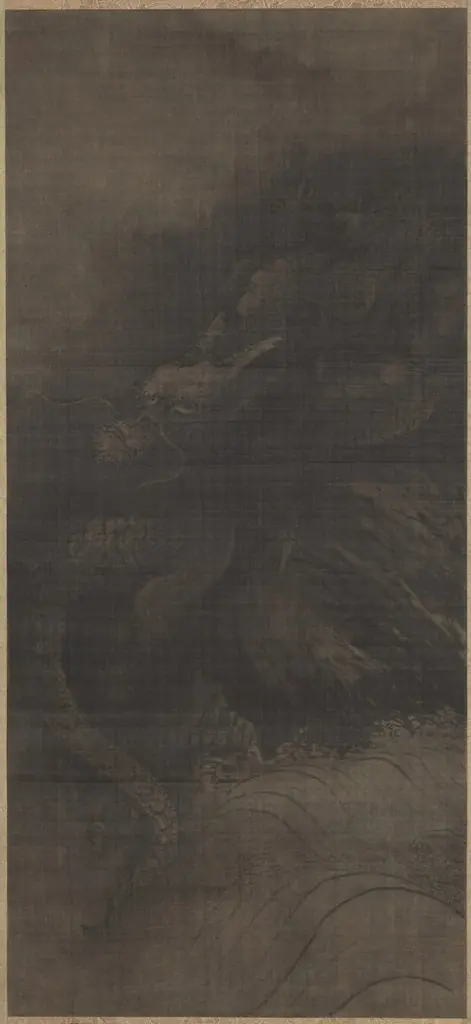
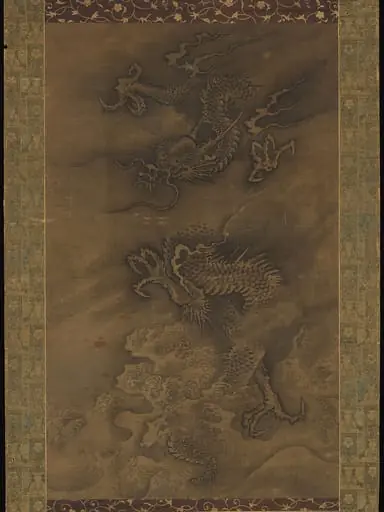
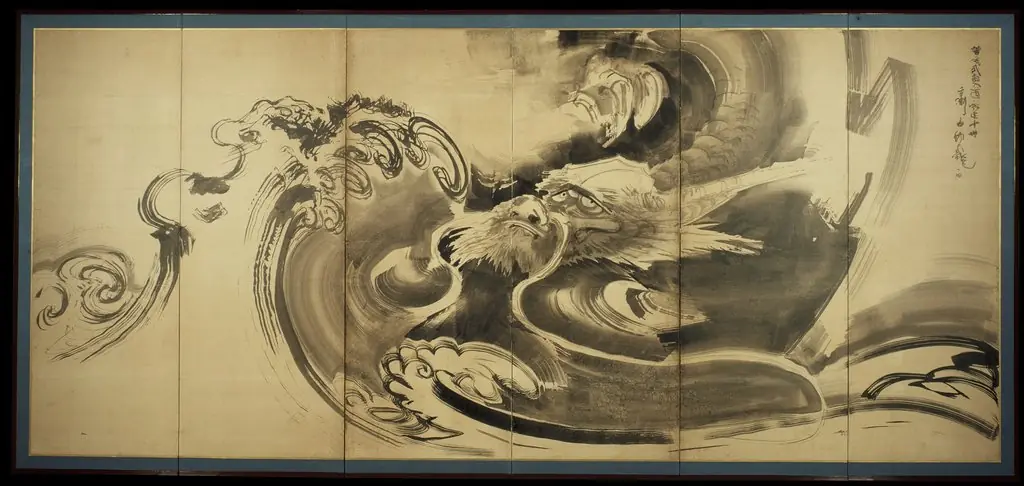
The work presents a single dragon, split across two vertical panels: the head and upper body on the right, the trailing form on the left.
Tiger and Dragon: Dragon is a 1791 ink-and-color painting by Maruyama Ōkyo, part of a paired composition. It resides in the Detroit Institute of Arts as one half of a diptych. The work presents a single dragon, split across two vertical panels: the head and upper body on the right, the trailing form on the left. Its execution blends Japanese aesthetic traditions with emerging naturalistic techniques influenced by Western observation.
Subject & Meaning
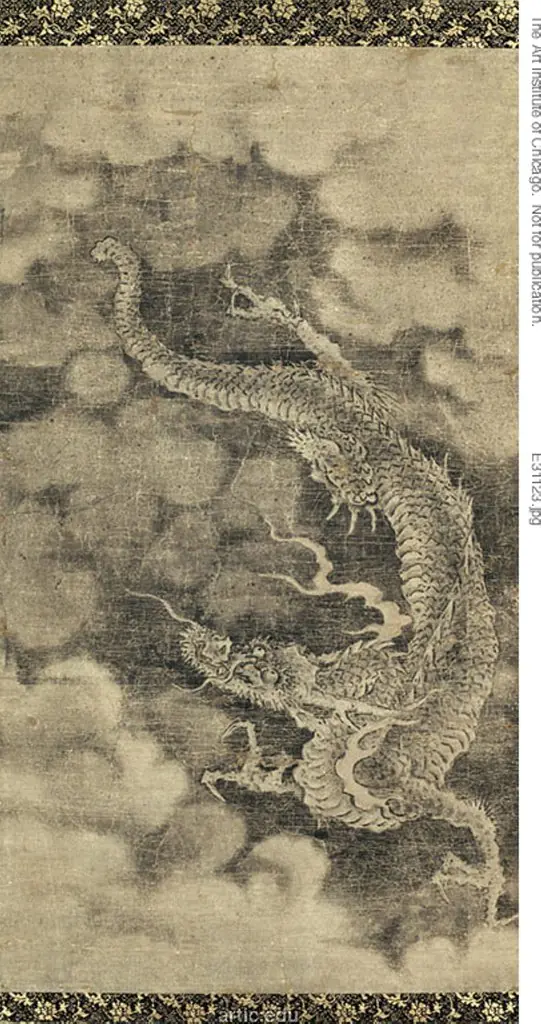
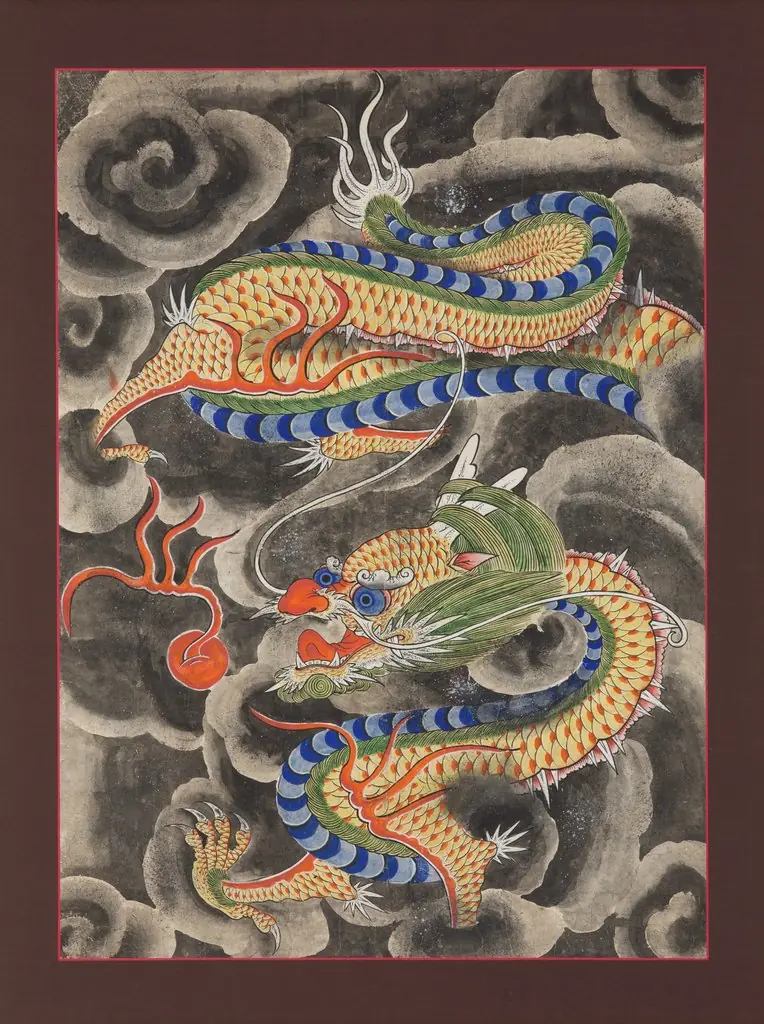
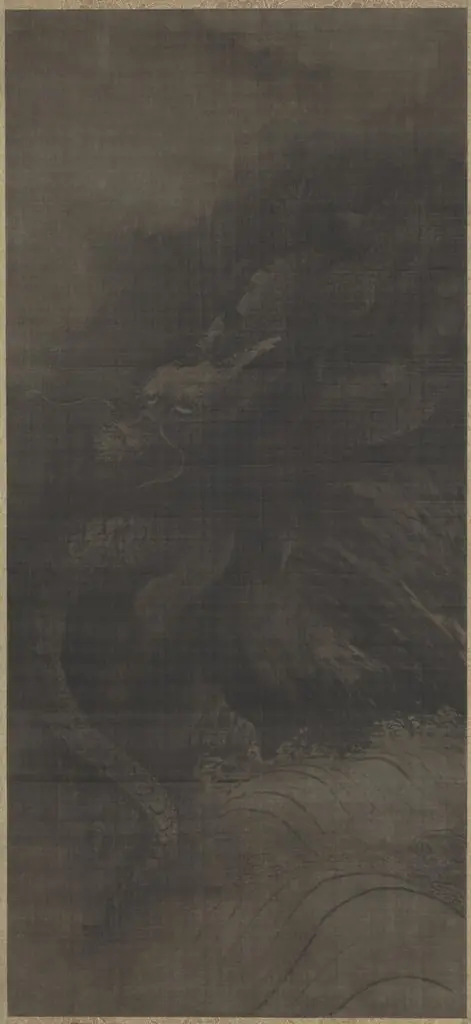
The dragon, a symbol of celestial power and transformation in East Asian cosmology, is depicted mid-motion, emerging from swirling clouds. Its direct gaze and bared teeth suggest alertness and authority. Unlike mythic representations that emphasize ornamentation, Ōkyo’s dragon feels present and animate, reflecting a shift toward observing nature as a source of spiritual resonance rather than purely symbolic form.
Technique & Style
Ōkyo employs subtle gradations of gray and gold ink to model the dragon’s scaled body, using chiaroscuro to create volume and depth. The clouds are rendered with soft, feathery brushwork, contrasting the dragon’s sharp, defined contours. Delicate whiskers and textured scales are meticulously detailed, enhancing realism.
The technique merges Japanese sumi-e traditions with a heightened attention to light and form, characteristic of Ōkyo’s naturalist approach.
History & Provenance
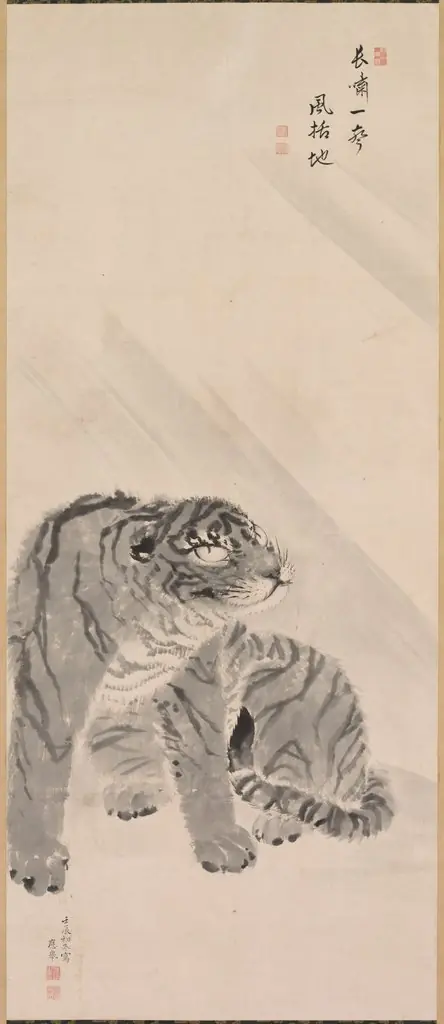
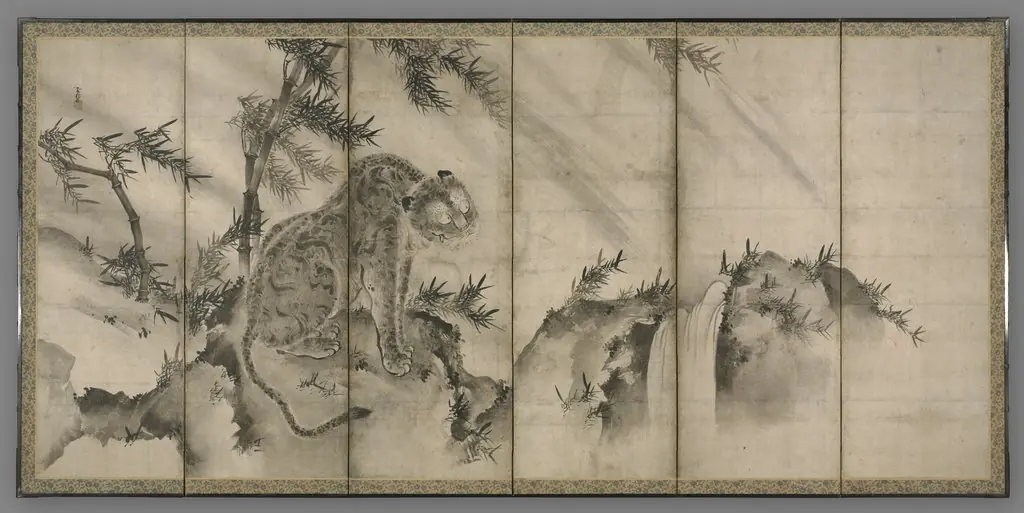
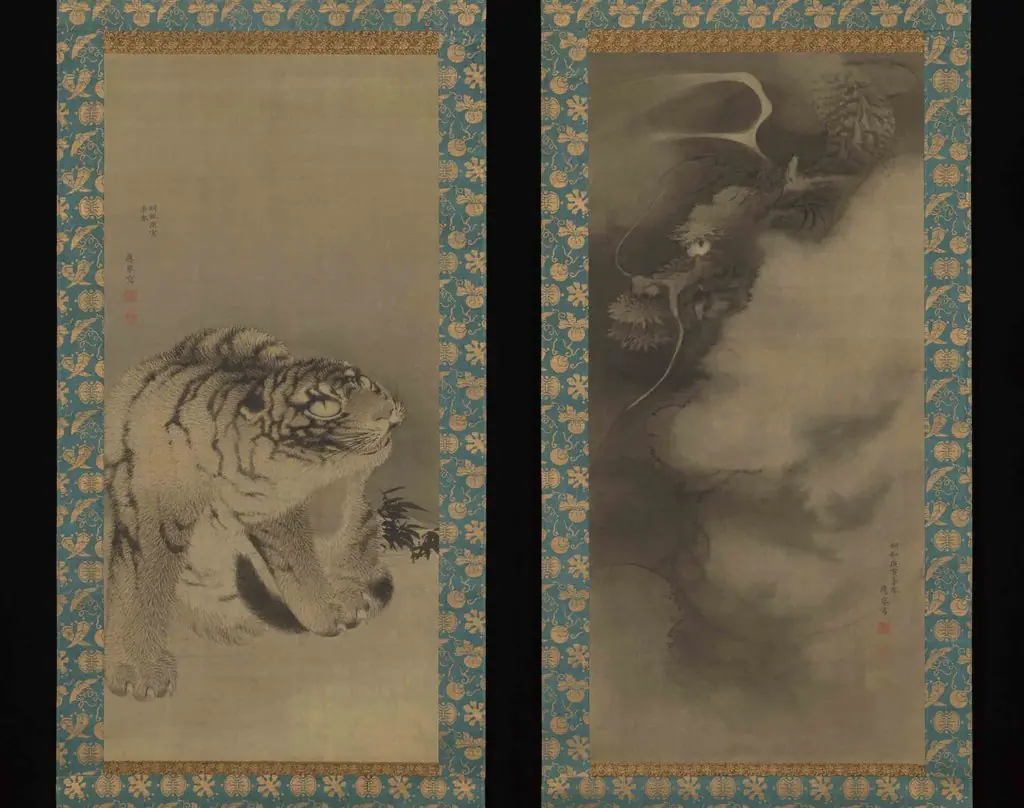
Created in 1791 during the late Edo period, the painting was likely commissioned for a private or institutional setting. It entered the Detroit Institute of Arts’ collection in the 20th century, following the broader Western interest in Japanese art after the Meiji Restoration. Its pairing with a tiger panel suggests it was intended as a complementary pair, though the tiger panel’s current location is not specified here.
Context
Ōkyo worked in Kyoto, where artists were beginning to incorporate Western-style observation into traditional Japanese painting. His naturalism stood apart from the more stylized schools of the time. The dragon-tiger diptych reflects a broader trend in late Edo art: blending spiritual symbolism with empirical study of the natural world, responding to both domestic aesthetics and imported visual ideas.
Legacy
This work exemplifies Ōkyo’s influence on modern Japanese painting by bridging classical themes with observational realism. His approach inspired later artists to treat traditional subjects with greater anatomical and atmospheric precision. While not widely exhibited, the painting remains a key example of how Edo-period artists redefined cultural icons through direct engagement with visible reality.
Own this work as a print
Artist & collection

Artist
Maruyama Ōkyo (円山 応挙; Japanese pronunciation: , June 12, 1733 – August 31, 1795), born Maruyama Masataka, was a Japanese artist active in the late 18th century.