Artwork
円山応挙筆 白鷺図|White Herons
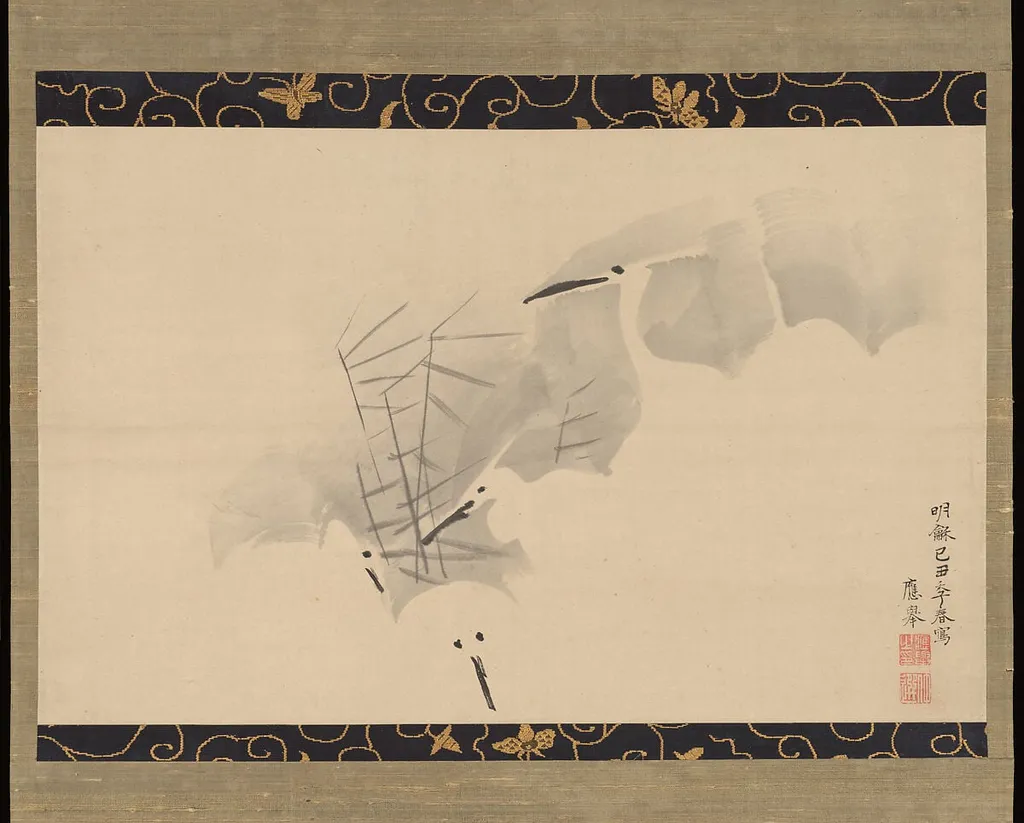
円山応挙筆 白鷺図|White Herons is an ink painting by the Romanticist artist Maruyama Ōkyo. It dates from 1769 and is held in the collection of the Metropolitan Museum of Art.
About this work
Three white herons stand in shallow water, their long necks curved like question marks. One lifts a foot, mid-step. The rest of the scroll is empty paper.
Ōkyo painted this in 1769, when most Japanese artists filled every inch. He left the herons floating in silence instead. The ink is so light you can see the brush hairs in the feathers.
If you like how quiet it feels, look up birds next.
Subject & Meaning
Created in 1769 by Maruyama Ōkyo, the painting classifies within the landscape genre while focusing on the avian subject.
The work depicts birds, specifically identified as white herons, rendered in ink on paper. Created in 1769 by Maruyama Ōkyo, the painting classifies within the landscape genre while focusing on the avian subject. As a hanging scroll, the composition centers on the natural presence of these herons.
While the specific iconographic or symbolic meaning of the herons is not detailed in the available records, the piece presents the birds as the primary visual element of the composition.
Technique & Style
Created in 1769, White Herons is executed as a hanging scroll using ink on paper. The work measures 35.5 cm in height and 56.6 cm in width. As a piece by Maruyama Ōkyo, it exemplifies the artist's approach to depicting birds within a landscape context, utilizing the traditional Japanese medium of ink on paper support.
The composition focuses on the formal representation of avian subjects, adhering to the stylistic conventions of the Maruyama school while employing the specific material constraints of monochrome ink on a paper scroll.
History & Provenance
The hanging scroll White Herons was created in 1769 by Maruyama Ōkyo using ink on paper. It entered the collection of the Metropolitan Museum of Art, where it remains on display.
The work was commissioned as a landscape painting and is classified as a bird depiction. Its dimensions are 35.5 cm in height and 56.6 cm in width.
The painting's provenance is documented through its acquisition by the museum, establishing a clear ownership chain from its creation to present custodianship.
The hanging scroll White Herons by Maruyama Ōkyo was created in 1769 and is part of the Metropolitan Museum of Art's collection in New York. Its dimensions are 35.5 cm in height and 56.6 cm in width.
The work has been displayed in exhibitions at the Metropolitan Museum of Art, including "Japanese Masterpieces: Paintings and Prints" and "Japanese Art from the Edo Period."
It is cataloged under the accession number 1983.215.5.
Overview
Created in 1769, this hanging scroll by Maruyama Ōkyo presents a minimalist scene of three white herons standing in shallow water. Rendered in ink on paper, the composition occupies only the lower portion of the scroll, leaving the majority of the surface empty and emphasizing a sense of quietude.
Context
Maruyama Ōkyo was known for integrating Western perspective techniques with traditional Japanese painting. While this piece does not display overt perspective, its emphasis on negative space and the isolated subject aligns with his broader aesthetic that valued realism tempered by compositional restraint.
Artist & collection

Artist
Maruyama Ōkyo (円山 応挙; Japanese pronunciation: , June 12, 1733 – August 31, 1795), born Maruyama Masataka, was a Japanese artist active in the late 18th century.

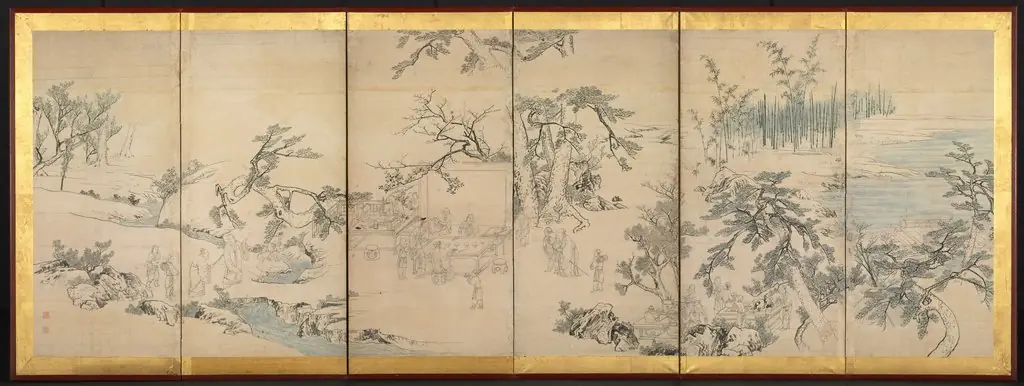
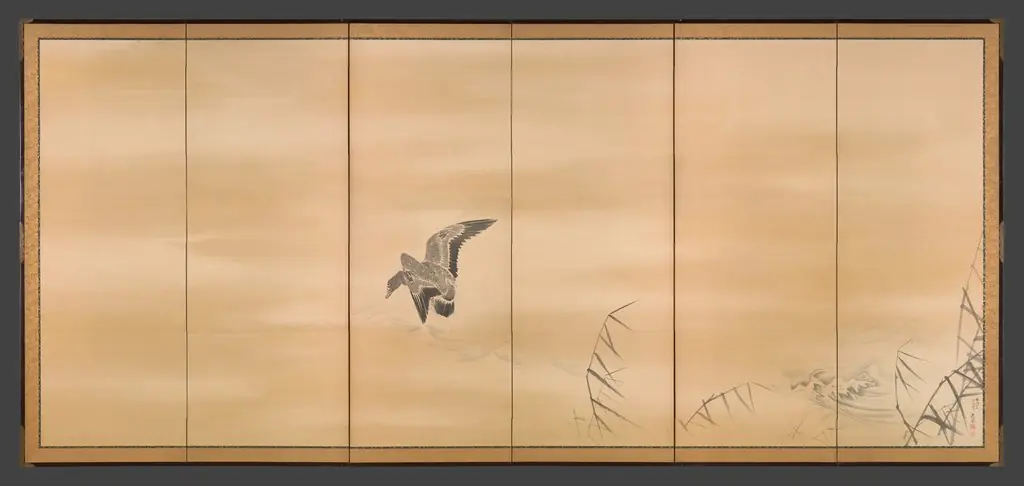
- Plum Trees
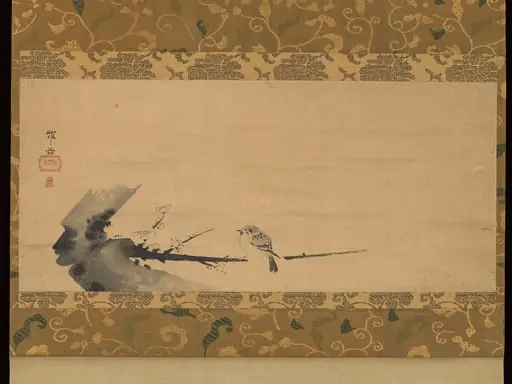 Untitled
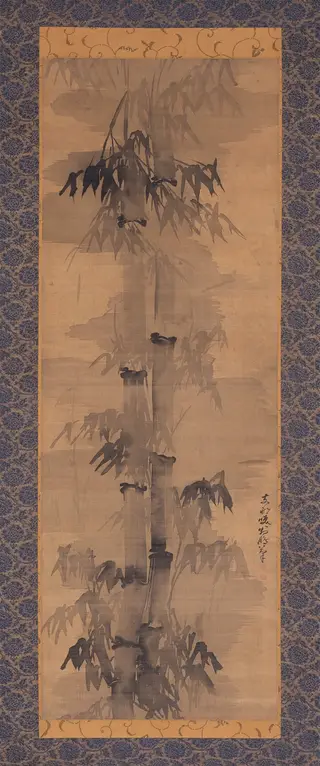 Bamboo
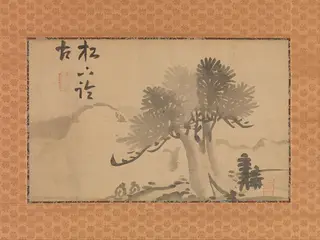 池大雅筆 「大雅堂画弁題詩」|Pine Tree and Calligraphy
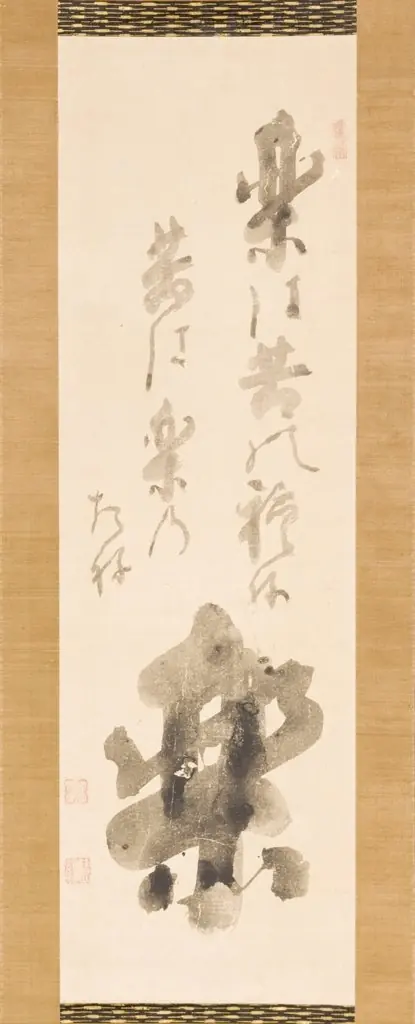 'JOY: In joy lie the seeds of sufferings; in sufferings lie the seeds of joy (RAKU: Raku wa kū no tane; Kū wa raku no tane)'
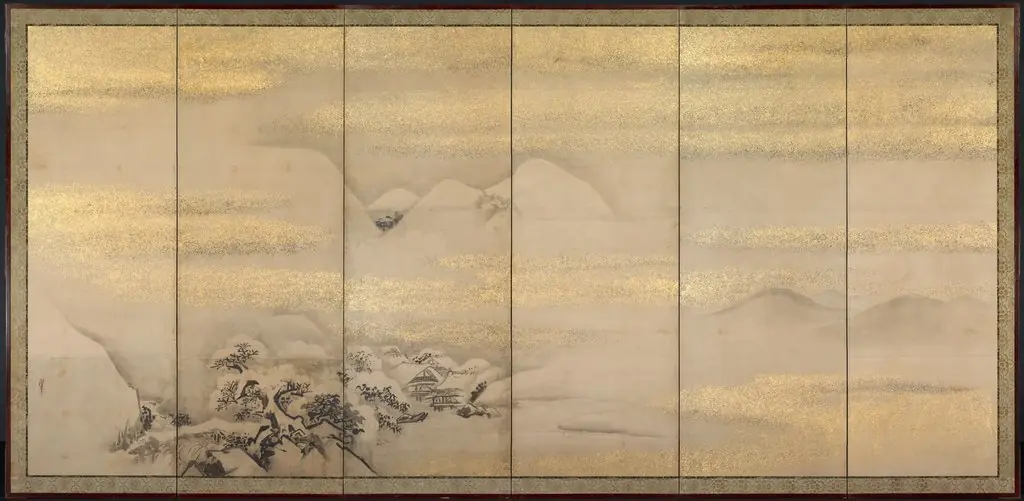 Summer and Winter Landscapes (one of a pair)
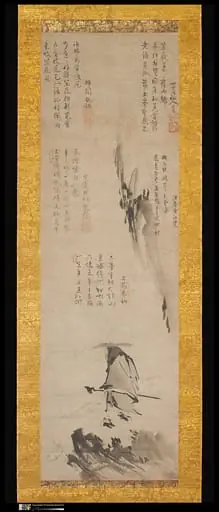 瑞巖龍惺・竹香全悟・九淵龍賝・南江宗沅・ 翺之慧鳳賛 東坡笠屐図|Su Shi (Dongpo) in a Bamboo Hat and Clogs
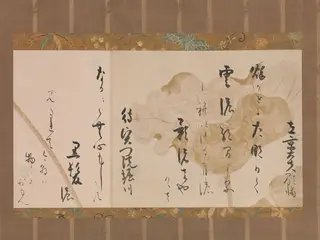 本阿弥光悦書・俵屋宗達下絵 小倉百人一首和歌巻断簡|Two Poems from One Hundred Poems by One Hundred Poets
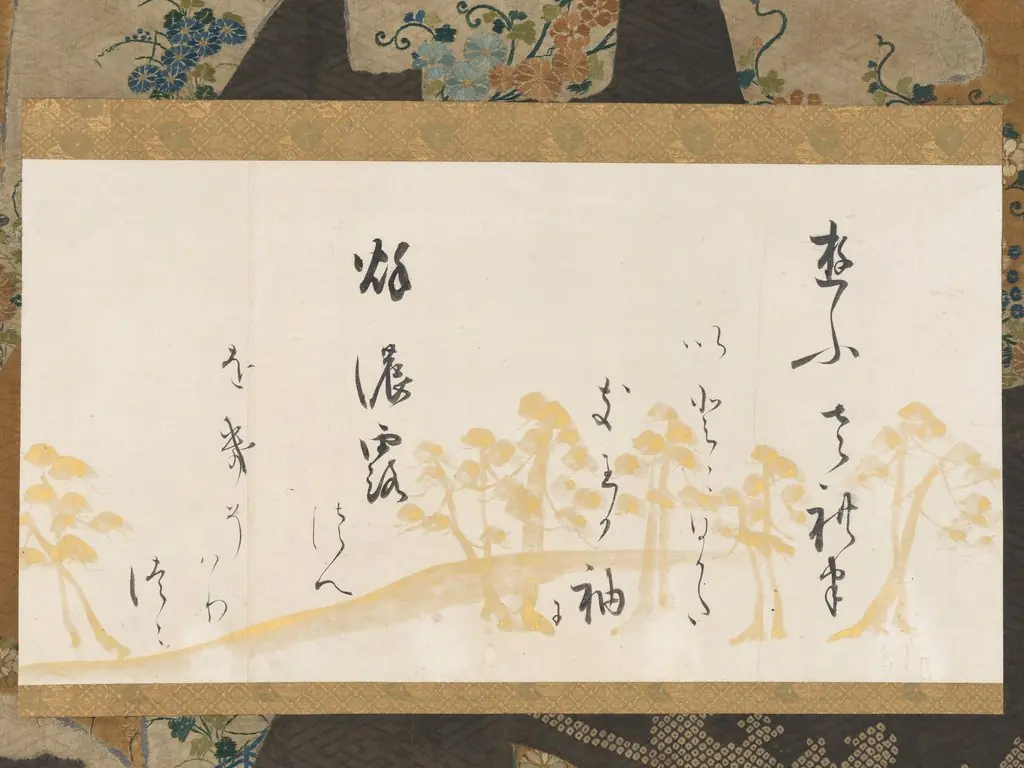 Section of a Handscroll with Waka and Underpainting of Pines
 Landscape with Boat
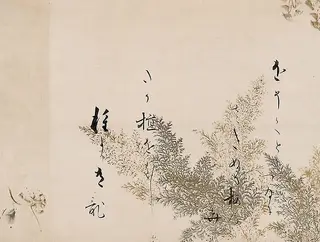 A Poem from the Shin Kokinshu with Design of Shinobugusa Grasses
 Winter and Summer Flowers