Artist
Maruyama Ōkyo

Japan
Maruyama Ōkyo is a Japan Impressionism artist. 23 works are cataloged here, principally at Cleveland Museum of Art.
Maruyama Ōkyo (円山 応挙; Japanese pronunciation: , June 12, 1733 – August 31, 1795), born Maruyama Masataka, was a Japanese artist active in the late 18th century. He moved to Kyoto, during which he studied artworks from Chinese, Japanese and Western sources. A personal style of Western naturalism mixed with Eastern decorative design emerged, and Ōkyo founded the Maruyama school of painting. Although many of his fellow artists criticized his work as too slavishly devoted to natural representation, it proved a success with laypeople.
Overview
Maruyama Ōkyo (円山応挙, 1733-1795) was a Japanese painter of the mid- to late Edo period, born in Anō village in present-day Kameoka, Kyoto Prefecture, and based in Kyoto until his death. Born Maruyama Masataka, he founded the Maruyama school of painting, a leading early modern Japanese school that fused Western naturalism with Eastern decorative traditions. Ōkyo is celebrated for pioneering shasei-ga, or realistic painting, based on direct observation of nature, and for integrating Western techniques of perspective, light, and shadow with indigenous Japanese and Chinese painterly conventions. His work commanded patronage from merchants, temples, the shogunate, and the imperial court, and his school profoundly influenced the development of modern Japanese Nihonga painting.
Biography & dates
Ōkyo was born on June 12, 1733, into a farming family in Anō, Kuwada district, Tamba province (modern Kameoka, Kyoto Prefecture). At about age twelve he moved to Kyoto, where he worked in a toy shop painting doll faces and creating megane-e, perspective images for European-style stereoscopes imported from the Netherlands. These early experiences with Western linear perspective proved formative. Around 1749 he began formal study under Ishida Yūtei (1721-1786), a painter of the Tsuruzawa branch of the Kanō school, through whom he received commissions from Kyoto aristocracy. During the 1750s and 1760s, Ōkyo produced numerous megane-e prints, including views of the Kabuki theater and Ishiyama-dera, often mirror-reversed for proper viewing in the optical device. His first major commission came in 1768 from Yūjō, abbot of Enman'in temple in Ōtsu (Shiga Prefecture), for The Seven Misfortunes and Seven Fortunes, a three-scroll narrative of karma completed over three years and totaling approximately 45 meters. In 1768 he established his studio at Shijō Kamiyachō in Kyoto, founding the Maruyama school. Imperial patronage followed: by the late 1760s his work attracted Emperor Gomomozono, and in 1781 he painted screens for the coronation ceremonies of Emperor Kōkaku. He was also involved in rebuilding the imperial palace after the devastating fire of 1788. In 1787 he met Matsumura Goshun, who became his close associate; when Ōkyo's studio burned in the 1788 fire, the two shared quarters at Kiunin temple. From 1785 until his death, Ōkyo concentrated on large-scale panel paintings for temples including Daijō-ji in Kasumi (Hyōgo Prefecture), Kongō-ji in his native Kameoka, and Kotohira-gū on Shikoku. His health declined from 1793, and he died on August 31, 1795, in Kyoto, leaving the studio to his son Ōzui.
Style & movement
Ōkyo's artistic practice centered on shasei-ga, a realistic painting method grounded in direct observation of nature rather than idealized or imaginary forms. He developed a distinctive technique known as tsukeitate, in which forms are built through ink shading without relying on contour lines, creating volume through tonal contrast rather than outline. His palette and brushwork were notably direct: light and dark pigments applied in broad, adjacent strokes with a flat brush, often loaded more heavily on one side to produce varied, expressive marks. This approach yielded works with strong light-dark contrasts but minimal midtones, differing from European painting while achieving naturalistic effects. Ōkyo's realism was tempered by decorative abstraction: he typically isolated subjects against minimal backgrounds, following East Asian convention, and integrated gold leaf and powder with adhesive to create gouache-like textures that transitioned smoothly to the white silk ground. His plant and animal studies show particular influence from European natural history drawings, with specimens labeled as in European guidebooks, yet his compositions remained fundamentally Japanese in their restraint and decorative flatness. Critics of his era, particularly adherents of traditional Sino-Japanese painting, attacked his work as overly concerned with superficial appearance and lacking in spiritual or literary dignity. Nevertheless, his synthesis answered the demands of an emerging bourgeois culture in mid-18th-century Kyoto that valued empirical observation and accessible visual experience.
Major works
Among Ōkyo's earliest significant works are the megane-e perspective prints from the 1750s and 1760s, including a view of the Kabuki theater in the Sijō district (c. 1759) and Ishiyama-dera (before 1795), printed in black and gray and often hand-colored. The Tōka-zu byōbu (Wisteria screens), dated 1766, is held at the Nezu Museum, Tokyo. In 1768-1771 he executed The Seven Misfortunes and Seven Fortunes for Enman'in, a 45-meter narrative in three handscrolls depicting karmic consequences with unprecedented physical specificity. His 1769 paintings of kingfisher and trout demonstrated a new explicitness in naturalistic color representation. The 1772 waterfall painting for Yūjō and contemporaneous nature sketches further developed his observational method. Yukimatsu-zu byōbu (Snow on Pines), commissioned by the Mitsui family in 1773 and now at the Mitsui Memorial Museum, Tokyo, was later designated a National Treasure; the twelve-panel screen set depicts snow-laden pines with spontaneous brushwork and tonal volume created through the mokkotsu (boneless) technique. In 1782 he painted Mizu-nomi no Tora Zu (Tiger Drinking Water), now at the Otani Memorial Art Museum, Nishinomiya. His late monumental works include the Yūko-zu (Tiger) panels of 1787 at Kotohira-gū, Shikoku, and the Hatō-zu (Waves) of 1788 painted for Kongō-ji, Kameoka, now housed at the Tokyo National Museum. The 1773 Unryū-zu byōbu (Dragons in Clouds) and the 1769 Nami-zu/Tsuki-zu/Taki-zu (Waves, Moon, Waterfall), formerly in the collection of Count Hokka, daimyo of Sakura, are also documented major works.
Influences & students
Ōkyo's formative influences were remarkably diverse. His initial exposure to Western art came through Dutch-imported stereoscopes and megane-e prints, particularly color-tinted Suzhou prints arriving via Nagasaki that demonstrated perspective and chiaroscuro. His teacher Ishida Yūtei provided grounding in the Kanō school tradition, though Ōkyo ultimately departed from this lineage. Among Chinese painters, he particularly admired Qian Xuan (Ch'ien Hsüan), the 13th-century flower painter whose name contributed the kyo element to Ōkyo's art name, and Qiu Ying, the Ming figure painter. He also studied Ming and Qing paintings and was aware of Shen Quan, the Chinese bird-and-flower painter who worked in Nagasaki in 1731-1733, though he preferred the proportions in works by Watanabe Shikō. The so-called Nanpin school of Nagasaki, deriving from Shen Quan, formed part of the broader Chinese realist current that informed his practice. Ōkyo's pupils and associates included his son Maruyama Ōzui (1766-1829), who succeeded him as head of the studio; Nagasawa Rosetsu (1754-1799), known for his eccentric and vigorous style; Komai Genki (1747-1797); Oku Bunmei (d. 1813); and most consequentially Matsumura Goshun (1752-1811), who joined in 1787. Goshun's collaboration with Ōkyo, particularly after they shared quarters following the 1788 fire, led to the development of the Shijō branch, and the combined tradition became known as the Maruyama-Shijō school.
Legacy
The Maruyama school, which Ōkyo established in 1768, rapidly gained popularity and expanded to Osaka and beyond, with significant holdings preserved at Daijō-ji in Kasumi. The later fusion with Goshun's Shijō branch created the Maruyama-Shijō school, one of the most influential painting traditions in early modern Japan, exercising major influence on the development of Nihonga in the modern period. Ōkyo's insistence on direct observation and his synthesis of foreign techniques with native conventions opened possibilities for subsequent generations of Japanese painters, even those opposed to his realism. His work for diverse patrons, from wealthy merchants like the Mitsui family to the highest imperial and shogunal circles, demonstrated the broad social appeal of his naturalistic approach. The designation of Yukimatsu-zu byōbu as a National Treasure confirms his canonical status in Japanese art history. Contemporary scholarship, represented by works such as those by Christine M. E. Guth and the Sasakis, continues to examine his pivotal role in mediating between global visual cultures and Japanese painterly tradition.
Works by Maruyama Ōkyo
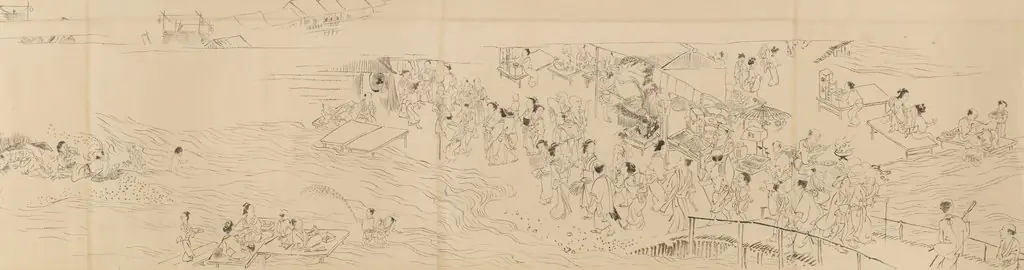 Amusements in Kyoto in the Four Seasons
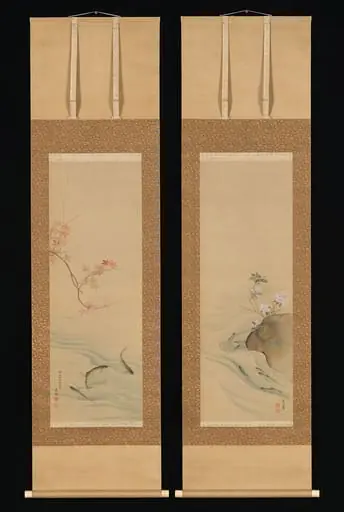 Untitled
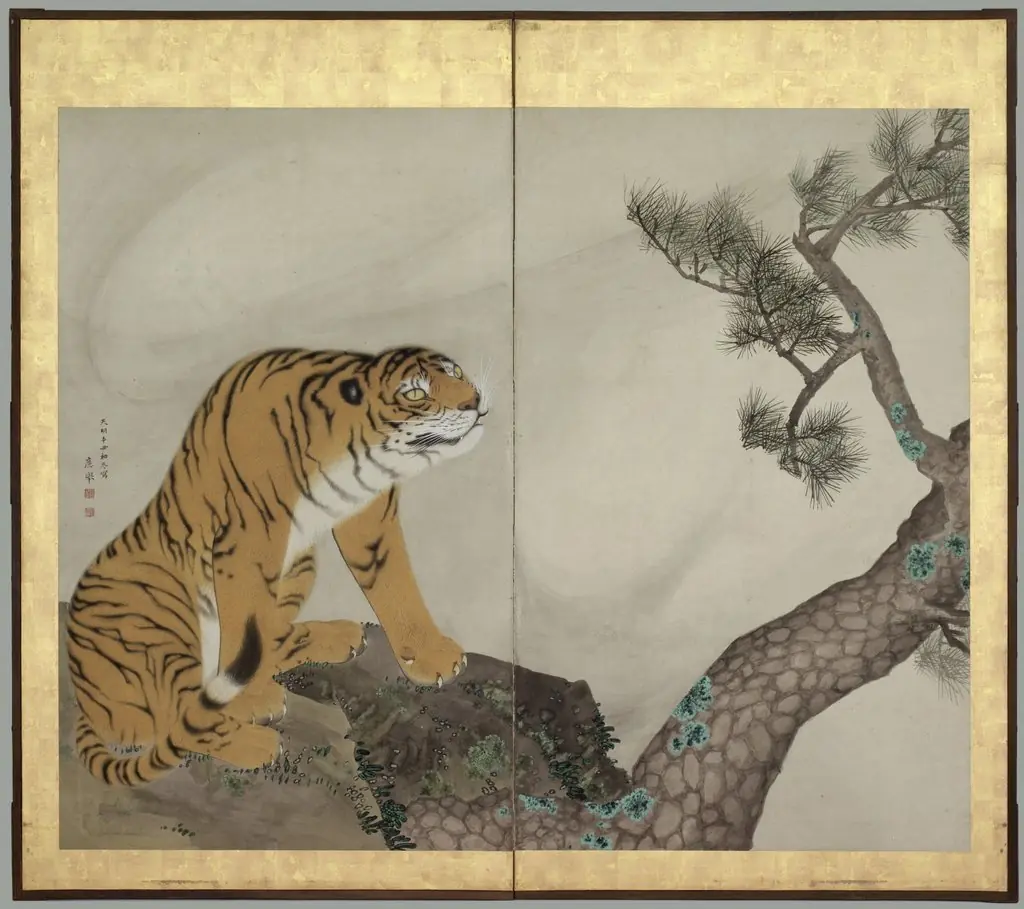
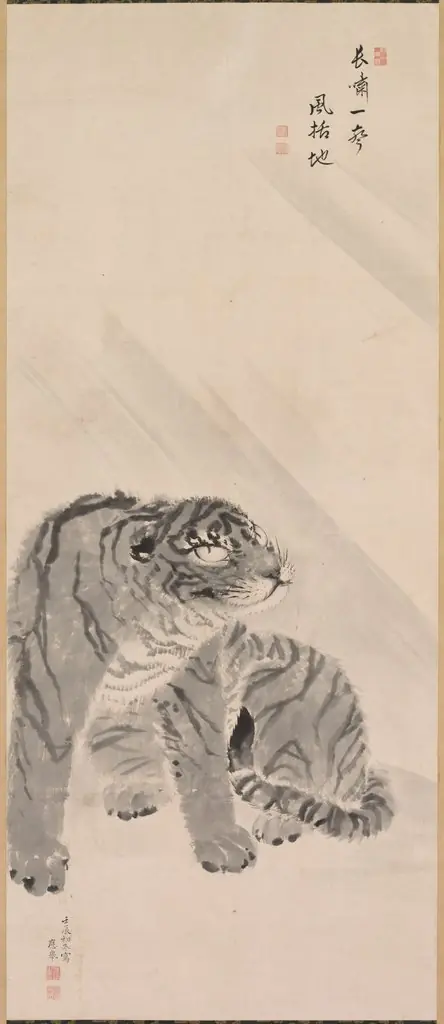 Tiger in Wind
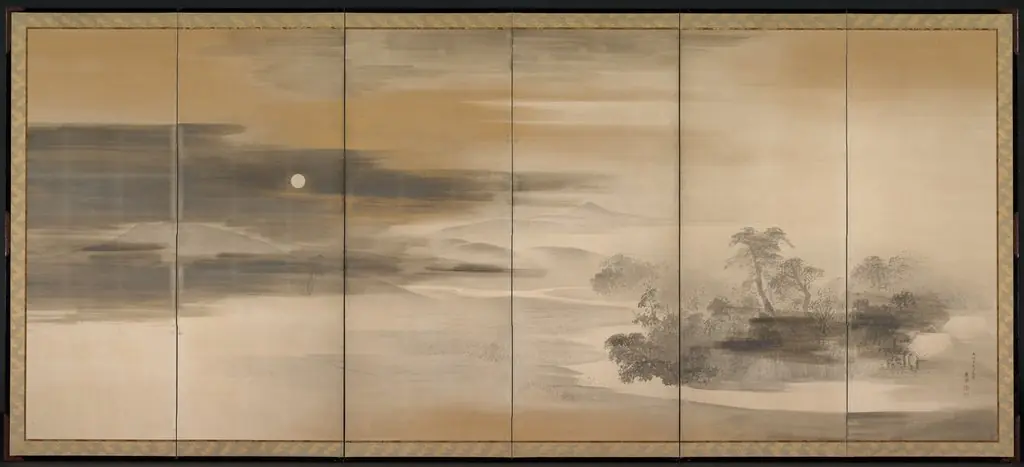 Summer Night; Winter Day
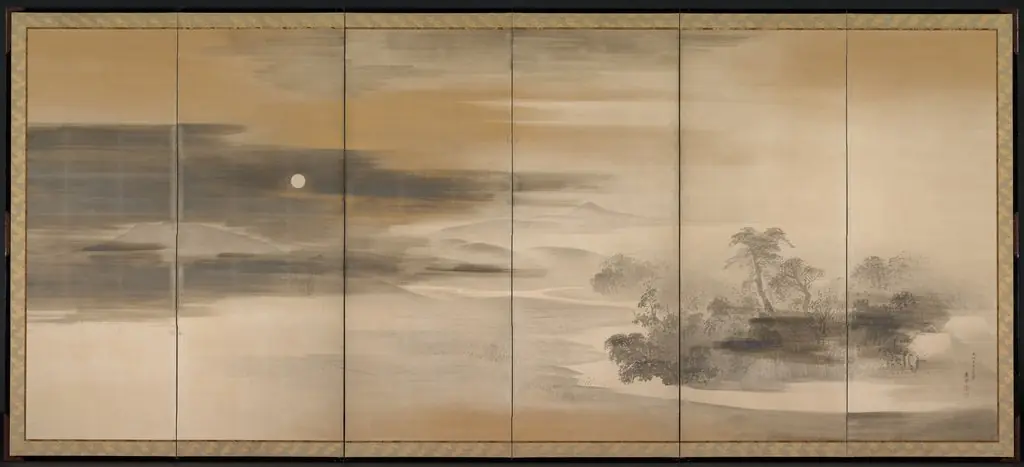 Summer Night
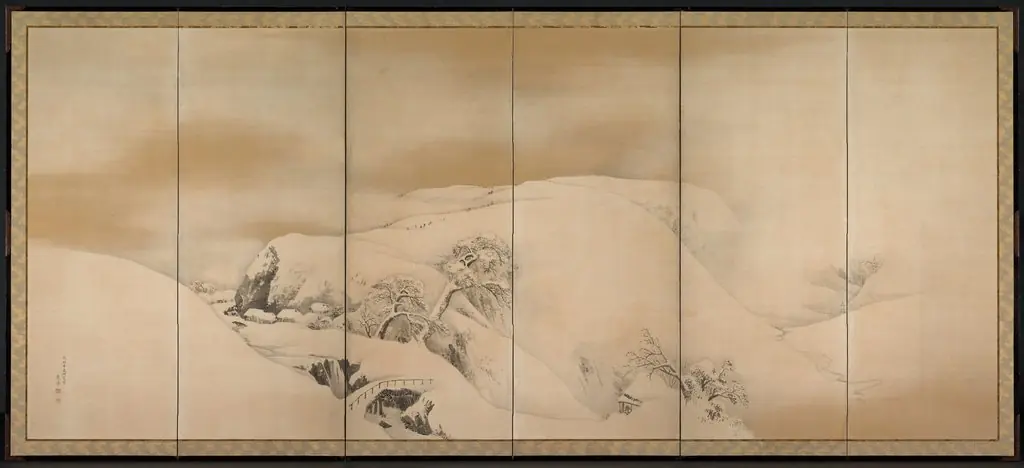 Winter Day
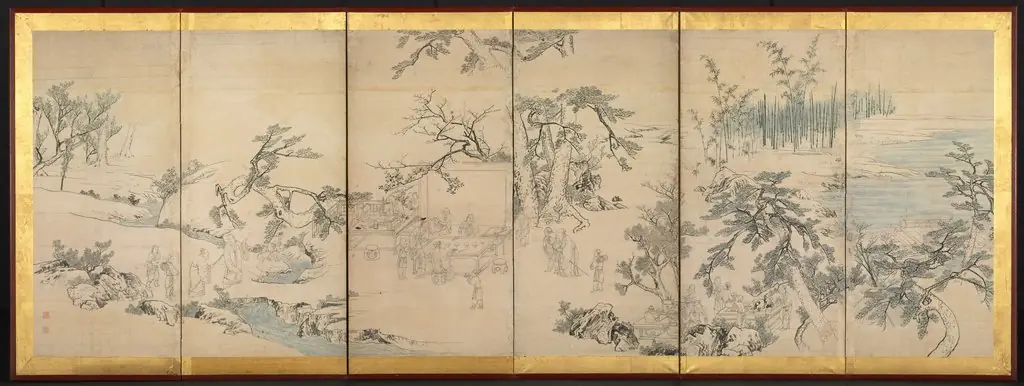 Literary Gathering in the Orchid Pavilion
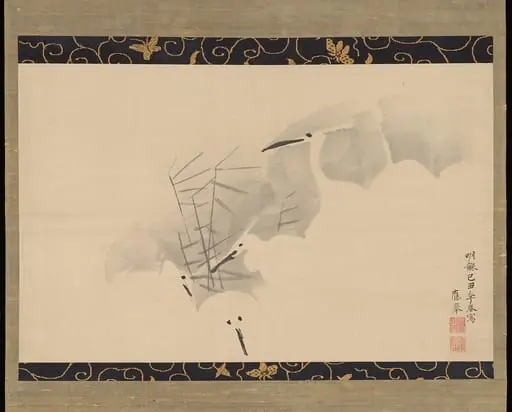 円山応挙筆 白鷺図|White Herons
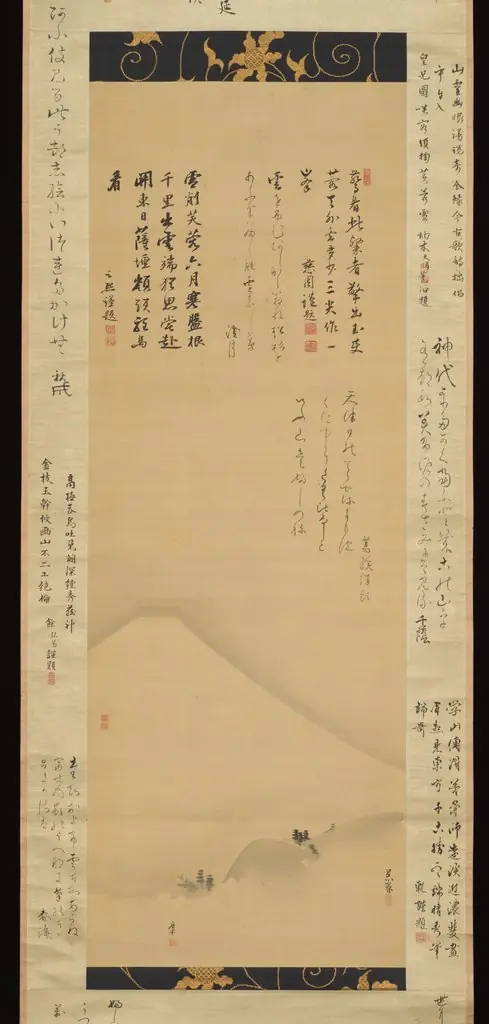 Gassaku: Mount Fuji 合作・富士山図 (Gassaku Fujisan zu)
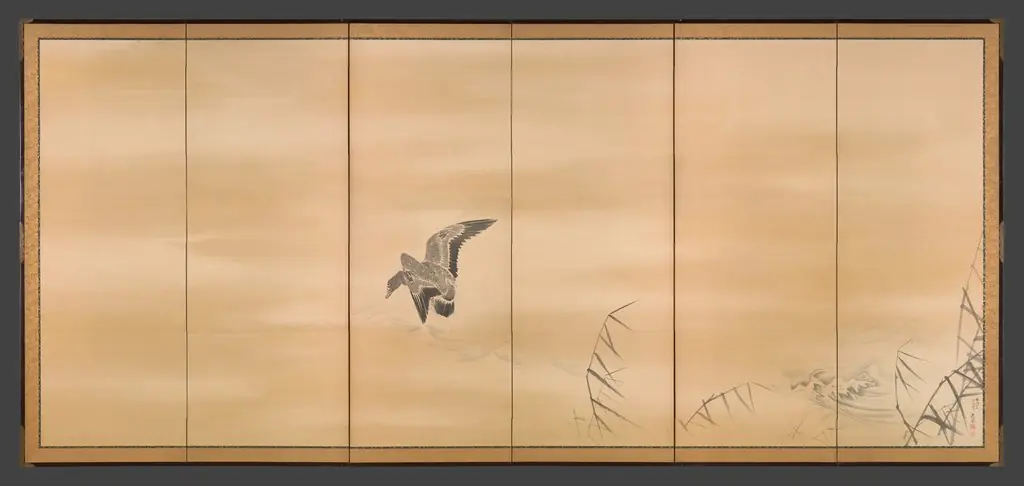 Goose and Reeds; Willows in the Moonlight
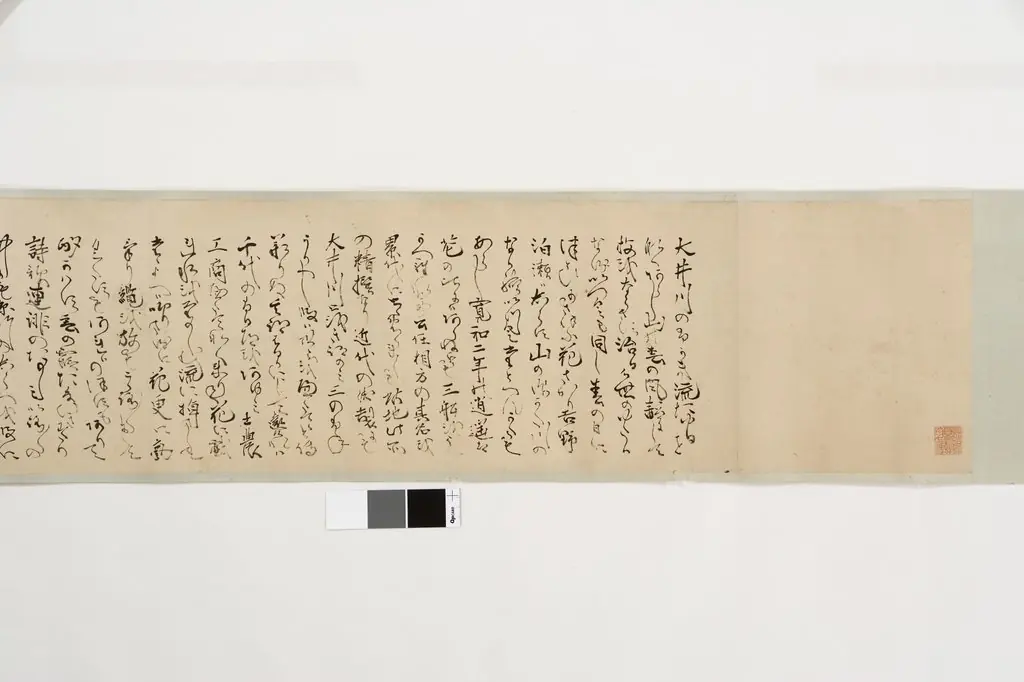 Entertainments of the Four Seasons in Kyoto
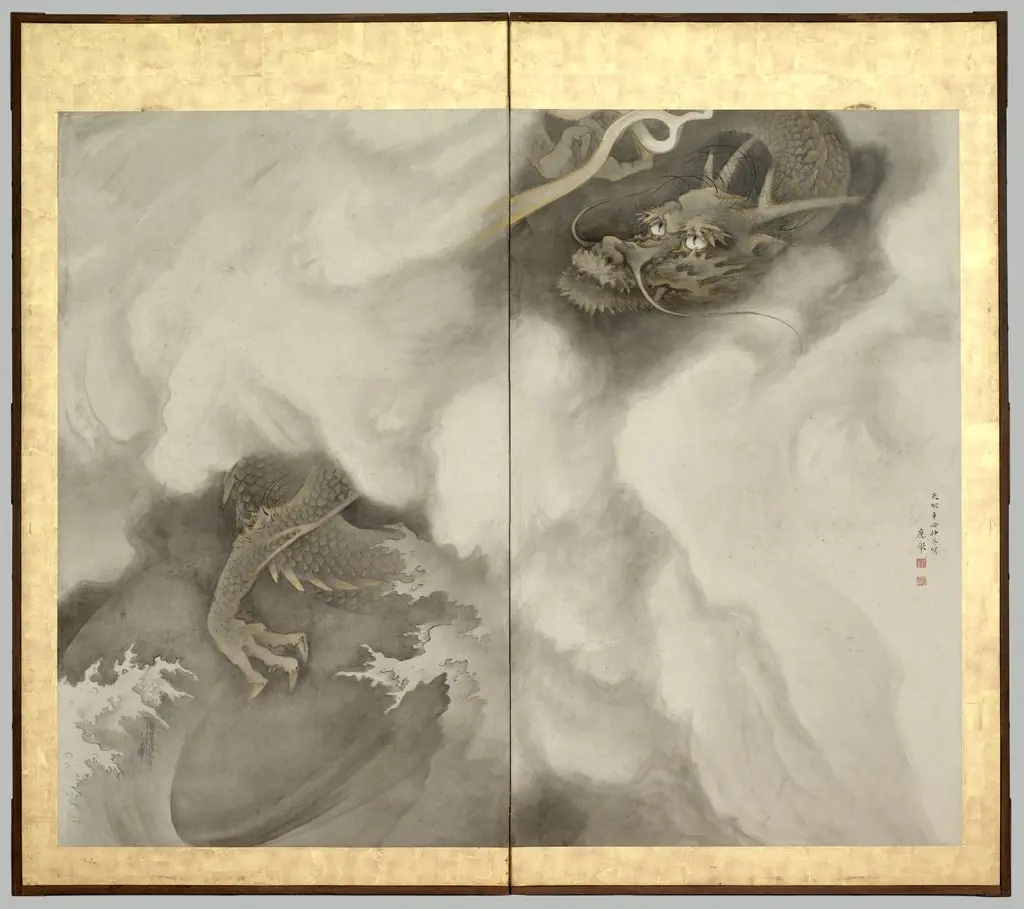 Tiger and Dragon: Dragon
 Tiger and Dragon: Tiger
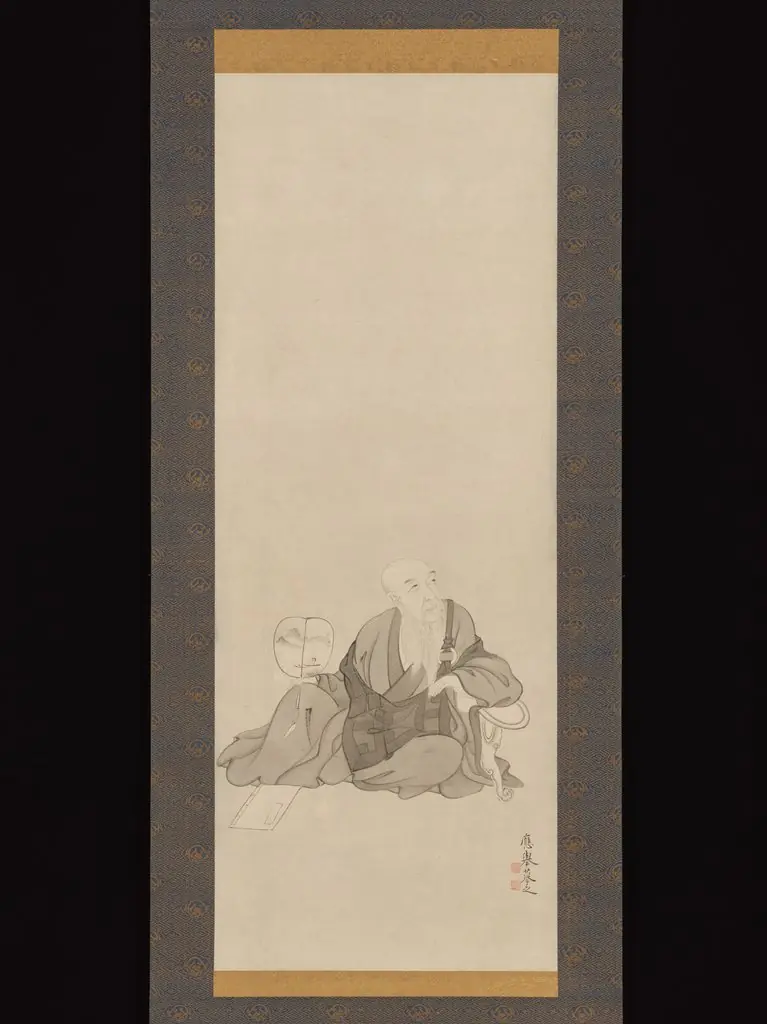 Portrait of Botanka Shōhaku
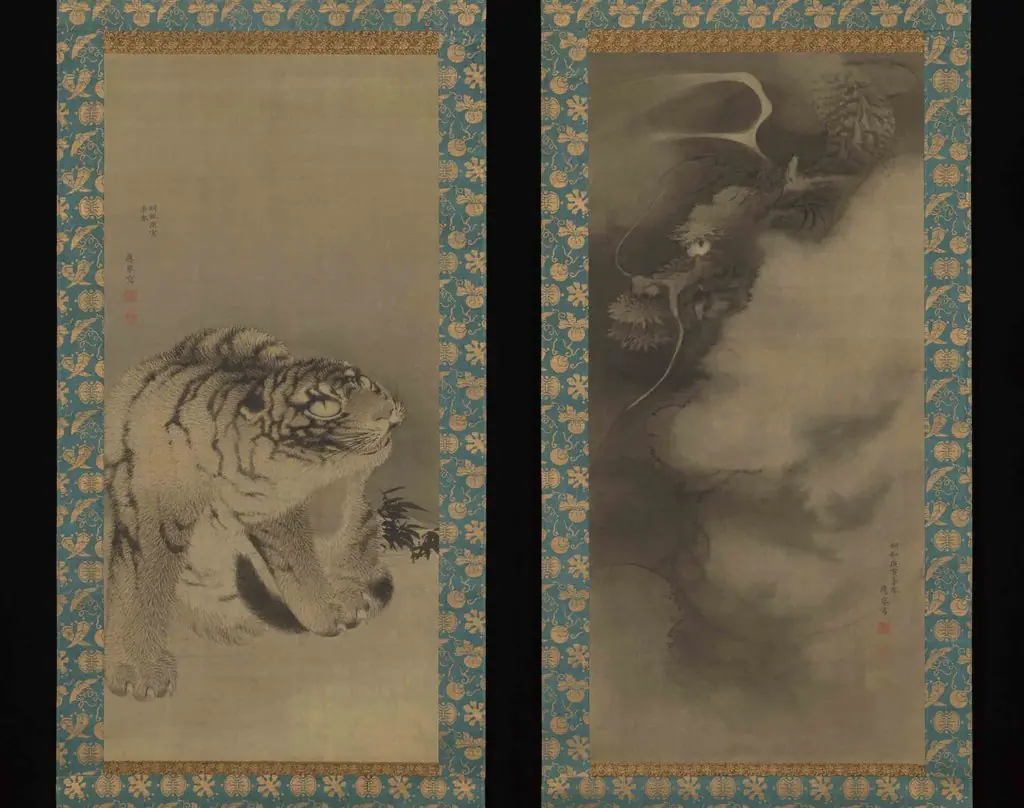 Dragon and Tiger 龍虎図 (Ryūko zu)
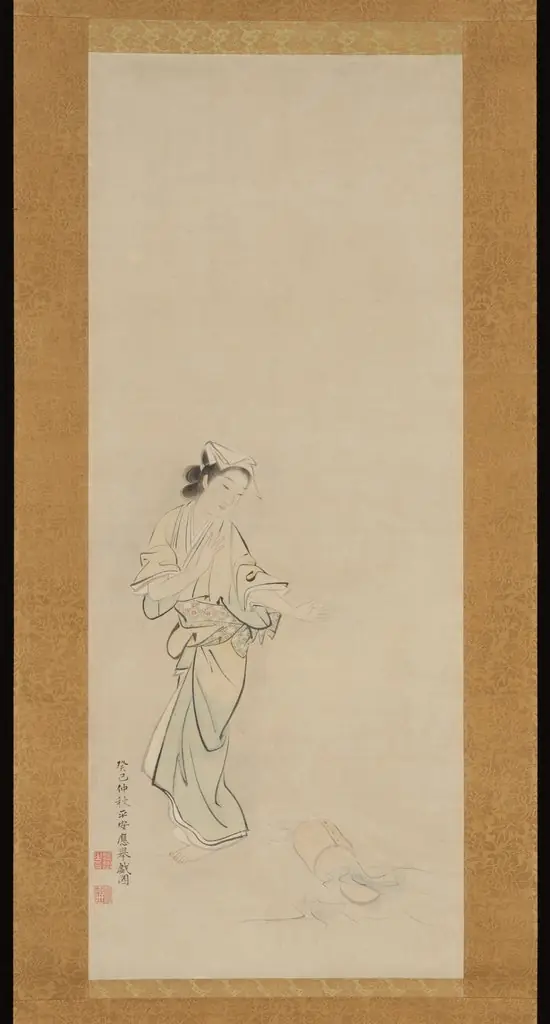 Lady Chiyono
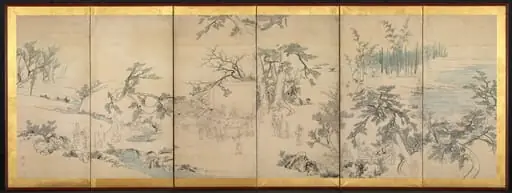 Literary Gathering in the Orchid Pavilion
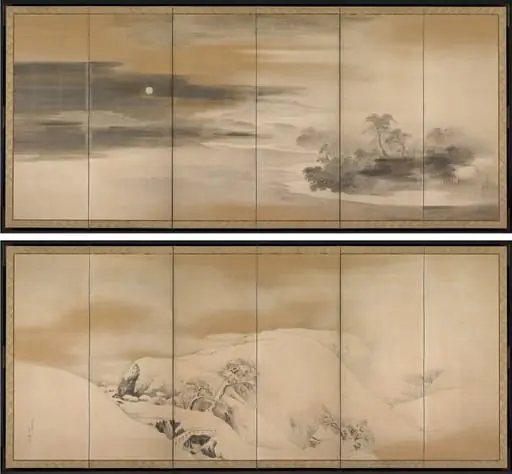 Summer Night; Winter Day
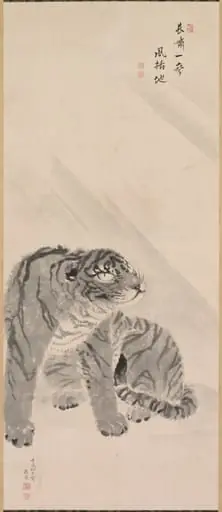 Tiger in Wind
 Summer Night
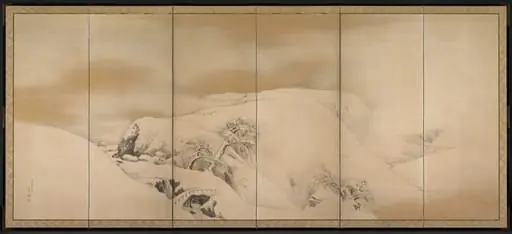 Winter Day
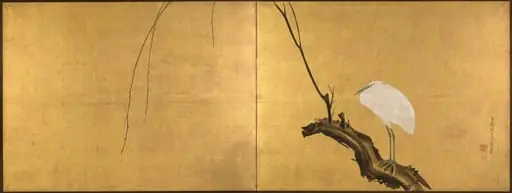 Heron on a Willow Branch
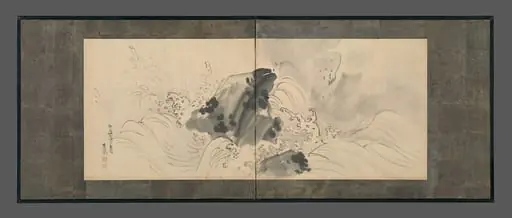 Untitled
Collections represented


Artists in a similar vein