Artwork
Tiger and Bamboo
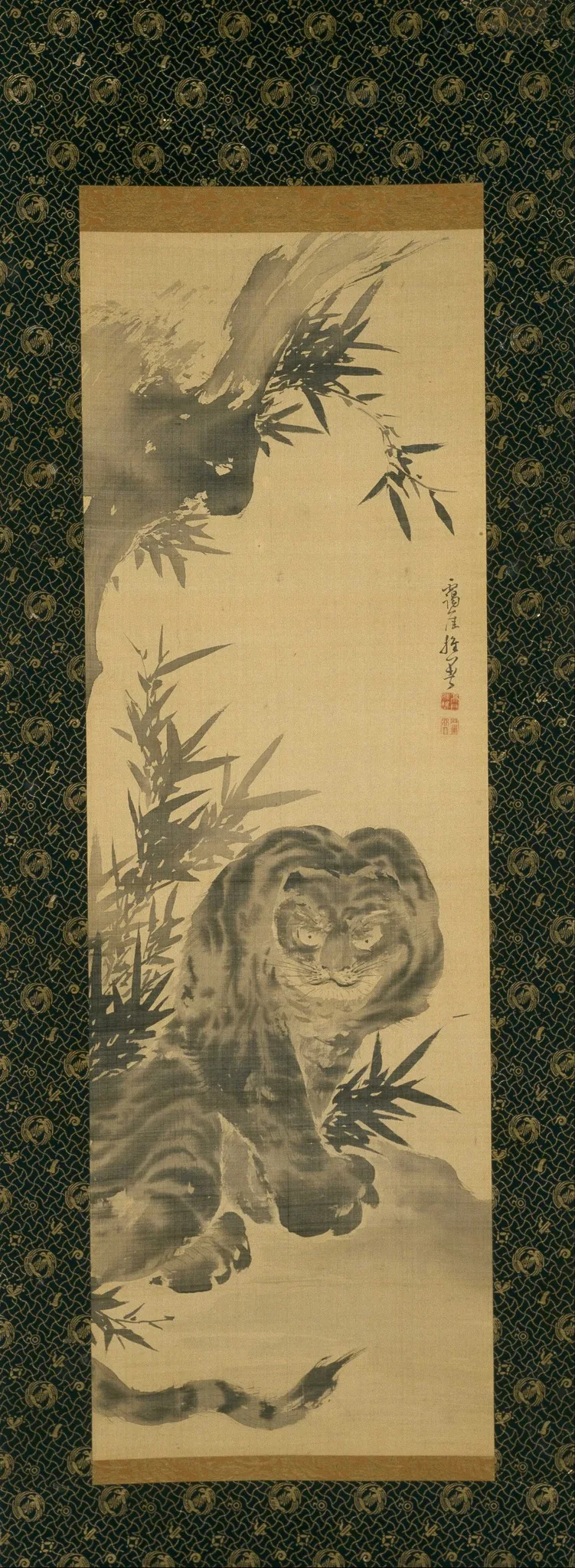
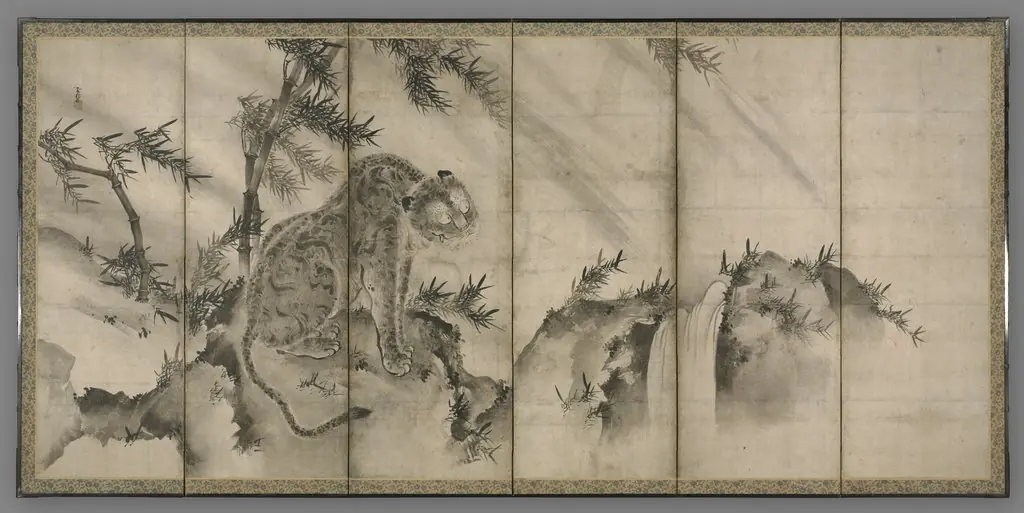
Tiger and Bamboo is an unspecified painting by the Joseon dynasty painting artist Takaku Aigai. It dates from 1831 and is held in the collection of the Museum of Fine Arts, Houston.
About this work
Overview
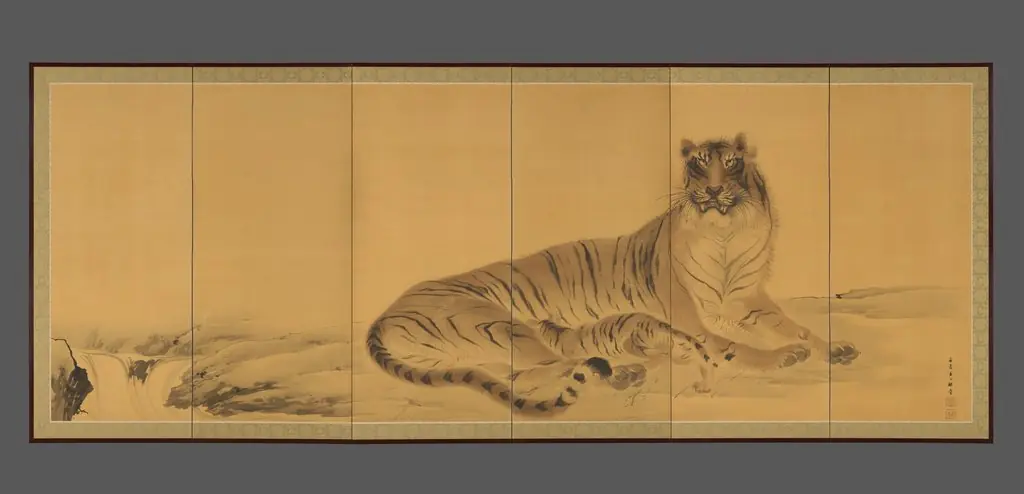
Created in 1831 by Takaku Aigai, the painting titled Tiger and Bamboo is part of the collection at the Museum of Fine Arts, Houston. The work presents a solitary tiger set against a grove of bamboo, rendered with a striking contrast between the animal’s powerful presence and the delicate foliage surrounding it.
Subject & Meaning
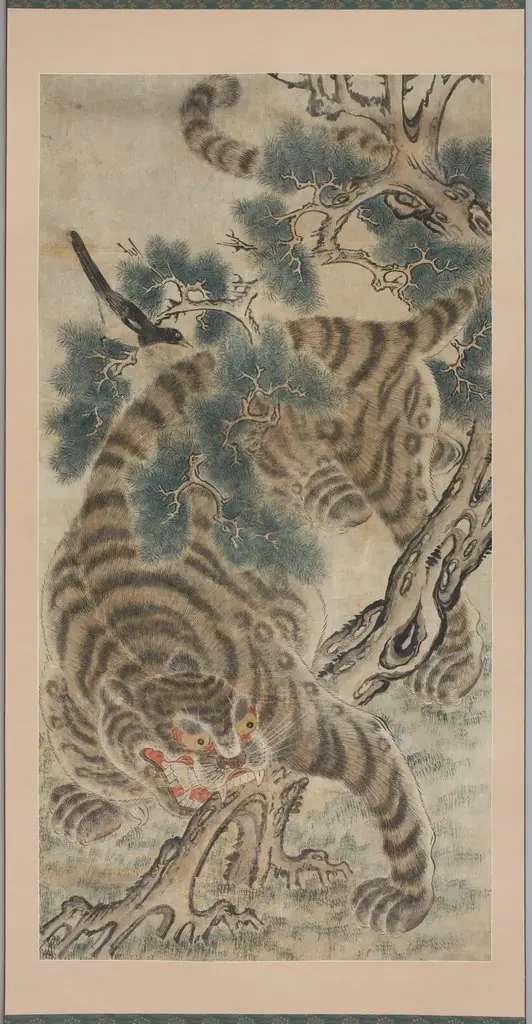
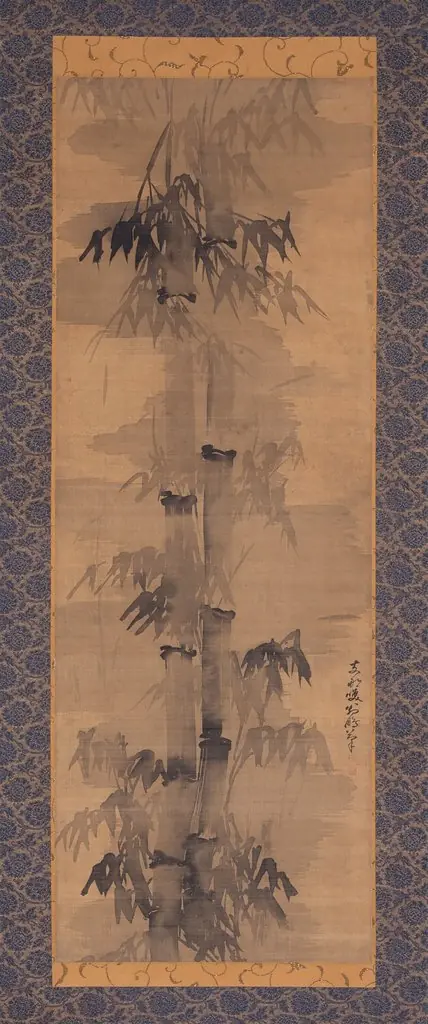
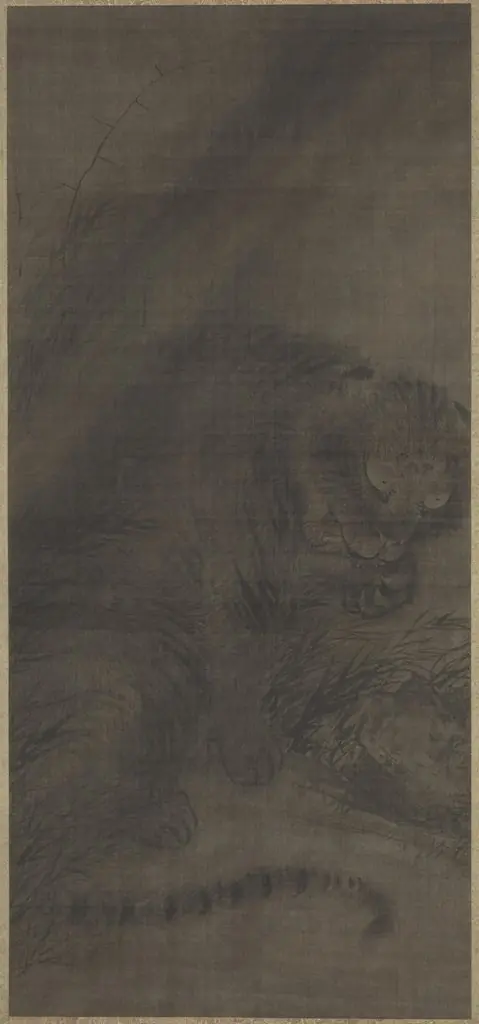
The central figure is a tiger, positioned with its body facing forward while its head turns to one side, mouth open and eyes fixed ahead, conveying a sense of alertness and ferocity. The bamboo, rendered in varying shades of green, frames the animal and suggests a natural habitat, highlighting the tension between wild strength and tranquil vegetation.
Technique & Style
Aigai employs bold, thick brushstrokes for the tiger’s fur, giving the coat a textured, almost tactile quality. In contrast, the bamboo is painted with finer, feathery lines that capture the slenderness of the stalks. The palette is vivid, using saturated colors to heighten the visual impact and convey a sense of dynamic movement.
History & Provenance
The work was completed in the early nineteenth century and has remained in private hands before entering the Museum of Fine Arts, Houston, where it is displayed as part of the institution’s Asian art holdings. Its accession reflects the museum’s ongoing effort to represent Japanese painting from the Edo period.
Context
During the Edo period, depictions of tigers and bamboo were popular motifs symbolizing strength and resilience. Aigai’s treatment aligns with contemporary trends that favored expressive brushwork and vivid coloration, situating the painting within a broader tradition of Japanese animal and landscape art.
Artist & collection