Artwork
The Beheading of Saint John the Baptist
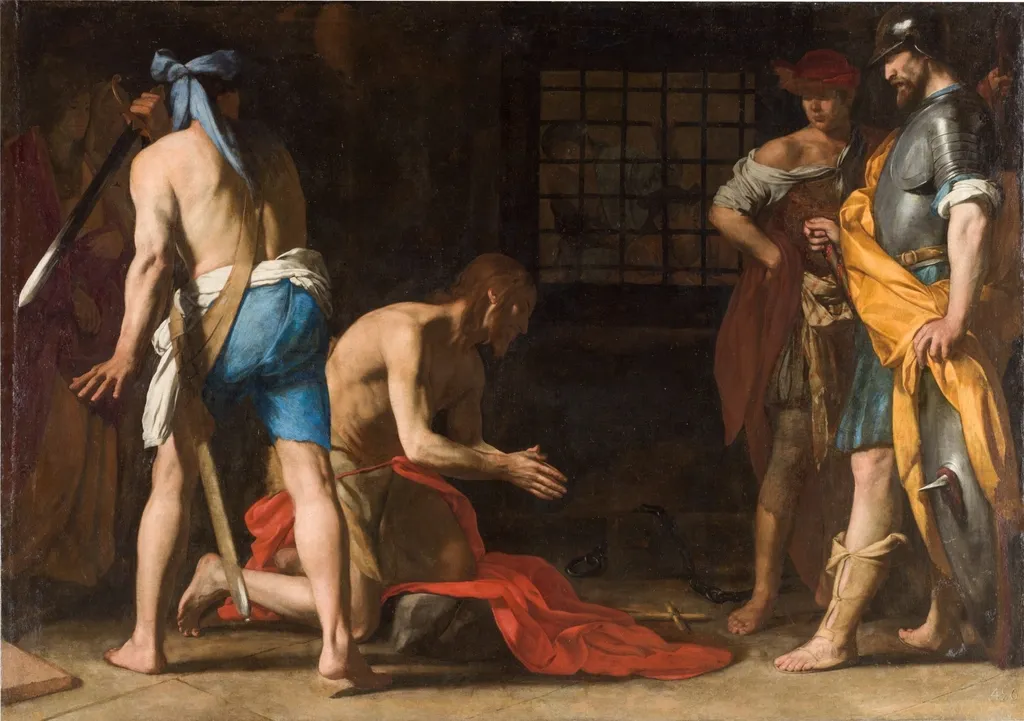
The Beheading of Saint John the Baptist is an oil painting by the Early Baroque Italian artist Massimo Stanzione. It dates from 1634 and is held in the collection of the Museo del Prado.
About this work
Subject & Meaning
The subject matter focuses exclusively on this pivotal moment from the life of John the Baptist, illustrating the violent conclusion of his imprisonment.
Massimo Stanzione's 1634 oil painting depicts the biblical narrative of the beheading of John the Baptist. As a work of religious art, the composition centers on the execution of the saint, identifying him as the primary figure within the scene. The subject matter focuses exclusively on this pivotal moment from the life of John the Baptist, illustrating the violent conclusion of his imprisonment.
The work serves as a visual representation of this specific martyrdom event, adhering to traditional iconographic depictions of the saint's death.
Technique & Style
Massimo Stanzione executed The Beheading of Saint John the Baptist as an oil painting on canvas. Created in 1634, the work measures 184 cm in height and 258 cm in width. The composition depicts the religious subject of the beheading of John the Baptist, adhering to the conventions of religious art prevalent during the period.
History & Provenance
The Beheading of Saint John the Baptist is an oil on canvas painting created in 1634 by the Neapolitan artist Massimo Stanzione for Cardinal Giovanni Battista Pamphili, later Pope Innocent X. The work entered the Spanish royal collection in the 17th century and was transferred to the Museo del Prado in 1922, where it remains on display. Its provenance includes a documented sale to the Pamphili family, a brief period in a private Spanish collection, and eventual acquisition by the Spanish state.
The work is held in the collection of the Museo del Prado, where it has been accessioned as part of the museum's holdings.
It was first exhibited in a major retrospective of Stanzione's work at the Prado in 1952, and later featured in the exhibition "Italian Baroque Masters from the Prado" that traveled to the Metropolitan Museum of Art in 1995.
The painting is catalogued under the Prado's inventory number P00968.
Context
Massimo Stanzione's 1634 painting The Beheading of Saint John the Baptist is documented in both scholarly catalogues and museum records as a significant religious work. It is housed in the Museo del Prado collection, where it has been studied as part of the artist's mature religious phase following his Neapolitan period. The work's dramatic composition and execution in oil on canvas reflect the influence of earlier masters like Caravaggio while demonstrating Stanzione's distinct approach to sacred narrative.
Art historical analysis positions this piece within the broader Counter-Reformation context of southern Italian painting, where visceral depictions of martyrdom served devotional purposes.
Overview
Massimo Stanzione’s The Beheading of Saint John the Baptist (1634) is an oil painting that captures a moment of violent martyrdom. Executed in the early Baroque period, the work is part of the Museo del Prado’s collection and exemplifies the artist’s focus on biblical narratives rendered with dramatic intensity.
Own this work as a print
Artist & collection
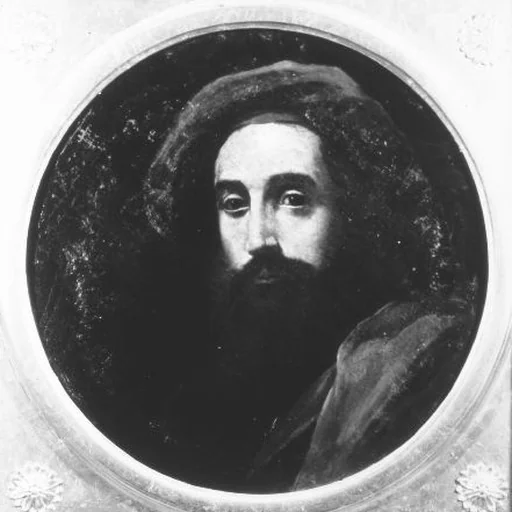
Artist
Massimo Stanzione (also called Stanzioni; Frattamaggiore 1585 – Naples 1656) was an Italian Baroque painter, mainly active in Naples, where he and his rival Jusepe de Ribera dominated the painting scene for several decades.