Artwork
The Kiss of Judas
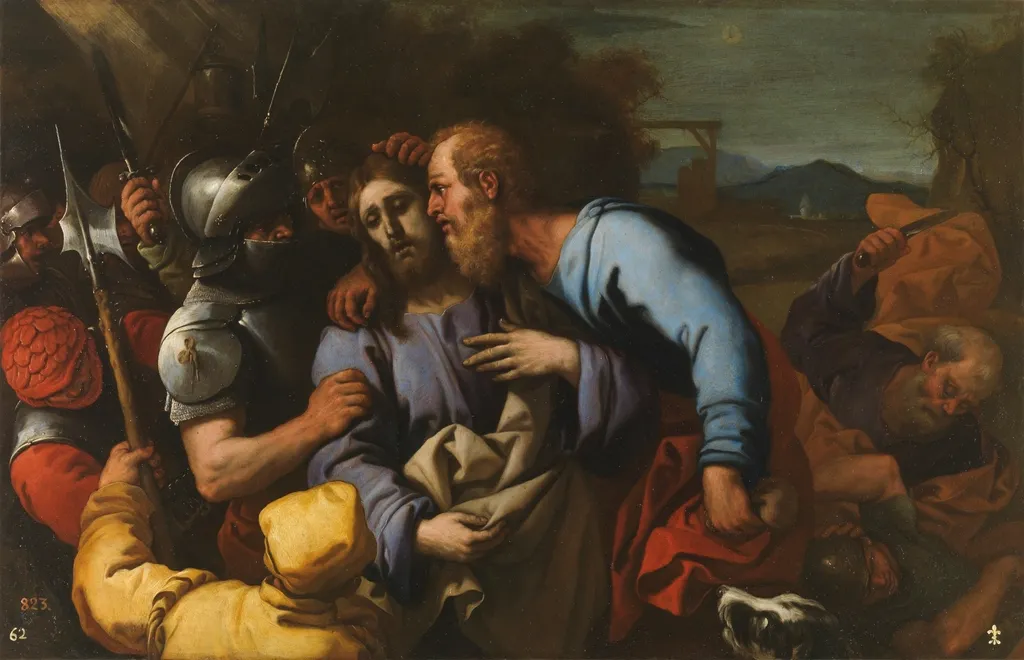
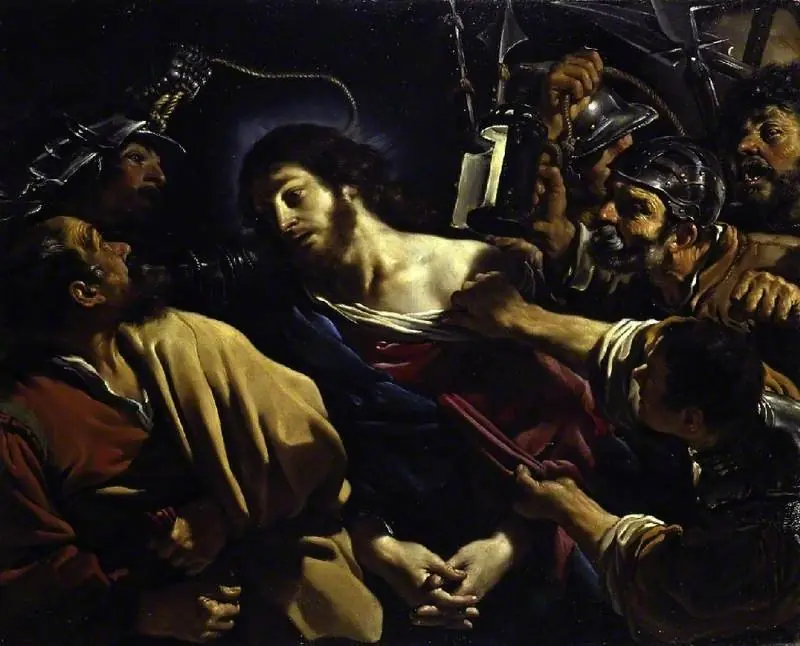
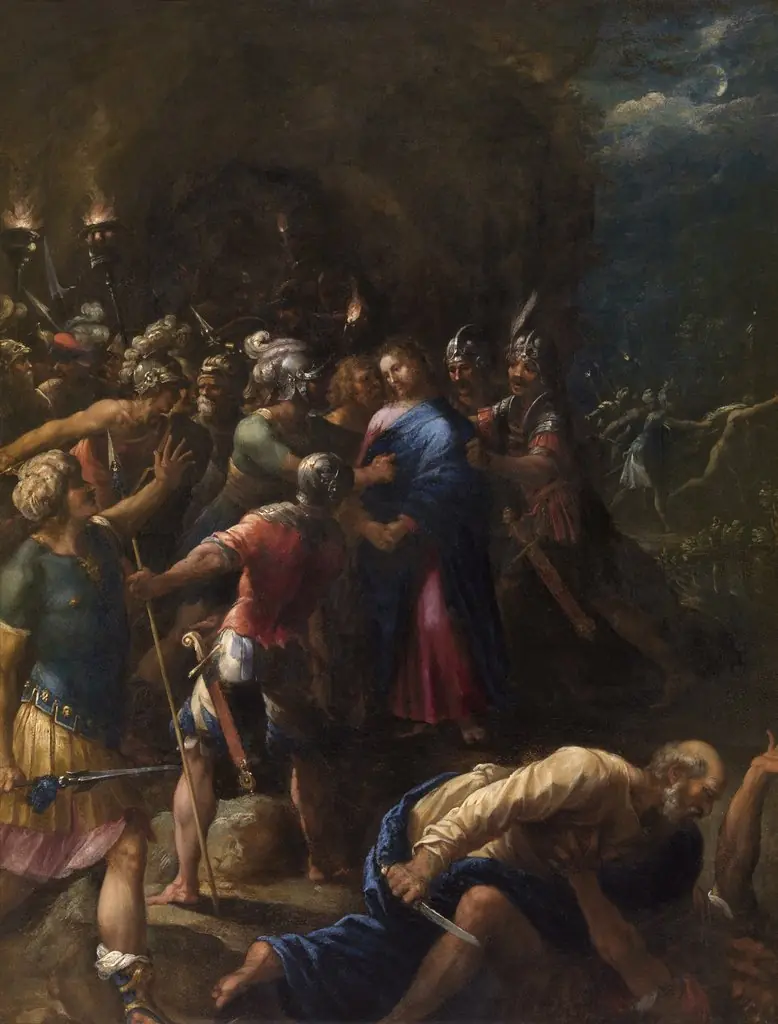
The Kiss of Judas is an oil painting by the Early Baroque Italian artist Luca Giordano. It dates from 1655 and is held in the collection of the Museo del Prado.
About this work
Subject & Meaning
Surrounding these figures are soldiers equipped with body armor and combat helmets, emphasizing the violent nature of the capture.
Luca Giordano's 1655 painting, The Kiss of Judas, depicts the biblical arrest of Jesus Christ. The composition focuses on the pivotal moment of betrayal, featuring the central figures of Jesus and Judas Iscariot. Surrounding these figures are soldiers equipped with body armor and combat helmets, emphasizing the violent nature of the capture.
As a work of religious art, the piece illustrates the specific narrative event where Judas identifies Jesus to the authorities through a kiss, leading to his crucifixion.
Technique & Style
Luca Giordano's The Kiss of Judas, executed in 1655, is an oil painting on a copper support. This choice of medium contributes to the work's compact dimensions, measuring 43 cm in height and 66 cm in width. The surface depicts the arrest of Jesus with a focus on religious narrative, featuring specific details such as body armor and combat helmets worn by the figures.
The use of oil paint on copper allows for a refined handling of the scene, capturing the dramatic interaction between Judas Iscariot and Jesus Christ within a small-scale format.
History & Provenance
The copper panel The Kiss of Judas was painted by Luca Giordano in 1655 during the artist’s early Neapolitan period.
The work entered the Spanish royal collection through Elisabeth Farnese, who acquired it before 1734. By 1746 it was recorded in the inventory of the Palacio Real de La Granja de San Ildefonso. It remained in Spanish royal holdings under Charles III and later Ferdinand VII, who in 1819 deposited it in the Museo del Prado, where it has been continuously housed since.
Legacy
The painting influenced Baroque interpretations of the arrest of Christ, particularly through its dramatic composition on copper. Its depiction of Judas in contemporary armor shaped visual narratives of the scene, as noted in scholarly analyses of Giordano's impact on later religious imagery. The work's provenance through the Spanish royal collection amplified its visibility, linking it to elite patronage of devotional art.
The Kiss of Judas remains part of the Museo del Prado's holdings, where it is studied as a key example of 17th-century Spanish religious painting.
Overview
Created in 1655 by the Neapolitan painter Luca Giordano, The Kiss of Judas is executed on a copper support and now belongs to the collection of the Museo del Prado. The work captures the moment of betrayal in the Garden of Gethsemane, focusing on the intimate yet treacherous kiss that signals Jesus’ arrest.
Context
The composition belongs to the Baroque tradition of dramatizing biblical episodes, echoing the Counter‑Reformation’s emphasis on emotional engagement. Giordano’s depiction aligns with contemporary depictions of the Passion, yet his use of a compact copper surface offers a distinctive, intimate scale compared with larger altar pieces.
Own this work as a print
Artist & collection

Artist
Luca Giordano was an Italian late-Baroque painter and printmaker in etching. Giordano was one of the most celebrated artists of the Neapolitan Baroque, whose vast output included altarpieces, mythological paintings and…