Artwork
El hijo pródigo
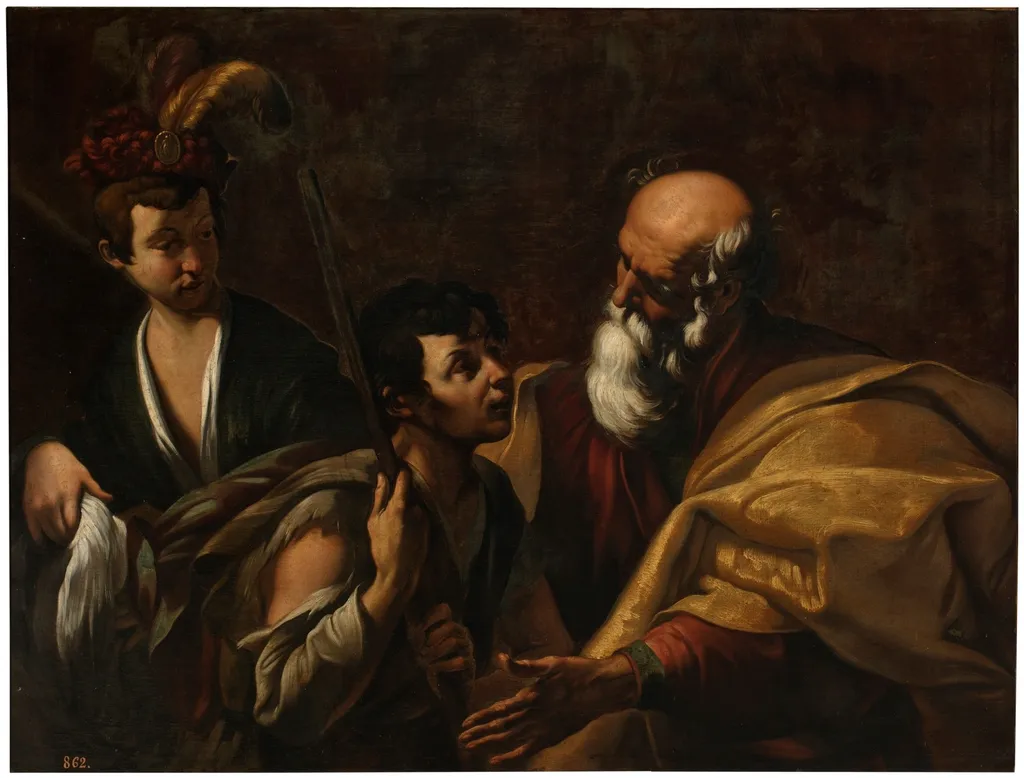
El hijo pródigo is an oil painting by the Early Baroque Italian artist Giacinto Brandi. It dates from 1601 and is held in the collection of the Museo del Prado.
About this work
Subject & Meaning
The symbolic use of light and gesture underscores the narrative's moral lesson, positioning the work within the broader context of 17th-century religious art.
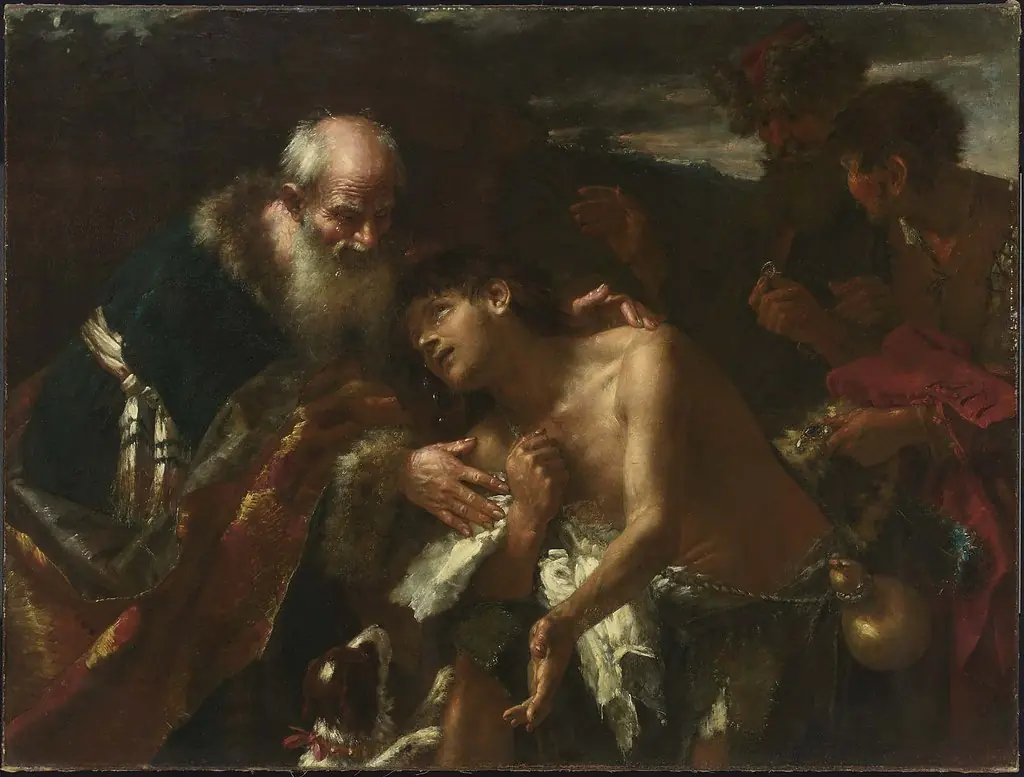
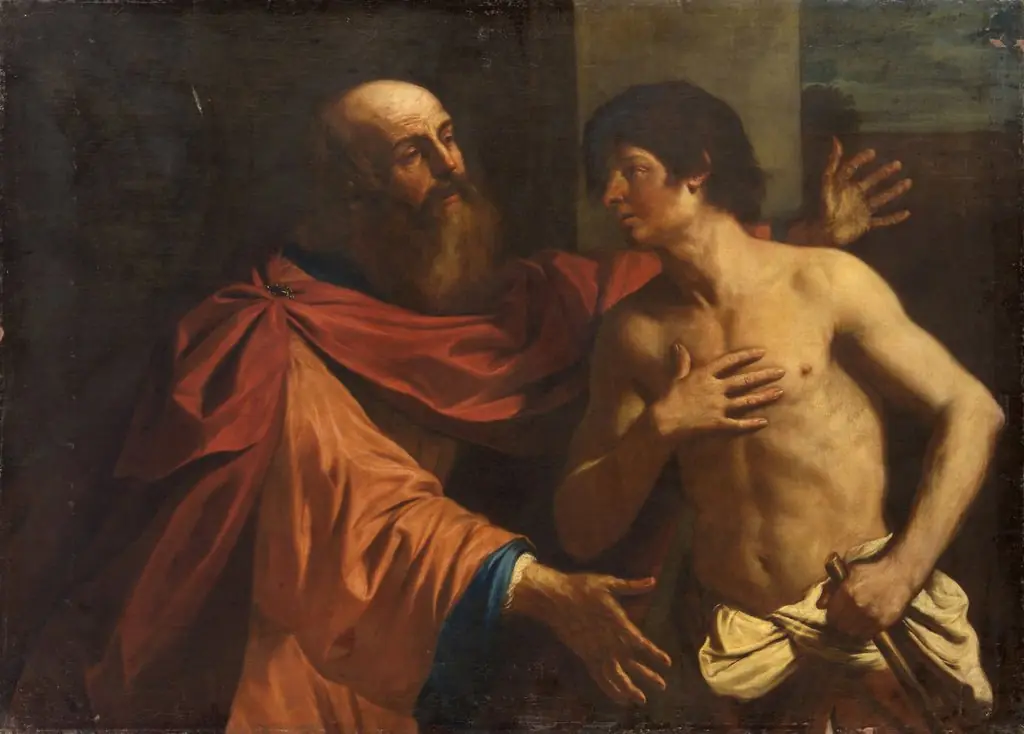
The painting portrays the biblical scene of the prodigal son returning home, a theme drawn from the Parable of the Prodigal Son in the Gospel of Luke. The composition emphasizes the emotional reunion between the wayward son and his forgiving father, symbolizing repentance and divine mercy. This subject aligns with Counter-Reformation ideals of spiritual reconciliation, reflecting the religious genre in which Brandi specialized.
Visual elements include the younger figure's tattered clothing and downcast gaze, contrasting with the elder's compassionate gesture, reinforcing themes of humility and grace. The artwork measures 112 cm by 148 cm and is executed in oil on canvas, currently housed in the Museo del Prado.
The symbolic use of light and gesture underscores the narrative's moral lesson, positioning the work within the broader context of 17th-century religious art.
Technique & Style
El hijo pródigo by Giacinto Brandi, painted in 1601, is executed in oil on canvas. The work measures 112 cm in height and 148 cm in width, reflecting the Baroque emphasis on dramatic composition and chiaroscuro. Its religious subject matter aligns with Counter‑Reformation themes, presenting the prodigal son in a moment of repentance.
History & Provenance
El hijo pródigo was painted in 1601 by Giacinto Brandi as an oil on canvas depicting the biblical Prodigal Son. The work is currently held in the Museo del Prado, where it constitutes part of the museum's permanent collection. The sources provide no information about an earlier ownership chain, specific commission, or subsequent transfers prior to its entry into the Prado.
El hijo pródigo is held in the collection of the Museo del Prado. It is accessioned under the museum's standard inventory system for paintings, though the specific accession number is not provided in the sources. The work was exhibited in the Museo del Prado's retrospective of Giacinto Brandi in 2019, which highlighted his contributions to religious painting.
The painting was created in 1601 and measures 112 cm in height by 148 cm in width. It is classified as a religious artwork depicting the Prodigal Son, executed in oil paint on canvas. No further exhibition records beyond the 2019 retrospective are documented in the sources.
Context
Giacinto Brandi's 1601 oil painting El hijo pródigo, depicting the biblical prodigal son, resides in the Museo del Prado collection. The work is categorized as religious art and exemplifies Baroque-era interpretations of scriptural narratives through chiaroscuro and intimate compositional focus. Scholarship emphasizes its significance within Brandi's oeuvre as a contemplative treatment of penitence, distinct from contemporaries' more theatrical renditions of the subject.
The painting's material execution on canvas (112 cm × 148 cm) and precise iconography reflect Counter-Reformation artistic directives, situating it at the intersection of devotional practice and aesthetic innovation in early 17th-century Italian art.
Legacy
The painting is recognized as an early Baroque interpretation of the Prodigal Son parable, influencing later artists who explored themes of repentance and forgiveness in religious art. Its composition and emotional intensity have been cited in studies of Baroque narrative techniques, contributing to the visual discourse on forgiveness in 17th-century Italy. The work remains part of the Museo del Prado's collection, where it is studied within the broader context of Spanish Baroque holdings.
Overview
El hijo pródigo is a 1601 oil painting by Giacinto Brandi, currently housed at the Museo del Prado. The work depicts a pivotal moment in the biblical parable of the Prodigal Son.
Own this work as a print
Artist & collection

- Die Verleugnung Petri
 Saint John the Baptist says goodbye to his Parents
 Geographer
 Chiromancer
 The Return of the Prodigal Son
 The Martyrdom of Saint Bartholomew
 The Return of the Prodigal son
 Moses and the Messengers from Canaan
 Saint Peter freed by an Angel
 Introduction of Jacob to Isaac
 Saint Matthew and the Angel
 Christus und der Hauptmann von Kafarnaum