Artwork
Pilate Washing his Hands and Saint Martin of Tours with a Beggar and the Donor
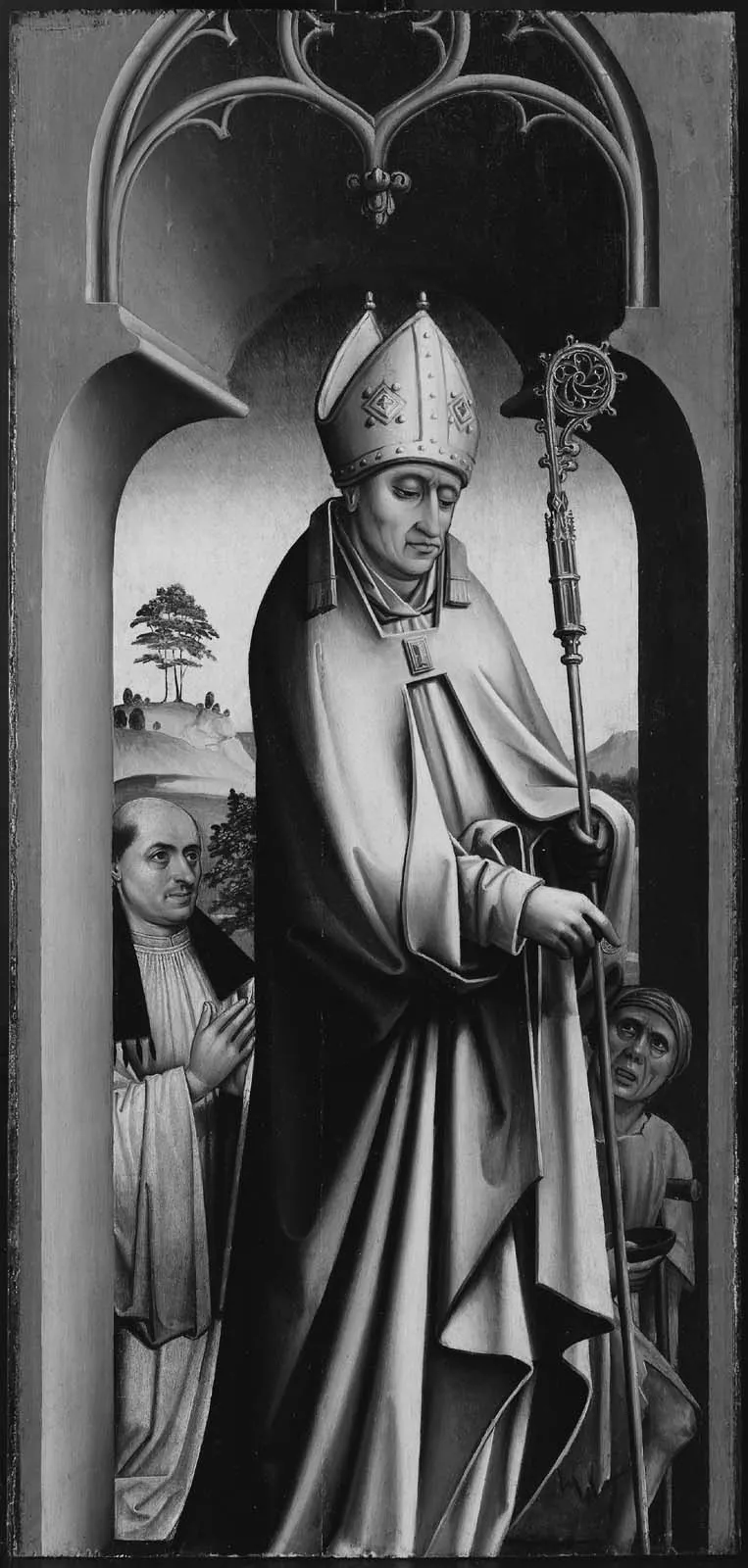
Pilate Washing his Hands and Saint Martin of Tours with a Beggar and the Donor is an oil painting by the Northern Renaissance artist Master of Alkmaar. It dates from 1500 and is held in the collection of the Museum of Fine Arts Boston.
About this work
Subject & Meaning
One scene illustrates Pontius Pilate washing his hands, a gesture symbolizing his attempt to absolve himself of responsibility for the crucifixion of Jesus.
This religious panel painting depicts two distinct biblical narratives within a single composition. One scene illustrates Pontius Pilate washing his hands, a gesture symbolizing his attempt to absolve himself of responsibility for the crucifixion of Jesus. The accompanying subject features Saint Martin of Tours in the act of sharing his cloak with a beggar, an iconic representation of Christian charity and humility.
The inclusion of a donor figure alongside these sacred events signifies the work's function as a devotional object, likely commissioned for private prayer or memorialization. By juxtaposing the theme of judicial abdication with charitable sacrifice, the artwork presents a complex moral dialogue on responsibility and virtue.
Technique & Style
The work is executed in oil paint on a wooden panel, a common support for early 16th‑century religious panels. The composition shows Pilate in the act of washing his hands, paired with Saint Martin sharing his cloak with a beggar and a donor figure, combining narrative clarity with delicate modeling of drapery and light. The stylistic handling reflects the Master of Alkmaar’s characteristic soft modeling and attention to gesture, while the precise rendering of figures and architectural details underscores the work’s formal refinement.
History & Provenance
The work was created around 1500 by the Master of Alkmaar as an oil painting on panel. It entered the collection of the Museum of Fine Arts Boston, where it remains on view in the European Paintings galleries. The piece was first documented in a 1500 dated inventory of the artist's workshop and later acquired by the museum in the early 20th century through a private sale. Its dimensions measure 87.6 cm in height and 41 cm in width.
The painting is held in the collection of the Museum of Fine Arts in Boston. Created around 1500 by the Master of Alkmaar, the work is executed in oil on panel and measures 87.6 cm in height by 41 cm in width. The provided sources confirm its location at this institution but do not list a specific inventory or accession number. Furthermore, no information regarding the exhibition history of this specific artwork is available in the current documentation.
Overview
This oil painting, created in 1500 by the Master of Alkmaar, combines two distinct scenes within a single composition. It is a representative work of the Northern Renaissance, showcasing the artist's skill in rendering complex narratives.
Artist & collection
Artist
The Master of Alkmaar was a Dutch painter active around Alkmaar at the beginning of the sixteenth century.

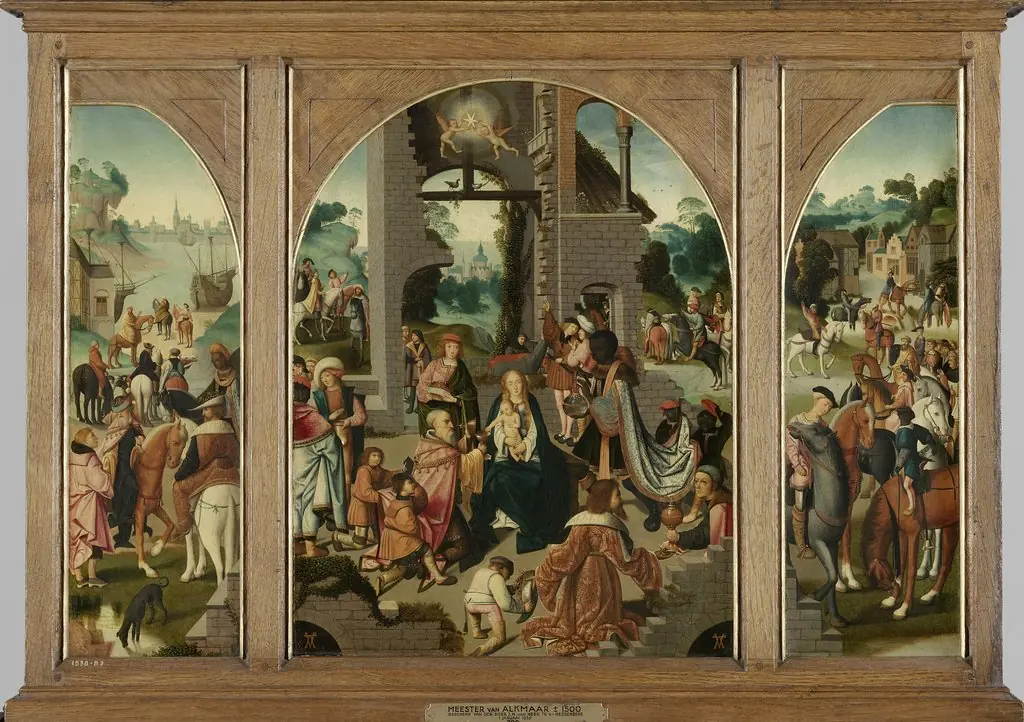 Triptych with the adoration of the Magi (centre panel and inner wings), St Antony Abbot (outer left wing) and St Adrian (outer right wing)
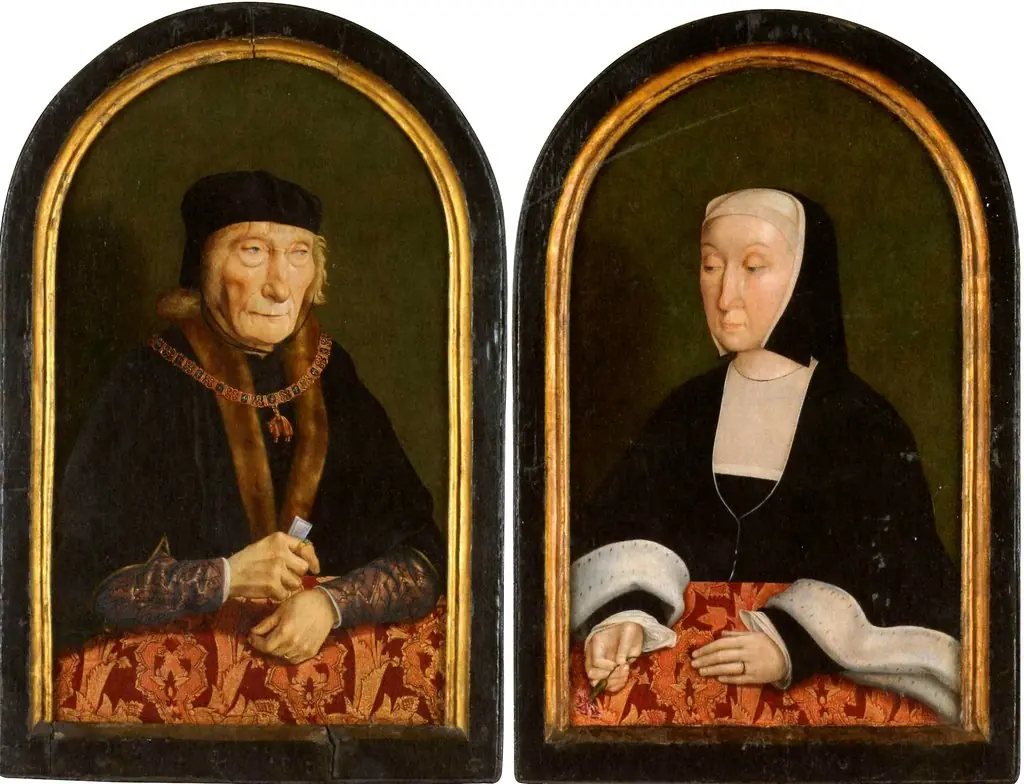 Portrait of Jan III, First Count of Egmond (1438–1516) and his wife Magdalena van Werdenburg, Countess of Egmond (1464–1538)
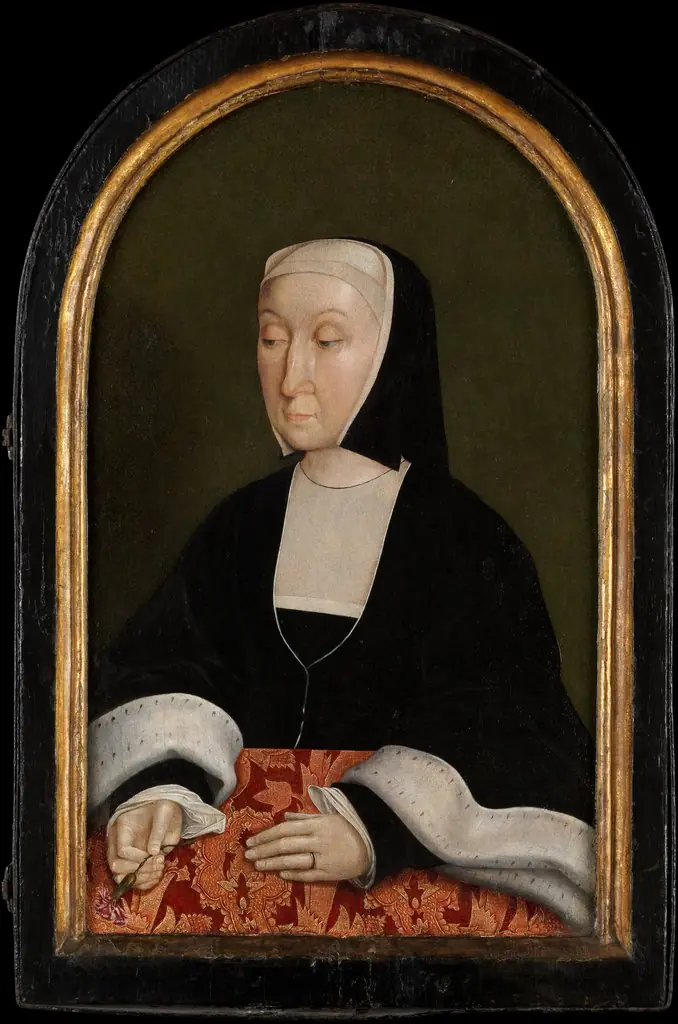 Portrait of Magdalena van Werdenburg (1464–1538), Countess of Egmond and wife of Jan (1438–1516), First Count of Egmond;
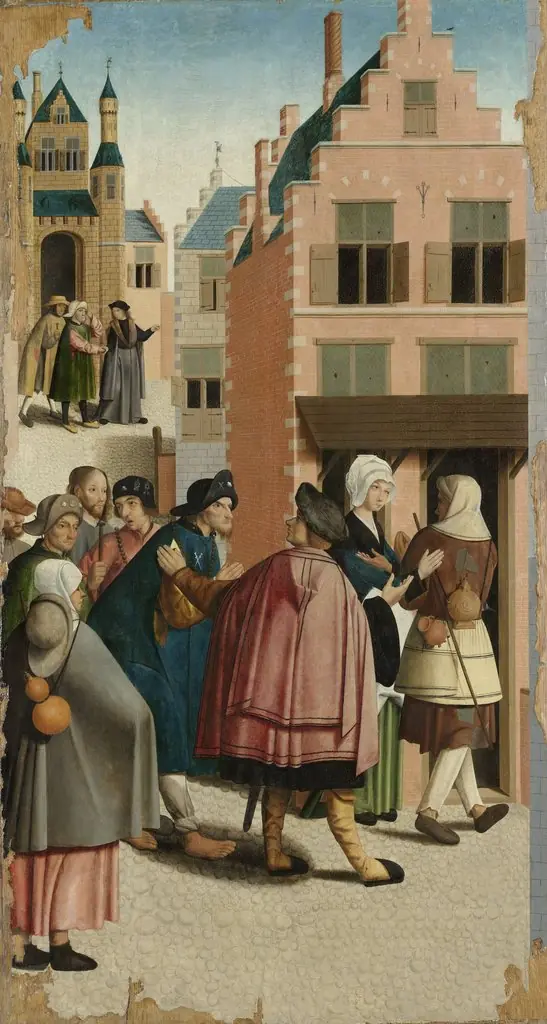 The Seven Works of Mercy
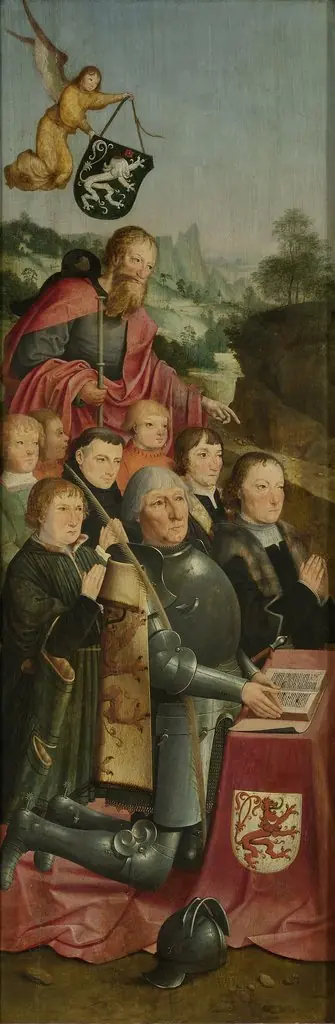 Memorial Panel with Eight Male Portraits, probably Willem Jelysz van Soutelande and Family, with Saint James the Greater and the Van Soutelande Family Crest, inner left wing of an altarpiece
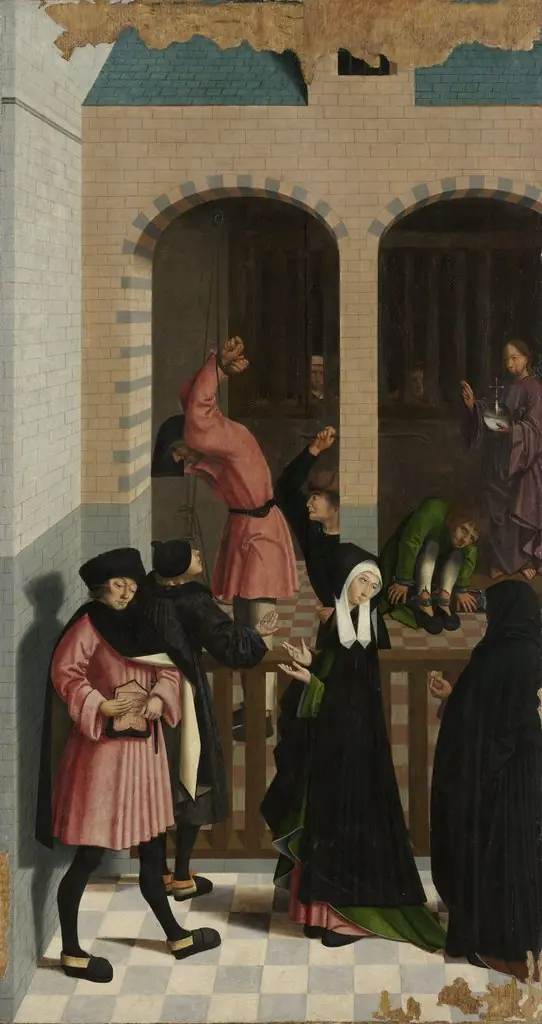 The Seven Works of Mercy
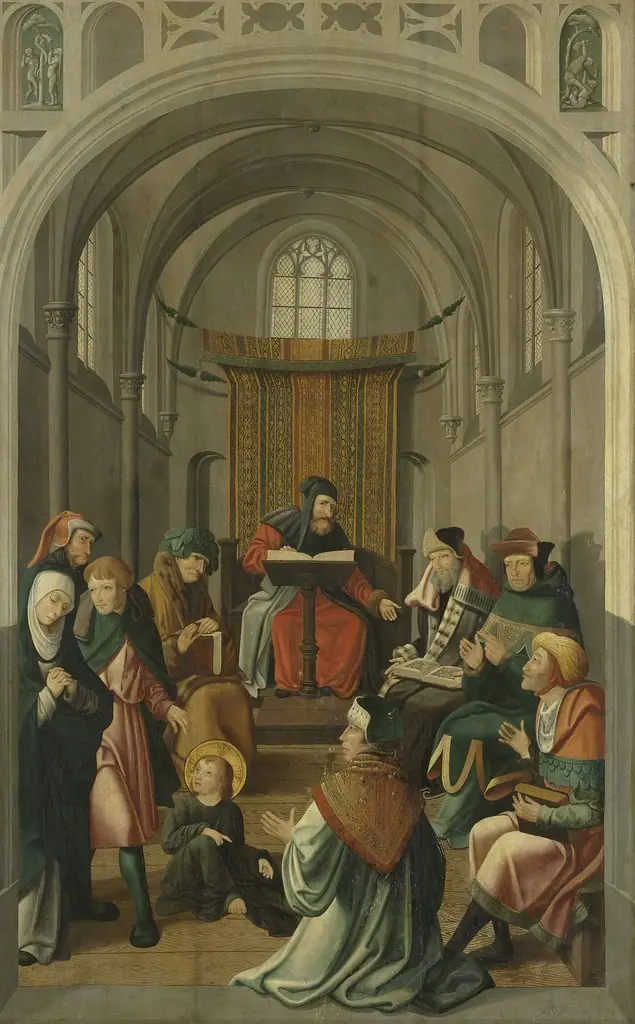 Panel of an altarpiece with Jesus disputing with the doctors in the Temple (inner wing) and Christ appearing to his mother (outer wing)
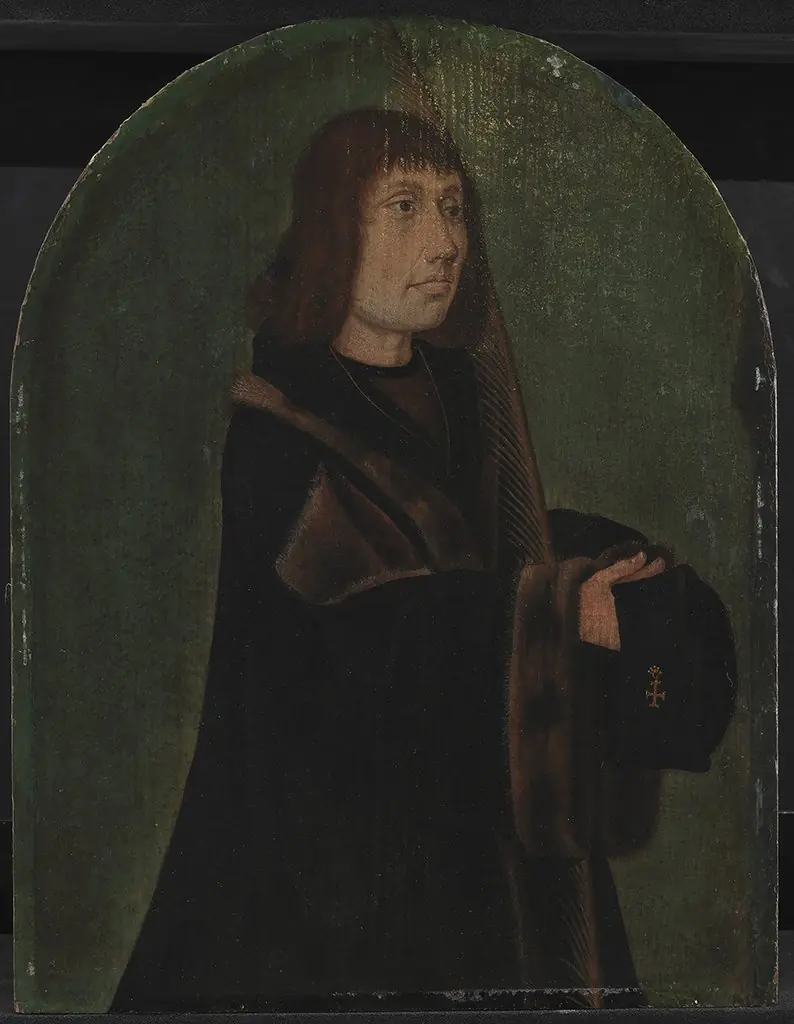 Portrait of a Man
- Saint Gregory
 St Bonaventure
 due vescovi
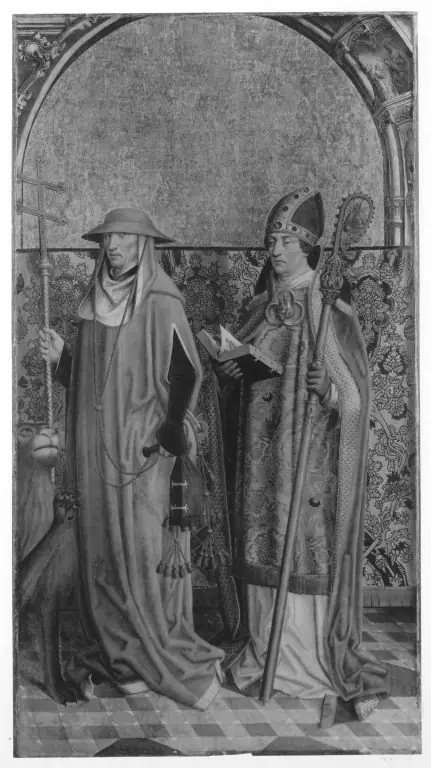 St. Jerome and a bishop
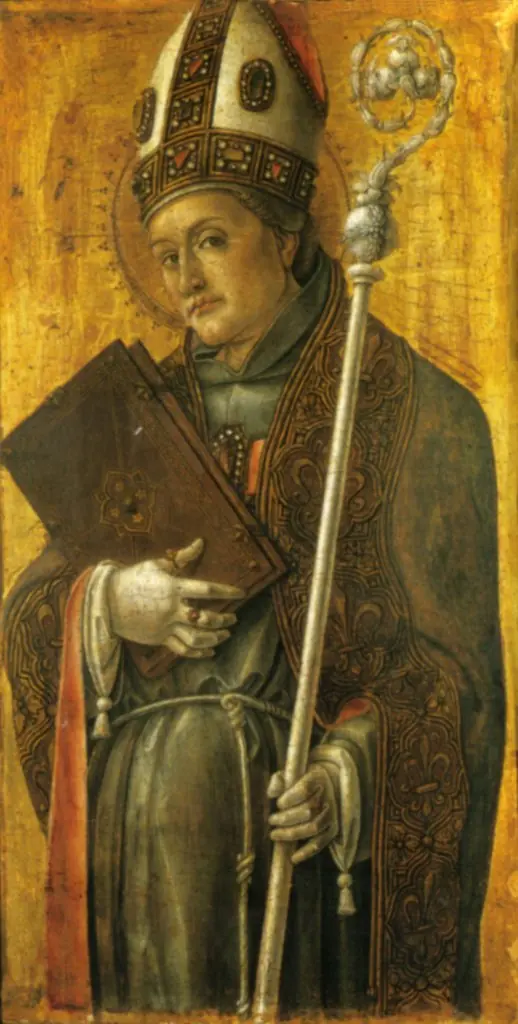 Saint Louis of Toulouse
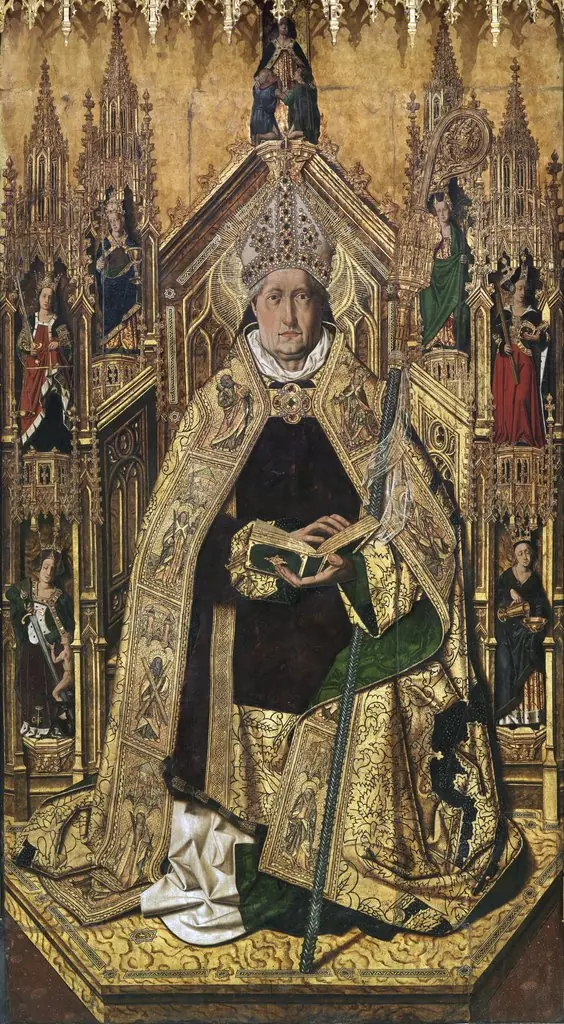 Santo Domingo de Silos entronizado como obispo, de Bartolomé Bermejo (Museo del Prado)
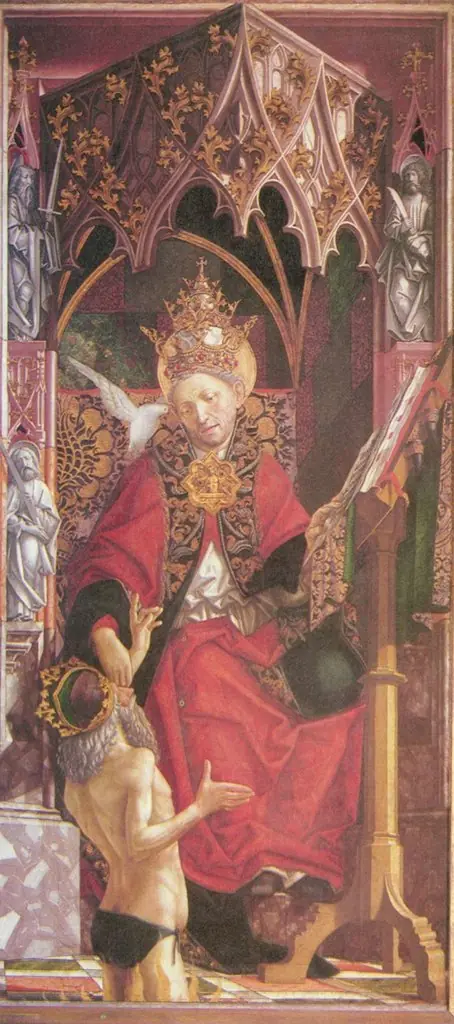 Kirchenväteraltar: Papst Gregor der Große
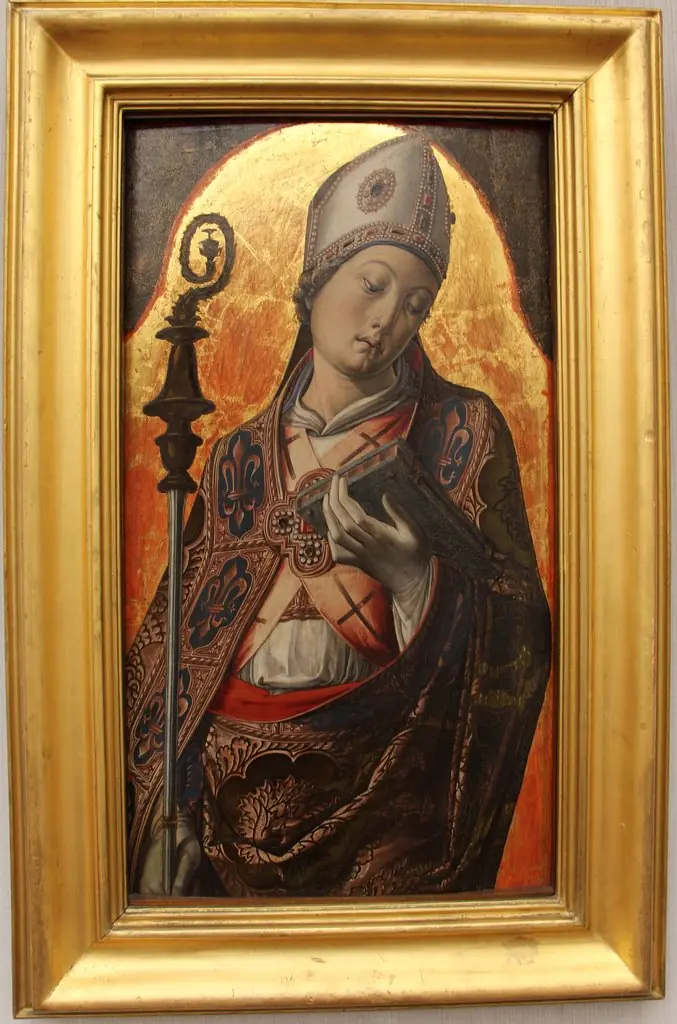 Saint Louis from Toulouse
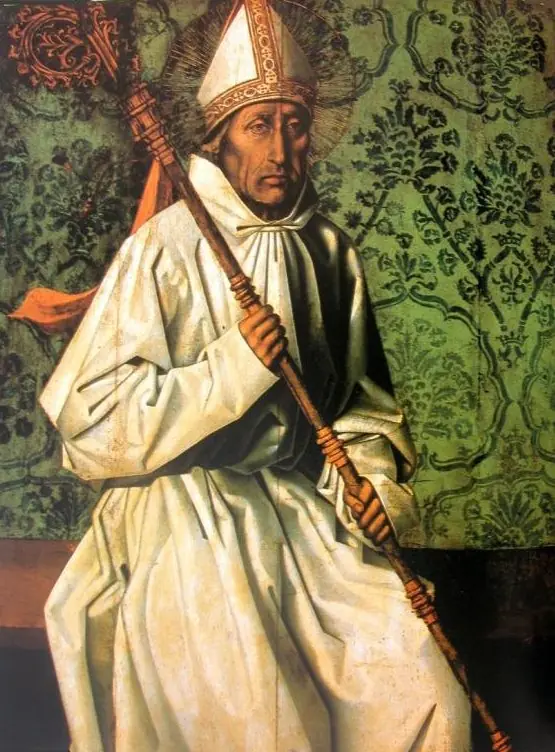 São Teotónio
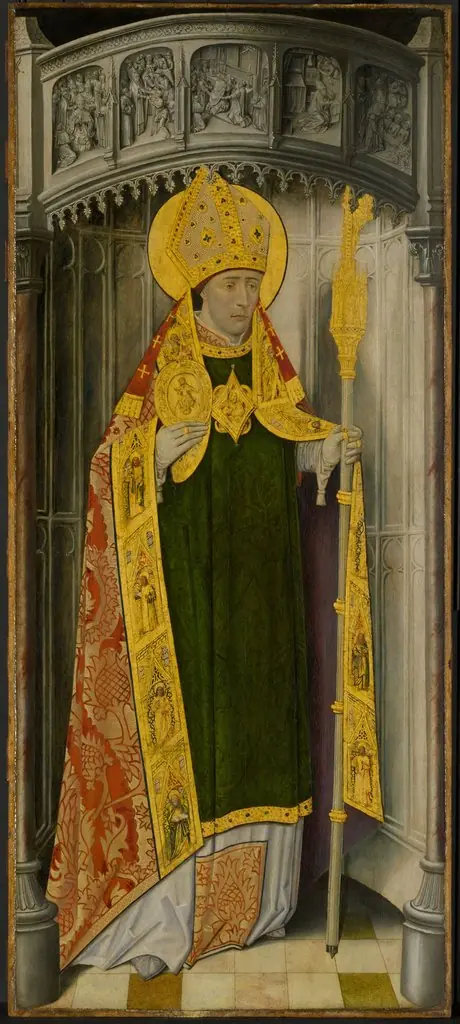 Altarpiece from Thuison-les-Abbeville: Saint Honoré
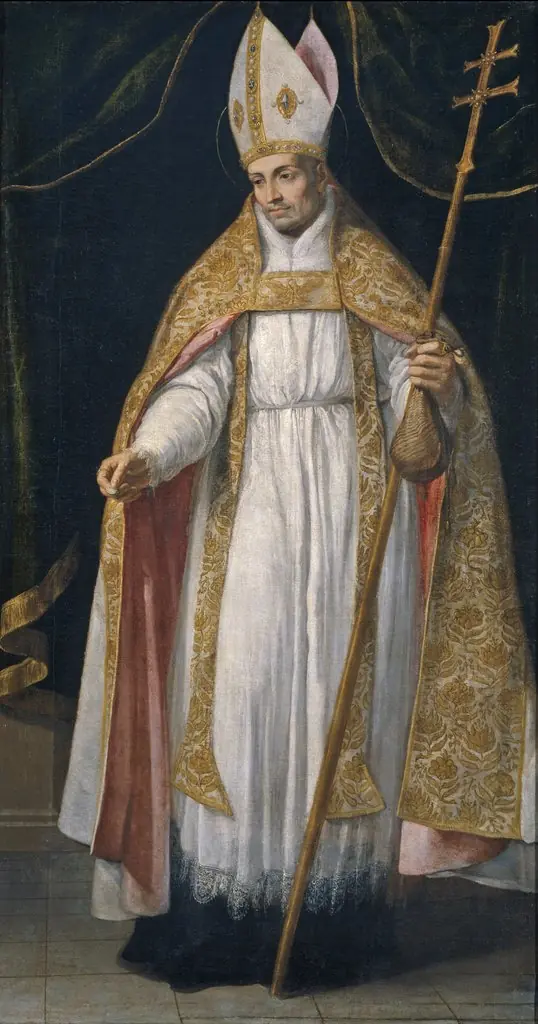 Santo Tomás de Villanueva
 Die hll. Augustinus und Andreas Außenseite: Buße des hl. Hieronymus und kniende Nonne