Artwork
Madonna and Child
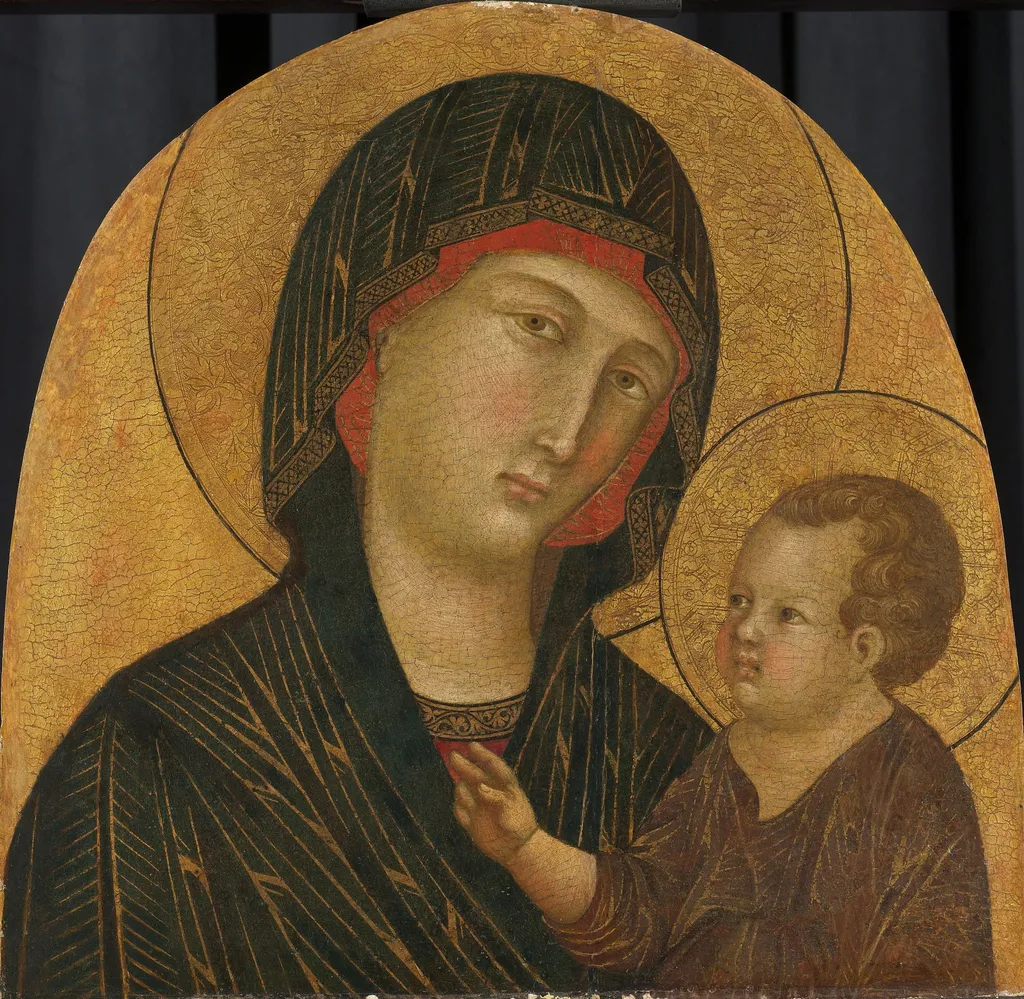
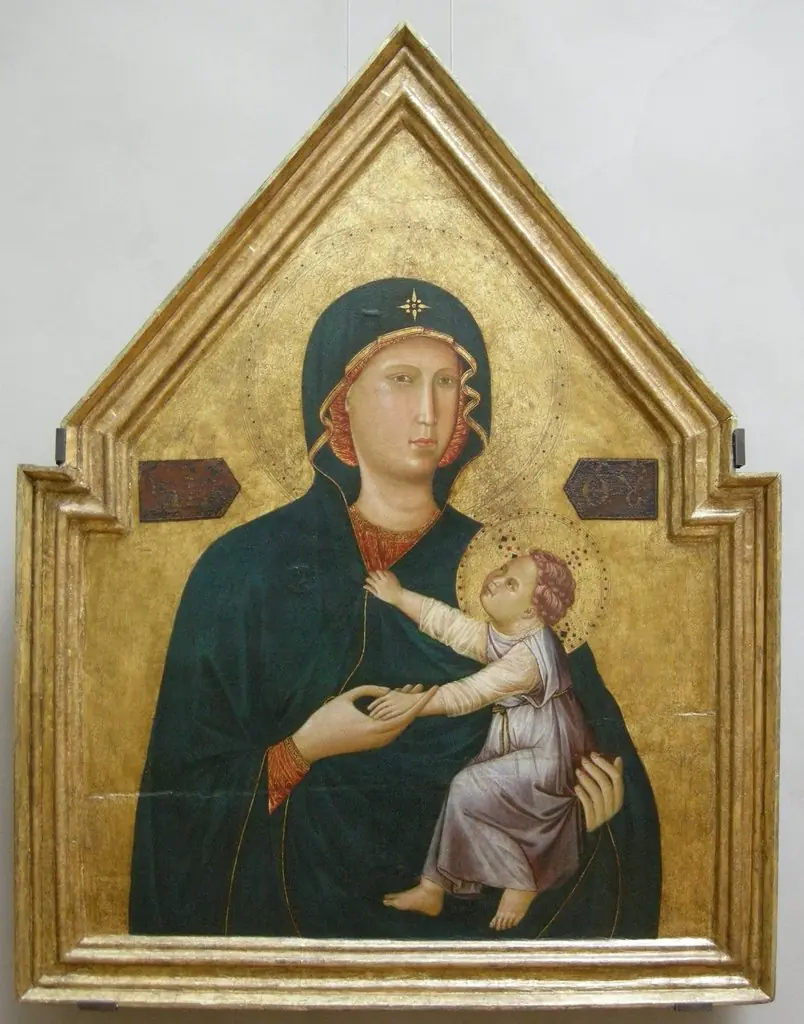
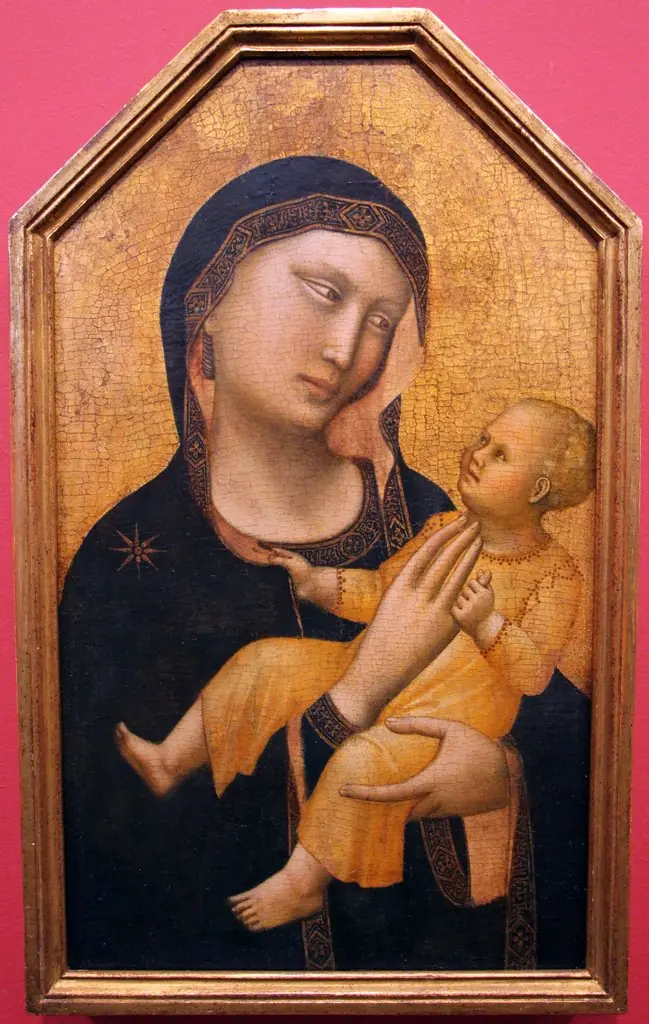
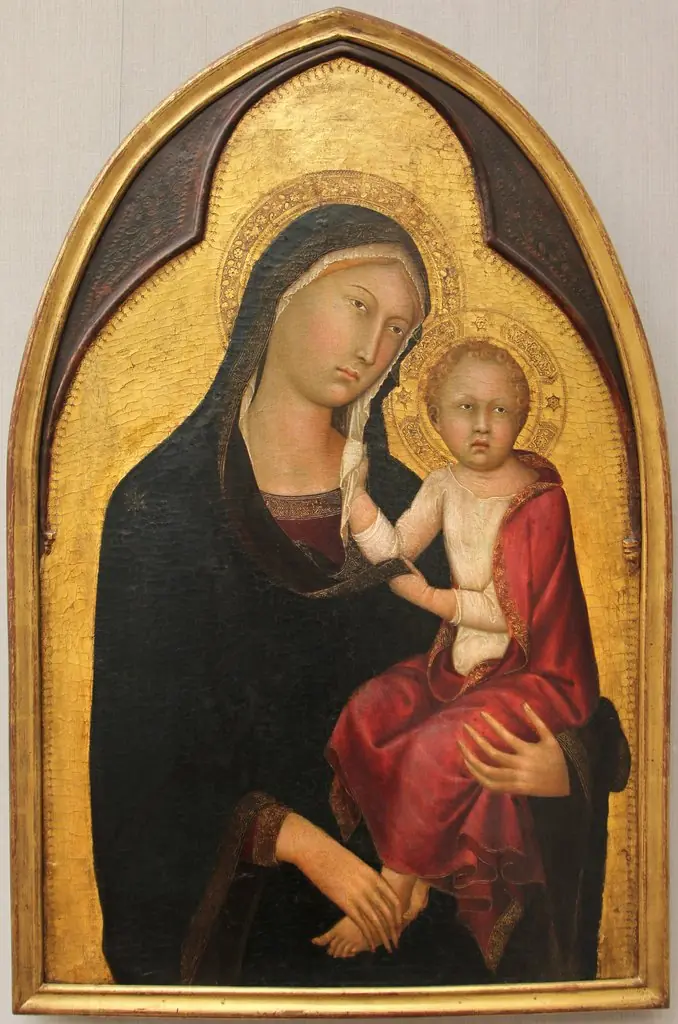
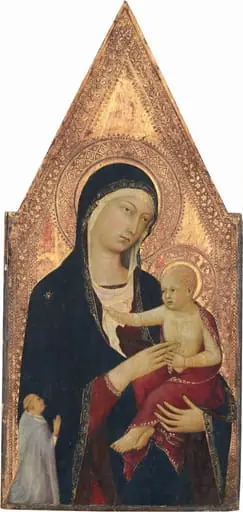
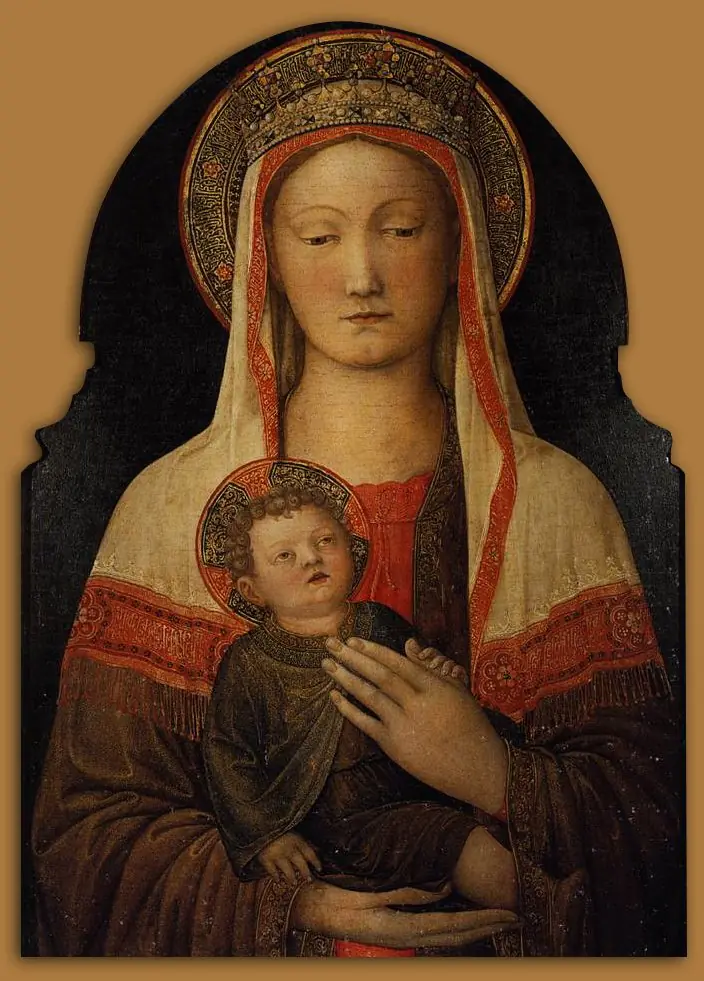
Madonna and Child is an oil painting by Master of Badia a Isola. It dates from 1300 and is held in the collection of the Rijksmuseum.
About this work
Subject & Meaning
The subject reflects the spiritual priorities of its era, emphasizing Mary's role as the Mother of God and the Christ Child as the savior of humanity.
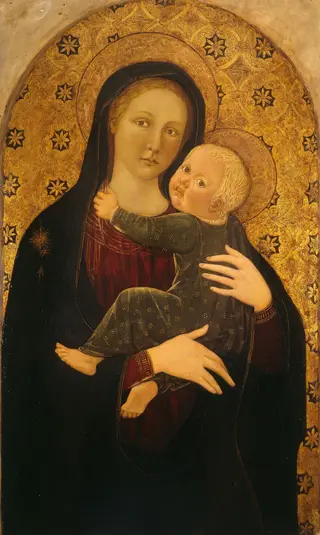
The painting depicts the Madonna and Child, a devotional subject central to late medieval religious art. The Virgin Mary is shown holding the Christ Child, a pairing that became one of the most enduring themes in Christian iconography, representing both maternal tenderness and the theological doctrine of the Incarnation. Such images functioned as objects of veneration, inviting the viewer to contemplate the humanity and divinity of Christ through the intimate bond with his mother.
As a work of Sienese religious painting from around 1300, the composition belongs to a tradition in which the Madonna and Child served as a focus for private devotion and as a visual expression of Marian piety. The subject reflects the spiritual priorities of its era, emphasizing Mary's role as the Mother of God and the Christ Child as the savior of humanity.
Technique & Style
Created by the Master of Badia a Isola around 1300, this religious painting depicts the Madonna and Child. The work is executed in tempera on a panel support, with some records indicating the presence of oil paint as well. Originating from Siena, the piece measures 40 cm in height and 41 cm in width.
The formal composition focuses on the depiction of Mary and the Christ Child within a traditional religious art genre.
History & Provenance
The painting was created around 1300 in Siena, executed in tempera on a wooden panel. Its provenance traces ownership from Johann Anton Ramboux and Gerard van Heukelum to the Museum Catharijneconvent, after which it entered the collection of the Rijksmuseum, where it is now housed.
The painting is held in the collection of the Museum Catharijneconvent in Utrecht, which also associates the work with the Rijksmuseum in Amsterdam. Its provenance includes ownership by Johann Anton Ramboux and Gerard van Heukelum before entering the museum's holdings. Created around the turn of the fourteenth century in Siena, the panel depicts the Madonna and Child using tempera and oil paint.
The provided sources do not list specific inventory numbers or detail any public exhibitions where the artwork has been displayed.
Context
The painting is recognized as an early example of the Madonna and Child motif within Sienese religious art, reflecting the devotional practices of 14th-century Italy. Its attribution to the Master of Badia a Isola situates it within the broader context of Italian Gothic painting, where such compositions were central to ecclesiastical use. Scholars have examined its stylistic elements, particularly the use of tempera on panel, to trace developments in devotional imagery during the late Middle Ages.
The work's presence in major collections, including the Rijksmuseum and Museum Catharijneconvent, underscores its significance in both art historical study and the preservation of early Italian religious painting.
Overview
Madonna and Child is a tempera painting created around 1300 by the Master of Badia a Isola, an Italian artist active in the late 13th to early 14th century. The work depicts the Virgin Mary holding the Christ Child against a textured gold background.
Own this work as a print
Artist & collection
Artist
The Master of Badia a Isola was an Italian painter. His name is taken from a depiction of the Madonna and Child that hangs in the Badia dei Santi Salvatore e Cirino in Abbadia a Isola, located near Monteriggioni, a…