Artwork
Madonna and Child
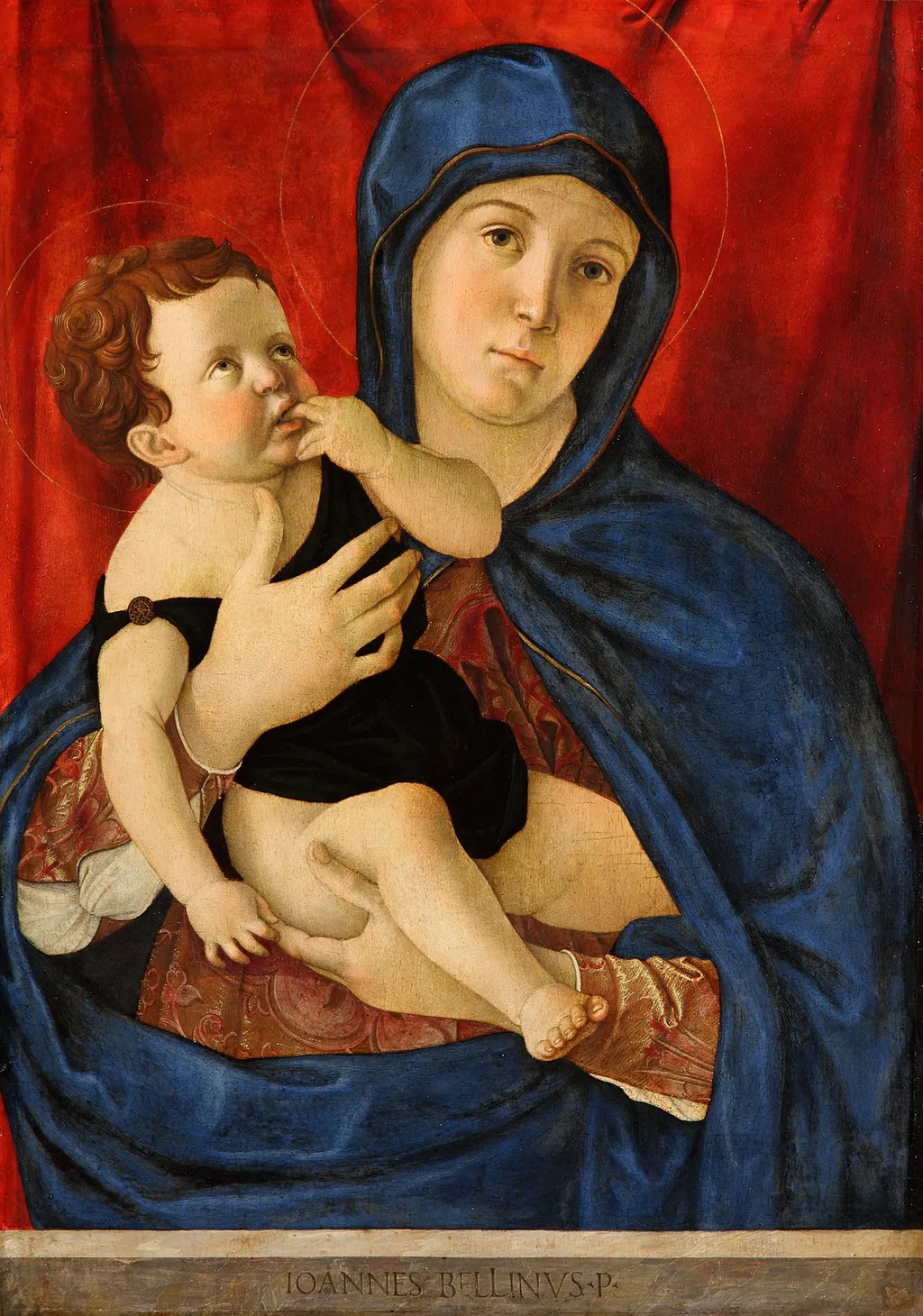
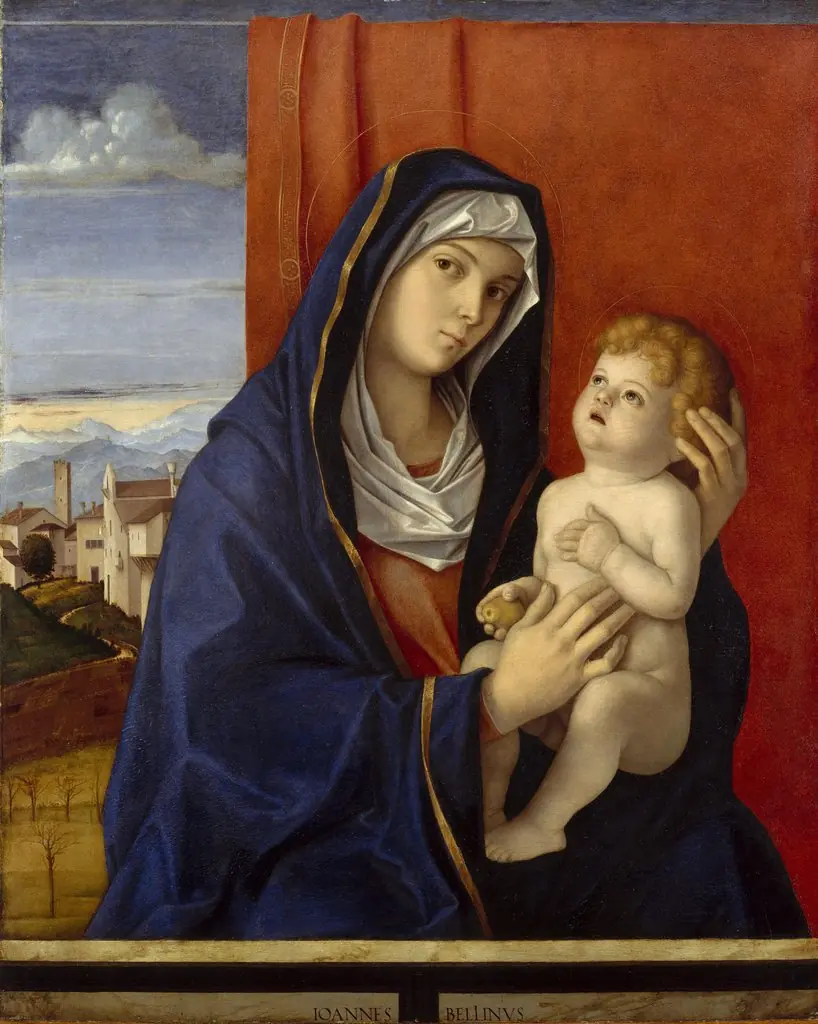
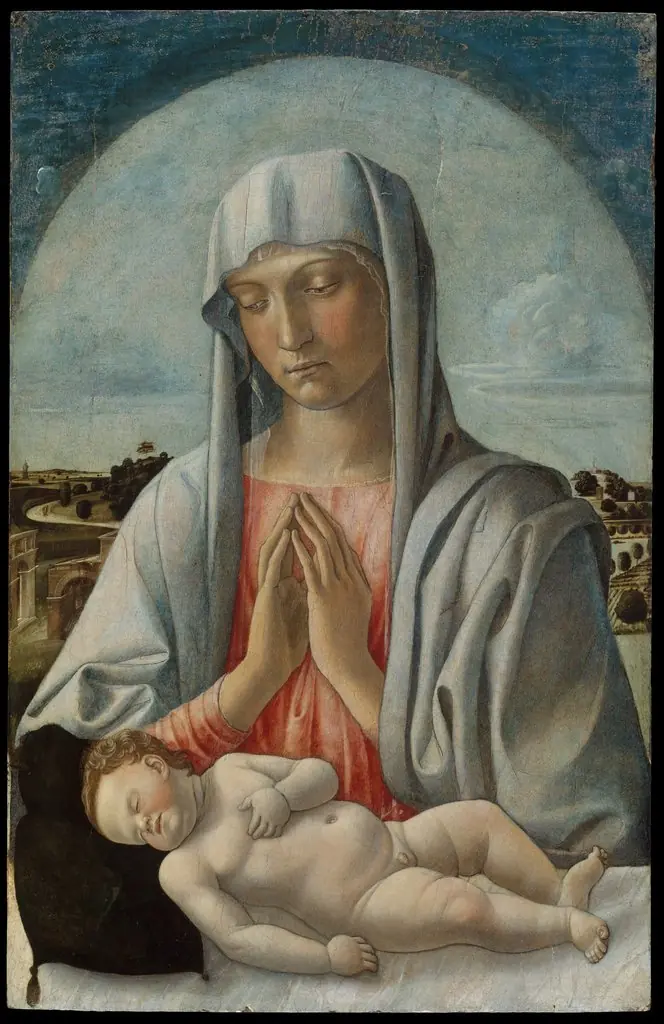
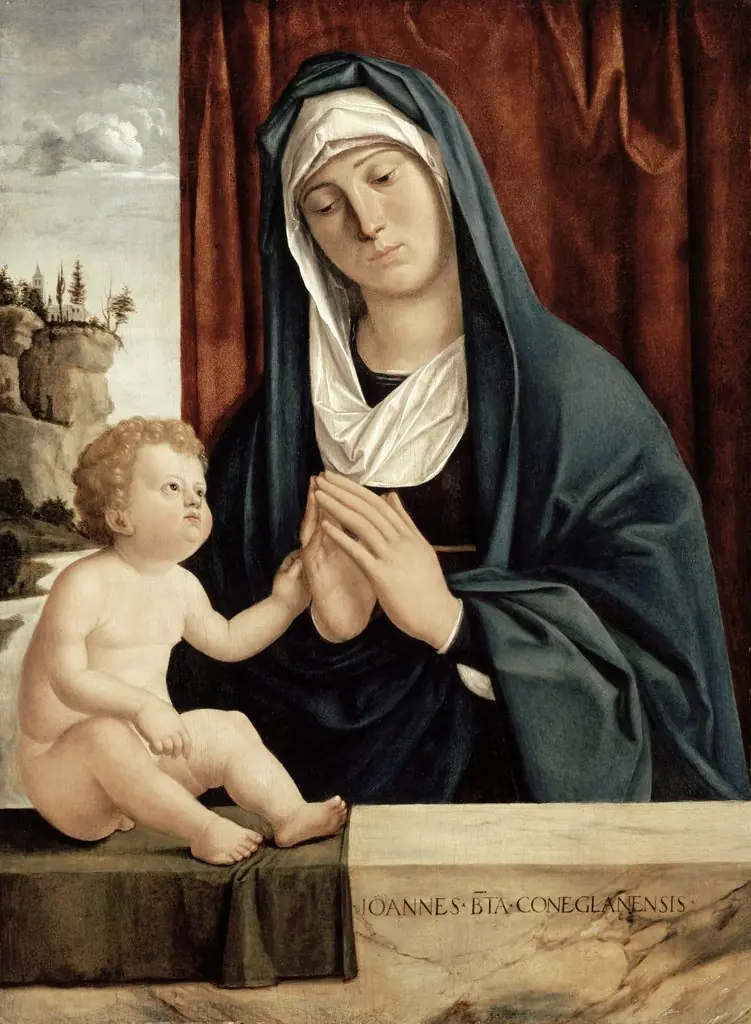
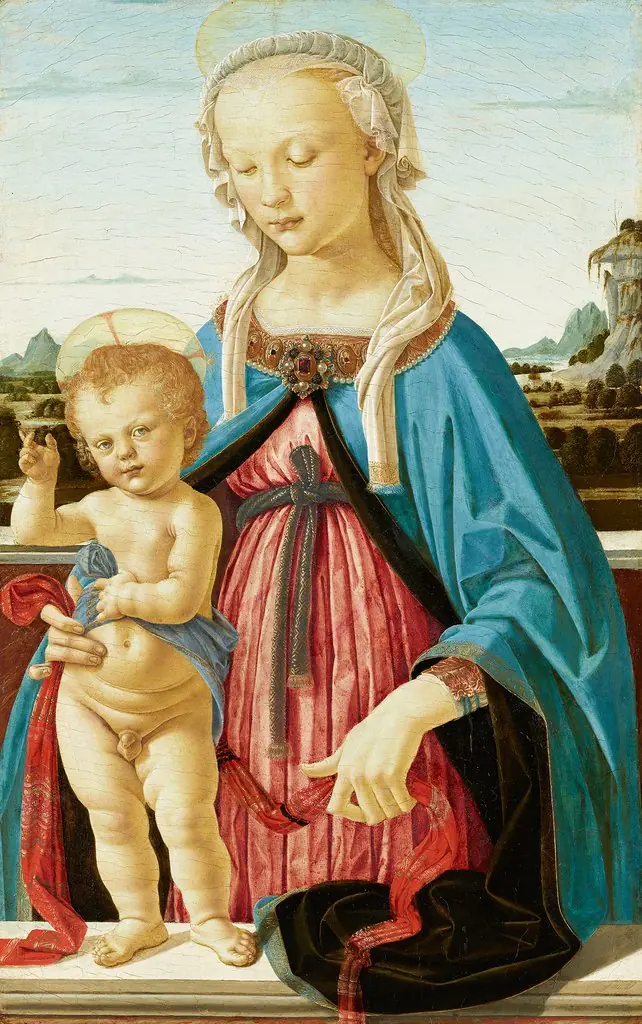
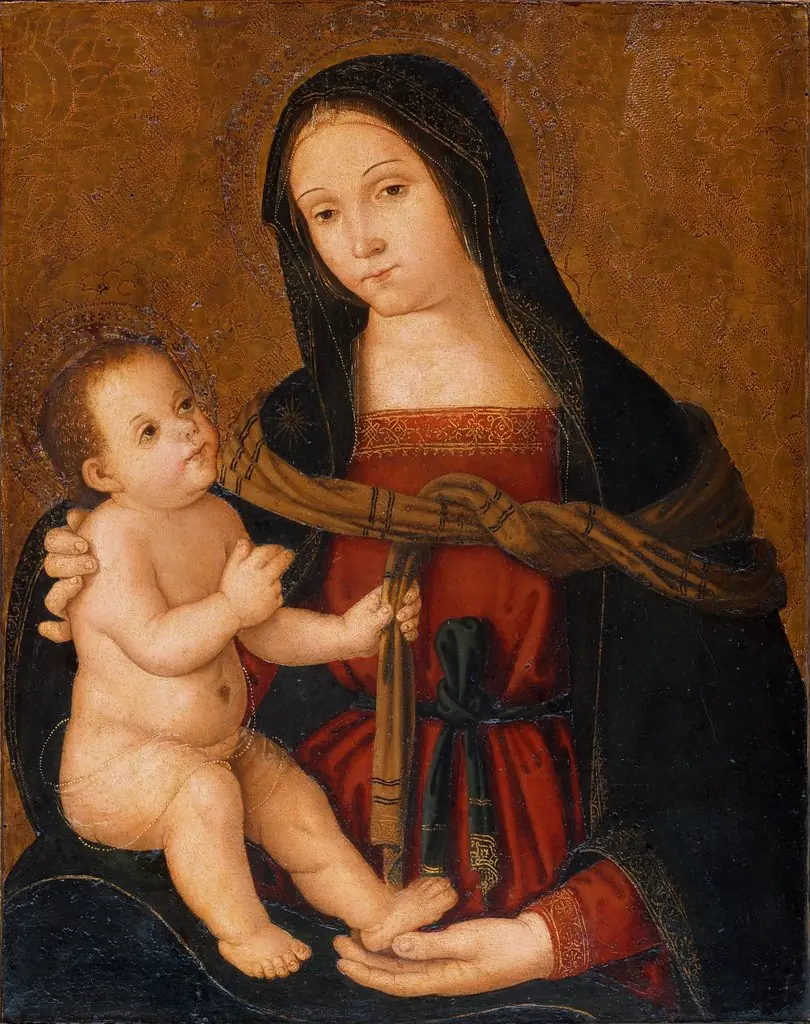
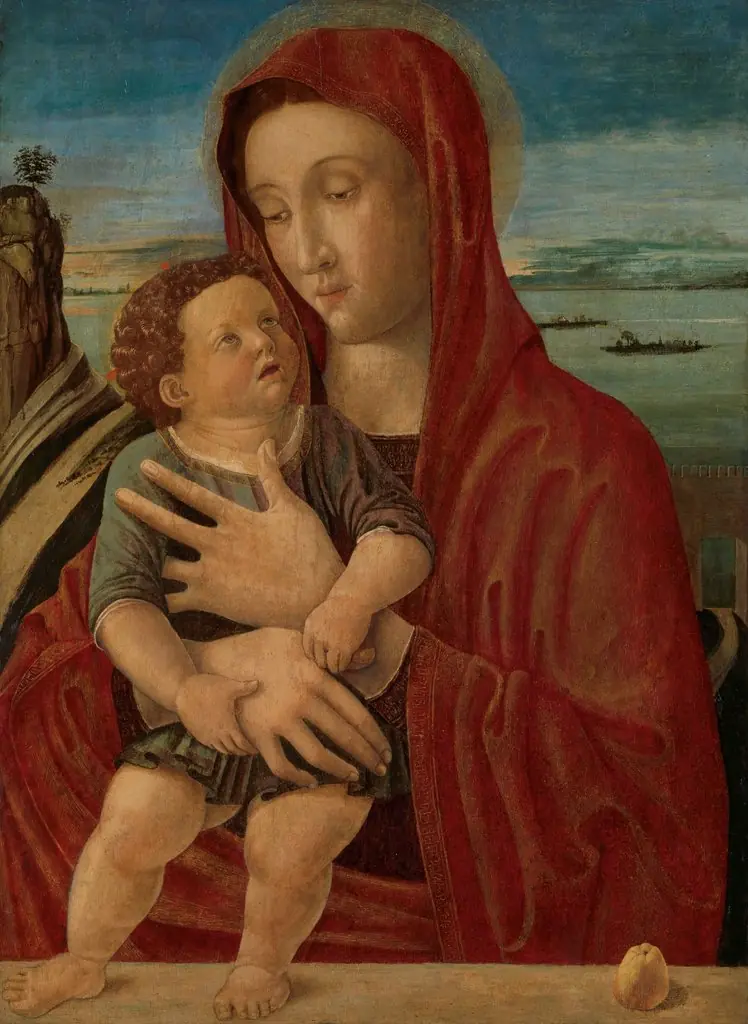
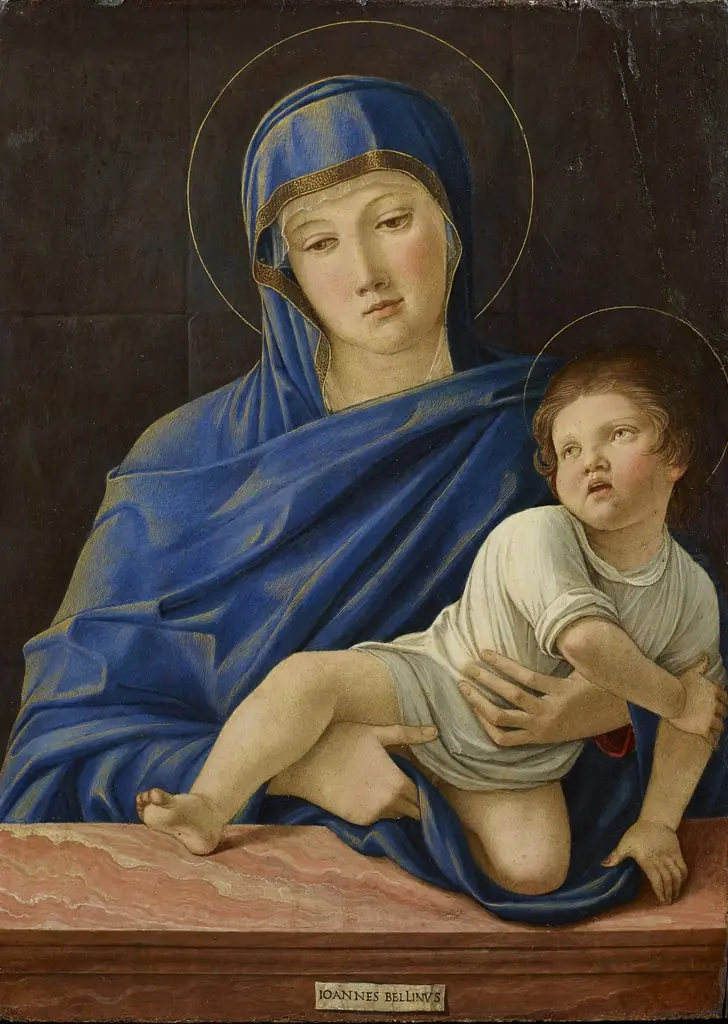
Madonna and Child is a paint painting by the Early Renaissance artist Giovanni Bellini. It dates from 1475 and is held in the collection of the Gemäldegalerie Berlin.
About this work
Overview
Madonna and Child is an oil-on-panel painting by Giovanni Bellini, the preeminent Venetian painter of the early Renaissance, executed circa 1480/1485.
Madonna and Child is an oil-on-panel painting by Giovanni Bellini, the preeminent Venetian painter of the early Renaissance, executed circa 1480/1485. The work measures 52.3 by 41.5 centimeters for the painted surface, with overall dimensions of 53.7 by 42.5 centimeters, and is held in the collection of the National Gallery of Art in Washington, D.C., where it is displayed in the West Building, Gallery M35. The painting exemplifies Bellini's mature ability to merge devotional solemnity with intimate human tenderness, representing a pivotal moment in the development of Venetian Renaissance art when the artist had fully transitioned from tempera to oil painting. Its polished finish, luminous color, and psychologically nuanced portrayal of the Virgin and Christ Child mark it as a significant work within Bellini's extensive corpus of Madonna paintings and within the broader tradition of Renaissance religious art.
Subject & Meaning
The painting depicts the Virgin Mary seated, holding the nude Christ Child on her lap against a flat red curtain backdrop. The Virgin wears a deep blue mantle over a red patterned gown, with a white sleeve visible at her left wrist, while her head is covered by the mantle that frames her face. The Christ Child, with curly brown hair, sits upright on her lap, his right hand raised to his mouth and his left hand resting near his thigh. Both figures bear thin golden halos. The Virgin's hands support the child: her right hand steadies his back while her left hand cups his left leg. The infant wears a dark cloth or swaddling band across his torso, fastened with a circular brooch. The composition adheres to traditional Christian iconography for the Madonna and Child, with the blue of the Virgin's mantle signifying her purity and the red suggesting love and sacrifice. The intimate, physically close positioning of mother and child emphasizes the humanity of the sacred figures and their maternal bond, a characteristic emphasis in Bellini's religious works that resonated deeply with contemporary viewers.
Technique & Style
The painting is executed in oil on panel, a medium Bellini had adopted several years prior to this work's creation, enabling the subtle gradations of color and tone that distinguish his mature style. The surface shows fine craquelure throughout, consistent with its age and medium. The modeling is smooth with soft transitions between light and shadow, particularly evident on the faces and limbs, demonstrating Bellini's mastery of the oil technique to achieve lifelike flesh tones. The blue mantle is rendered with deep folds and subtle highlights, contrasting with the uniform red background, while the overall finish is polished with meticulous attention to textile patterns. The handling of paint reflects the influence of Bellini's earlier training in tempera, refined through his adoption of oil glazes to create depth and luminosity. The painted stone ledge running along the bottom bears the inscription 'IOANNES BELLINVS P.', integrating the signature into the fictive architecture of the picture space in a manner characteristic of Venetian Renaissance practice.
History & Provenance
The painting's documented history begins with Niccolò d'Attimis, Conte Maniago, of Spilimbergo near Udine in Friuli. It was purchased in 1916 by Duveen Brothers, Inc., of London and New York. The name 'Olivotti' is recorded next to the date and amount of the purchase, possibly indicating an agent for the transaction. By 1920, the painting was on approval to Carl W. Hamilton of New York, though he did not purchase it and returned it to Duveen in 1921. In 1937, Duveen Brothers sold it to the Samuel H. Kress Foundation of New York, as confirmed by a dealer's letter dated 9 March 1937. The Samuel H. Kress Foundation gifted the painting to the National Gallery of Art in 1939, where it entered the collection with accession number 1939.1.352. The work has been exhibited publicly on several occasions, including at the Duveen Brothers' Loan Exhibition of Important Early Italian Paintings in the Possession of Notable American Collectors in New York in 1924; the Exhibition of Italian Renaissance Art at the Wadsworth Atheneum and Morgan Memorial in Hartford in 1932; and Byzantium: Faith and Power (1261-1557) at The Metropolitan Museum of Art in New York in 2004, where it was shown as 'Icon of the Virgin and Child.'
Context
Giovanni Bellini, born circa 1424/26 and active until his death in 1516, is widely regarded as the father of Venetian painting and the foremost artist of the early Renaissance in Venice. His career spanned the transition from the Gothic style to the Renaissance, and he played a pivotal role in establishing the distinctive Venetian approach to color and light. Bellini was influenced by earlier masters including Andrea Mantegna, his brother-in-law, and by the Byzantine tradition that remained strong in Venice, yet he developed a unique synthesis that combined realism with spiritual depth. The dating of this Madonna and Child to circa 1480/1485 places it in Bellini's mature period, following his complete adoption of oil paint and during the years when he was producing some of his most psychologically penetrating religious works. Scholarship on the painting is documented in major catalogues, including Miklós Boskovits and David Alan Brown's Italian Paintings of the Fifteenth Century (2003) and Mauro Lucco, Peter Humfrey, and Giovanni C.F. Villa's Giovanni Bellini: Catalogo ragionato (2019), where it is catalogued as number 76. The work's attribution to Bellini has remained stable in the scholarly literature, and it is recognized as an important example of his Madonna compositions from this productive decade.
Legacy
Bellini's Madonna and Child paintings, including this work, exercised profound influence on subsequent generations of Venetian painters. His approach to color, light, and the humanization of sacred subjects established paradigms that were developed by his pupils and followers, including Giorgione and Titian, and through them shaped the entire course of Venetian Renaissance painting. The emotional accessibility and chromatic richness of his devotional images helped define the Venetian contribution to Renaissance art, distinct from the more line-oriented Florentine tradition. Within Bellini's own oeuvre, this painting represents the sustained exploration of the Madonna and Child theme that occupied him throughout his long career, from early works influenced by Mantegna through to late compositions that responded to innovations by his own former pupils. The painting's presence in the National Gallery of Art, one of the most visited museums in the world, ensures its continued exposure to broad public audiences and its role in shaping understanding of Venetian Renaissance art for contemporary viewers. Its inclusion in scholarly catalogues and exhibition histories confirms its established place in the canon of Bellini's authenticated works.
Own this work as a print
Artist & collection

Artist
Giovanni Bellini (Italian: ; Venetian: Zuane Belin; c. 1430 – 29 December 1516) was an Italian Renaissance painter, probably the best known of the Bellini family of Venetian painters. He was raised in the household of…