Artwork
Madonna and Child
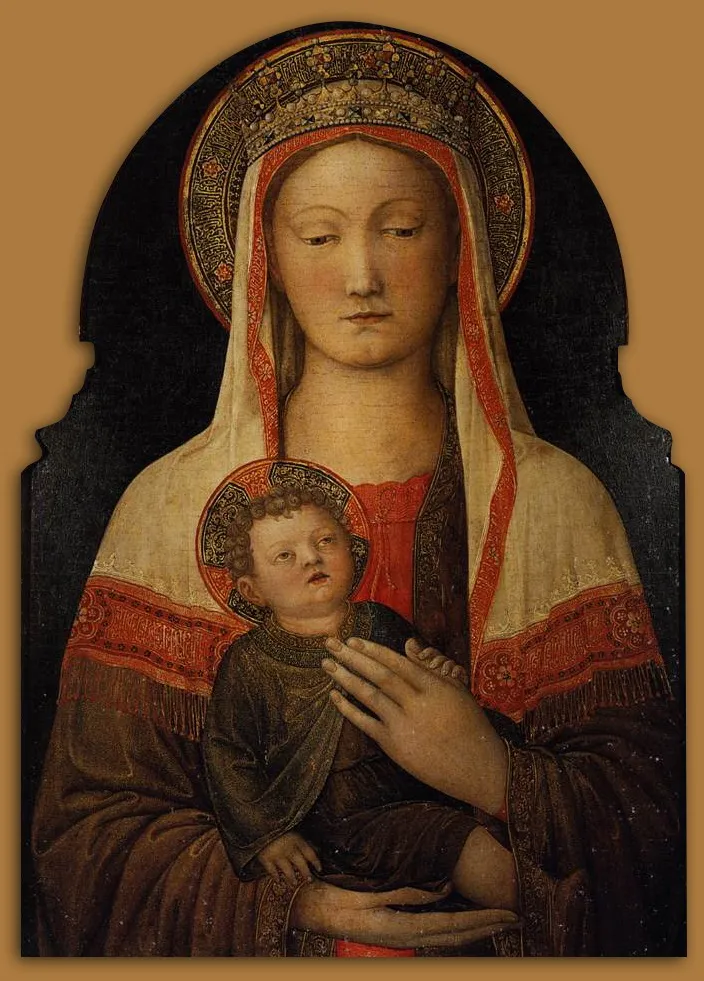
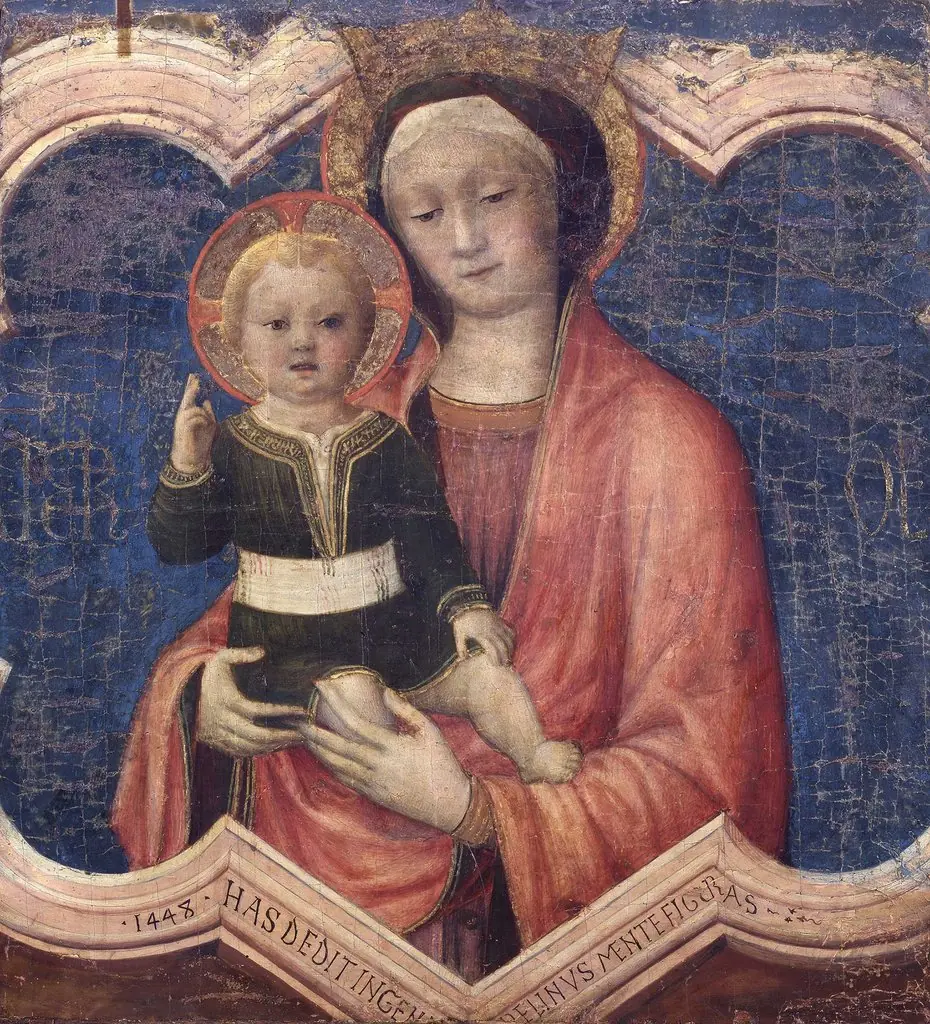
Madonna and Child is a tempera painting by the Early Renaissance artist Jacopo Bellini. It dates from 1450 and is held in the collection of the Uffizi Gallery.
About this work
Subject & Meaning
The work depicts the Virgin Mary holding the Christ Child, a central subject in religious art representing the Incarnation.
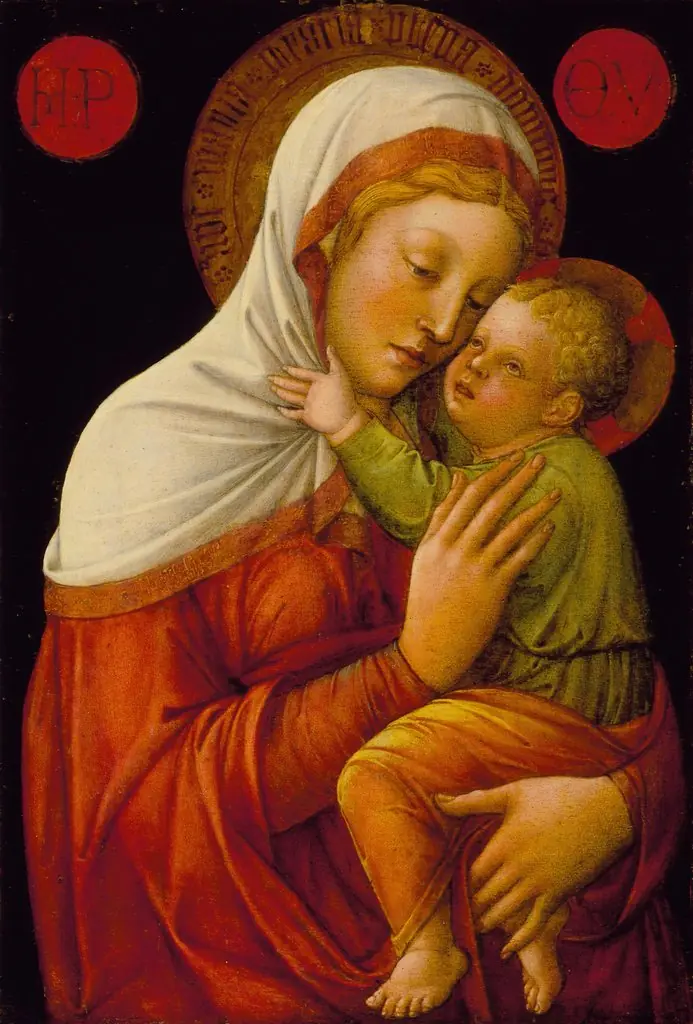
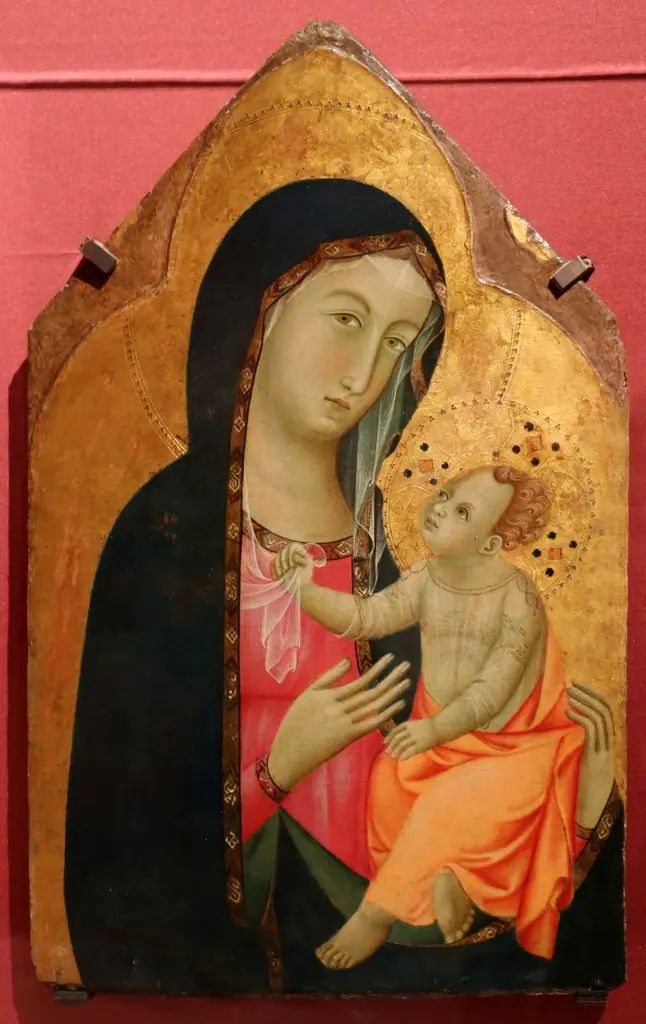
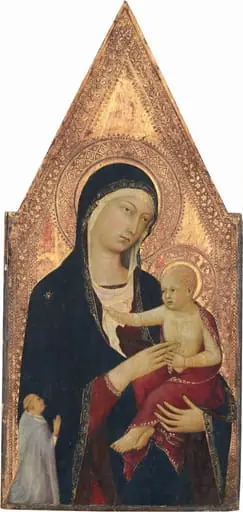
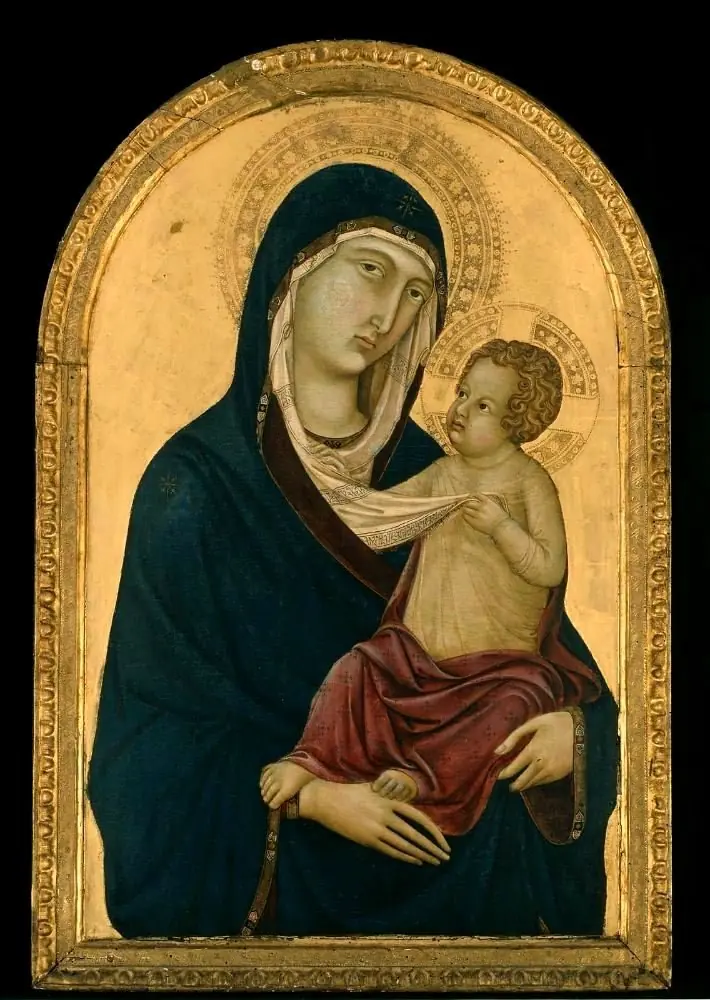
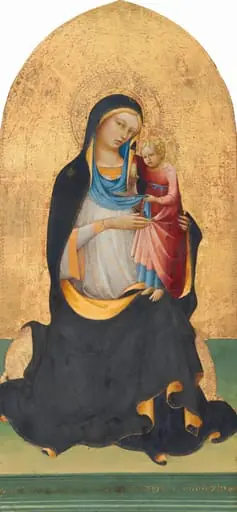
The work depicts the Virgin Mary holding the Christ Child, a central subject in religious art representing the Incarnation. Mary is shown from the bust, emerging from a dark background to present the infant toward the viewer's contemplation. Iconographic details include a crown and a calligraphic aureola, reflecting the Byzantine tradition of the Venetian lagoon. The composition is framed to suggest a view through a window, with the figures rendered in a solid, monumental style using soft chiaroscuro to achieve Renaissance solidity. Specific symbolic elements include the Child leaning forward to seek his mother and a foot emerging from her mantle, which demonstrates an early attempt at perspective. The meticulous rendering of embroidered vestments and fringe further emphasizes the sacred nature of the figures.
Technique & Style
Executed in 1450, this work is a tempera painting on a wooden panel measuring 69 by 49 cm. The composition features a half-length Madonna emerging from a dark background, holding the Christ Child as if offering him to the viewer. The painting's format and framing evoke the illusion of a view through a window, a device reflecting Flemish artistic influence. Stylistically, the piece demonstrates a shift toward Renaissance solidity and monumentality, achieved through simplified contours and soft chiaroscuro transitions. An early attempt at perspective is visible in the Child's foot protruding beneath the Virgin's mantle. While adopting these modern volumetric approaches, the artist retains Byzantine traditions in the meticulous detailing of the crown, the calligraphic halo, and the individually painted fringes on the embroidered garment borders.
History & Provenance
The painting is dated to circa 1450 and executed in tempera on panel (sources 1, 2, 3, 4). It remained for centuries in a monastery in the Lucca region before being noticed by the antiquarian Costantini; in 1906 Corrado Ricci acquired it for the Uffizi Gallery, a purchase that sparked considerable press debate (sources 3, 4). The work belongs to Jacopo Bellini’s Renaissance phase, reflecting the influence of Masolino da Panicale, which Bellini assimilated through Antonio Vivarini (source 3).
The painting is held in the Uffizi Gallery in Florence. It was acquired for the museum in 1906 by Corrado Ricci from a monastery in Lucca, having been identified by the antiquarian Costantini. The sale generated considerable controversy in the press at the time. No specific exhibition history is recorded in the available sources.
Context
The Madonna and Child belongs to Jacopo Bellini's Renaissance phase, a period of stylistic renewal shaped by his engagement with contemporary innovations. The work reflects the influence of Masolino da Panicale, who was active in Lucca from 1435 to 1440, a contact Bellini absorbed through Antonio Vivarini. The composition's framing, which suggests a view through a window, anticipates a similar treatment in a related panel now in the Gallerie dell'Accademia, where Bellini introduced an actual parapet in keeping with Flemish developments. Within the panel, Bellini's effort to modernize is visible in simplified contours, a more monumental figure, and soft chiaroscuro transitions, alongside a tentative use of perspective in the Christ Child's foot emerging beneath the Virgin's mantle. The careful detailing of the crown, calligraphic halo, and individually painted embroidered fringes preserves the Byzantine tradition of the Venetian lagoon. The painting's acquisition by the Uffizi in 1906 by Corrado Ricci, after being spotted at the antiquarian Costantini's premises, prompted public controversy in the press.
The work is catalogued by Gloria Fossi in the Uffizi guide published by Giunti in 2004.
Artist & collection

Artist
Jacopo Bellini (c. 1400 – c. 1470) was one of the founders of the Renaissance style of painting in Venice and northern Italy. His sons Gentile and Giovanni Bellini, and his son-in-law Andrea Mantegna, were also famous…