Artwork
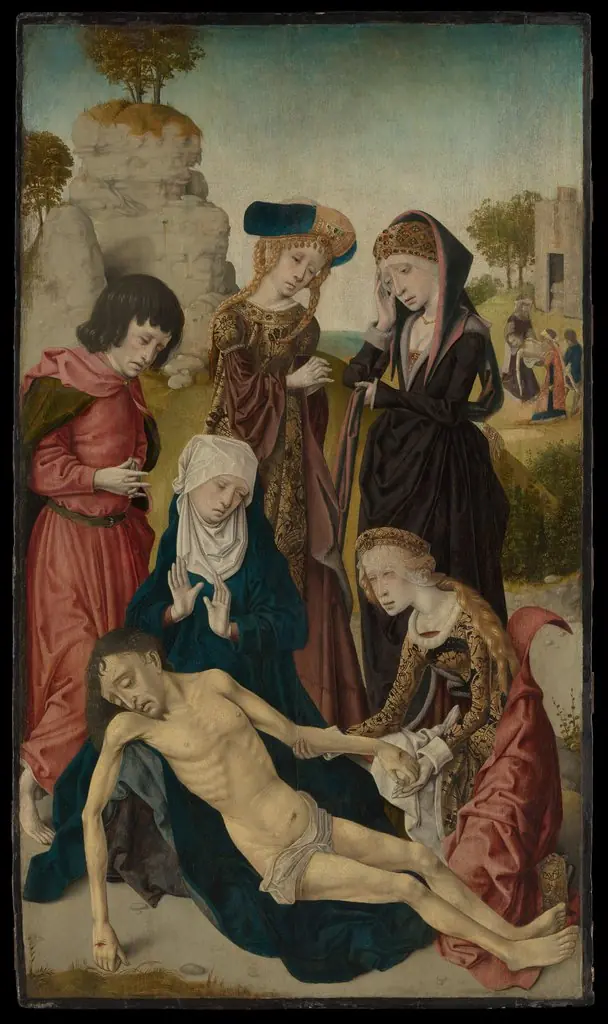
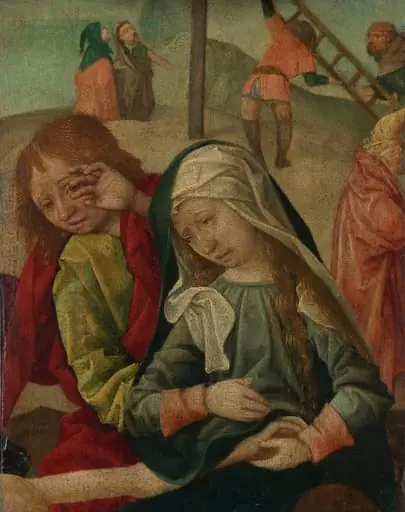
The Virgin and St John lamenting over the body of Christ
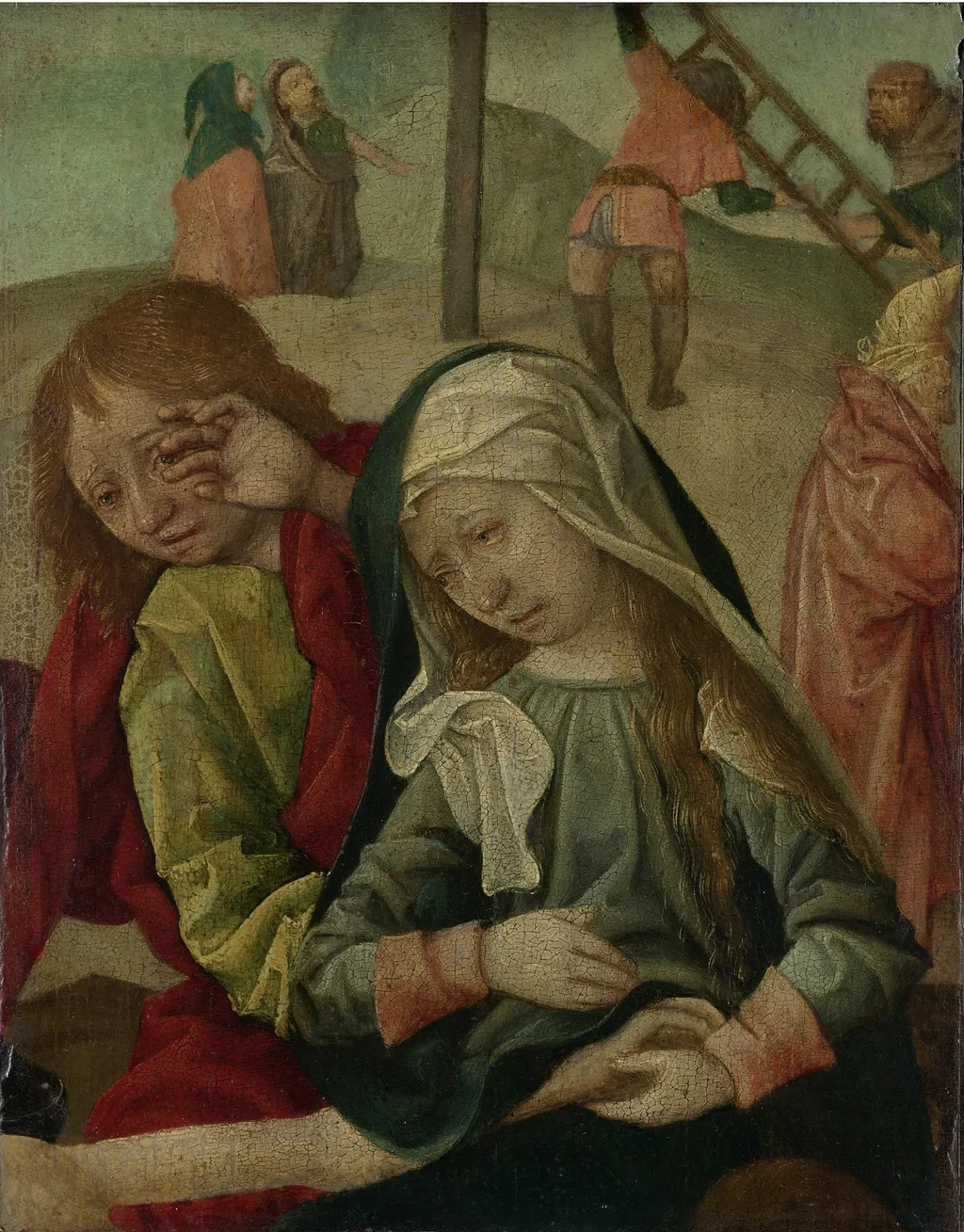
The Virgin and St John lamenting over the body of Christ is an oil painting by the Northern Renaissance artist Master of Delft. It dates from 1505 and is held in the collection of the Rijksmuseum.
About this work
Subject & Meaning
This subject draws on traditional iconography of the Pietà, emphasizing themes of sacrifice, mourning, and divine humanity within Catholic devotional practice.
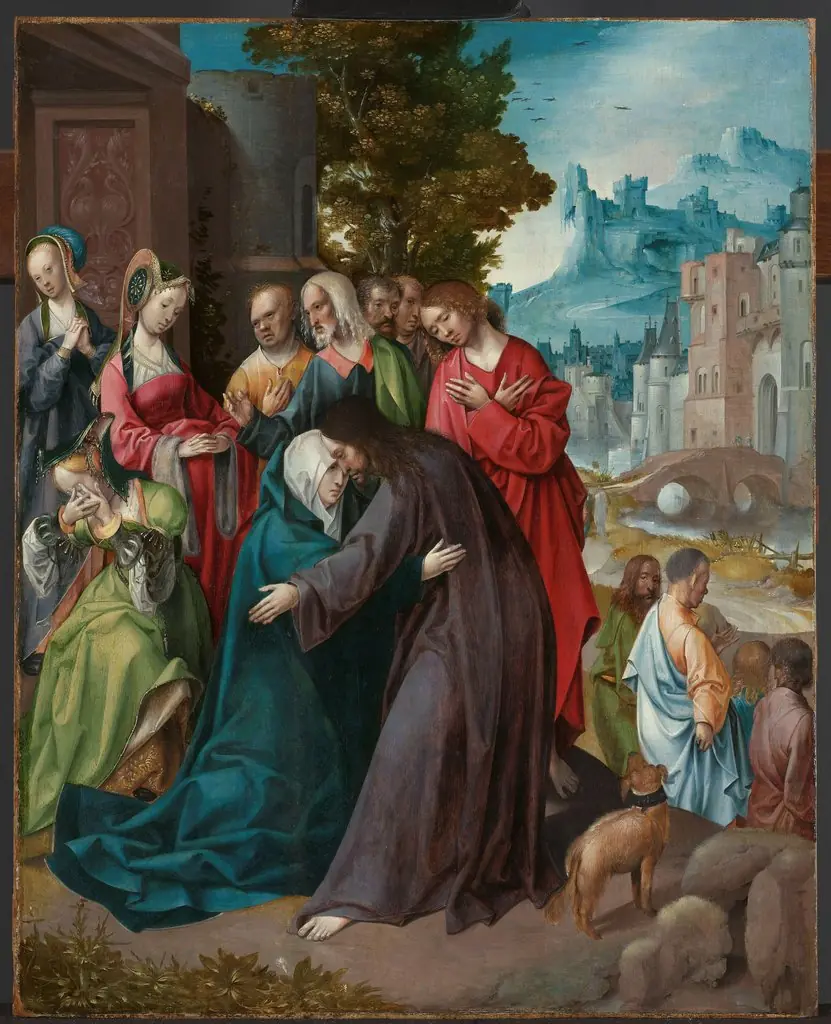
The composition portrays the Virgin Mary cradling the lifeless body of Jesus, while Saint John kneels beside them in grief, embodying the moment of Christ's deposition after the crucifixion. This subject draws on traditional iconography of the Pietà, emphasizing themes of sacrifice, mourning, and divine humanity within Catholic devotional practice. The work reflects late medieval religious art, where emotional intensity and symbolic gestures conveyed theological narratives of redemption and compassion.
Technique & Style
Executed in 1505 by the Master of Delft, this religious painting utilizes oil paint applied to a wooden panel support. The work measures 23.7 cm in height and 17.9 cm in width, indicating a small-scale format suitable for private devotion. Stylistically, the composition focuses on the figures of the Virgin Mary and John the Evangelist lamenting over the body of Christ, adhering to traditional iconography for this genre.
The application of oil on panel allows for the detailed rendering characteristic of Netherlandish art from this period, though specific details regarding the current condition or handling history of the object are not provided in the available records.
History & Provenance
The work is held in the Rijksmuseum collection under inventory number SK-C-5. Exhibition history includes its display in the Rijksmuseum exhibition 'Early Netherlandish Painting' in 1953 and again in the 1975 exhibition 'Religious Art of the Netherlands' at the same institution.
Overview
Created in 1505, this oil on panel is attributed to the anonymous Dutch painter known as the Master of Delft. Executed during the late phase of the Early Netherlandish period, the work is part of the Northern Renaissance canon and is presently displayed in the Rijksmuseum’s collection.
Context
The painting reflects the devotional practices of its time, focusing on personal piety and the emotional response to Christ’s death. Its intimate scale and focus on the Virgin and John align with contemporary Northern European trends that favored private contemplation over grandiose public altarpieces.
Own this work as a print
Artist & collection
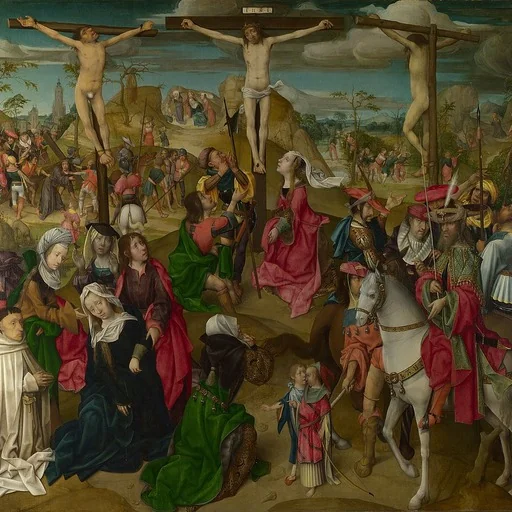
Artist
The Master of Delft (fl c. 1490–1520) was a Dutch painter of the final period of Early Netherlandish painting, whose name is unknown. He may have been born around 1470. The notname was first used in 1913 by Max Jakob…