Artwork
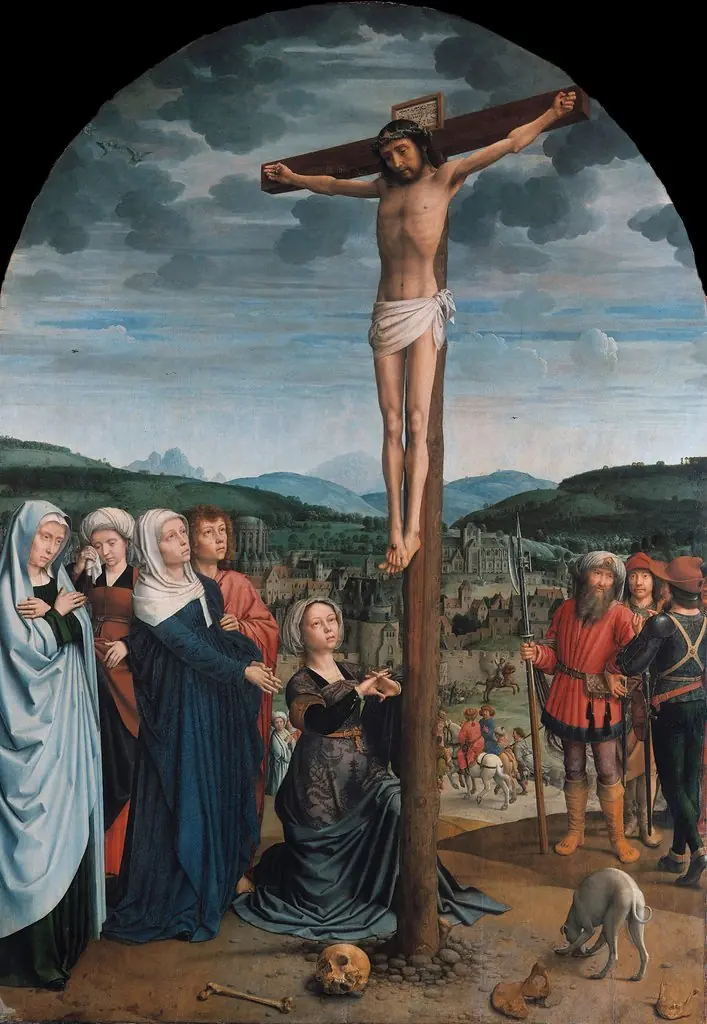
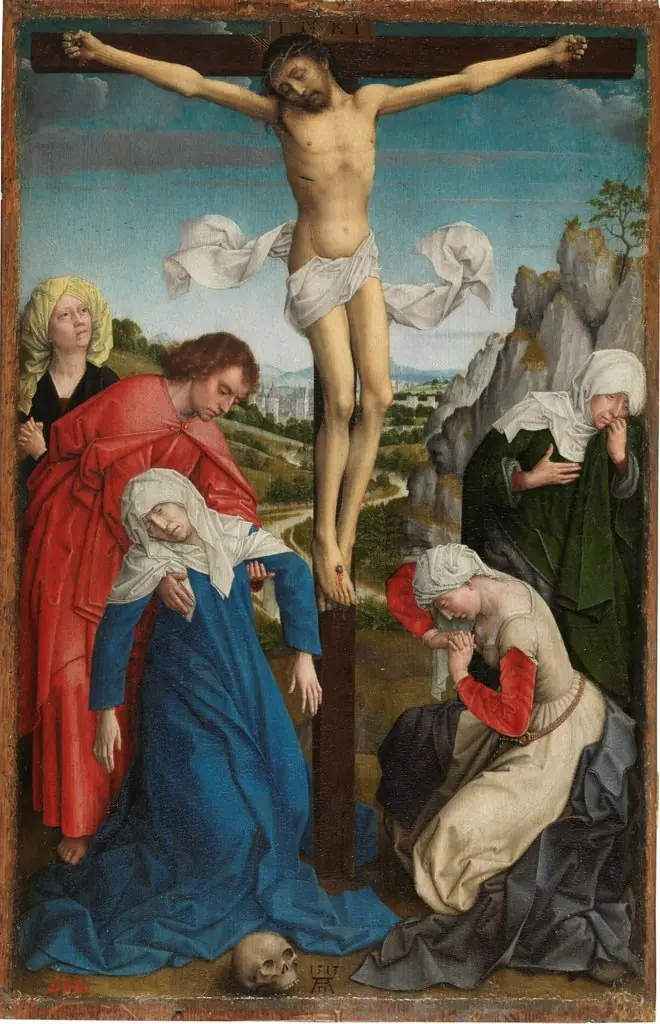
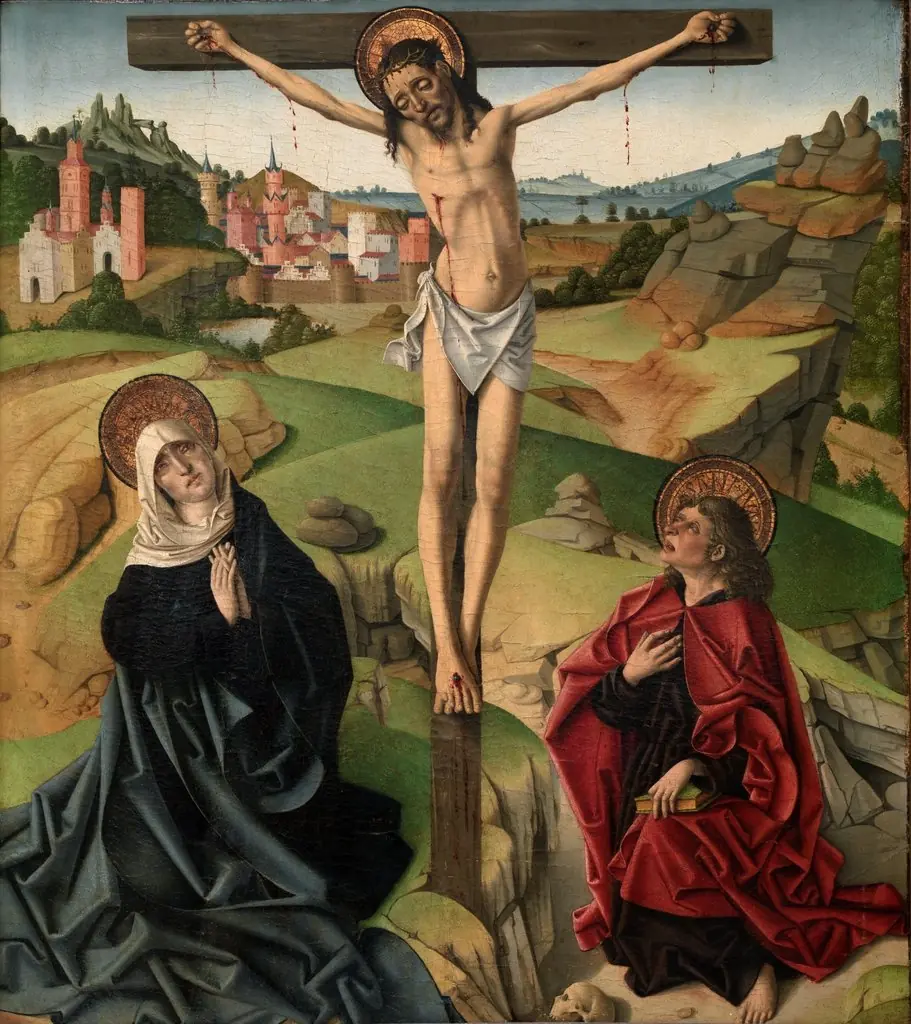
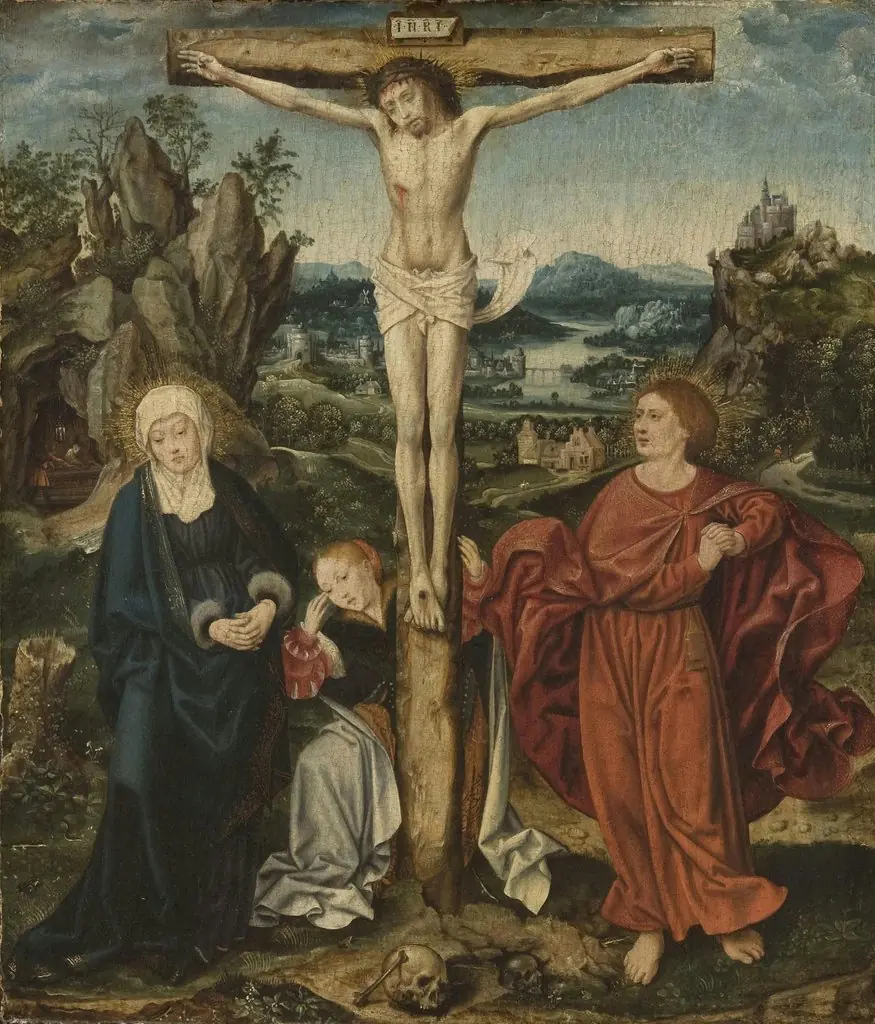
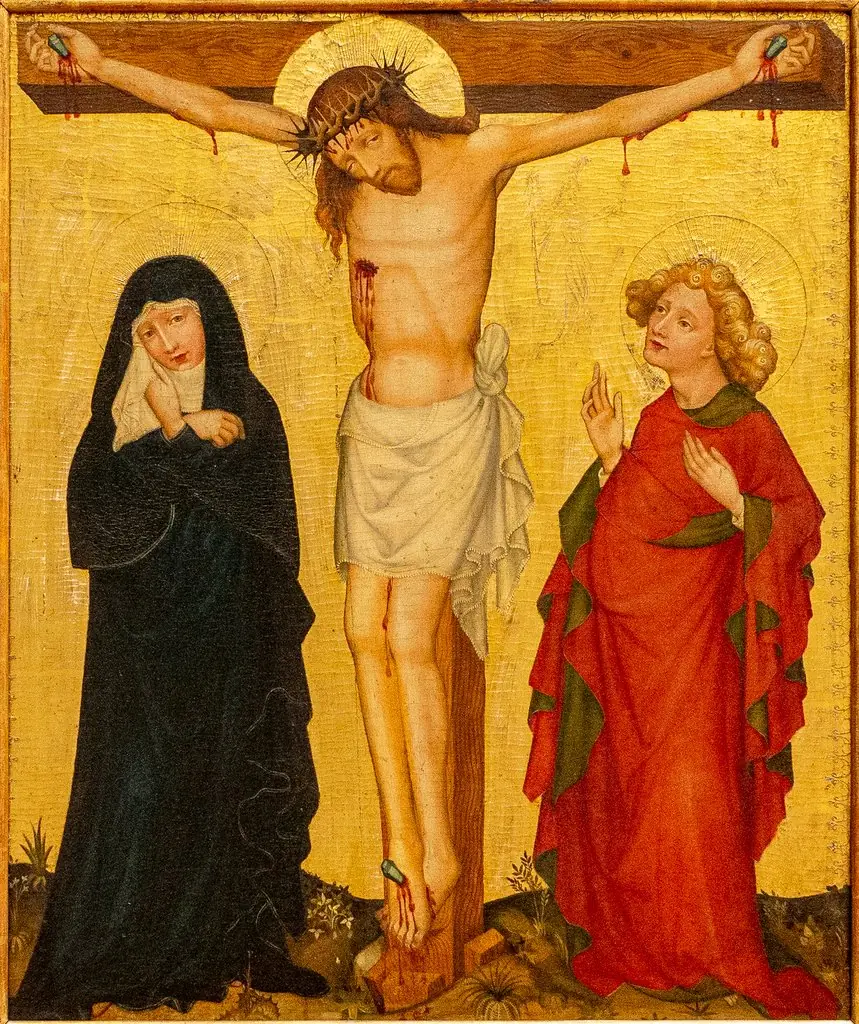
Christ on the Cross with the Virgin and Saint John
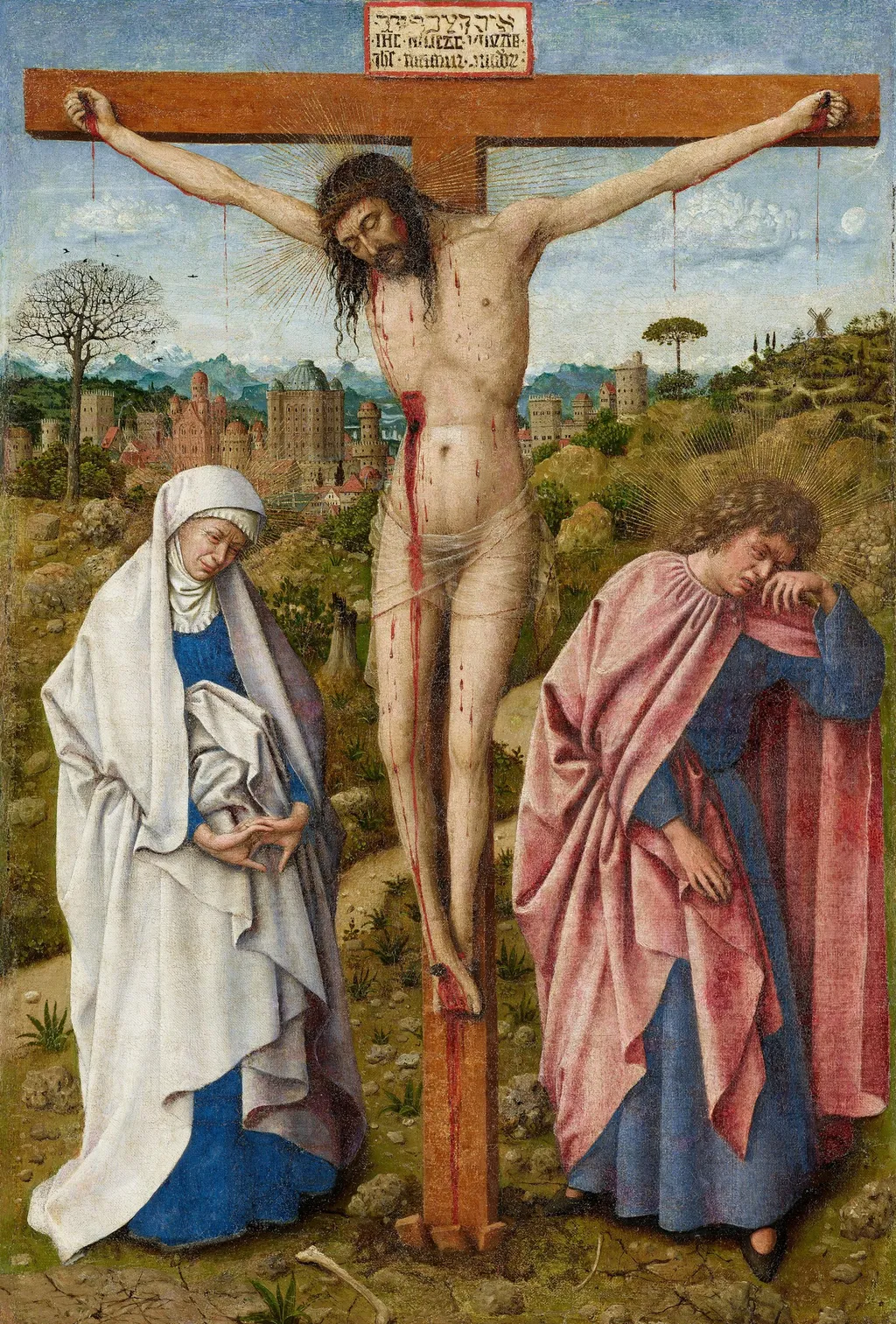
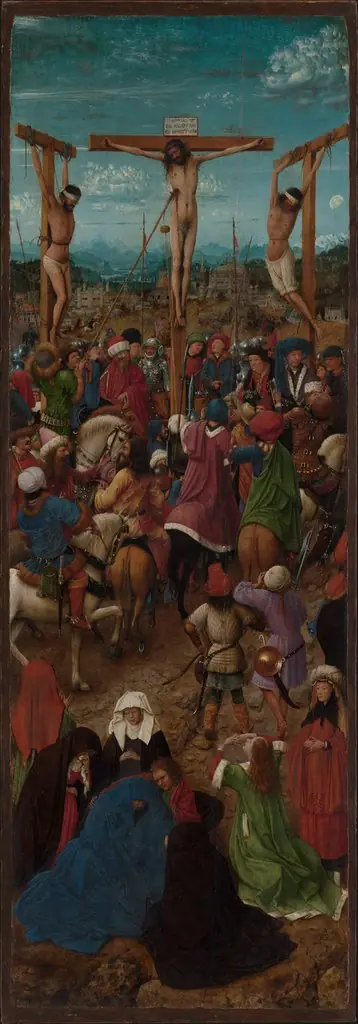
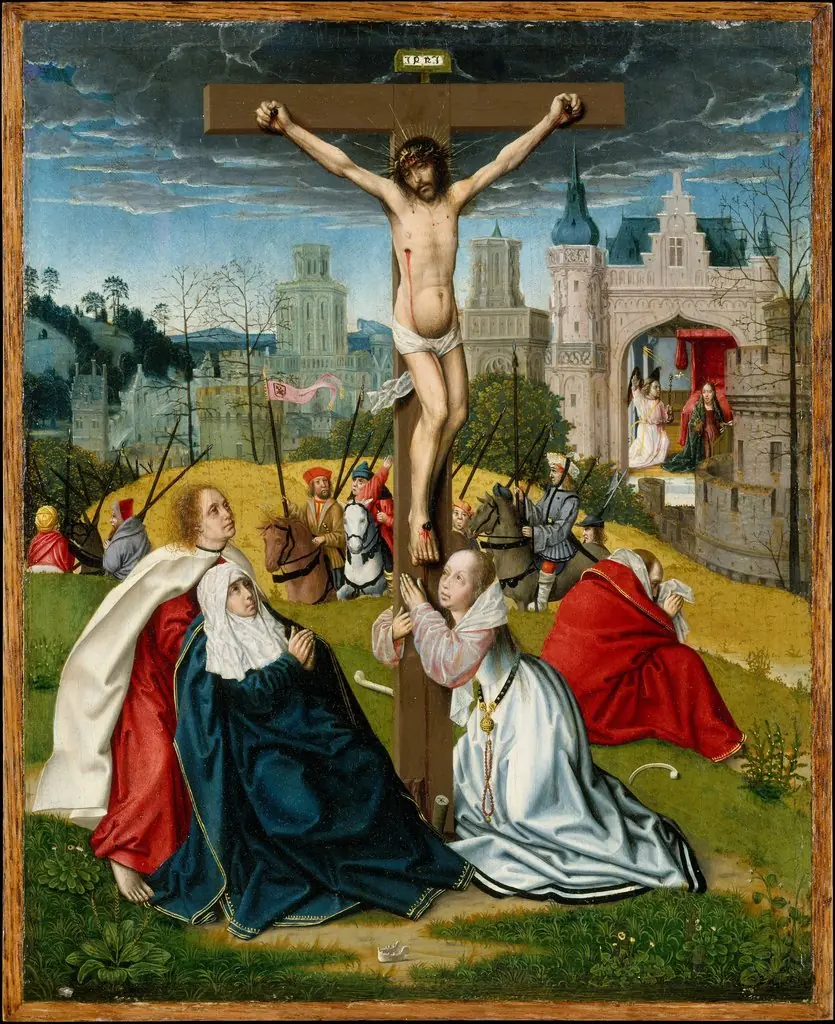
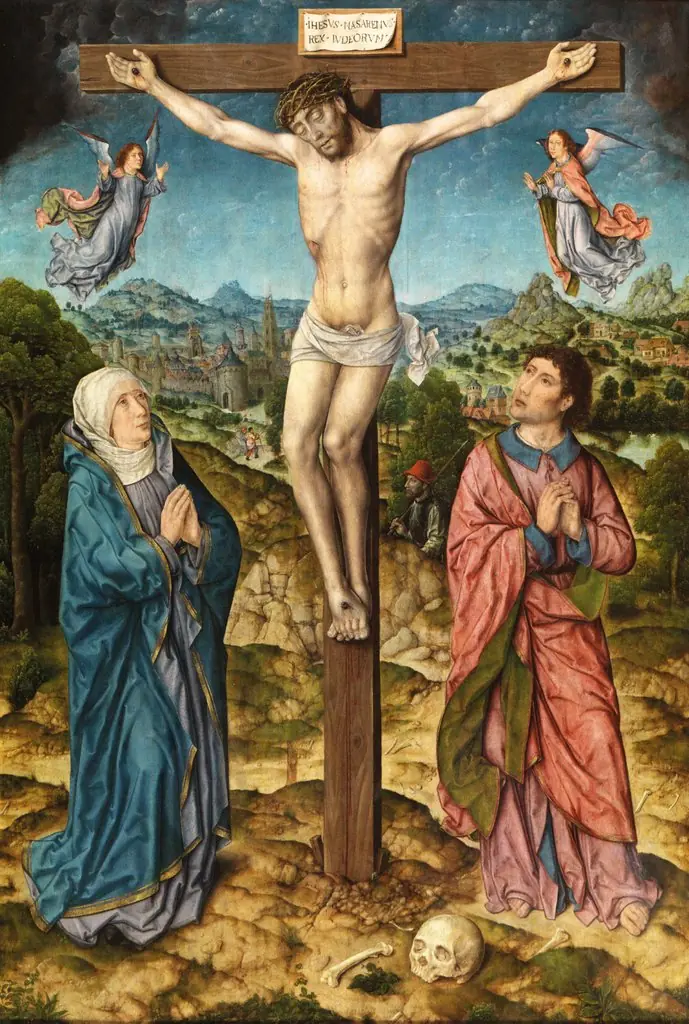
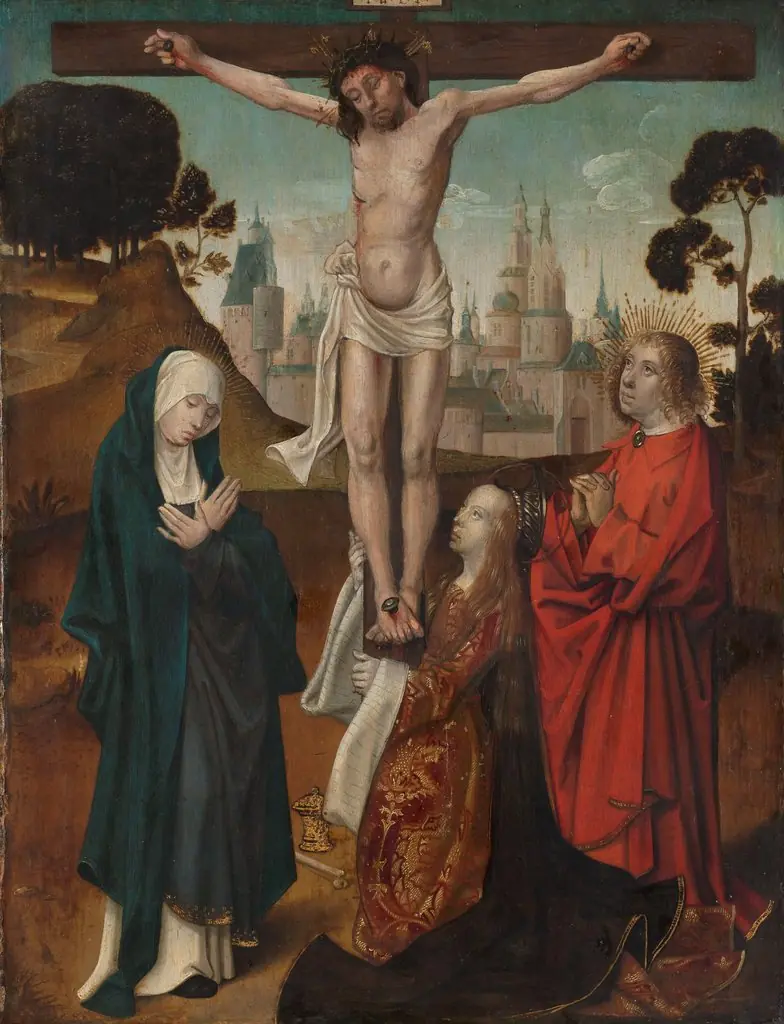
Christ on the Cross with the Virgin and Saint John is an oil painting by the Northern Renaissance artist Jan van Eyck. It dates from 1430 and is held in the collection of the Bode Museum.
About this work
Subject & Meaning
This composition represents a standard religious subject within Early Netherlandish painting, focusing on the moment of Christ's death on the cross.
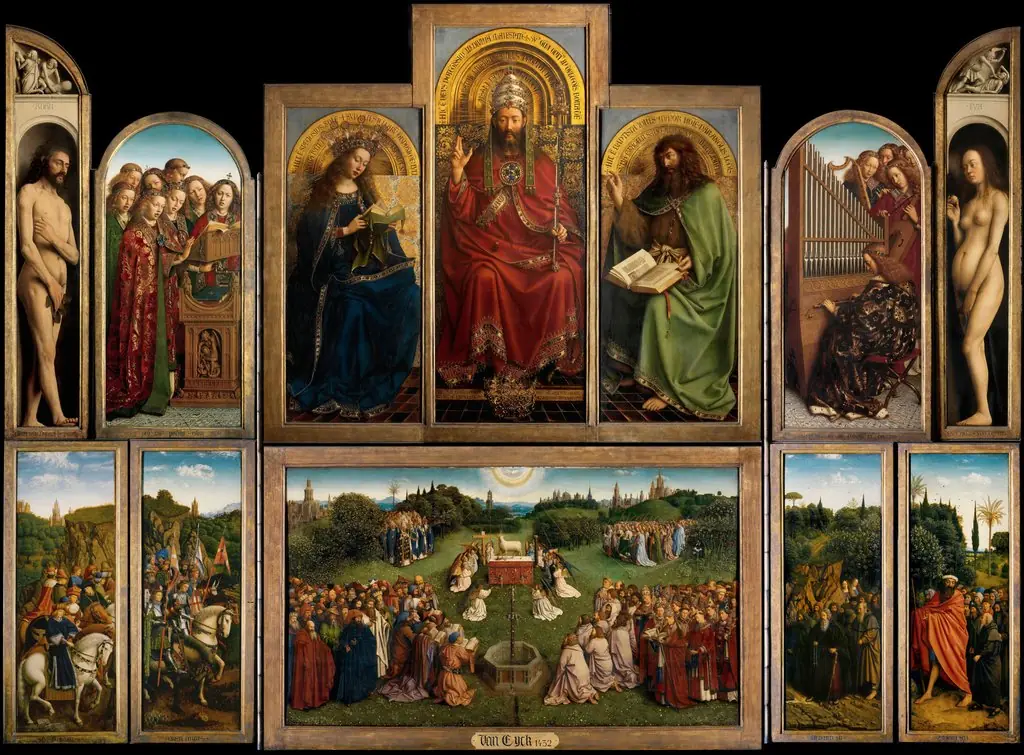
The work depicts the Crucifixion of Jesus Christ, flanked by the Virgin Mary and John the Apostle. This composition represents a standard religious subject within Early Netherlandish painting, focusing on the moment of Christ's death on the cross. While the piece was historically attributed to Hubert van Eyck due to stylistic parallels with the Ghent Altarpiece, it is now associated with the Master of the Grimacing St John, a senior member of Jan van Eyck's workshop.
The identification of this anonymous artist relies on specific stylistic markers found in other works, such as a grisaille diptych featuring an imitation stone statue. The painting serves as a devotional image centered on the central figures of the Passion narrative.
Technique & Style
The work is an oil painting executed on a wooden panel, which was subsequently transferred to canvas. Measuring 43 cm in height and 26 cm in width, the piece exemplifies the Early Netherlandish style through its religious depiction of the crucifixion. Stylistically, the handling of the figures reflects the hand of the Master of the Grimacing St John, a senior assistant in Jan van Eyck's workshop.
This attribution is supported by specific formal qualities, including the imitation of a stone statue rendered in grisaille, a technique also found in a diptych wing panel of St. John the Baptist. These stylistic markers distinguish the work from earlier attributions to Hubert van Eyck, which were based on similarities to the Ghent Altarpiece.
History & Provenance
Christ on the Cross with the Virgin and Saint John is dated to circa 1430, aligning with the period of Jan van Eyck’s workshop activity. The painting entered the collection of the Kaiser Friedrich Museumsverein (KFMV) before 1897, and has been held by the Gemäldegalerie, Berlin, since that year. It was transferred from panel to canvas at an unknown date prior to its inclusion in the museum’s holdings.
Long attributed to Jan van Eyck or his brother Hubert, the work is now associated with the anonymous Master of the Grimacing St John, a senior assistant in van Eyck’s workshop whose hand has been identified across multiple works.
Context
The painting’s critical reception has long been shaped by its contested attribution and stylistic ties to Jan van Eyck’s workshop. Initially linked to Hubert van Eyck due to similarities with the Ghent Altarpiece, it was later assigned to the Master of the Grimacing St John, an identified senior assistant whose hand appears across multiple works. This figure’s distinctive style, visible in grisaille panels and drawings, established a recognized oeuvre, distinguishing his contributions from van Eyck’s own hand.
Within the broader context of Early Netherlandish painting, the panel exemplifies the workshop’s collaborative practice, where specialized assistants executed devotional panels while adhering to the master’s innovations in oil technique and naturalistic detail. Its presence in the Berlin Gemäldegalerie since 1897 reflects sustained institutional recognition of its cultural significance within Netherlandish religious art.
Legacy
The painting's reputation has evolved significantly through shifting attributions, moving from a long-standing association with Hubert van Eyck to its current identification with the Master of the Grimacing St John. This reclassification relies on stylistic parallels to the Ghent Altarpiece and the identification of the Master as one of the few assistants in Jan van Eyck's workshop whose hand is distinguishable across multiple works. The Master's notname derives from a specific grisaille depiction of St. John the Baptist, further linking this small panel to a broader, identifiable corpus within the Early Netherlandish tradition.
Since its acquisition by the Gemäldegalerie in Berlin in 1897, the work has served as a key example for analyzing the contributions of senior workshop members distinct from the master's own hand.
Overview
Christ on the Cross with the Virgin and Saint John is an oil painting attributed to the Master of the Grimacing St John, a senior assistant in Jan van Eyck's workshop.
Own this work as a print
Artist & collection

Artist
Jan van Eyck ( van EYEK; Dutch: ; c. before 1390 – 9 July 1441) was an early Netherlandish painter active in Bruges who was one of the early innovators of what became known as Early Netherlandish painting, and one of…