Artwork
Saint Anne with the Virgin and the Christ Child
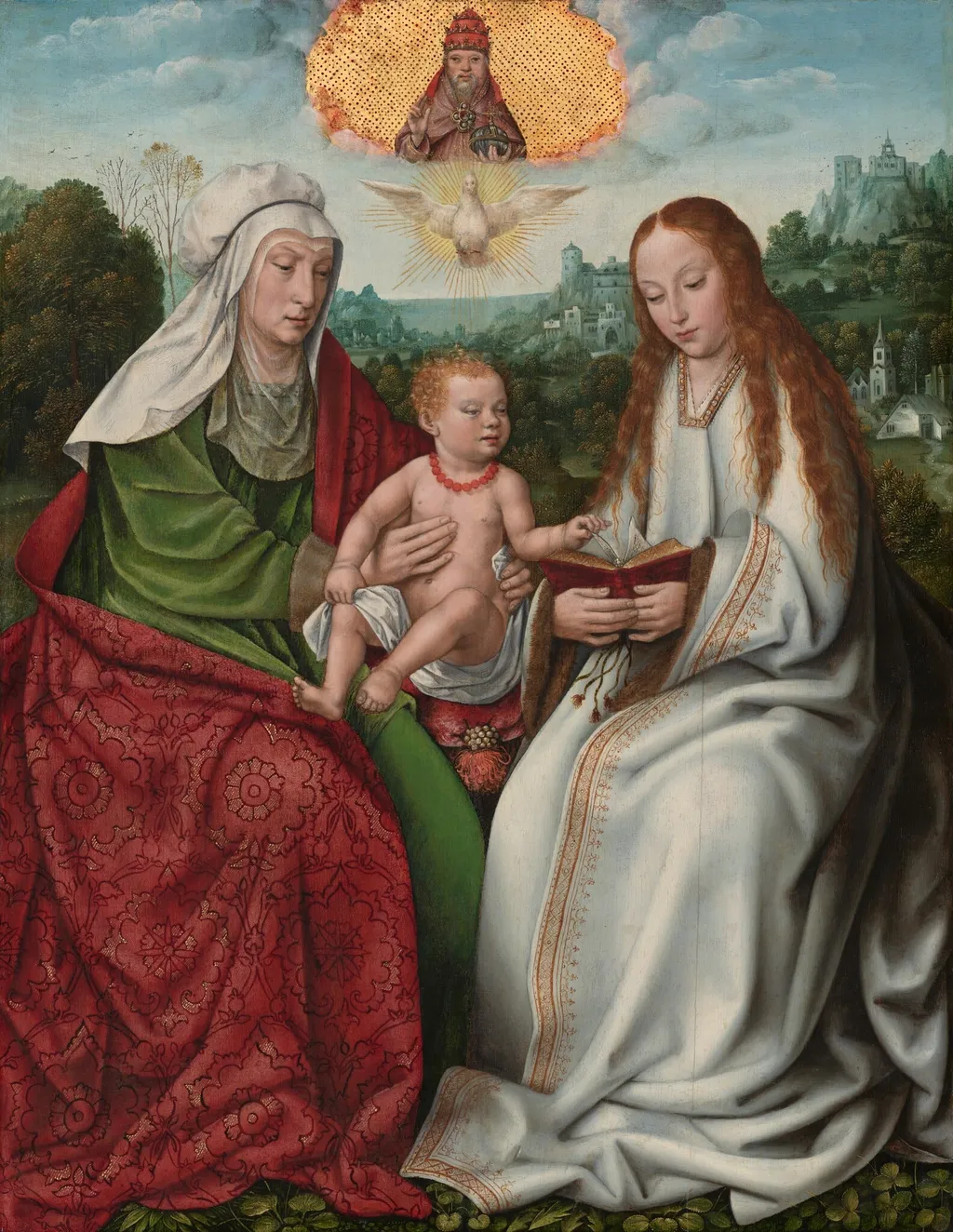
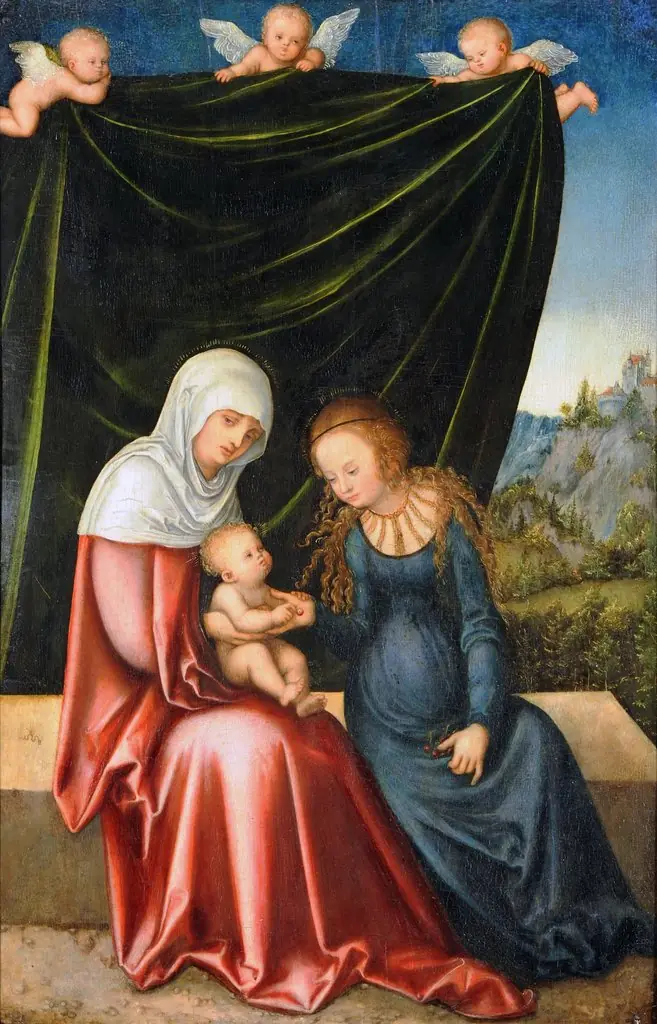
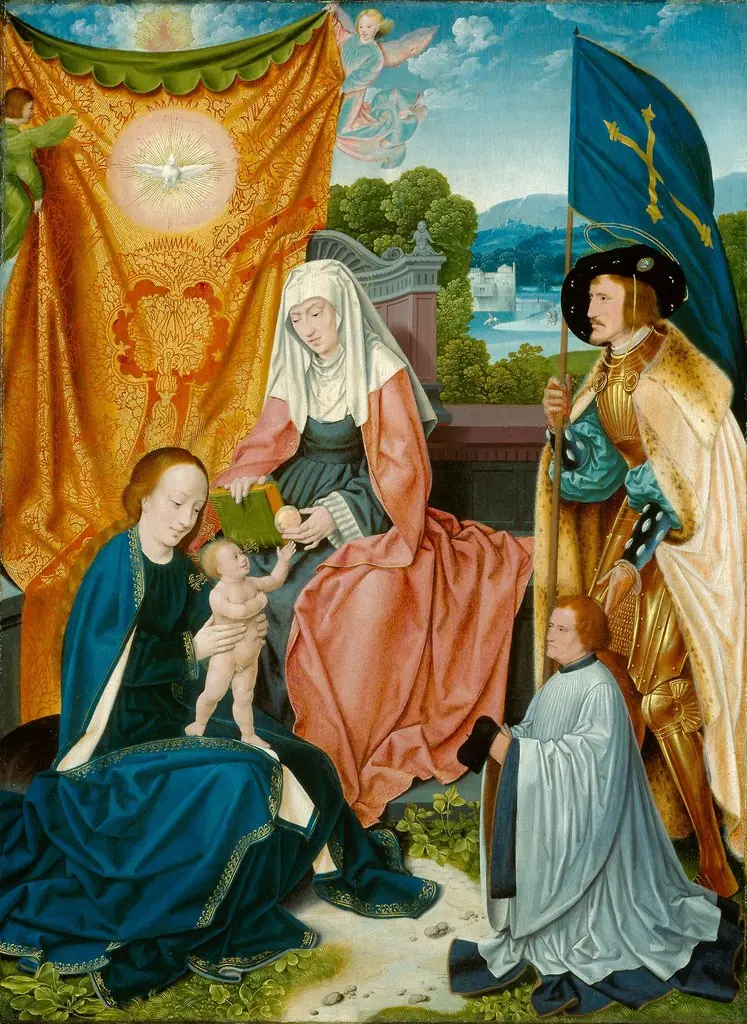
Saint Anne with the Virgin and the Christ Child is an oil painting by the Northern Renaissance artist Master of Frankfurt. It dates from 1513 and is held in the collection of the National Gallery of Art.
About this work
Subject & Meaning
In this iconography Anne presents Mary, who cradles the Christ Child, symbolizing the transmission of divine grace from grandmother to mother to son.
The painting depicts Saint Anne alongside the Virgin Mary and the infant Christ, emphasizing the holy family’s generational continuity. In this iconography Anne presents Mary, who cradles the Christ Child, symbolizing the transmission of divine grace from grandmother to mother to son. The work belongs to the religious genre of early sixteenth‑century German art and was created by the Master of Frankfurt in 1513.
It entered the National Gallery of Art in Washington, D.C. after being held in a private Budapest collection and later acquired by Sidney K. Lafoon.
History & Provenance
Created in 1513 by the Master of Frankfurt, this oil-on-panel painting depicts the Virgin and Child with Saint Anne. The work's documented ownership begins in a private collection in Budapest. By 1954, or shortly prior, the panel was acquired by Mr. and Mrs. Sidney K. Lafoon of Washington, D.C. The Lafoons retained the piece for over two decades before donating it to the National Gallery of Art in 1976, where it remains part of the permanent collection.
The painting is held by the National Gallery of Art, Washington, D.C.
Its accession record is documented as a gift in 1976 from Mr. and Mrs. Sidney K. Lafoon, who had acquired it by or shortly before 1954.
It does not appear in the provided sources to have been exhibited publicly since entering the National Gallery of Art’s collection.
Overview
Saint Anne with the Virgin and the Christ Child, executed by the Master of Frankfurt between 1511 and 1515, is a devotional panel painting in oil on wood. Created during the artist's mature phase in the early 16th century, the work depicts the Holy Kinship seated within a lush, detailed landscape. The composition arranges the three figures in a stable, pyramidal grouping: Saint Anne occupies the left, dressed in a green gown with a red mantle; the Virgin Mary sits to the right in white, holding an open book; and the Christ Child is positioned centrally, distinguished by curly hair and a red necklace.
The artist employs precise Northern Renaissance techniques to render the textures of the garments and the surrounding foliage, emphasizing material richness and naturalistic observation. This painting exemplifies the Master of Frankfurt's characteristic style, which blends Flemish attention to detail with a serene, intimate approach to religious subjects. The work serves as a significant example of Antwerp painting from the period, reflecting the era's focus on domesticating sacred narratives through realistic settings and individualized portraiture.
Technique & Style
The Master of Frankfurt rendered the scene with careful attention to detail, particularly evident in the elaborate drapery and textures of the figures' garments. The artist placed the holy figures within a developed landscape background, which adds depth and naturalism to the composition. This approach reflects common artistic practices of the early 16th century, emphasizing both narrative clarity and visual richness.
Own this work as a print
Artist & collection