Artwork
Madonna and Child with Sts Catherine and Barbara
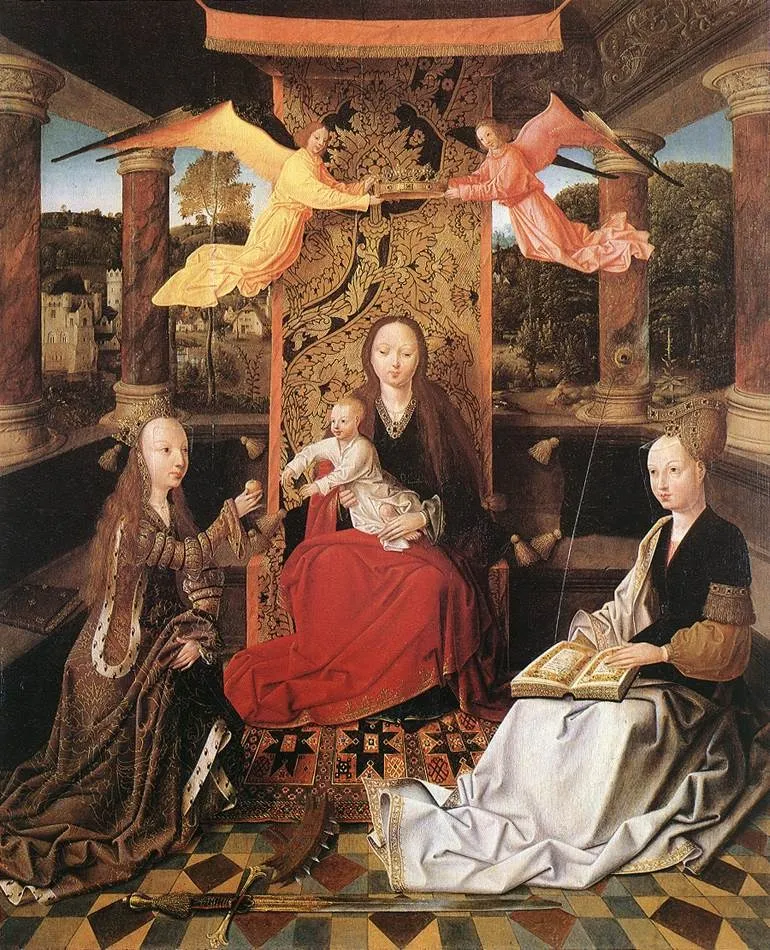
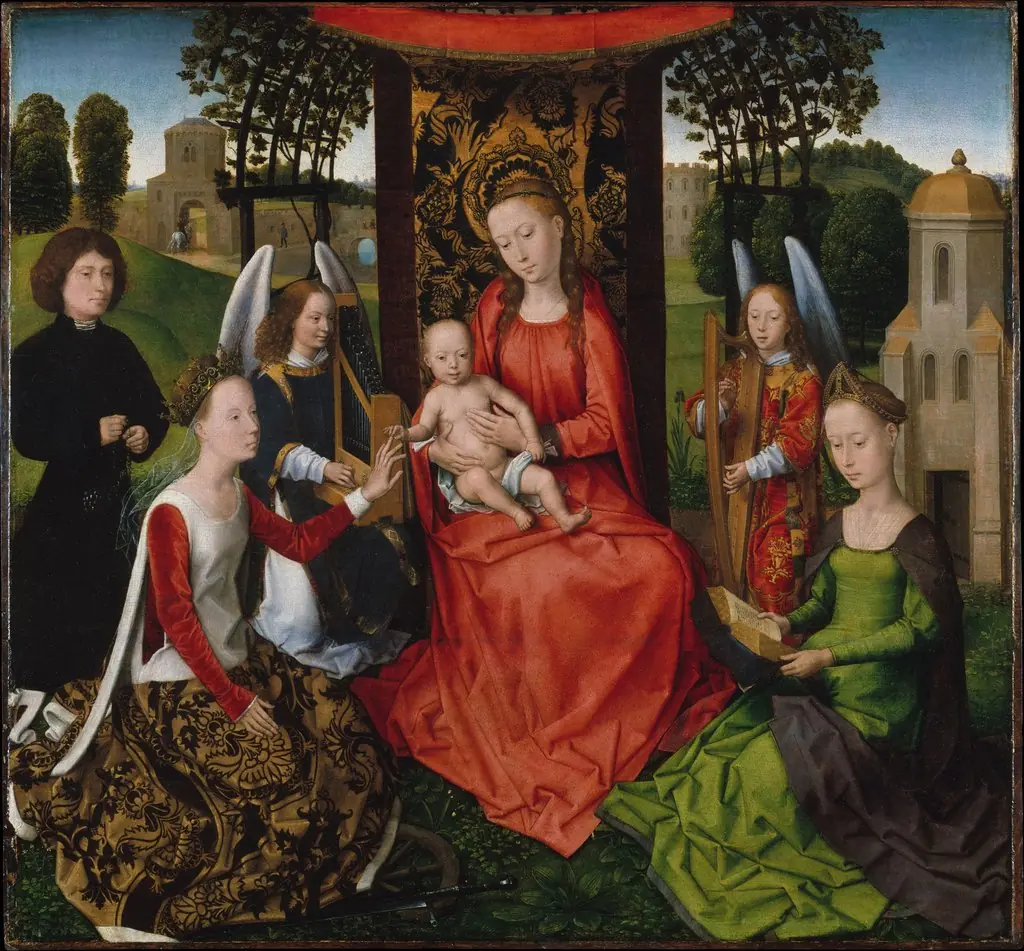
Madonna and Child with Sts Catherine and Barbara is an oil painting by the Northern Renaissance artist Master of Hoogstraeten. It dates from 1500 and is held in the collection of the Uffizi Gallery.
About this work
Subject & Meaning
Saint Barbara, traditionally associated with the tower and the Eucharist, appears as a secondary witness to this exchange.
The painting depicts a sacra conversazione centered on the Virgin and Child enthroned beneath an ornate canopy, flanked by Saint Catherine of Alexandria and Saint Barbara. Catherine offers the Christ Child an apple, a conventional symbol of original sin, which the Child reaches to grasp, an act read as prefiguring his redemptive sacrifice. Saint Barbara, traditionally associated with the tower and the Eucharist, appears as a secondary witness to this exchange. Behind the group, a broad northern-European landscape unfolds in depth, framed by a loggia with colored marble columns and a parapet, replacing the window-like settings common in Memling’s compositions. Flying angels above crown the Virgin, reinforcing her regal sanctity and the celestial dimension of the scene.
Technique & Style
The work is an oil painting executed on a wooden panel measuring 84 × 70 cm, dating to around 1520. It belongs to the Early Netherlandish tradition and exemplifies a sacra conversazione, with the Madonna and Child seated under an elaborately decorated canopy and flanked by Saints Catherine of Alexandria and Barbara. The composition shows the influence of Hans Memling’s structured arrangements while incorporating elements from Hugo van der Goes, such as the angels bearing Mary’s crown and the stylised Madonna’s pose. The angels’ flight and Mary’s expression reflect van der Goes’s influence, contrasting with Memling’s more limited background, which is rendered in expansive perspective. The painting’s handling of space and detail demonstrates a sophisticated use of oil medium to achieve rich textures and vivid colour on the panel surface.
History & Provenance
The painting is an oil on panel produced around 1520 by the anonymous Antwerp master known as the Master of Hoogstraeten, who was active between roughly 1490 and 1530, and it is made in Bruges. Its attribution history is complex: the work was long given to Hugo van der Goes, an attribution that Giovanni Battista Cavalcaselle strongly opposed. It was subsequently assigned to the artist known as Civetta before receiving its present attribution to the Master of Hoogstraeten in 1929, when Max Friedländer compared it with a panel then held in the Benda collection in Vienna. Giorgio Faggin later theorized a connection between this painting and a series of panels depicting the Seven Sorrows of the Virgin, originally from St Catherine's Church in Hoogstraten and now in the Royal Museum of Fine Arts Antwerp. The work is held in the Uffizi Gallery in Florence, where it measures 84 by 70 cm. The painting is held in the Uffizi Gallery in Florence, where it remains part of the museum’s collection. Its inventory or accession number is not specified in available sources, but it is cataloged under the title *Madonna in trono tra le sante Caterina d'Alessandria e Barbara* in the Uffizi’s records. The work has been exhibited as part of the Uffizi’s permanent display. While specific temporary exhibitions are not detailed in the sources, its attribution history, including reattribution to the Master of Hoogstraeten in 1929, has been discussed in scholarly contexts, particularly in relation to comparisons with works in the Benda collection, Vienna, and the Royal Museum of Fine Arts Antwerp.
Context
The painting was long attributed to Hugo van der Goes, an attribution strongly opposed by Giovanni Battista Cavalcaselle, before being reassigned to the anonymous Antwerp master known as the Master of Hoogstraeten in 1929 following Max Friedländer's research that compared it to a work in the Benda collection in Vienna. The attribution process reflects broader scholarly debates in early 20th-century art history, where stylistic analysis and comparative study of collections like the Benda collection played a decisive role in reattributing works to anonymous masters. The work's composition, particularly its use of a sacra conversazione format with figures positioned under a richly decorated canopy, demonstrates clear influence from Hans Memling, while its architectural spatial depth and the flight of angels bearing Mary's crown reveal connections to Hugo van der Goes, as noted in both Italian and English language scholarship. The painting's stylistic synthesis of Early Netherlandish techniques, including detailed symbolic gestures such as Saint Catherine offering an apple to the Christ Child to represent redemption, and its innovative use of perspective, with a wide-angle view extending into a northern landscape, underscore its significance within the development of devotional imagery in the early 16th century.
Artist & collection
Artist
The Master of Hoogstraeten (c. 1475 – c. 1530) is the Notname given to a Flemish painter or a collective of painters active in Antwerp in the early 16th century. The master created principally religious paintings and is…

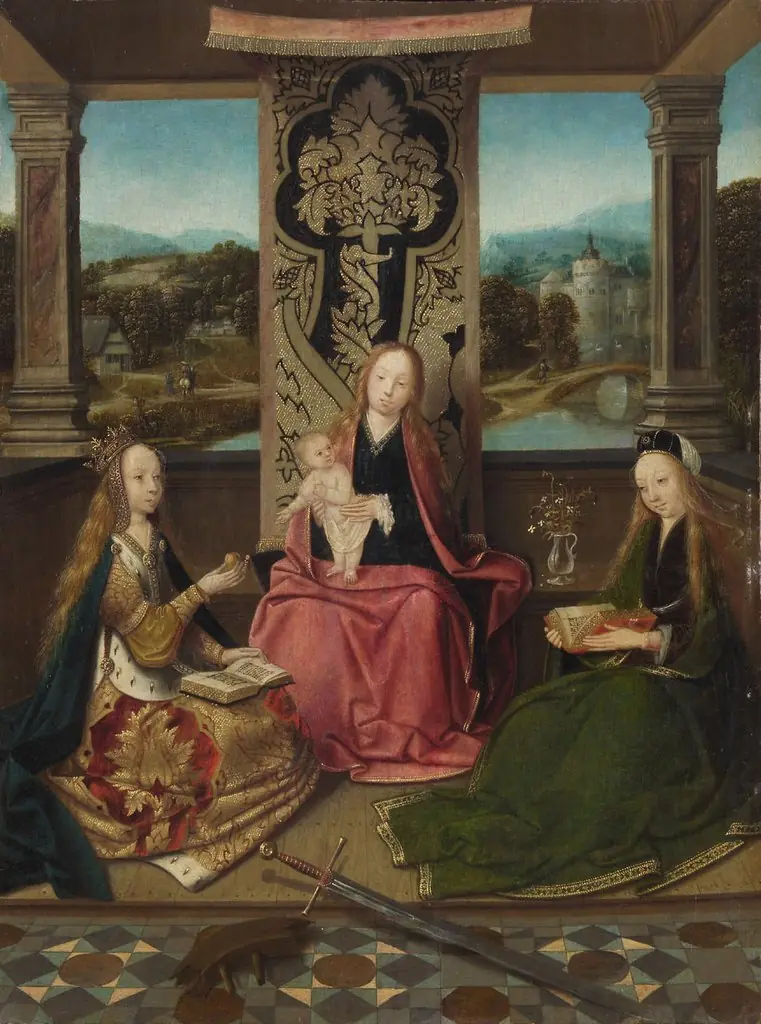
- Madonna and Child with Saints Catherine and Barbara
 Calvary
![Altarpiece showing scenes from the Infancy of Christ: The Adoration of the Magi [center]; The Annunciation; The Presentation of Christ in the Temple; The Flight into Egypt; The Nativity [clockwise from upper left], by Master of Hoogstraeten](https://artifactworldgallery.com/img/master-of-hoogstraeten--altarpiece-showing-scenes-from-the-infancy-of-christ-the-ado--6a236bfea3373486-w320.webp) Altarpiece showing scenes from the Infancy of Christ: The Adoration of the Magi [center]; The Annunciation; The Presentation of Christ in the Temple; The Flight into Egypt; The Nativity [clockwise from upper left]
Altarpiece showing scenes from the Infancy of Christ: The Adoration of the Magi [center]; The Annunciation; The Presentation of Christ in the Temple; The Flight into Egypt; The Nativity [clockwise from upper left]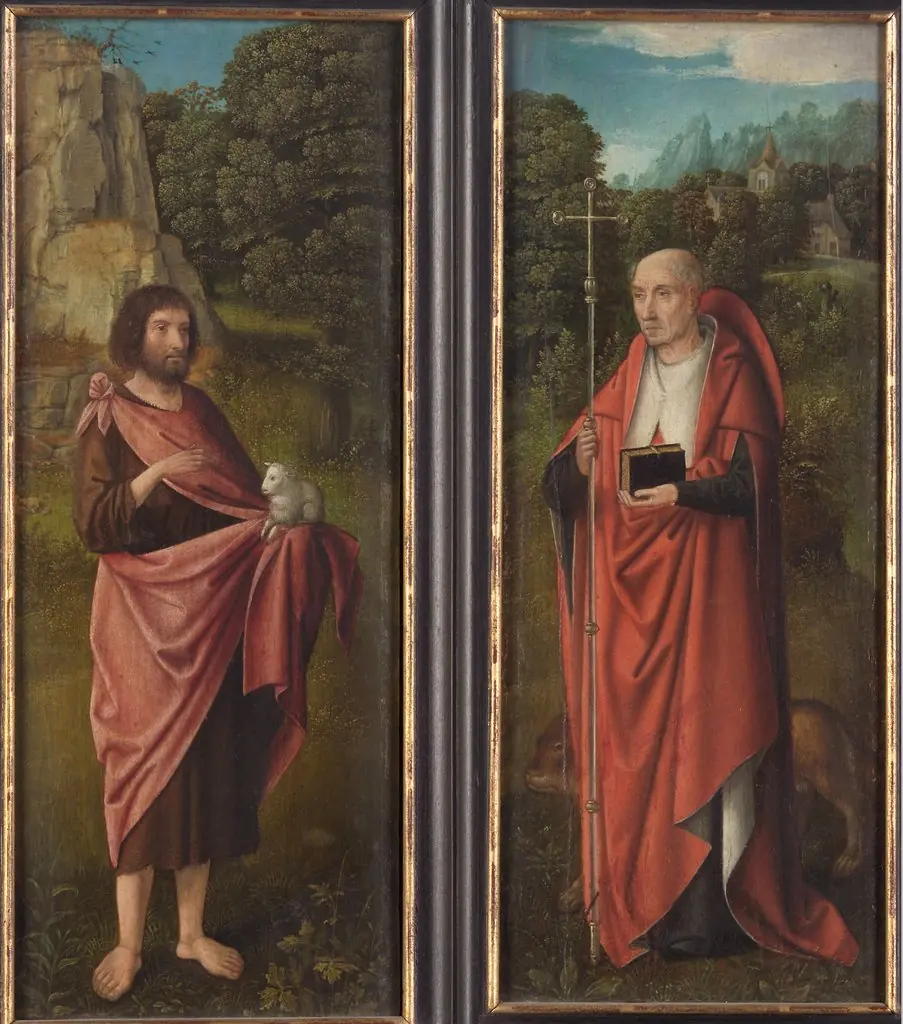 Saint John the Baptist and Saint Jerome
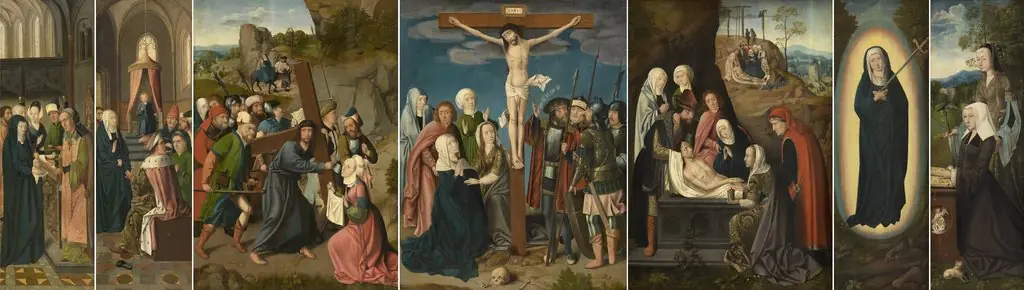 The Seven Sorrows of Mary
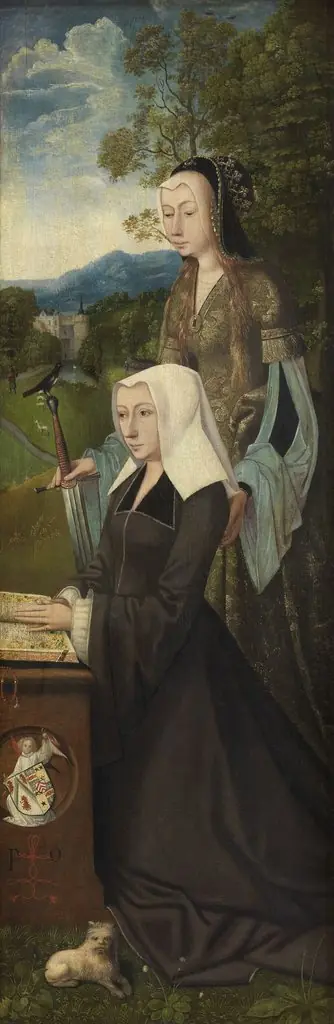 Oda Stecke
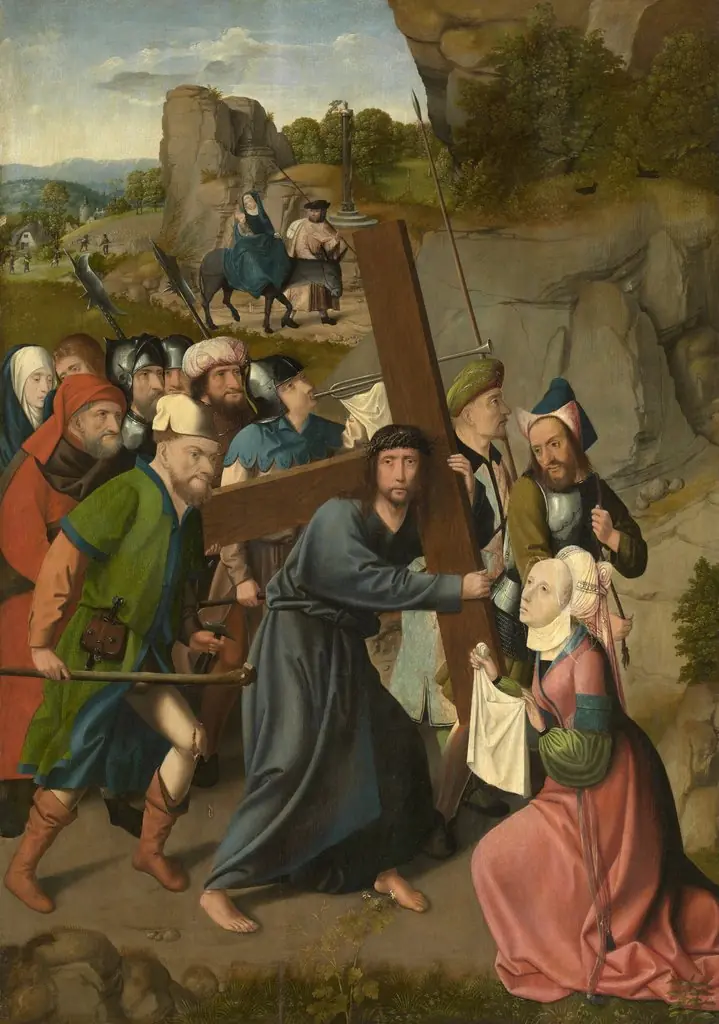 The Bearing of the Cross and the Flight into Egypt
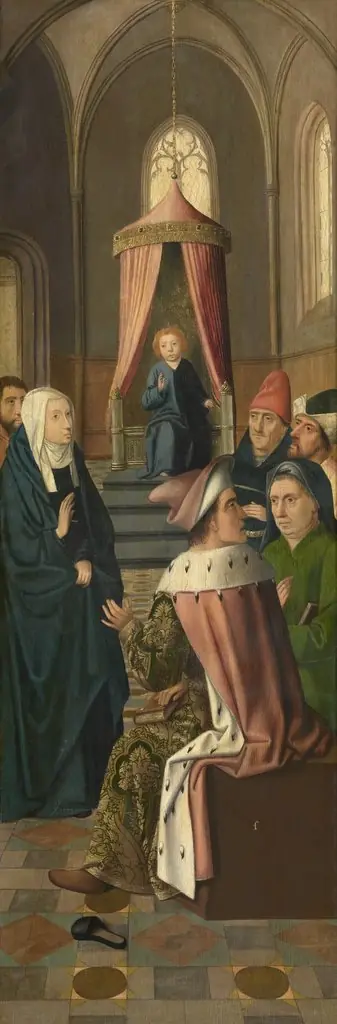 Christ's Dispute with the Doctors
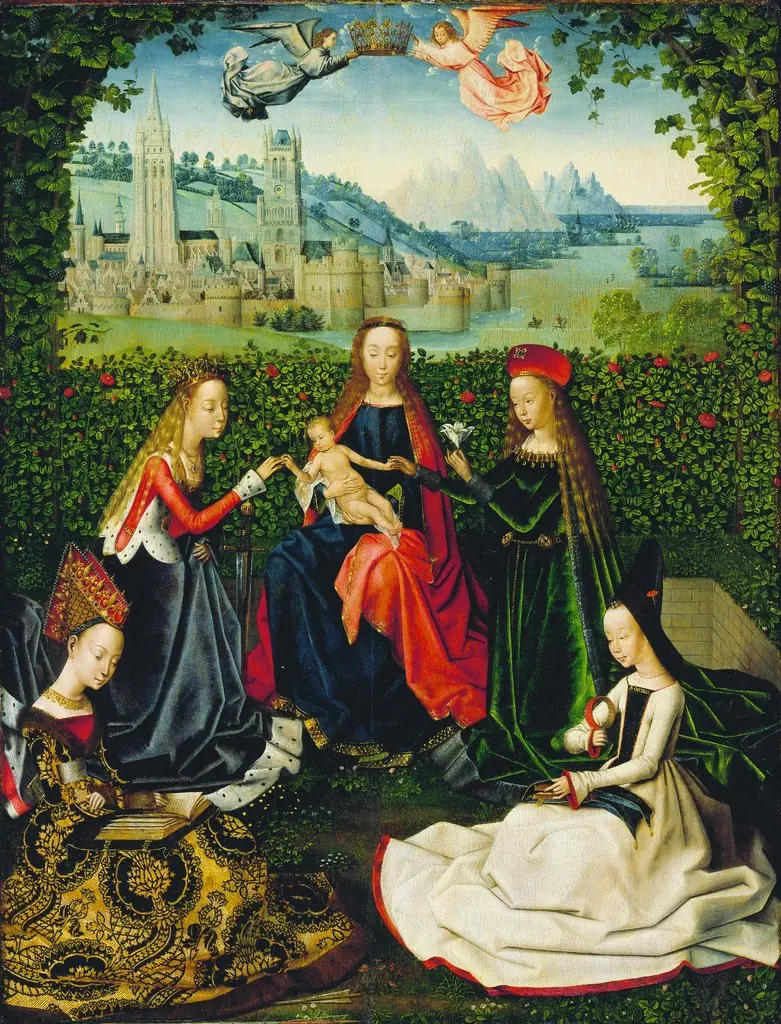 Virgin of the Rose Garden
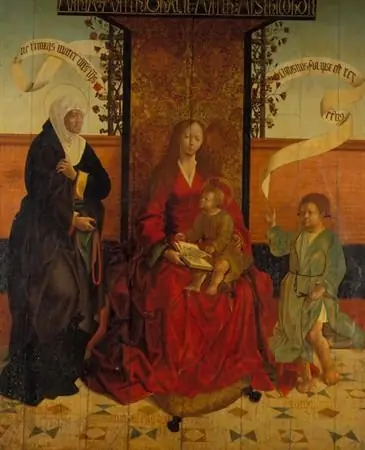 Mary and child, Saint Julita and Saint Guerito.
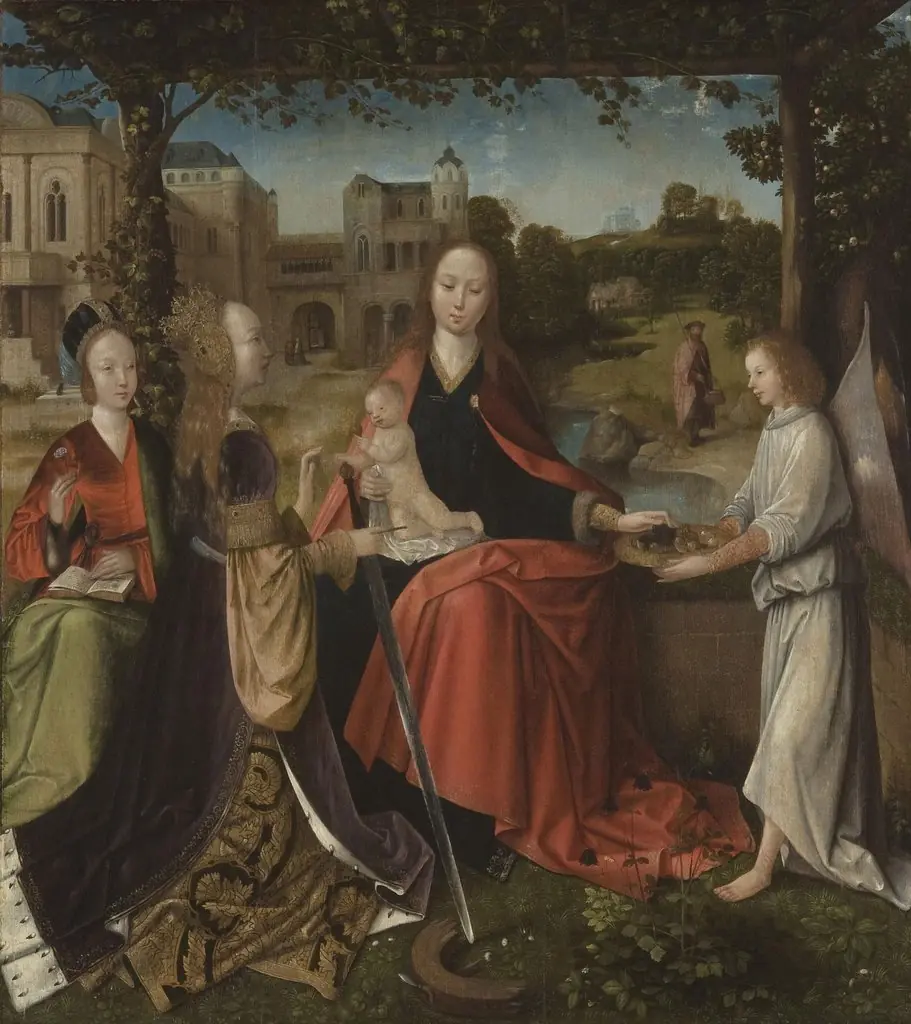 Virgin and Child, with Saint Catherine of Alexandria, a Female Saint, and an Angel
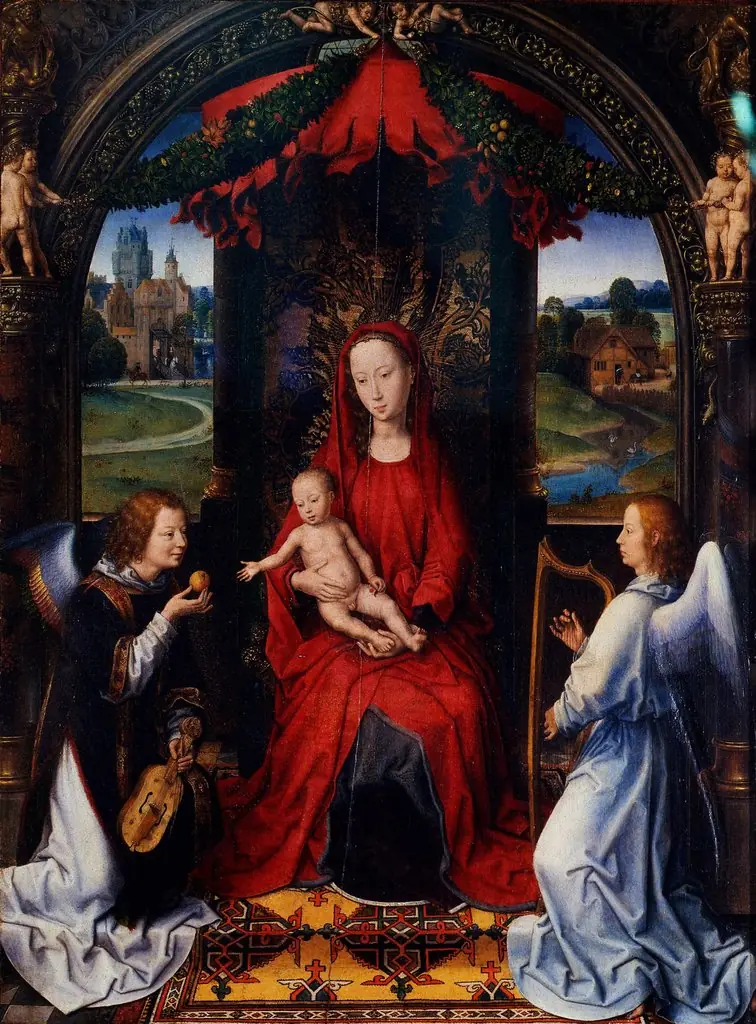 Madonna enthroned with child and two musical angels
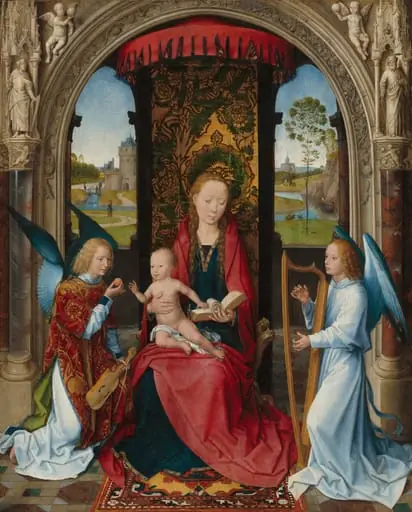 Madonna and Child with Angels
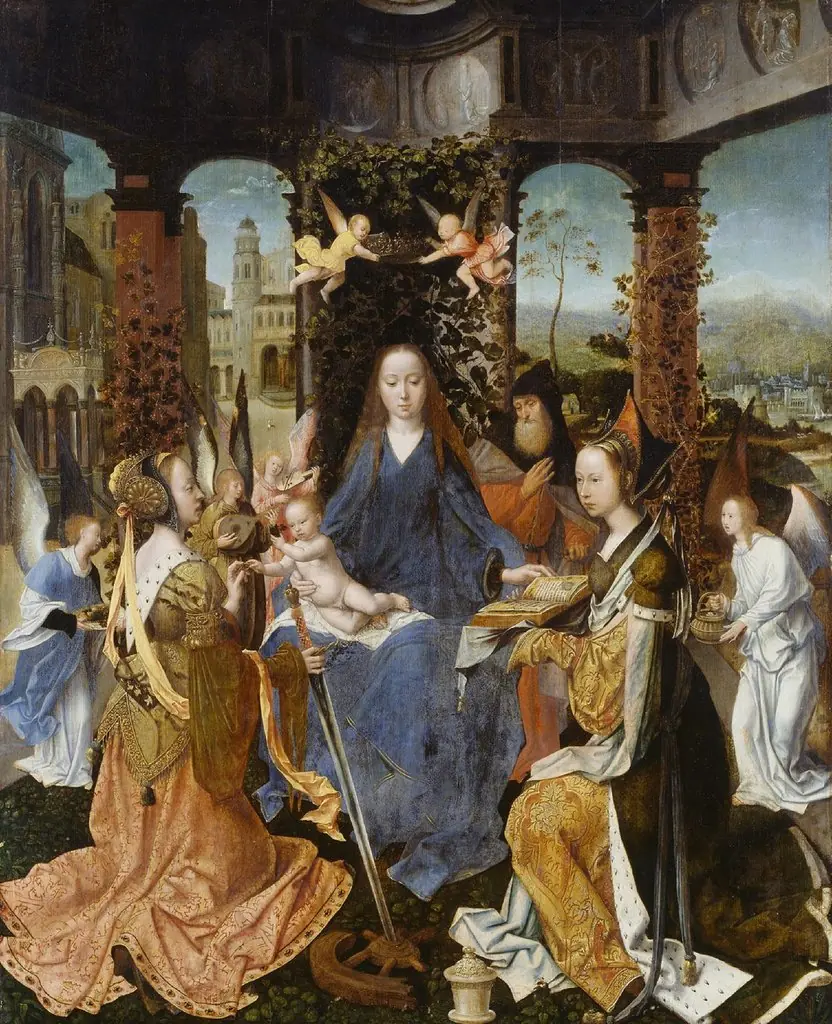 The mystic marriage of Saint Catherine
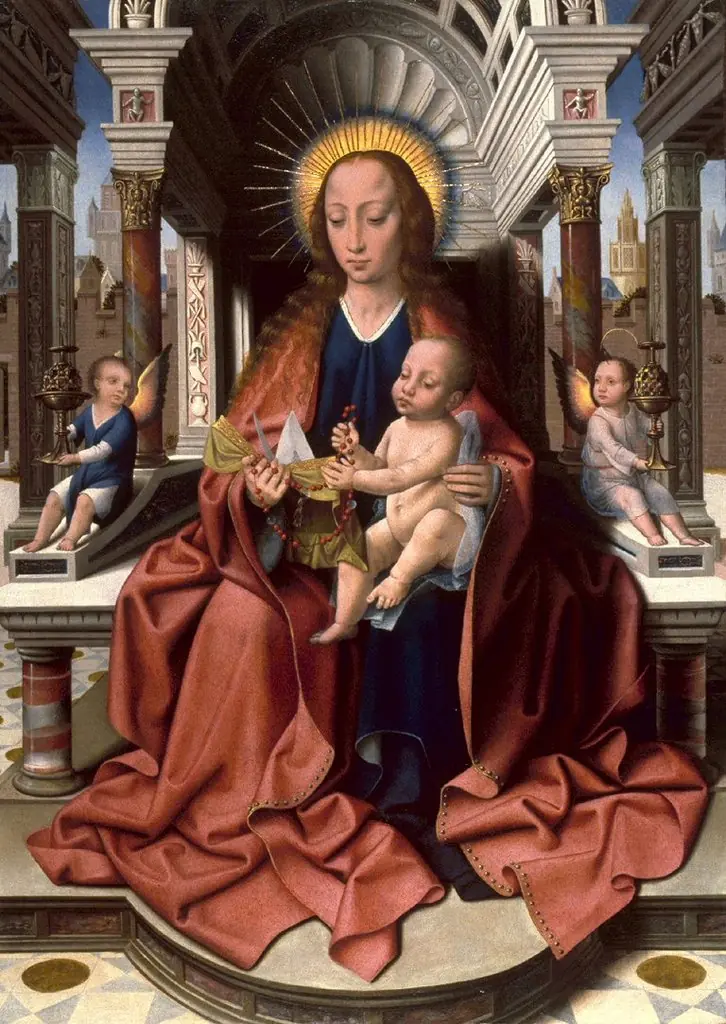 Virgin and Child Enthroned
 Virgin and Child with Saints Catherine of Alexandria and Barbara
 The Gift of Kalmthout
 Enthroned Virgin and Child, with Angels
 The Annunciation