Artwork
The Gift of Kalmthout
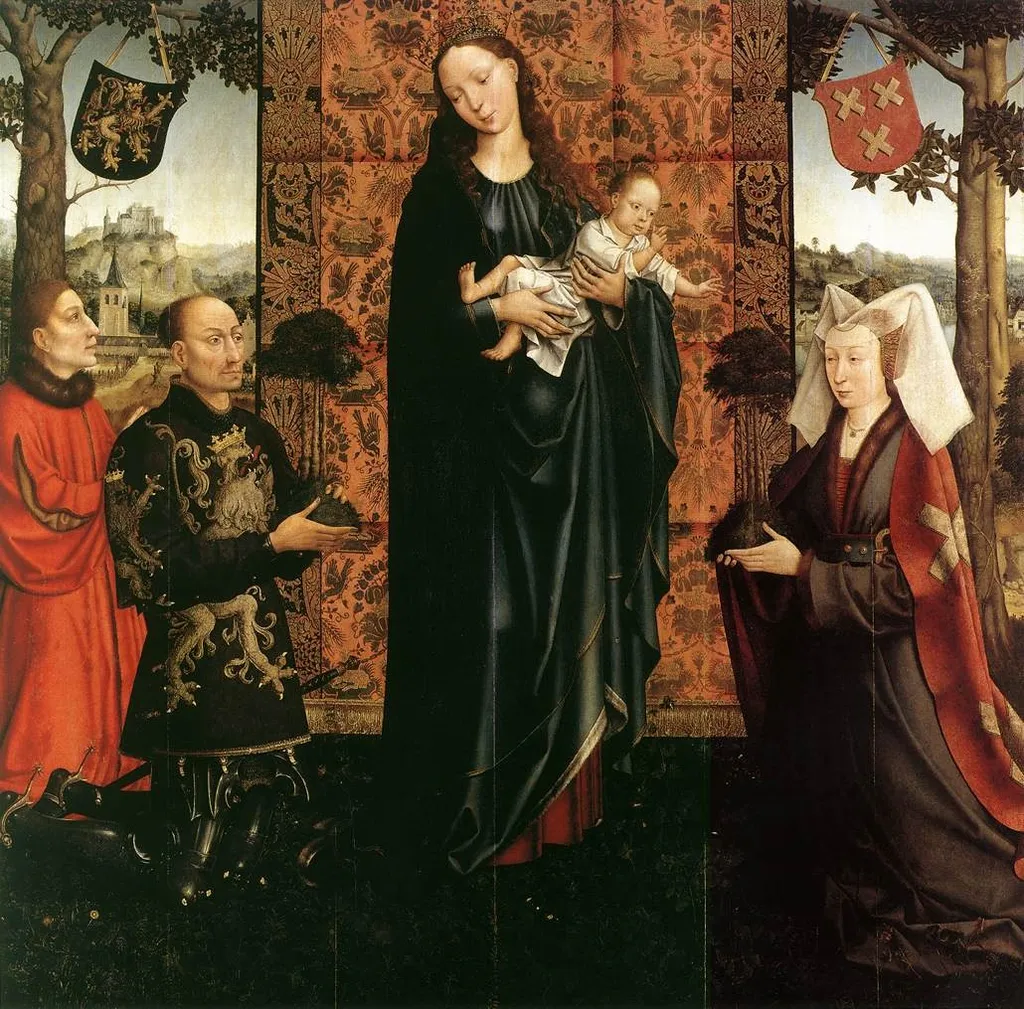
The Gift of Kalmthout is a paint painting by the Northern Renaissance artist Goswin van der Weyden. It dates from 1510 and is held in the collection of the Gemäldegalerie Berlin.
About this work
Overview
The Gift of Kalmthout is a religious panel painting created by the Early Netherlandish artist Goswin van der Weyden, dated to roughly 1510.
The Gift of Kalmthout is a religious panel painting created by the Early Netherlandish artist Goswin van der Weyden, dated to roughly 1510. Executed in paint on a wooden panel, the work measures 153 centimeters in height and 153 centimeters in width. It is currently held in the Gemäldegalerie Berlin as part of the Solly Collection. The painting is a significant example of early sixteenth-century Netherlandish art, notable for its complex synthesis of inherited fifteenth-century figural models with the emerging Antwerp Mannerist style, and for its unique documentation of medieval donation practices.
Subject & Meaning
The painting depicts the Virgin Mary holding the Christ Child, who reaches outward with one arm. She is flanked by two kneeling donor figures who present small plots of earth with trees growing on them. These figures are identified as Arnold of Louvain and his wife Elisabeth of Breda, who bequeathed the district of Kalmthout to a monastery in the thirteenth century. Because medieval legal entities could not be institutions, pious donations had to be bequeathed directly to a saint. Consequently, the long-deceased Arnold and Elisabeth are shown offering their gift to the Virgin Mary as the actual legal recipient. Each tree behind the group bears a heraldic shield, reinforcing the identity and lineage of the donors.
Technique & Style
Goswin van der Weyden executed the work with smooth, detailed brushwork, paying careful attention to the textures of textiles, gold decoration, and armor. The composition is symmetrical and formal with a strong vertical emphasis. The palette is dominated by deep reds, blacks, and golds, seen in the dark blue-black mantle and red undergarment of the Virgin, the dark dress and red mantle of Elisabeth, and the elaborate black armor of Arnold. The panel support features visible vertical seams, and the dark green foreground includes small plants. Stylistically, the work merges older fifteenth-century figural types with modern Antwerp Mannerist elements, the latter particularly evident in the background landscape. The female donor's costume, featuring a tall white headdress, was likely based on a drawing after Rogier van der Weyden's portrait of Isabella of Portugal. Though old-fashioned by the early sixteenth century, this anachronistic costume serves the historical context of the thirteenth-century donation and the long-deceased status of the donors.
History & Provenance
The painting was likely commissioned for the Saint John Baptist Hospital in Leuven. Sources vary slightly on the exact date of inception, placing it around 1510 or 1512. The work eventually entered the Solly Collection and is now housed in the Gemäldegalerie Berlin. The artist's use of older workshop materials and models suggests he inherited stocks from his father, who had previously taken over the workshop of the famous Rogier van der Weyden, Goswin's grandfather. These older models were repurposed for this painting despite their considerable age.
Context
Goswin van der Weyden, grandson of the legendary Rogier van der Weyden, settled in Antwerp around 1499. His work bridges the Brussels tradition of his grandfather and the modern Antwerp style. In this painting, he relied on inherited workshop stocks and models, such as the figure derived from Rogier's Isabella of Portugal. Goswin maintained a strong sense of pride in his artistic lineage. At the age of seventy, he inscribed an altarpiece for the abbey church of Tongerlo with a panegyric describing Rogier as the Apelles of his age. This painting demonstrates how he integrated his grandfather's legacy with the modern influences he encountered in Antwerp.
Artist & collection
Artist
Goswin van der Weyden or Goossen van der Weyden (1455–1543) was a Flemish Renaissance painter active in Antwerp.

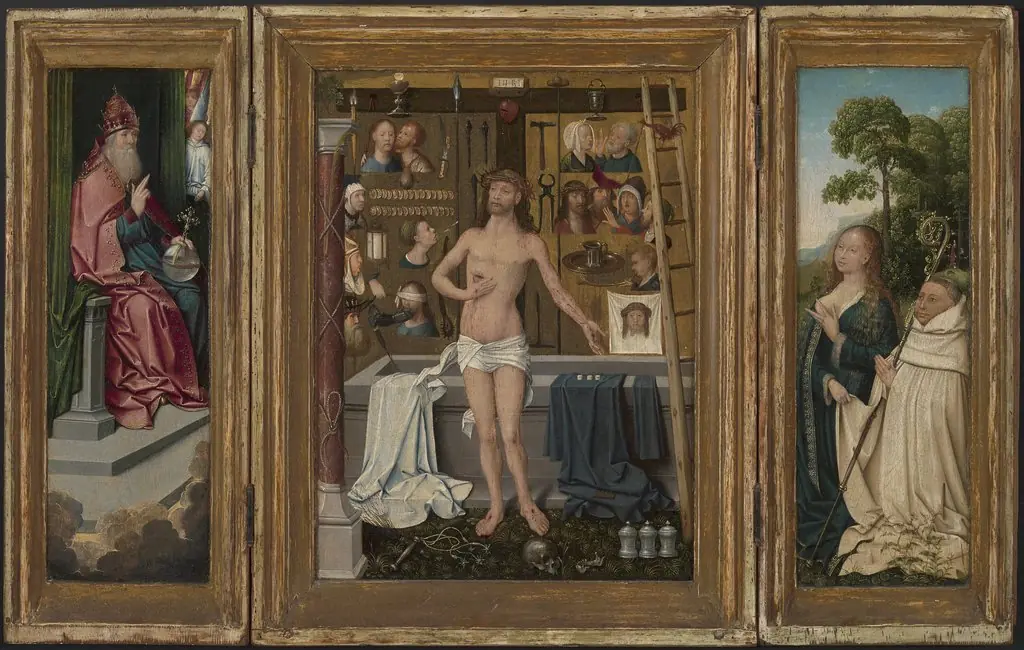 Triptych of Antonius Tsgrooten
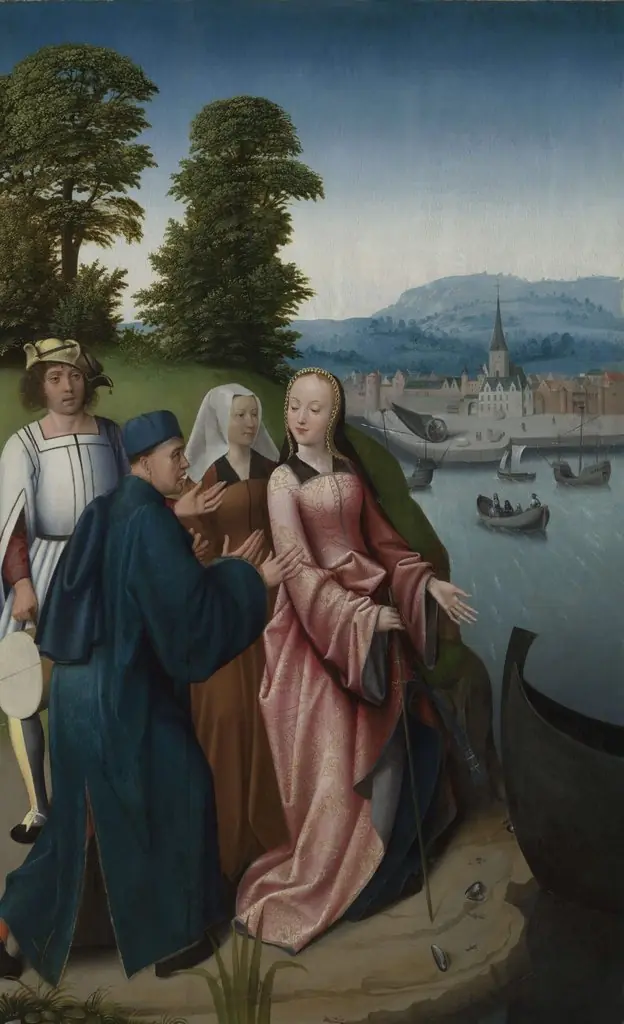 Dymphna and her Companions about to Embark
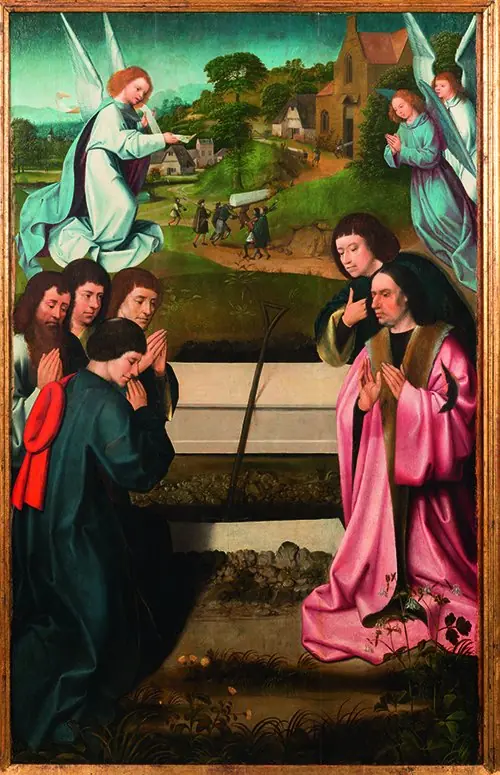 Discovery of the Sarcophagi Containing the Bodies of Dymphna and Gerebernus
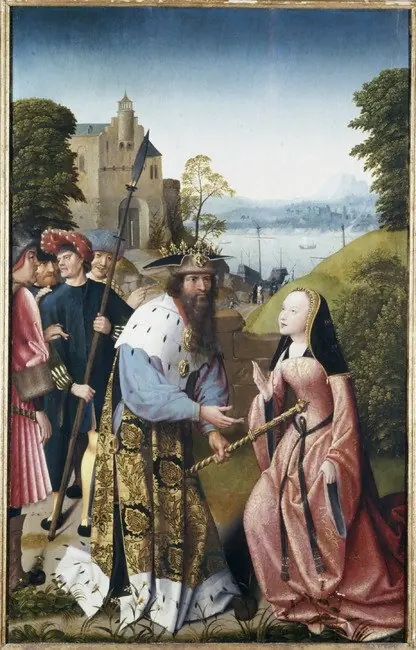 Dymphna’s Father Proposes to her
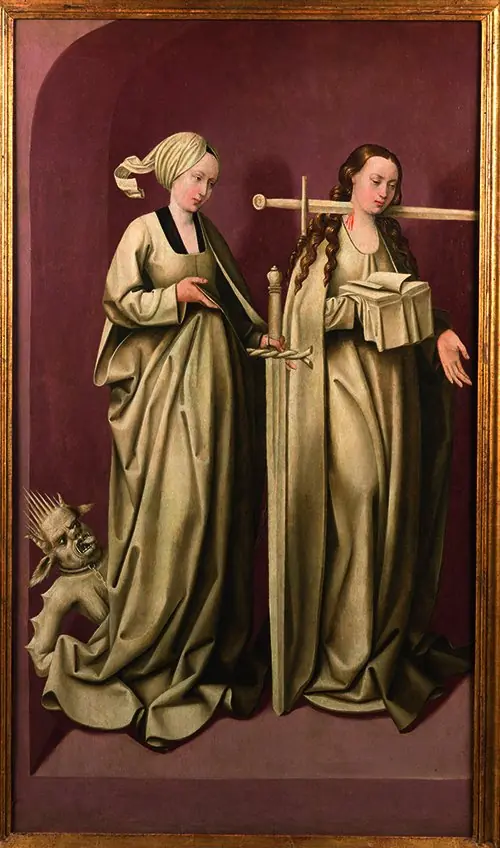 Saints Dymphna and Lucy
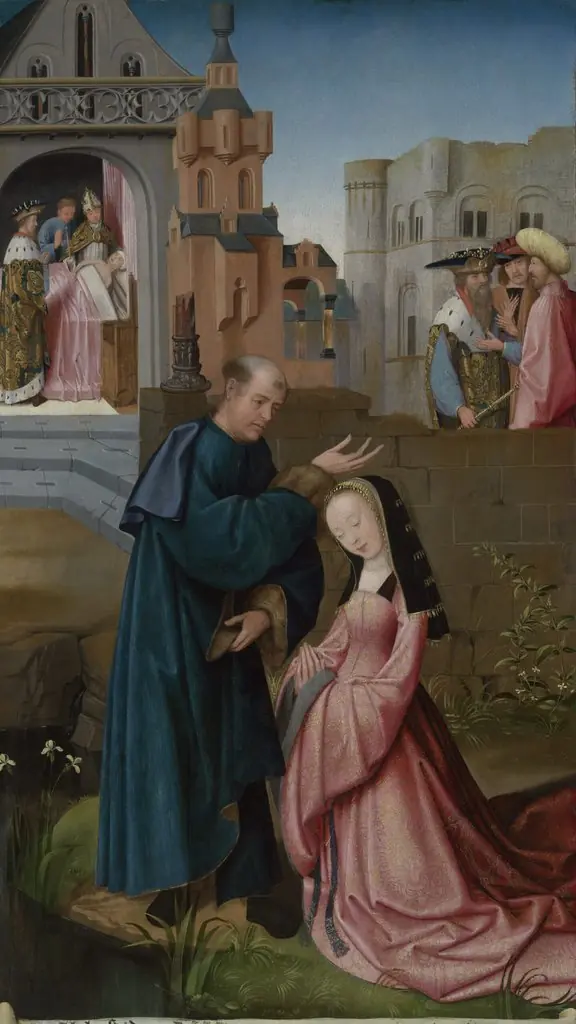 Baptism of Dymphna, with the Death of Dymphna’s Mother Represented in the Background
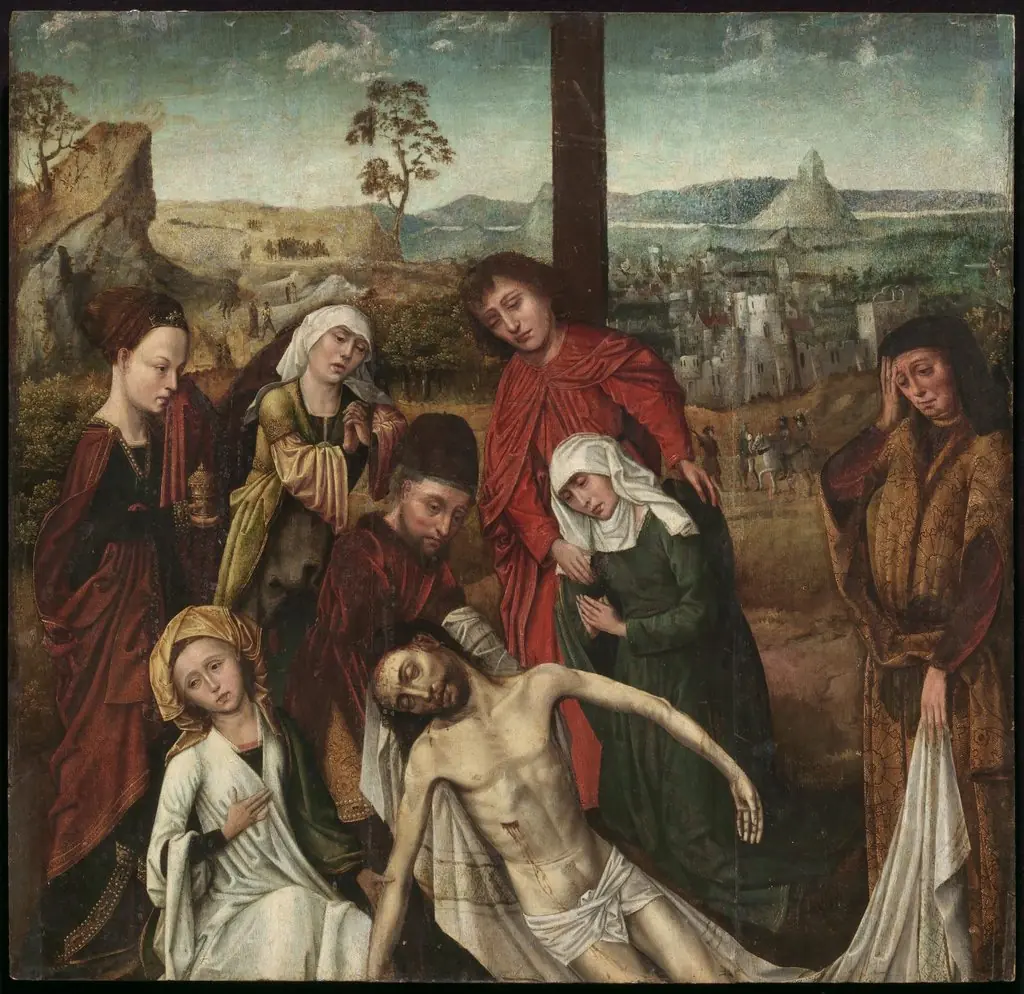 The Deposition of Christ
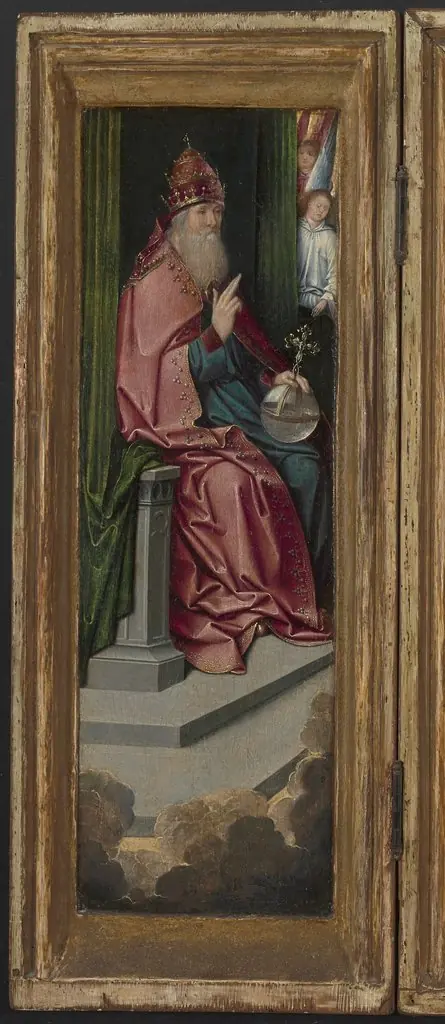 God the Father
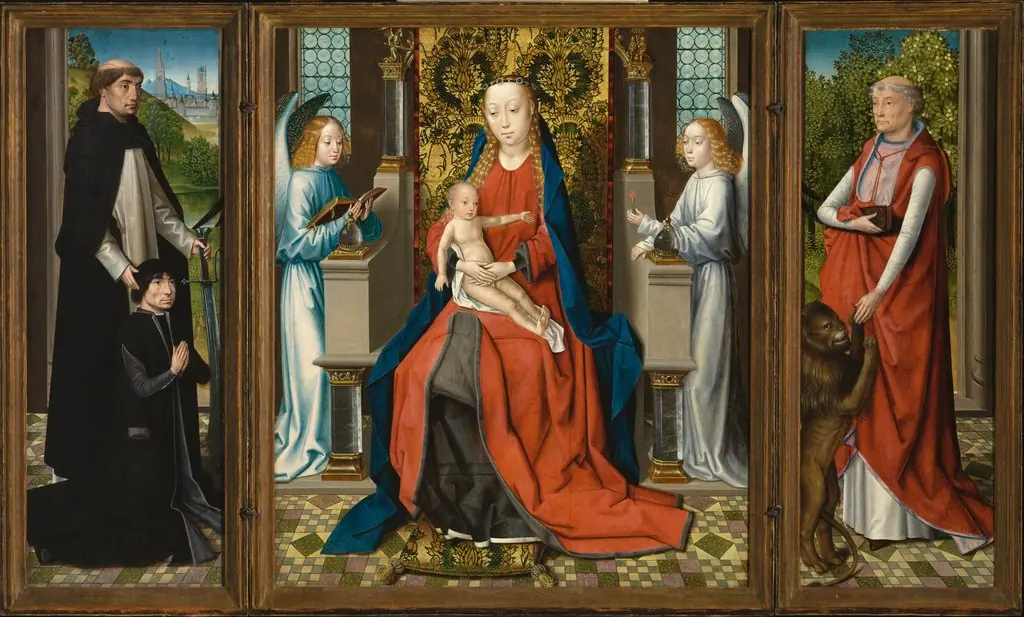
- Triptych of Madonna and Child with Angels; Donor and His Patron Saint Peter Martyr; and Saint Jerome and His Lion
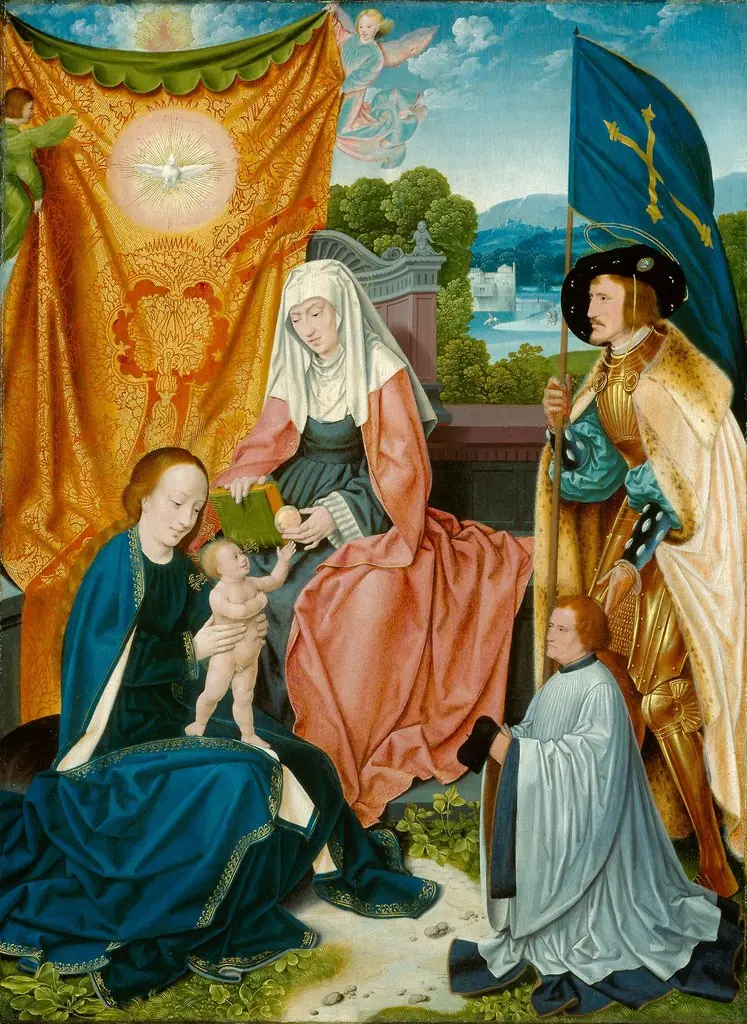 Virgin and Child with Saint Anne, Saint Gereon, and a Donor
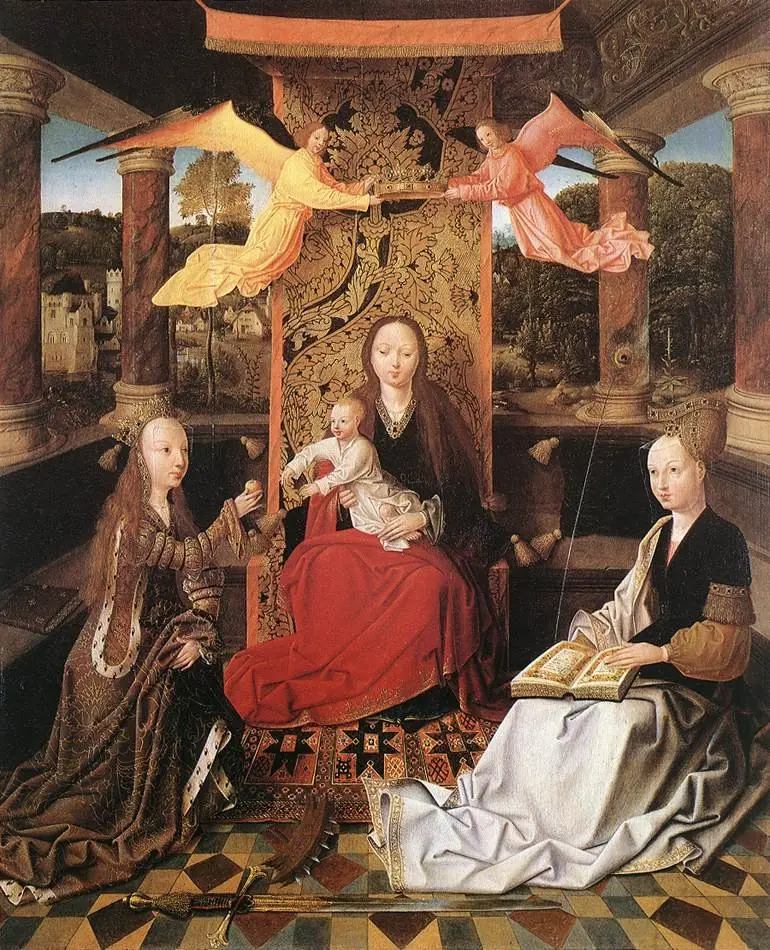 Madonna and Child with Sts Catherine and Barbara
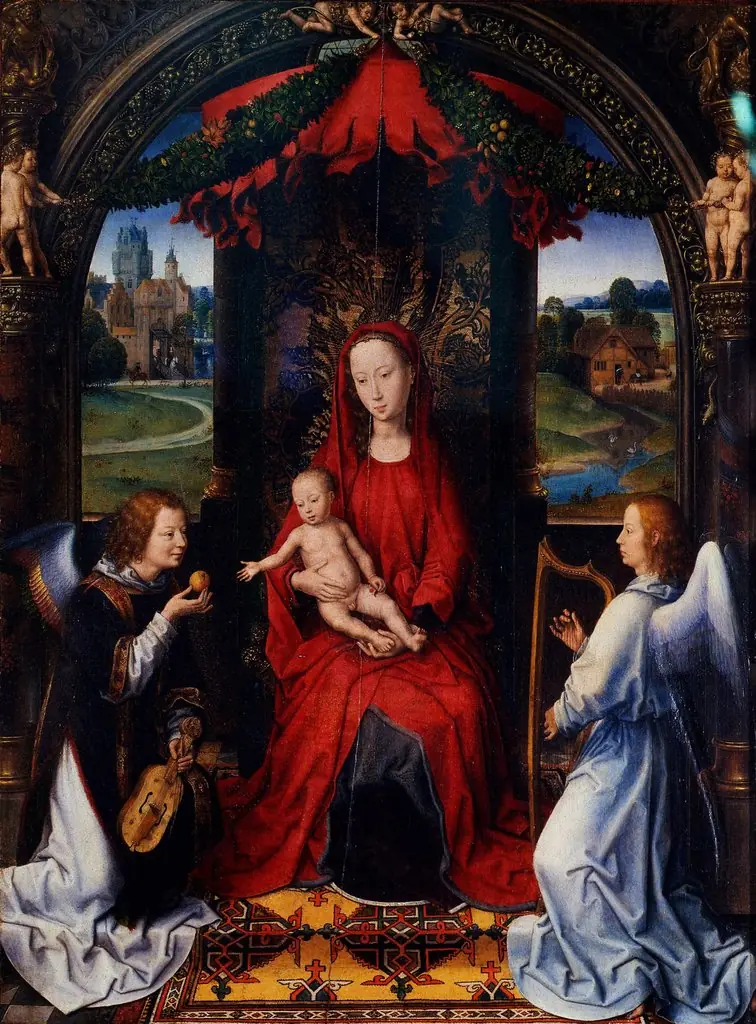 Madonna enthroned with child and two musical angels
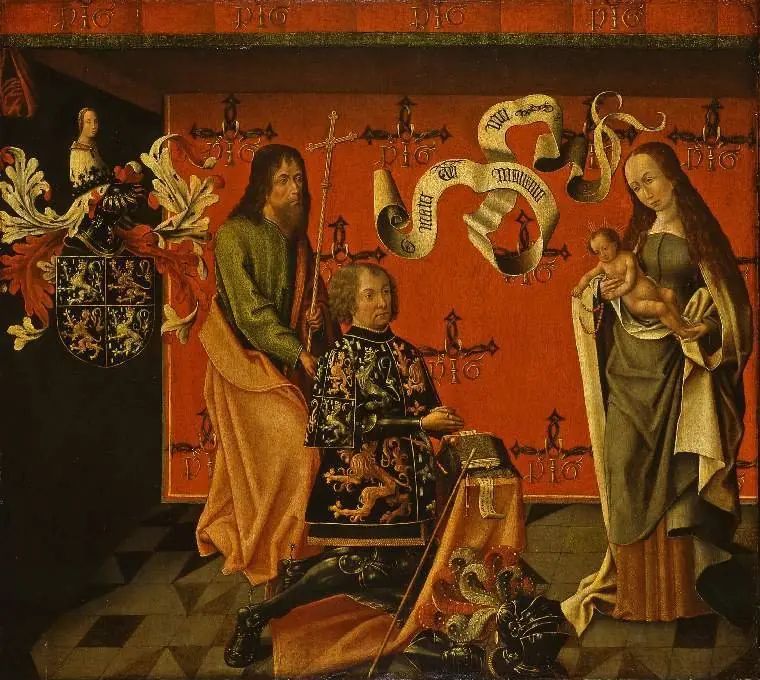 Diptych: Calvary and Virgin with Child, Saint Philip and the donor
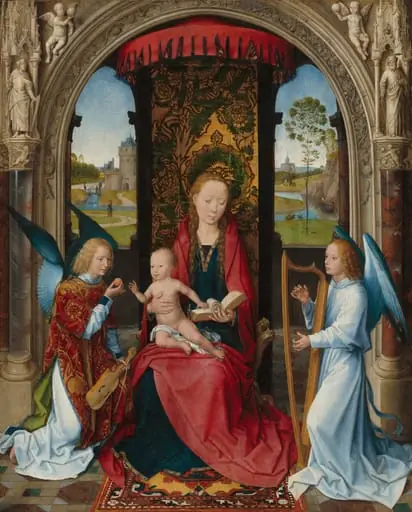 Madonna and Child with Angels
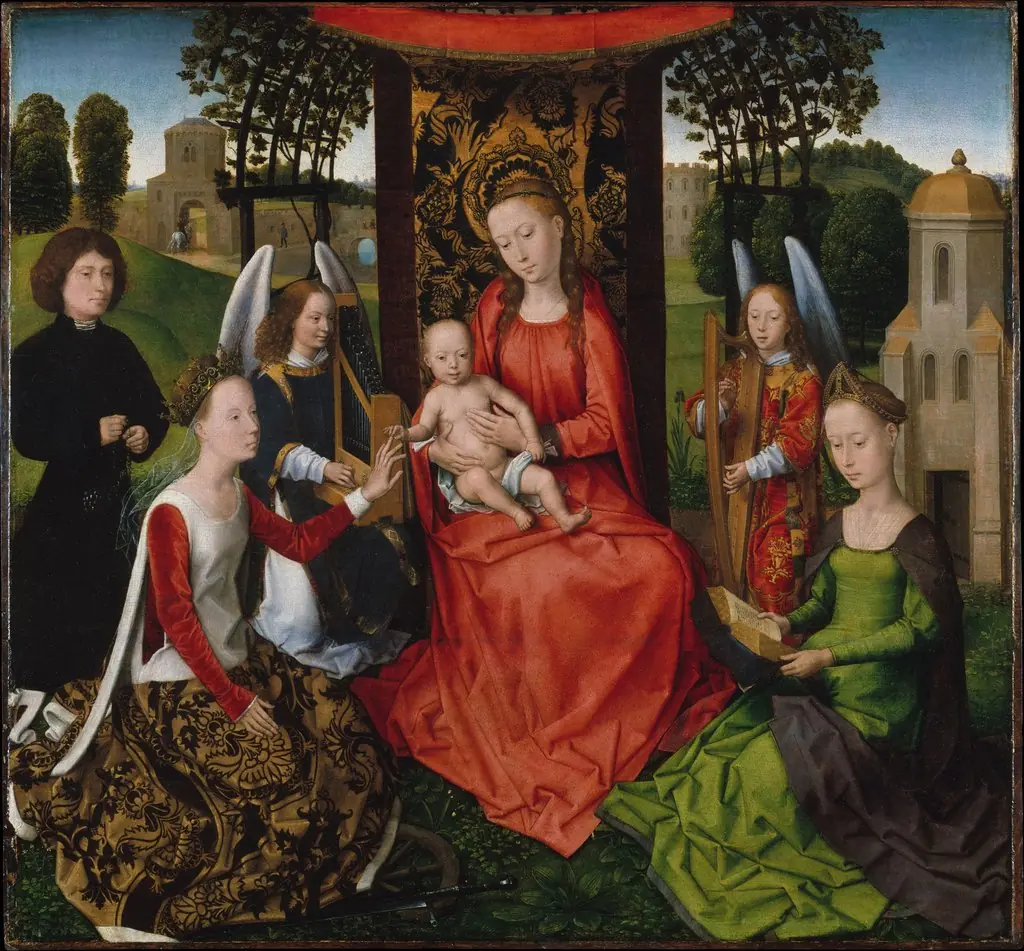 Virgin and Child with Saints Catherine of Alexandria and Barbara
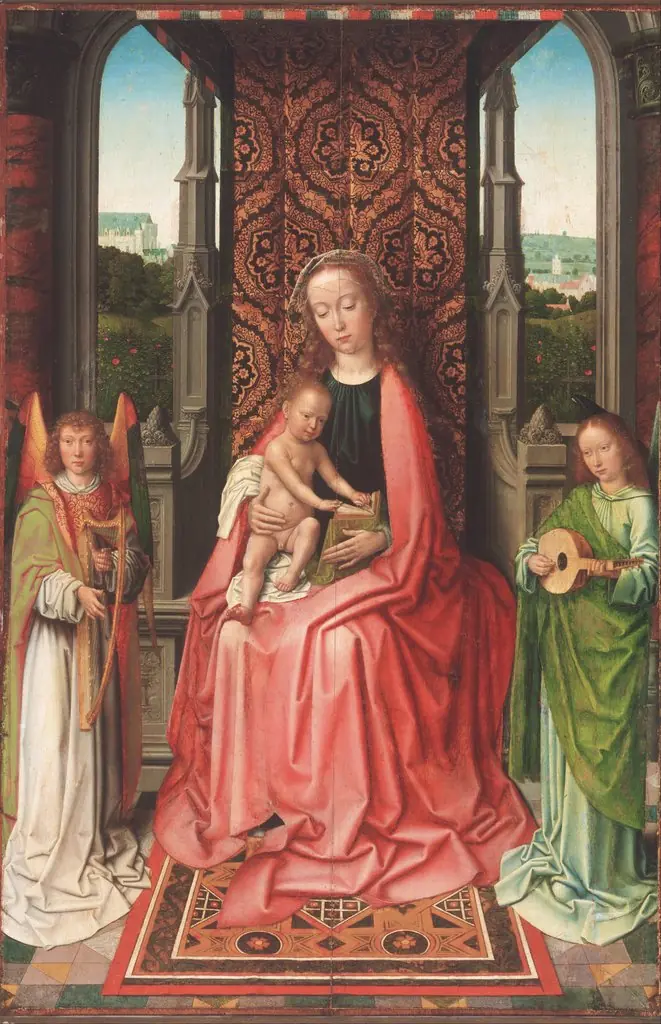 Enthroned Virgin and Child, with Angels
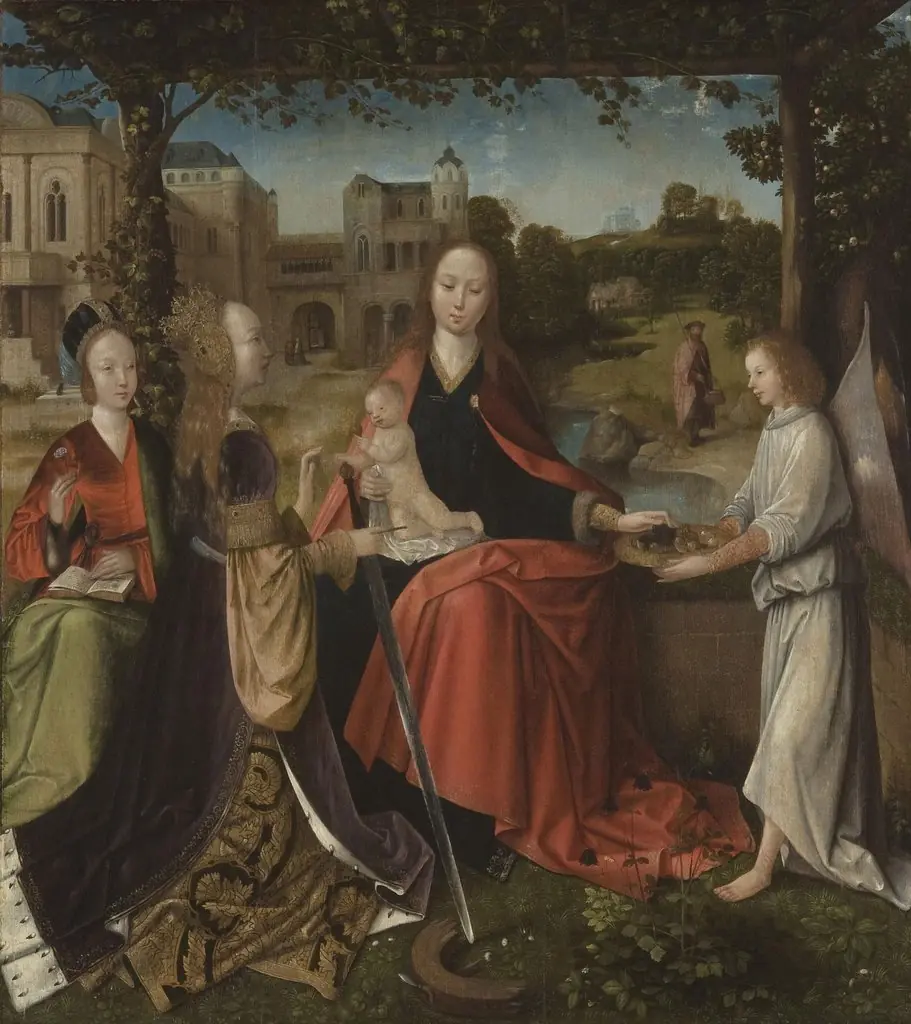 Virgin and Child, with Saint Catherine of Alexandria, a Female Saint, and an Angel
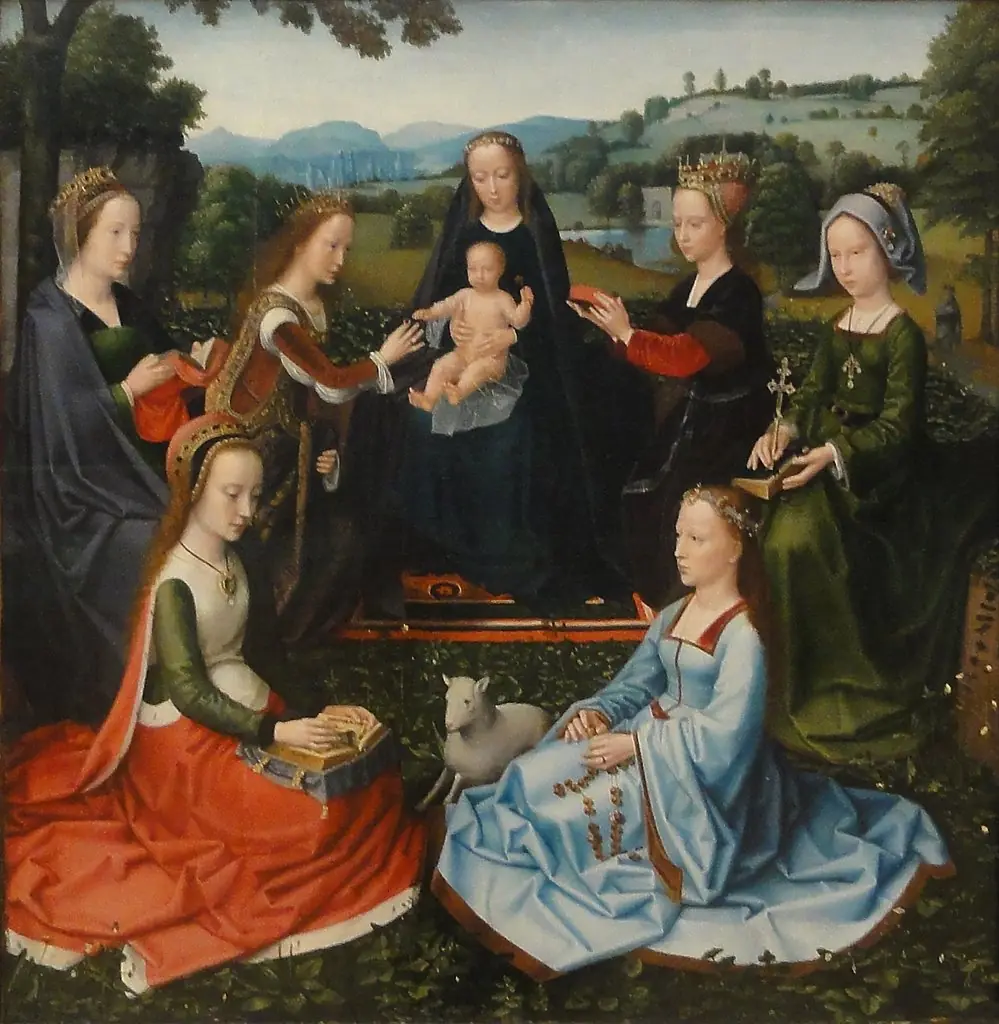 Madonna with Female Saint
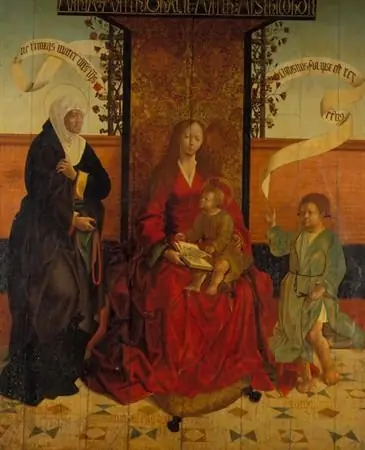 Mary and child, Saint Julita and Saint Guerito.
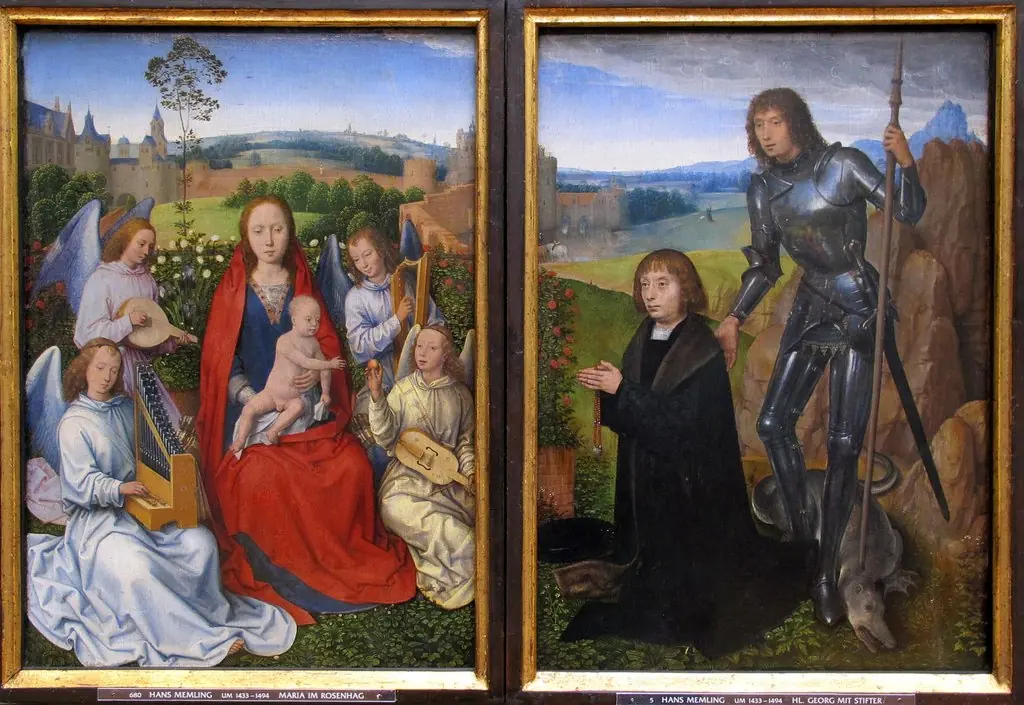 Diptych of Munich